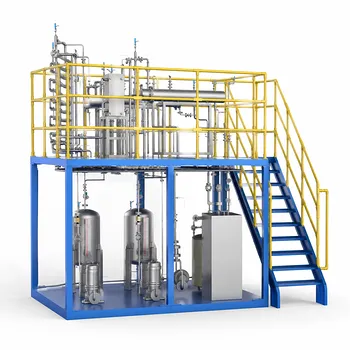
Wet granulation is the go-to unit operation for mitigating particle segregation and maintaining content uniformity in solid dosage pilot plants. When a blended powder is prone to separating—due to differences in particle size, shape, or density between active ingredients and excipients—integrating a wet granulation step after initial mixing locks the components together. The binder solution creates cohesive agglomerates that resist sifting, percolation, and other segregation mechanisms during hopper discharge, transfer, and feeding, ensuring every dose stays uniform.
Particle segregation often strikes during the transfers between unit operations, not inside the mixer itself. Adding a wet granulation step after blending physically binds fine drug particles to larger excipient carriers, transforming a fragile powder mixture into robust, content-uniform granules that survive the entire downstream process.
Why Powder Blends Segregate in Pilot Lines
The Hidden Instability of Dry Mixes
Even a perfectly blended powder can unmix in seconds. Differences in particle size cause fine particles to sift through the gaps between coarse ones during vibration, flow, or pouring. Density mismatches lead to percolation, where heavier particles sink while lighter ones rise. In a pilot plant with multiple hoppers, feeders, and transfer chutes, every handling step becomes an opportunity for the blend to fall apart.
Where Segregation Strikes Most
The highest risk zones are not inside the blender but in gravity-driven flows—when the blend discharges from the mixer hopper or travels through a feed frame. Small API particles tend to concentrate at the discharge outlet walls or form dust clouds that separate from the main flow. Once segregation occurs, content uniformity is lost and cannot be recovered by simple re-blending at that stage.
How Wet Granulation Locks in Uniformity
Agglomeration as a Physical Lock
Wet granulation introduces a binder solution (often water or a polymeric binder) while the powder is agitated. The liquid bridges form between particles, and as the mass is worked, small API particles become cemented to larger excipient surfaces. The resulting wet mass is then dried and milled into granules of a controlled size. Each granule now contains a representative fraction of the active ingredient, physically trapped inside a larger particle.
Eliminating the Sifting Mechanism
Once agglomerated, the mixture no longer consists of disparate fine particles. The granules have a larger, more uniform size and enough mechanical strength to resist breakage. Because they are too large to sift through inter-particle voids, the percolation pathway is blocked. Downstream operations—pneumatic transfer, bin filling, tableting—can no longer separate the API from the excipients.
Direct Alignment with Primary Reference Evidence
The primary source confirms that wet granulation specifically targets the problem: it binds smaller particles (APIs) to larger excipient particles, preventing the smaller ones from sifting during hopper discharge and feeding. This ensures content uniformity in the final dosage form, making it the most reliable mitigation step in a pilot plant configuration.
Alternative Granulation and Particle Engineering Approaches
Dry Granulation for Moisture‑Sensitive APIs
If the active ingredient is sensitive to moisture or heat from the drying step, dry granulation (roller compaction) offers a solvent‑free alternative. The blend is compressed into ribbons or briquettes and then milled to form granules. While not as direct at binding fines as wet granulation, it reduces segregation by enlarging particle size and narrowing size distribution. Supplementary references support this for reducing segregation potential through particle size distribution modification.
Milling Without Granulation
Milling alone can break down overly large agglomerates or adjust particle size distribution before blending. However, it does not permanently lock the fines; it merely resizes particles. For robust segregation control, milling is typically paired with a granulation step, not used as a standalone solution.
Designing a Pilot Plant for Content Uniformity
Integrating Granulation into the Sequence
A well‑configured pilot plant places wet granulation immediately after the blending step. The sequence becomes: weighing → blending → wet granulation → drying → milling → final blending (if needed) → tablet compression or capsule filling. This arrangement ensures the blend’s uniformity is captured and solidified before any long‑distance transport or storage.
Leveraging Blending Optimization First
Before committing to granulation, the blending unit itself can be tuned. Studies highlighted in the supplementary references show that an upward processing angle and low impeller rotation rate can generate optimal turbulent flow with slight backflow, maximizing the variability reduction ratio. A pilot plant with adjustable blade design, residence time, and processing angle lets you minimize segregation at the source—reducing the burden on downstream granulation or eliminating the need for it in simpler formulations.
Coupling with Simulation Models
Advanced pilot lines can pair experimental data with CFD and DEM simulations to visualize particle trajectories, velocity distributions, and dead zones. These tools help predict segregation hotspots and optimize granulation parameters without trial‑and‑error runs, speeding up process development.
Understanding the Trade‑offs
The Cost of Added Complexity
Wet granulation introduces additional equipment (granulator, dryer, mill), longer processing times, and increased energy consumption. Cleaning validation also becomes more demanding. For a pilot plant designed for rapid formulation screening, this complexity may slow down the iteration cycle.
Sensitivity to Formulation and Binder
Not every blend granules well. The choice of binder, liquid addition rate, and wet massing time must be carefully controlled. Over‑wetting can produce hard granules that resist compression, while under‑wetting may lead to weak granules that still segregate. Deliquescent or heat‑labile drugs further limit the process window.
Granulation vs. Continuous Blending Optimization
If the powder blend can be made segregation‑resistant by simply adjusting the continuous blender’s impeller speed, angle, or feed sequence, granulation might be an over‑engineered solution. The pilot plant must offer flexibility to explore both paths, so the decision is data‑driven rather than forced.
Making the Right Choice for Your Pilot Plant Goal
The best “subsequent unit operation” depends on your formulation’s characteristics and your development stage. Use these tailored guidelines to decide:
- If your primary focus is achieving absolute content uniformity for a challenging, wide‑size‑distribution blend: Adopt wet granulation immediately after blending. It provides the highest mitigation of segregation and is the definitive solution supported by the primary evidence.
- If your primary focus is developing a moisture‑sensitive API or a solvent‑free process: Evaluate dry granulation (roller compaction) as your next step. It reduces segregation risk by particle enlargement while avoiding liquid binder exposure.
- If your primary focus is high‑throughput screening or teaching fundamental process engineering: Start by optimizing the continuous blender’s processing angle, impeller speed, and residence time. Use that data to determine whether granulation is even necessary before adding downstream complexity.
- If your primary focus is building a fully integrated, simulation‑backed pilot line: Combine blender optimization with a granulation module and CFD/DEM modeling. This allows you to quantify segregation reduction at every stage and build a digital twin for scale‑up.
Every solid‑dose pilot plant must confront segregation—the strong, agglomerated structure created by granulation is the most definitive way to win that battle.
Summary Table:
| Unit Operation | Mitigation Mechanism | Key Advantage | Best Application |
|---|---|---|---|
| Wet Granulation | Binds APIs to excipients using a liquid binder | Highest uniformity; physically blocks sifting | Challenging blends with wide size distribution |
| Dry Granulation | Compresses powder into ribbons before milling | Solvent-free and heat-free process | Moisture- or heat-sensitive APIs |
| Blender Optimization | Adjusts impeller speed, angle, and residence time | Eliminates need for downstream units | Simpler formulations with low segregation risk |
Optimize Your Solid Unit Operations with LABPARK
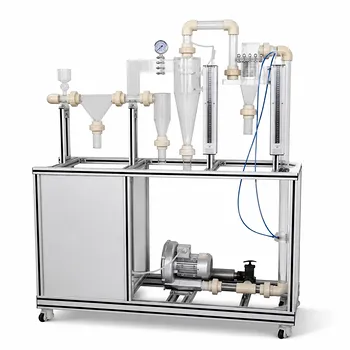
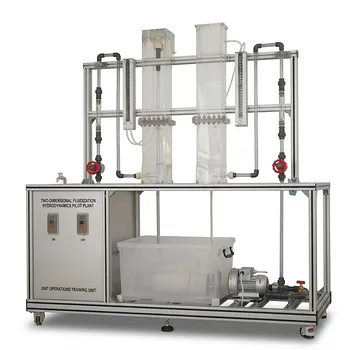
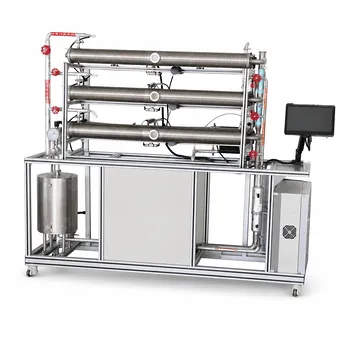
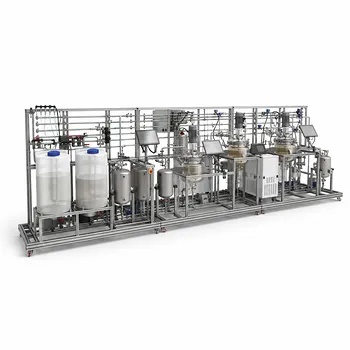
Are you looking to eliminate segregation issues and achieve absolute content uniformity in your powder processes? LABPARK provides state-of-the-art Educational and Vocational Unit Operations Pilot Plants across chemical engineering, bioprocess & biotech, and environmental & water treatment.
Designed specifically for universities, research institutes, and enterprises, our pilot plants allow you to simulate, test, and optimize critical processes like blending, granulation, and drying in a controlled, scalable environment.
Ready to elevate your research or training capabilities? Contact LABPARK today to find the perfect pilot plant configuration for your lab!
Related Products
- Solid Waste Pyrolysis and Refining Educational Pilot Plant for Unit Operations
- Gas-Solid Heterogeneous Separation Demonstration Educational Unit Operations Pilot Plant
- Two-Dimensional Fluidization Hydrodynamics Educational Pilot Plant for Unit Operations Training
- Fixed-Bed Chemical Reaction and Gas Dust Tar Removal Unit Operations Pilot Plant
- Educational Unit Operations Pilot Plant for Intraparticle Diffusion Effective Factor Measurement
People Also Ask
- How do educational unit operations pilot plants bridge theory and design? Bridge the Engineering Gap
- How do educational unit operations pilot plants address safety and waste management when scaling up?
- When to transition from PID to adaptive control in pilot plants? Key process indicators.
- Why is the chemical plant startup schedule crucial? De-risk scale-up with pilot plants.
- How to study gasification in pilot plants? Compare exit gas composition & efficiency