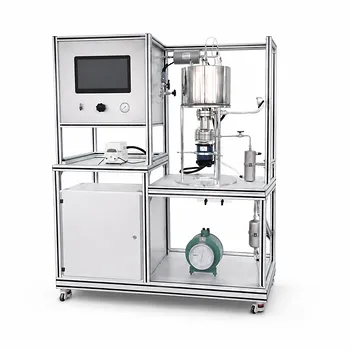
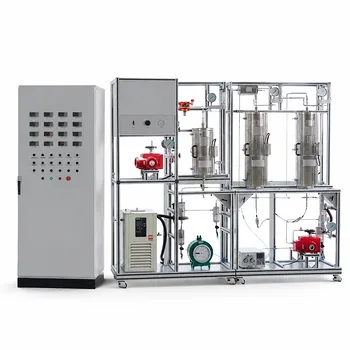
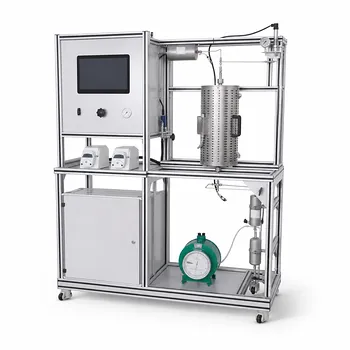
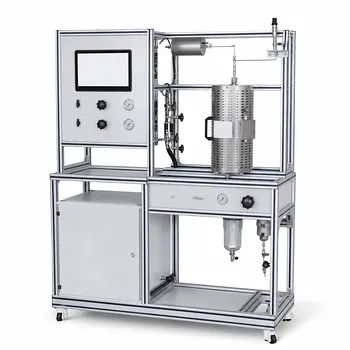
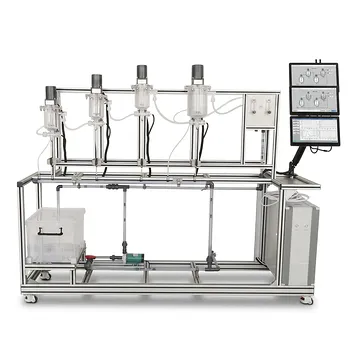
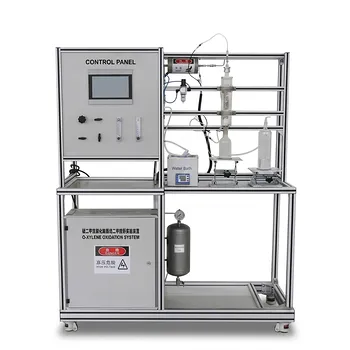
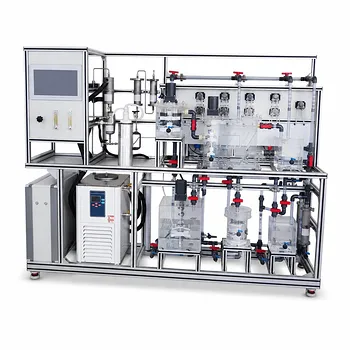
The carrier material is the stage on which the catalytic performance plays out. In a catalytic combustion pilot plant, choosing between alumina (Al₂O₃) pellets or honeycomb ceramics directly determines the observed pressure drop, heat transfer profile, and catalyst loading efficiency. This choice shapes whether students can isolate mass transfer limitations, map temperature gradients, or study intrinsic kinetics during gas purification unit operations. Each carrier geometry creates a distinct experimental platform for teaching core chemical engineering fundamentals.
Pilot-plant carrier selection is a teaching decision, not just a technical one. Honeycomb monoliths excel at demonstrating low-resistance flow and thermal patterns, while gamma-alumina pellets maximize accessible catalyst surface area for deep reaction kinetics studies. The ideal carrier is the one that makes the target unit operation phenomena unmissable for the learner.
How Carrier Geometry Redefines the Experiment
The carrier’s shape and material properties become the experimental variables that students measure. Every gas purification run — from VOC oxidation to catalytic combustion — is filtered through the carrier’s influence.
Pressure Drop and Flow Distribution
Honeycomb ceramics offer minimal pressure drop thanks to their straight, parallel channels that allow laminar flow. This makes them ideal for demonstrating near-plug-flow behavior and for experiments where downstream vacuum or fan power is limited.
Alumina pellets or spherical extrudates, in contrast, create a tortuous packed bed. The higher pressure drop forces students to account for pumping energy and to map axial dispersion — a perfect setup for studying non-ideal flow regimes in fixed-bed reactors.
Heat Transfer and Temperature Control
Catalytic combustion is exothermic. Honeycomb monoliths, with their low thermal mass and thin walls, respond rapidly to temperature changes, allowing clear observation of light-off curves and transient thermal behaviors. This sensitivity helps students grasp the link between heat generation and reaction runaway.
Packed beds of alumina particles store and smeared heat, creating slower thermal responses and the potential for hot spots. These conditions open a window into practical industrial reactor challenges like hotspot management, catalyst sintering, and the role of thermal conductivity.
Mass Transfer and Reaction Rate Visibility
The carrier’s diffusion path length dictates which phenomenon dominates. The thin washcoat on a honeycomb monolith keeps diffusion paths short, so students often see reaction-rate-limited behavior, which simplifies kinetic analysis.
A porous gamma-alumina pellet, with a high internal surface area of 200–600 m²/g, introduces significant intraparticle diffusion resistance. This pushes experiments into the mass-transfer-limited regime, giving students direct experience with the Thiele modulus and effectiveness factor concepts that are central to unit operations.
Gamma-Alumina vs. Alpha-Alumina: Not All Al₂O₃ Is Created Equal
A common pitfall is treating “alumina” as a single material. The phase of alumina dictates whether the carrier is a catalyst support or simply an inert filler.
Why Gamma-Alumina Dominates Catalytic Studies
Gamma-alumina (γ-Al₂O₃) is the workhorse support for catalytic combustion experiments. Its high specific surface area and tunable pore structure maximize the dispersion of the active metal (e.g., platinum, palladium, or silver). A pilot plant filled with γ-alumina pellets allows students to correlate surface area with conversion and to observe how pore size distributions influence catalyst deactivation through fouling or sintering. All key mass transfer lessons hinge on this porous structure.
When Alpha-Alumina Enters the Picture
Alpha-alumina (α-Al₂O₃, or corundum) is a dense, low-surface-area material (<1 m²/g). It would be a poor choice as the primary catalyst carrier in a combustion study because it provides minimal active sites. However, it often serves as an inert packing material in pre-post heating zones, or as a reference to show students the dramatic difference between a catalytic and a non-catalytic surface. Its role is benchmarking, not reactivity.
Translating Carrier Choices to Gas Purification Learning Objectives
The real power of this selection lies in connecting the carrier to the classic unit operations curriculum.
Demonstrating VOC Destruction Efficiency
Honeycomb structures directly translate geometric surface area into destruction performance, making the relationship between residence time, channel density (cells per square inch, CPSI), and conversion easy to visualize. Students can vary the gas velocity, see when the reaction becomes mass-transfer limited, and link these observations directly to the conservation equations.
Unpacking Reaction Selectivity and Deactivation
Packed beds of porous alumina carriers lend themselves to long-duration studies. By loading a gamma-alumina support with a silver catalyst, students can investigate how alkali promoters improve thermal stability and how the carrier’s macroporous structure reduces undesired byproduct formation — essential lessons for gas purification where trace contaminants can poison a catalyst.
Understanding the Trade-offs
Carrier selection is always a compromise. Recognizing these trade-offs prevents misinterpretation of pilot plant data.
- Pressure Drop vs. Active Volume: Honeycombs are easy on blowers but have less catalyst per unit reactor volume than a packed bed. Achieving high conversion with a honeycomb may require a longer reactor or a higher cell density, which then increases pressure drop.
- Mechanical Robustness vs. Porosity: Gamma-alumina’s high internal porosity gives fantastic surface area but makes the particles brittle and prone to attrition in moving beds or under frequent thermal cycling. Honeycomb ceramics can crack under thermal shock if heating is uneven.
- Washcoat Adhesion: A honeycomb’s performance relies on a thin layer of gamma-alumina washcoat that anchors the active metal. Poor washcoat adhesion can cause catalyst loss, skewing degradation studies. Packed pellets avoid this adhesion problem but introduce channeling risks.
- Scale-Up Interpretation: Data from a honeycomb pilot plant can be scaled using known relationships for monolith reactors; packed-bed data must account for wall effects and axial dispersion that disappear at larger tube-to-particle diameter ratios. Choose the carrier that mirrors the final industrial design your students will encounter.
Making the Right Choice for Your Educational Goal
The carrier material is a teaching tool first and a reactor component second. Align your selection with the specific unit operation concepts you want to illuminate.
- If your primary focus is flow dynamics and pressure drop: Choose a honeycomb monolith. It will make plug flow and low-pressure operation visually and computationally straightforward for students.
- If your primary focus is reaction kinetics and catalyst deactivation: Choose a fixed bed of gamma-alumina extrudates. The high surface area and porosity will generate rich data for calculating rate constants, effectiveness factors, and observing long-term activity loss.
- If your primary focus is comparing catalytic regimes: Include both carriers in your pilot plant design. Run identical reactions under the same conditions to create a side-by-side demonstration of how geometry alone shifts the controlling resistance from reaction to diffusion.
- If your primary focus is industrial gas purification realism: Use a cordierite honeycomb washcoated with gamma-alumina and platinum/palladium. This is the standard architecture for VOC abatement catalysts, offering students the most authentic experience of downscaled industrial operation.
Every pass through the reactor teaches a different lesson depending on the substrate beneath the catalyst. Select the carrier that makes the invisible transport processes visible, and your pilot plant becomes an irreplaceable bridge between theory and practice.
Summary Table:
| Carrier Type | Pressure Drop | Thermal Response | Dominant Regime | Best Educational Focus |
|---|---|---|---|---|
| Honeycomb Ceramics | Very Low (Laminar Flow) | Rapid (Low Thermal Mass) | Reaction-Rate-Limited | Flow dynamics, plug-flow, low-resistance systems |
| Gamma-Alumina (γ-Al₂O₃) | High (Packed Bed) | Slow (Thermal Searing/Hotspots) | Mass-Transfer-Limited | Reaction kinetics, diffusion, catalyst deactivation |
Upgrade Your Chemical Engineering Lab with LABPARK
Ready to bring complex chemical kinetics and gas purification concepts to life? LABPARK provides premium Educational and Vocational Unit Operations Pilot Plants in chemical engineering, bioprocess & biotech, and environmental & water treatment. Tailored for universities, research institutes, and enterprises, our pilot plants are designed to help students bridge the gap between theory and practical industrial operations.
Equip your laboratory with robust, customizable teaching systems—contact our experts today to configure your ideal pilot plant!
Related Products
- Fixed Bed Gas Solid Catalytic Reaction Educational Pilot Plant
- Micro-Scale Gas-Solid Catalytic Reaction Educational Pilot Plant
- Fluidized Bed Gas Solid Catalytic Reaction Educational Pilot Plant
- Fixed-Bed Chemical Reaction and Gas Dust Tar Removal Unit Operations Pilot Plant
- Methane Cracking Educational Unit Operations Pilot Plant
People Also Ask
- How do reactor pilot plants safely study gas-solid reactions? Master kinetics with thermal & flow control.
- How does the Mears criterion evaluate transport resistance? Key Guide to Intrinsic Kinetics
- Why is a multibed configuration necessary for exothermic reactions? Optimize your pilot plant trajectory.
- Fluidized vs. Fixed Bed Reactors: Comparing Heat & Complexity in Pilot Plants
- How is the friction factor determined for fixed-bed pilot plants? Select the best pressure drop correlation.