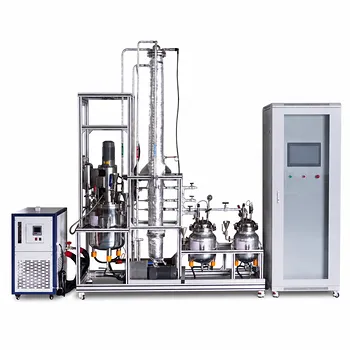
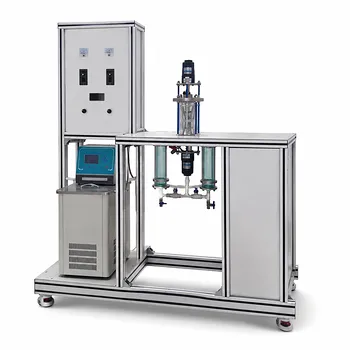
Melt equilibrium is deceptively complex. When conducting crystallization and solid‑liquid separation experiments on pilot‑scale equipment, you must account for three specific thermodynamic complexities: the existence of multiple crystalline forms (polymorphism) that shift with temperature and pressure, the spontaneous formation of intermolecular compounds that alter the melting behavior, and the fact that melting temperatures may exceed the safe extrapolation range of standard VLE or LLE models. Overlooking any one of these can lead to unpredictable phase transitions, unsafe thermal excursions, or complete experimental failure.
While solution equilibria involving distinct chemical species are generally well‑behaved, melt equilibria—where the same substance exists in both molten and solid states—introduce variables like polymorphism, compound formation, and extreme melting points. Recognizing these factors allows you to configure temperature controls and predict phase transitions, keeping pilot‑plant operation both safe and efficient.
The Hidden Complexity Gap Between Melt and Solution Equilibria
In a pilot‑plant environment, solid‑liquid separation often relies on predicting phase boundaries. When the liquid and solid are chemically different (solution equilibria), models tend to be reliable. But melt equilibria, which involve the transition of the same chemical species between its liquid and solid forms, behave differently and much more unpredictably.
The root cause of this difference is that the solid phase is not a single, static entity. It can rearrange itself into different crystal structures, react with itself, or exhibit melting points far outside the range where typical correlation tools are accurate. Understanding these peculiarities is the foundation for safe experimental design.
Polymorphism Changes the Energy Landscape You Are Standing On
Polymorphism is the ability of a substance to crystallize into more than one distinct lattice structure, each with its own unique melting point, density, and solubility. In melt equilibrium, the system can unexpectedly shift from one polymorph to another based on temperature or pressure fluctuations that are common during scale‑up.
From a pilot‑plant perspective, this means the solid you are trying to separate may not be the thermodynamically stable form at your operating temperature. A form that was dominant in a small‑scale lab test might convert partway through your run, completely changing the slurry’s settling characteristics or filtration rate. You must verify which polymorph is present at each stage and map the exact transition temperatures to avoid surprise phase inversions.
Intermolecular Compounds Form Uninvited Solid Solutions
Even if you start with a chemically pure substance, melt systems can spontaneously form intermolecular compounds—ordered solid‑state associations between two or more identical molecules that behave as a distinct chemical entity. For example, a melt‑phase system might produce a 1:1 solid adduct that has a higher melting point than either parent form.
In a pilot‑scale crystallizer, these compounds can nucleate on cool surfaces and create a solid‑phase composition that was never accounted for in a binary‑only equilibrium diagram. Your solid‑liquid separation equipment—whether a centrifuge, filter, or wash column—will suddenly be handling a material with entirely different thermal and mechanical properties. Recognizing this possibility forces you to scan for anomalous melting peaks during scale‑up, rather than blindly trusting a simple eutectic profile.
When Melting Points Sit Outside the Correlative Safe Zone
Many pilot‑plant operators borrow equilibrium data from vapor‑liquid equilibrium (VLE) or liquid‑liquid equilibrium (LLE) experiments conducted at much lower temperatures. Melt equilibria, however, often involve melting points that are substantially higher than the temperature range where those empirical correlations were fitted.
Extrapolating a Peng‑Robinson equation of state or an activity‑coefficient model to a temperature 200 °C above its validated range is thermodynamically reckless. The adjustable binary interaction parameters that work beautifully for near‑ambient VLE lose their physical meaning, and the entire prediction of the solid‑liquid coexistence curve becomes unreliable. Before running a melt‑based separation, confirm that your thermodynamic model was actually regressed against solid‑liquid data near the melting point—or be prepared for a wide margin of error.
Practical Consequences in a Pilot‑Scale Experiment
These three complexities do not merely add academic nuance; they manifest as concrete operational problems that can stop a campaign cold.
Temperature Control Instability When a New Solid Phase Appears
A thermocouple‑controlled heating jacket can easily be fooled. If a polymorphic transition or the melting of an intermolecular compound occurs within your target temperature band, it absorbs or releases latent heat in a way your controller did not anticipate. The result is a thermal runaway or a sluggish setpoint overshoot that destroys the yield or safety envelope. You must design your heat transfer system with enough flexibility to dampen these unforeseen excursions—oversizing the jacket and applying ramp‑and‑soak profiles based on the full phase diagram, not just the single reported melting point.
Solid‑Liquid Separation Equipment Going Off‑Design
Your downstream filter or centrifuge was sized for a specific crystal size distribution and liquid viscosity. A polymorphic shift can produce plate‑like needles instead of compact cubes, blinding filtration media instantly. An intermolecular compound might raise the apparent melting point enough that the slurry viscosity skyrockets, turning a routine pump into a blocked‑line event. Always pressure‑test your separation unit against at least two possible solid phase scenarios, not just the “base case” pure‑component form.
Understanding the Trade‑offs
Focusing solely on melt equilibrium brings its own set of challenges and compromises.
- Experimental detection is time‑intensive. Differential scanning calorimetry (DSC) and hot‑stage microscopy are essential to map polymorphism and compound formation. Skipping these steps saves time but guarantees blind spots during scale‑up.
- Modelling precision vs. operational simplicity. High‑fidelity equations of state that incorporate solid‑phase non‑ideality exist, but they require data that most pilot‑plant teams lack. Accepting a simpler model and running conservative, wide safety margins often beats chasing a perfect prediction that never materializes on time.
- Batch‑to‑batch variability. Polymorph‑controlling seeds or trace impurities from upstream synthesis can shift the equilibrium unexpectedly. A perfectly executed run this week might fail next month unless you treat the input material’s solid phase purity as a critical process parameter.
How to Safeguard Your Pilot‑Scale Separation
Ultimately, these thermodynamic complexities demand that you treat the solid phase not as a passive participant but as an active, shape‑shifting component of your equilibrium.
- If your primary focus is safe temperature control: Map the full solid‑solid transition and melting endotherm profile via DSC before any scale‑up, and design heating rates that stay clear of polymorph‑induced latent‑heat spikes.
- If your primary focus is consistent product quality: Identify and characterize all stable polymorphs and intermolecular compounds for your substance, then implement seed‑crystal strategies that lock the system into the desired form.
- If your primary focus is model reliability: Never extrapolate VLE‑tuned interaction parameters to melt‑zone temperatures; instead, gather at least a few solid‑liquid equilibrium data points near the melting region to anchor your simulation, no matter how basic the model.
With melt equilibria, the solid state holds the answers you need before the first valve opens. Respect its complexity, and your pilot‑plant runs will deliver the predictable, safe separations that scaling‑up demands.
Summary Table:
| Complexity | Operational Impact | Mitigation Strategy |
|---|---|---|
| Polymorphism | Unexpected phase shifts; altered filtration rates. | Map transition temps via DSC; use seed-crystal strategies. |
| Intermolecular Compounds | Unplanned solid adducts; blocked lines due to viscosity. | Scan for anomalous melting peaks; design flexible heat transfer. |
| Model Extrapolation | Unreliable predictions at high temperatures. | Anchor simulations with solid-liquid data near the melting point. |
Scale Up Safely with LABPARK Pilot Plants
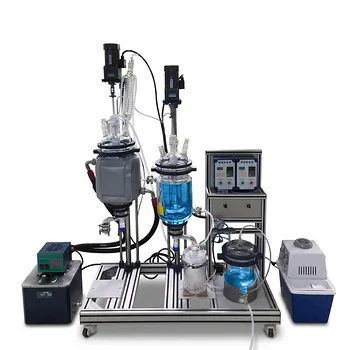
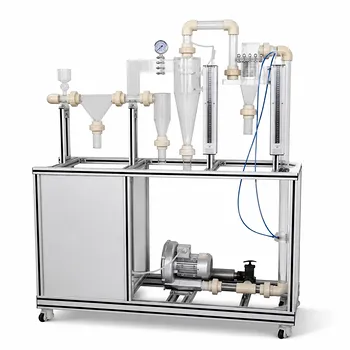
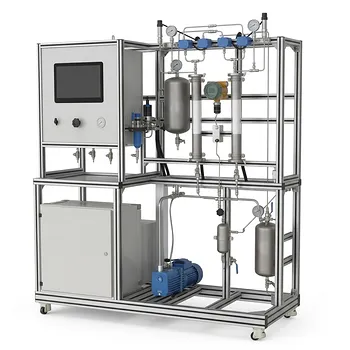
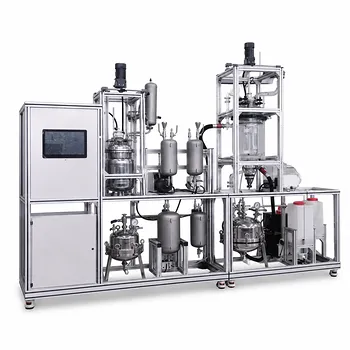
Navigating thermodynamic complexities like melt equilibrium requires high-precision equipment. LABPARK provides state-of-the-art Educational and Vocational Unit Operations Pilot Plants in chemical engineering, bioprocess & biotech, and environmental & water treatment for universities, research institutes, and enterprises.
Ensure your crystallization and solid-liquid separation experiments are safe, predictable, and scalable. Contact LABPARK today to find the ideal pilot plant solution for your lab or facility!
Related Products
- Potassium Salt Thermal Dissolution and Crystallization Separation Educational Unit Operations Pilot Plant
- Multi Functional Membrane Crystallization Educational Unit Operations Pilot Plant
- Hot Filtration Educational Unit Operations Pilot Plant Laboratory System
- Gas-Solid Heterogeneous Separation Demonstration Educational Unit Operations Pilot Plant
- Pressure Swing Adsorption Educational Unit Operations Pilot Plant
People Also Ask
- What are the benefits of integrating online PAT tools like ATR-FTIR into crystallization unit operations pilot plants?
- How do crystallization pilot plants improve student learning? Shift from manual observation to process control.
- Why is precise temperature control critical in crystallization pilot plants? Key to Scale-Up Success
- Control Crystallization Pilot Plant Secondary Nucleation: 4 Key Adjustments
- What key factors should be considered when configuring a crystallization unit operations pilot plant?