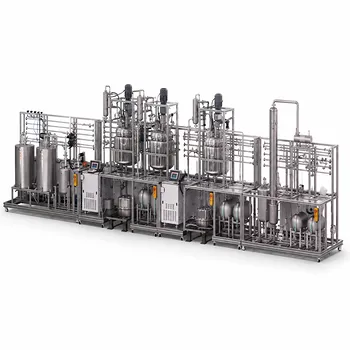
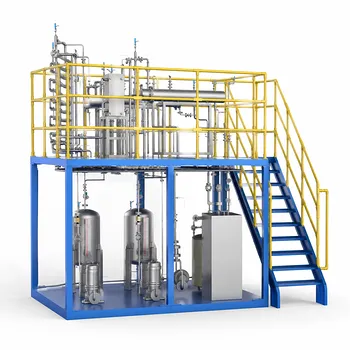
Purge lines, inert blankets—these aren’t just engineering jargon. They are the front-line defenses that prevent pyrophoric catalysts from igniting on contact with air and stop the formation of lethal compounds like nickel carbonyl. Unit operations pilot plants make these protocols tangible, demonstrating how nitrogen purging and controlled inert atmospheres are systematically integrated into reactor shutdown, catalyst unloading, and emergency response.
Handling reactive catalysts at industrial scale requires a choreographed sequence of inert gas purging, pressure control, and continuous monitoring. The pilot plant serves as the living classroom where operators learn to coordinate these steps to eliminate combustion risks and toxic vapor releases—mistakes that carry no real-world consequences on the plant floor.
Why Catalyst Handling Demands a Zero-Oxygen Philosophy
The Hazard Profile of Pyrophoric and Reactive Catalysts
Many industrial catalysts, particularly nickel, platinum, and cobalt-based systems, are pyrophoric in their reduced state. When exposed to air, they will spontaneously ignite, causing fires that can escalate into explosions within a vessel. This isn't a hypothetical risk—it's the baseline condition of a freshly activated catalyst bed.
Even more insidious is the risk of toxic byproduct formation under specific atmospheres. The classic example is nickel catalyst reacting with carbon monoxide to form nickel carbonyl, a highly toxic, volatile compound that can be lethal at parts-per-billion levels. Unit operations plants deliberately train operators on the gas exposure conditions that trigger this conversion and the purge sequences that prevent it.
From Textbook to Tactile: The Pilot Plant Advantage
A benchtop experiment might demonstrate a single purge cycle, but a pilot plant forces operators to manage the entire system lifecycle. The interconnected network of reactors, transfer lines, and holding vessels shows how a single dead leg can trap air and defeat the entire inerting effort. Students quickly learn that inert gas blanketing is not a one-time valve operation but a dynamic pressure and flow management challenge.
The Core Protocol: Nitrogen Purging and Inert Gas Blanketing in Action
Achieving an Inert Atmosphere Before Shutdown
Before a catalyst is ever exposed, the pilot plant protocol demands a controlled oxygen displacement sequence. The procedure typically involves:
- Pressure-purging cycles: Pressurizing the reactor with nitrogen and then venting it, repeated multiple times to dilute the oxygen concentration below a critical threshold (often below 0.5 vol%).
- Continuous flow or vacuum purging: For systems that cannot tolerate pressure swings, a steady nitrogen flow sweeps the vessel until online oxygen analyzers confirm an inert state.
- Temperature conditioning: The bed is cooled below a set point before the purge begins, reducing the catalyst’s reactivity and preventing hot spots that could reignite even residual traces.
These aren't abstract rules. The pilot plant’s real-time gas analyzers and multi-point thermocouples provide immediate feedback, showing that a poorly executed purge leaves behind oxygen pockets visible as temperature spikes on the console.
Blanketing During Catalyst Unloading: The Critical Transition
The moment of highest risk is when the inert boundary is breached for physical unloading. The pilot plant demonstrates containment and covering techniques including:
- Sustained nitrogen flow: A low-flow nitrogen blanket is maintained over the open manway or through a glove bag, creating a slight positive pressure that prevents air ingress.
- Inerted transfer zones: The catalyst is moved from the reactor to a sealed, pre-purged container using a closed discharge chute flooded with nitrogen. The unit operations equipment often includes a dedicated unloading station with its own local oxygen monitor and alarm.
- Chemical quenching: For some catalysts, a passivation step—exposing the material to a carefully controlled dilute air stream at low temperature—is demonstrated to form a thin oxide skin, rendering it safe for disposal before the blanket is removed.
Interlocking Inert Gas Systems with Emergency Shutdown
Inert gas blanketing is never a standalone safety function. The pilot plant illustrates how it integrates into the broader automated safety shutdown (ESD) system. If a leak detector triggers or a pressure relief event occurs, the interlocks automatically:
- Isolate the feedstock supply.
- Initiate full-flow nitrogen purge into the reactor and the surrounding containment area.
- Activate a switchover valve that replaces the process stream with nitrogen at all critical points, including pump seals and sampling lines.
This integrated response teaches operators that the inert gas supply is a safety utility on par with electrical power—its failure during a runaway reaction is a catastrophic scenario.
Integrating the Inert Shield Into a Multi-Layered Safety System
Layer of Protection: From Basic Control to Physical Relief
The inert blanket is one ring in a defensive onion. Unit operations plants bring this hierarchy to life:
- Inherent design: The plant’s welded joints minimize leak paths where air could infiltrate. Vapor spaces in solvent and feed tanks are continuously blanketed.
- Basic process controls: Mass flow controllers keep reactant concentrations strictly outside explosive limits, preventing the need for the blanketing system to cope with a fire.
- Critical alarms: Oxygen detectors and gas-specific alarms (for CO, nickel carbonyl) give operators a chance to manually trigger a purge before an automatic trip.
- Automatic interlocks: If a trip threshold is crossed, the system executes the emergency inerting sequence without human intervention.
- Physical relief: Rupture disks and relief valves are sized for the worst-case deflagration, but their primary job is to protect the vessel while the nitrogen blanket smothers the reaction.
The Flammable Solvent Connection
Catalyst handling often coexists with flammable solvents. The pilot plant’s identical inert blanket system for feed and product tanks teaches a unified concept: the vapor space above any flammable liquid must be kept below the lower flammability limit. Students witness how the same nitrogen header that protects a pyrophoric catalyst bed also renders a tank of ethanol inert, reinforcing the principle of centralized inert gas supply as a backbone safety utility.
Understanding the Trade-offs and Hidden Dangers
Asphyxiation Hazards and Oxygen Monitoring
An inert atmosphere that is safe for a catalyst is immediately lethal to personnel. Pilot plants must demonstrate that the safety protocol doesn’t end at the reactor flange. Fixed ambient oxygen monitors are placed around the unloading area, and operators are drilled to never enter a confined space without a permit and a fresh air purge. The lesson is stark: the gas that prevents a fire can also cause a silent death if containment is lost.
The Risk of Incomplete Purge and Dead Zones
Pilot plant experiments frequently reveal that a single point of oxygen measurement is insufficient. Scale-up geometries create recirculation zones and stagnant pockets that the main nitrogen flow never reaches. Protocols demonstrated include the use of multiple sample points and the deliberate sequencing of valves to “walk” the purge gas through all branches. Students learn that a blanket certification is only valid when confirmed at the furthest, most isolated point.
Managing the Thermal Stress of Repeated Purging
Repeated cold nitrogen purges on a hot catalyst can subject the reactor internals to thermal cycling stress. The pilot plant protocol emphasizes controlled cooling rates and the use of pre-heated inert gas streams when required to avoid catalyst support degradation and metal fatigue—a detail often overlooked until a real plant experiences cracking.
Making the Right Choice for Your Goal
After a brief summary sentence, use bulleted list format:
- If your primary focus is operator training: Prioritize a unit operations plant that allows for hands-on, repetitive execution of purge-venting cycles with real-time oxygen feedback, so the relationship between flow rate, pressure, and atmospheric safety becomes instinct.
- If your primary focus is process design verification: Use the pilot plant to map actual oxygen decay curves in complex reactor geometries, validating that your theoretical purge model removes all dead zones before you commit to the final design.
- If your primary focus is developing emergency protocols: Drill the transition from normal blanket to emergency purge and the subsequent safe catalyst quench, ensuring the interlocks activate within the required time and the inert gas supply has sufficient capacity.
The enduring lesson of a unit operations plant is that inert gas blanketing is never a static condition but a dynamic, actively managed safety function that must be tested, challenged, and verified at every stage of catalyst handling.
Summary Table:
| Process Phase | Key Protocol | Safety Objective |
|---|---|---|
| Pre-Shutdown | Pressure-purging & cooling | Dilute oxygen below 0.5 vol% to prevent ignition |
| Unloading | Positive-pressure N₂ blanket & quenching | Prevent air ingress and passivate reactive catalysts |
| Emergency | Automated ESD interlocks | Isolate feedstock and initiate immediate system purge |
| Monitoring | Multi-point oxygen & temp sensing | Detect stagnant gas dead zones and hotspot formation |
Equip Your Institution with Industry-Standard Process Safety Training
Mastering hazardous protocols like catalyst handling and inert gas blanketing requires hands-on experience. LABPARK provides premium Educational and Vocational Unit Operations Pilot Plants in chemical engineering, bioprocess & biotech, and environmental & water treatment tailored for universities, research institutes, and enterprises.
Our pilot plants bridge the gap between theory and practice, allowing students and operators to safely simulate emergency shutdowns, analyze oxygen decay curves, and execute purging cycles without real-world risks.
Ready to elevate your training and research capabilities? Contact LABPARK today to explore our custom pilot plant solutions!
Related Products
- Multi-Modal Distillation Unit Operations Training Pilot Plant
- Multi Pump Fluid Transport Process Piping Unit Operations Training Pilot Plant
- Multi-Reactor Educational Pilot Plant for Reaction Engineering Unit Operations
- Carbon Dioxide Hydrogen Methanol Synthesis Educational Unit Operations Pilot Plant
- Natural Product Extraction Unit Operations Training Pilot Plant
People Also Ask
- How can energy balance equations for condensers & reboilers be validated experimentally? Guide
- How can real-time carbon number prediction improve distillation pilot plants? Optimize control.
- How does catalyst water concentration affect distillation pilot plant design? Key separation train choices.
- Why is vacuum operation capability an essential feature for a distillation unit operations pilot plant? Unlock Efficiency
- What are the primary reflux ratio control strategies? Master Distillation Unit Operations