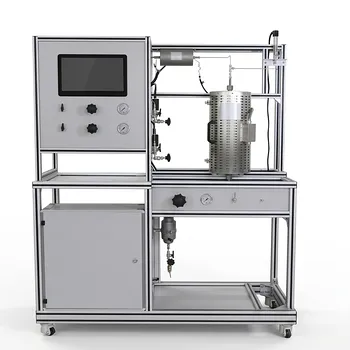
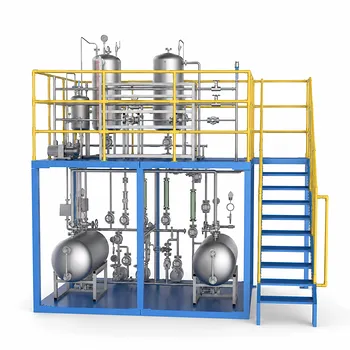
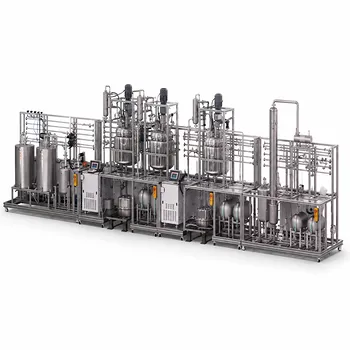
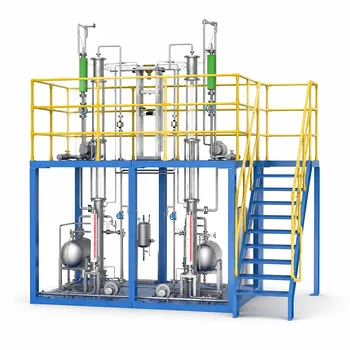
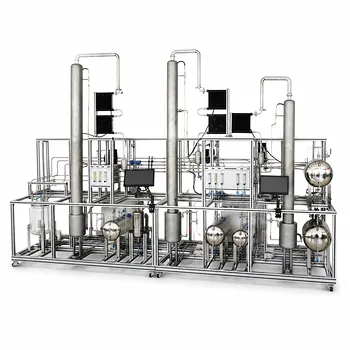
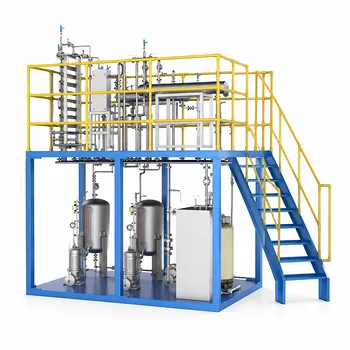
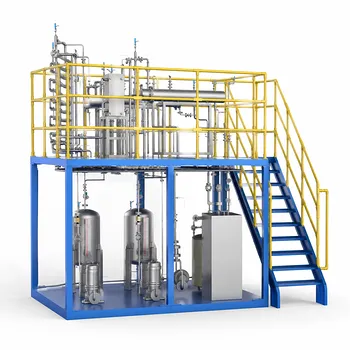
When handling flammable solvents like ethanol or acetone in a pilot plant, your safety design must begin with containment, ventilation, inerting, and detection. A properly selected and installed unit will use welded connections over flanges to minimize leaks, integrate an open-frame structure or dedicated exhaust hood to dilute vapors, blanket feed and product tanks with nitrogen, and deploy fixed gas detectors with pre-alarm thresholds near the plant. Yet checking off these four items is only the starting point—lasting safety requires a layered, inherent-safety philosophy that shapes every component from the agitator seal to the pressure relief device.
The true goal is not to manage a flammable atmosphere but to prevent it from forming in the first place. This is achieved by designing multiple independent protective layers: inherently safer equipment choices, active ventilation and inerting, and automated controls and relief systems—all tailored to the specific solvent, scale, and environment of the pilot plant.
The Foundation: Inherent Safety in Design
A pilot plant that handles flammable solvents must minimize leak points and ignition sources before any operator action is required. This starts with the structural integrity of the system and the selection of intrinsically safe components.
Minimizing Leak Points Through Mechanical Design
Reliable containment is the first line of defense. Every joint, seal, and connection is a potential release point. Opt for high-quality welded joints rather than flange connections wherever practical, as they eliminate gasket failures and reduce fugitive emissions. For connections that must remain demountable, use raised-face flanges with spiral-wound gaskets rated for the solvent’s chemical family.
The agitator shaft seal is a critical vulnerability in any stirred vessel that contains flammable liquids. A rotating shaft passing through a dynamic seal can leak, overheat, or generate static electricity. To eliminate this risk entirely, consider replacing mechanical agitators with liquid jet mixers. These have no moving seals in the product zone, making them intrinsically safe for mixing flammable fluids and completely removing the primary source of chemical leakage.
Material Selection and Pressure Integrity
The wetted materials must resist the solvent’s chemical attack and maintain strength over time. While carbon steel may be economical for non-corrosive training fluids, specifying stainless steel (304 or 316) is essential when the pilot plant will encounter corrosive compounds, humid laboratory air, or rigorous cleaning cycles. Degraded metal from corrosion can create thin spots that fail under pressure, releasing vapor into the workspace.
Pressure ratings are never a commodity. Even small pilot plants can operate at 10 to 25 bar in reactors or heat exchangers. All pressure-retaining components must be fabricated and stamped to a recognized code, and the system must be protected by certified pressure relief valves and rupture discs sized for the worst-case scenario. This prevents a simple process upset from escalating into a catastrophic vessel rupture.
Balancing Visibility and Containment
Transparent sections offer invaluable educational and troubleshooting value—for example, glass columns in a distillation pilot plant allow students to observe flooding, weeping, or poor packing wetting. However, glass inherently lowers the containment robustness. The design must therefore limit glass to low-pressure zones, use borosilicate glass with protective polymer coatings, and integrate the glass into a secondary containment frame that shields operators from a possible break.
Ventilation and Dilution: Keeping Vapors Below the Flammability Limit
Even with robust containment, small releases can occur during sampling, loading, or maintenance. The environment must be engineered to dilute these vapors rapidly and prevent accumulation.
Open-Frame Structures and Active Exhaust
An open-frame pilot plant structure is one of the most effective passive safety measures. By avoiding confined walls, it allows natural air movement to disperse any fugitive solvent vapors before they approach the lower flammability limit (LFL). When open construction is not possible—for instance, inside a crowded laboratory—the pilot plant must be housed within a dedicated exhaust hood that continually sweeps air away from operators and toward an external vent.
Fixed Gas Detection and Alarm Placement
Continuous monitoring turns an invisible hazard into actionable data. Install fixed gas detectors near potential leak sources such as pump seals, sampling points, and vessel manways. These detectors should be calibrated for the specific solvent’s LFL and set to activate a clear, audible alarm at a conservative fraction—typically 10–25% of the LFL. The alarm must be integrated into the building management system or the pilot plant’s local control panel, so that personnel can evacuate and ventilation can ramp up automatically.
Active Safeguards: Inerting and Explosion Prevention
Where a flammable atmosphere cannot be completely prevented through ventilation alone, active systems keep the internal atmosphere inert or prevent flame propagation.
Nitrogen Blanketing and Inert Gas Purging
The vapor space inside feed tanks, product receivers, and even the reactor itself can become a perfect fire triangle if oxygen, fuel, and an ignition source coexist. Nitrogen blanketing maintains oxygen concentrations well below the limiting oxygen concentration (typically under 5–8% for most solvents). For feed and product tanks, a simple pressure-regulator system can maintain a slight positive nitrogen pressure, preventing air in-leakage during liquid transfer. Before startup, a nitrogen purge sequence should displace air from the entire process piping.
Flame Arresters and Deflagration Venting
If an ignition were to occur inside a pipe or vessel, flame arresters stop the flame front from propagating back into the storage tank or into the laboratory space. These devices are mounted on atmospheric vent lines and on the inlet of vacuum pumps. In addition, designs should comply with NFPA 68 (deflagration venting) and NFPA 69 (explosion prevention systems), incorporating proper relief vents and, where applicable, chemical suppression to prevent a deflagration from exceeding the vessel’s strength.
Explosion-Proof Electrical Components
All electrical equipment in the vicinity of the pilot plant must be rated for the hazardous zone. Use ATEX- or IECEx-certified explosion-proof enclosures for motors, solenoids, junction boxes, and instrumentation. This includes components inside closed-loop glass reactor systems, where a solvent-laden atmosphere can exist near heating mantles and stirrer motors. Explosion-proof design doesn’t just contain an internal explosion; it also ensures the external surface temperature stays below the solvent’s auto-ignition temperature.
Layers of Protection: Controls, Alarms, and Interlocks
Hardware safeguards must be supported by a structured control architecture that detects deviations and acts faster than a human operator can.
Basic Process Control Systems (BPCS)
The first active layer is the basic process control system that maintains temperature, pressure, and flow within safe operating envelopes. For a distillation pilot plant, this means reliably controlling the reboiler heat input to prevent overpressure. The BPCS keeps the process stable and predictable, eliminating the random excursions that could bring flammable atmospheres into existence.
Critical Alarms and Human Intervention
When the BPCS cannot keep a parameter in range—such as an unexpected pressure rise during a reaction—critical alarms must alert the operator immediately. The alarm system should be independent of the BPCS logic and designed with clear, prioritized annunciation. In an educational setting, this also teaches students the principle of operator response to deviations before an automatic trip.
Automatic Safety Shutdown (Interlocks)
If the operator fails to respond or the event accelerates too rapidly, hard-wired safety interlocks must take over. These shut down heat input, isolate flammable liquid feeds, and open emergency vent valves when a critical high pressure or high temperature is detected. The interlock logic should be separate from the BPCS and fail-safe, so that a loss of power or instrument air defaults all valves and drives to their safe position.
Pressure Relief Systems as the Last Resort
The final physical layer is the pressure relief system. Relief valves and rupture discs protect vessels from overpressure caused by blocked outlets, runaway reactions, or external fire. The set pressure, discharge piping, and relief flow capacity must be calculated for the worst credible scenario. Discharged vapors are routed to a safe location—preferably an external atmospheric vent or a scrubbing system—rather than into the laboratory.
Systematic Hazard Identification: The Engineered Approach
Before purchasing or installing any pilot plant, a structured hazard review is essential to tailor the safety features to the actual operation.
Start with a full inventory and material safety data sheet (MSDS) review of every chemical to identify flammability range, auto-ignition temperature, and incompatibilities. Next, conduct a process hazard analysis—even a simplified HAZOP or what-if study—to identify potential equipment failures, maloperations, and chemical reactivity hazards. Inspect storage and utility interfaces to confirm that cooling water, electrical supplies, and nitrogen sources won’t introduce new ignition or contamination pathways. Finally, evaluate ignition sources systematically: static electricity from liquid transfer, hot surfaces, mechanical sparks from misplaced tools, and even adiabatic compression in poorly designed piping. This exercise often reveals gaps that can be closed by a simple design change—such as adding a grounding strap to a portable solvent container—before the plant is ever built.
Understanding the Trade-offs
No safety design is without compromise. Acknowledging these trade-offs is critical to making informed decisions.
Welded joints vs. flanged connections: Welding eliminates leak points but makes cleaning and modifying the plant far more difficult. In a research or teaching pilot plant that changes configurations frequently, a hybrid approach—welding permanent piping while using high-quality flanges at vessel connections—can balance safety and flexibility.
Liquid jet mixers vs. mechanical agitators: While intrinsically safe and maintenance-free for the seal, jet mixers may not provide the same uniform shear or rapid blending as a turbine impeller. For reactions that require high mass transfer or controlled particle suspension, a mechanically sealed agitator with a double mechanical seal and leak detection monitoring may be the necessary compromise.
Transparent sections for education vs. pressure containment: Glass provides immense educational value but limits pressure ratings and introduces a brittle fracture risk. In high-pressure operations, consider substituting with high-strength sight glasses in metal windows or using video probes.
Cost of safety materials: Stainless steel and ATEX-rated components add significant upfront cost. For a pilot plant dedicated solely to non-corrosive, non-flammable training fluids like water and air, carbon steel and general-purpose electrics are sufficient. However, if the system will ever be used with solvents—even for a single demonstration—the specification must be upgraded at the outset.
Making the Right Choice for Your Goal
Apply safety features in a way that matches your primary mission, whether it’s educating students, scaling up a new process, or managing a shared research facility.
- If your primary focus is training students: Prioritize inherent safety above all—use liquid jet mixers, double-contained glass reactors, and robust interlocks that demonstrate industrial safety protocols without exposing novices to mechanical hazards.
- If your primary focus is scaling up from bench chemistry to pilot production: Match the containment and inerting strategy to the larger liquid inventory; integrate ATEX-rated components, nitrogen blanketing on all tanks, and a full pressure relief philosophy designed for the scaled-up volumes.
- If your primary focus is operating in a shared laboratory: Maximize ventilation and continuous gas detection, and conduct a rigorous hazard identification process that accounts for neighboring activities that could introduce new ignition sources.
- If your primary focus is long-term flexibility: Select materials and a modular design that can later handle corrosive or flammable fluids without retrofitting—this means stainless steel construction and a controls architecture that easily accepts added safety interlocks.
A pilot plant that handles flammable solvents must never be reduced to a single-vendor checklist. By layering inherent containment, engineered dilution, active inerting, and automated protection, and then rigorously aligning those layers with your specific operational goals, you will create a system that is both safe to operate and a worthy model of sound chemical engineering practice.
Summary Table:
| Safety Layer | Key Design Features | Primary Function |
|---|---|---|
| Containment | Welded joints, liquid jet mixers | Minimizes leaks and eliminates dynamic seal failures |
| Ventilation | Open-frame design, fixed gas detectors | Dilutes vapors rapidly and monitors LFL levels |
| Inerting & ATEX | Nitrogen blanketing, explosion-proof parts | Prevents ignition and eliminates oxygen in vapor space |
| Controls & Relief | Fail-safe interlocks, pressure relief valves | Shuts down systems automatically and prevents overpressure |
Ensure the highest safety standards in your facility with LABPARK. We provide premium Educational and Vocational Unit Operations Pilot Plants in chemical engineering, bioprocess & biotech, and environmental & water treatment for universities, research institutes, and enterprises. Our systems are engineered with advanced containment, active venting, and automated safety interlocks to guarantee a secure, compliant, and highly productive environment for students and researchers alike.
Ready to design a safe and efficient pilot plant for your institution? Contact us today to discuss your requirements!
Related Products
- Carbon Dioxide Hydrogen Methanol Synthesis Educational Unit Operations Pilot Plant
- Multi Pump Fluid Transport Process Piping Unit Operations Training Pilot Plant
- Natural Product Extraction Unit Operations Training Pilot Plant
- Multi-Modal Distillation Unit Operations Training Pilot Plant
- Multi-Reactor Educational Pilot Plant for Reaction Engineering Unit Operations
People Also Ask
- How do temp & pressure affect methanol synthesis pilot plants? Optimize equilibrium and catalyst performance.
- Why is a purge system necessary when operating a gas recirculation loop in a methanol synthesis pilot plant? (Guide)
- Why do modern methanol pilot plants operate at lower pressures? Catalyst & Feed Requirements Explained
- What are the operational requirements for catalyst activation? Safe Methanol Pilot Plant Operation
- Why is the chemical plant startup schedule crucial? De-risk scale-up with pilot plants.