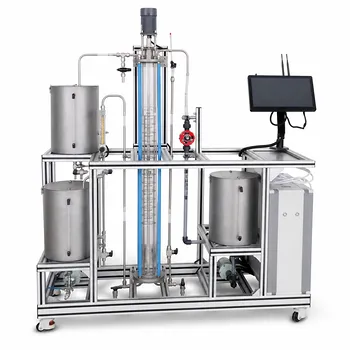
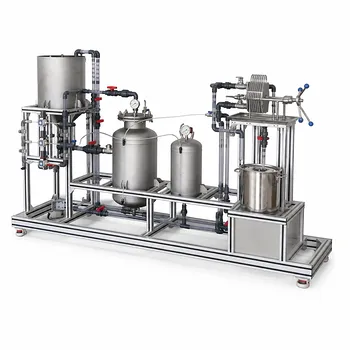
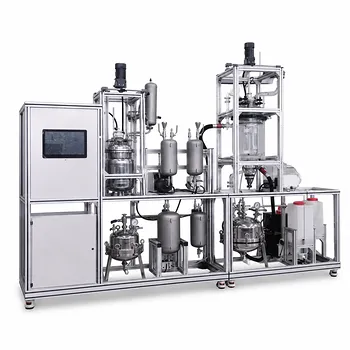
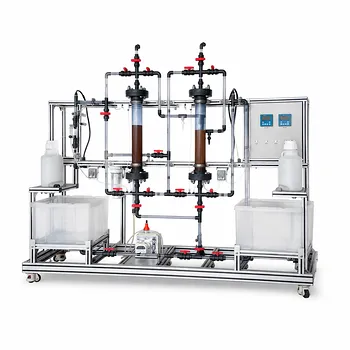
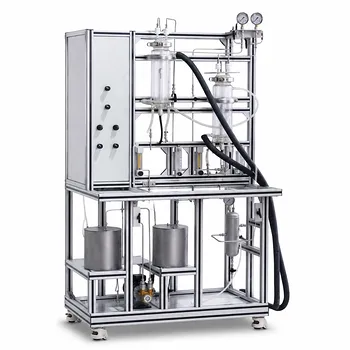
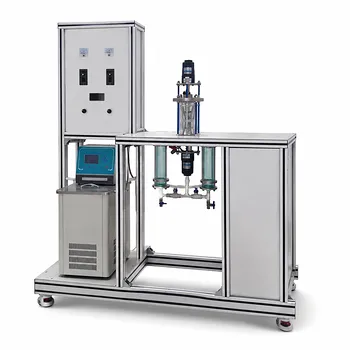
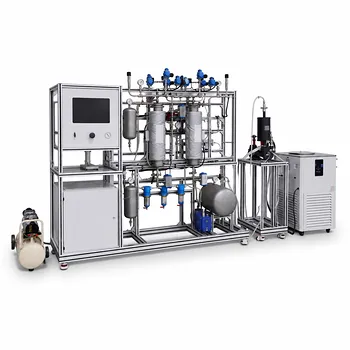
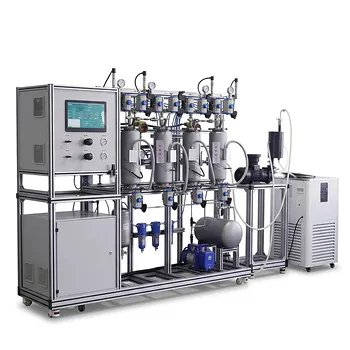
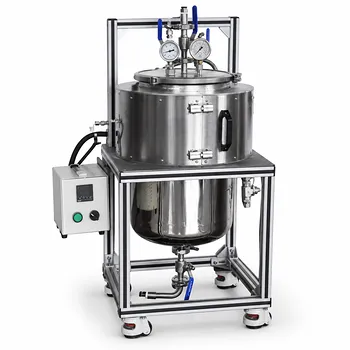
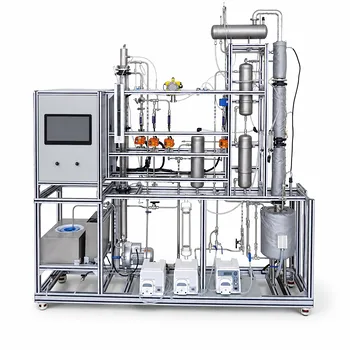
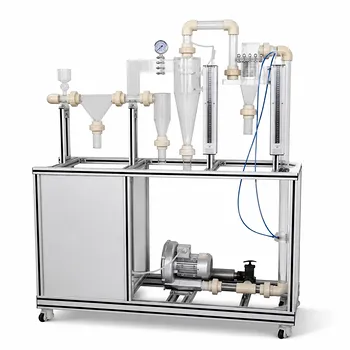
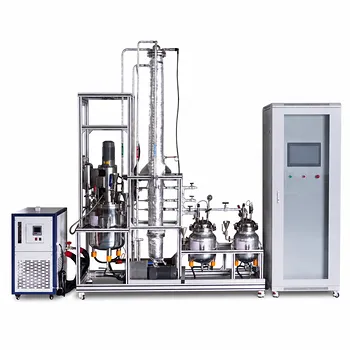
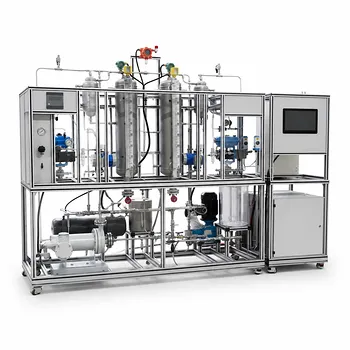
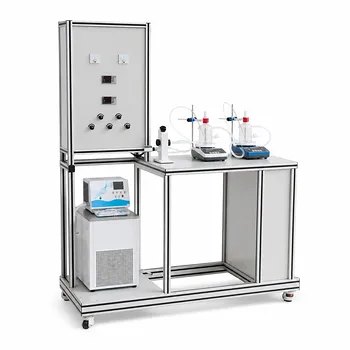
His-tag mediated IMAC is the linchpin of modern antibody fragment purification, providing a rapid, high-specificity capture step directly from crude bacterial lysates. Recombinant antibody fragments (such as Fabs) expressed in E. coli are engineered with a polyhistidine tag that chelates immobilized metal ions on a chromatography resin. After unbound host-cell impurities are washed away, the pure target protein is eluted in a single step. In biotechnology pilot plants, this unit operation is taught as a full engineering challenge: students optimize binding dynamics, flow rates, elution conditions, and column regeneration to mirror industrial reality.
Downstream purification can represent up to 90% of total bioproduct cost. IMAC pilot-plant training therefore focuses not only on the affinity mechanism but also on the parametric trade-offs, scale-up principles, and hardware considerations that transform a successful lab protocol into a robust industrial bioseparation.
The Scientific Core of IMAC
The Affinity Tag Strategy
The target antibody fragment is genetically fused to a short sequence of six or more histidine residues (the His-tag). This tag is deliberately exposed on the protein surface so that it can interact freely with the chromatography medium.
The chromatography resin is functionalized with a chelating ligand that firmly holds a divalent metal ion — typically Ni²⁺, Co²⁺, or Zn²⁺. These immobilized metal ions are the “hooks” for the histidine tag.
The Binding, Wash, and Elution Cycle
When clarified bacterial lysate passes through the column, the electron-donating imidazole rings of the histidine side chains form a reversible coordination complex with the immobilized metal ions. This interaction is highly selective and can occur even in the presence of many host-cell proteins.
A wash step with a low concentration of imidazole or a high-salt buffer then removes non-specifically bound impurities. Finally, a step gradient of free imidazole (typically 250–500 mM) competes for the metal coordination sites, displacing the His-tagged Fab and yielding a concentrated, purified product.
Why IMAC is the Workhorse for Antibody Fragments
High Specificity and Simplicity
Unlike ion-exchange or hydrophobic interaction methods, IMAC directly targets the engineered tag, not a native surface property. This drastically reduces the number of unit operations needed to reach clinical or analytical purity.
A single IMAC column can often reduce the host-cell protein burden to <1% in one passage. For recombinant antibody fragments, this translates into massive time and buffer savings during downstream processing.
Critical Role in Cost Control
Downstream purification often accounts for 40–90% of total production cost in modern bioprocesses. IMAC’s ability to combine capture, concentration, and initial purification into one step addresses this economic pressure head-on.
By teaching IMAC in a pilot-plant context, students learn that column efficiency directly governs overall process economics — a lesson that resonates whether they are making milligrams for research or kilograms for a biosimilar.
How Biotechnology Pilot Plants Transform Theory into Skill
Hands-on Parameter Optimization
In an educational pilot plant, students operate chromatography skids that replicate industrial-scale fluid handling. They vary linear flow rate, residence time, and gradient slope to see how binding capacity and elution volume respond in real time.
They also adjust buffer pH, conductivity, and imidazole concentration, directly observing their effect on purity and yield. This laboratory-to-pilot translation solidifies the connection between molecular interactions and macroscopic process performance.
Studying Scale-up Principles
Chromatography pilot plants demonstrate a foundational scale-up rule: bed height and linear flow velocity are kept constant, while column diameter and bed volume are increased. This preserves residence time and pressure drop characteristics.
Using columns up to 10–20 cm in diameter, students can pack beds with modern resins that offer protein loading capacities exceeding 30 g/L. They learn that uniform packing quality becomes the dominant challenge at larger scale, with poorly distributed flow reducing effective binding capacity and causing premature breakthrough.
Evaluating Hardware and Resin Performance
Pilot systems expose learners to the full hardware ecosystem: flow distributors, screens, headplates, and automated fraction valves. Students can test how column header design influences band broadening and how frits prevent resin loss but introduce their own pressure drop.
They also perform resin life-cycle studies, tracking dynamic binding capacity across dozens of cycles. This teaches the critical difference between static binding capacity (mg/mL) and breakthrough capacity at process velocity, a nuance that often determines the economic feasibility of a purification train.
Integrating Process Analytics and Automation
Modern biotechnology pilot plants incorporate online sensors for UV absorbance, conductivity, and pH. Students learn to correlate real-time elution peaks with off-line purity assays, mirroring the Quality-by-Design approach of the biopharma industry.
By programming automatic peak fractionation and cleaning-in-place (CIP) sequences, they gain the data-handling and automation skills needed for closed-loop process control — a core competency for next-generation biomanufacturing.
Understanding the Trade-offs
Resin Limitations and Metal Ion Leakage
IMAC resins are not inert. Divalent metal ions can slowly leach into the product stream, especially under acidic elution or with strong chelating buffers. This raises concerns for therapeutic proteins.
Additionally, the high imidazole concentrations needed for elution can sometimes denature or aggregate the target antibody fragment. Pilot-plant training emphasizes immediate buffer exchange or neutralization to mitigate this risk.
Host-Cell Protein Co-purification
Despite its specificity, IMAC can capture histidine-rich native E. coli proteins. Educational pilot runs often include a subsequent polishing step — such as size-exclusion chromatography or ion exchange — to illustrate the reality that one column is rarely enough for drug-substance purity.
Students also test alternative metal ions (e.g., Co²⁺ instead of Ni²⁺) to improve purity at the cost of slightly lower binding capacity, a classic trade-off exercise.
Tag Removal Complexity
For many therapeutic applications, the His-tag must be enzymatically removed after capture. Pilot-plant experiments that combine IMAC with a tag-cleavage step and a reverse IMAC (to remove cleaved tag and uncleaved protein) teach downstream processing as an integrated, multi-column strategy rather than an isolated unit operation.
Making the Right Choice for Your Bioprocessing Goal
When designing or teaching an IMAC-based purification in a pilot plant, align your operational choices with the end goal:
- If your primary focus is maximum purity in a single step: Select a resin with low metal-ion leakage and use a shallow imidazole gradient elution, while planning for a rapid buffer exchange to protect the protein.
- If your primary focus is scaling up for economic protein production: Study residence time distribution and column packing quality meticulously — uniform flow and consistent bed height will drive throughput more than any incremental improvement in resin capacity.
- If your primary focus is educational depth: Deliberately allow a run to fail (e.g., pack a column with inadequate consolidation or overload the column) to make mass-transfer limitations and zone broadening tangible, then analyze the resulting chromatogram with online analytics to teach diagnostics.
The true power of IMAC in a biotechnology pilot plant is not merely performing a capture step — it is using that step to teach the integration of molecular affinity, fluid mechanics, analytical sensing, and economic decision-making that defines modern bioprocess engineering.
Summary Table:
| Training Focus | Key Parameter / Mechanism | Learning Objective |
|---|---|---|
| Parameter Optimization | Flow rate, pH, gradient slope | Maximize dynamic binding capacity and yield |
| Scale-up Principles | Bed height, column diameter | Understand constant velocity & packing quality |
| Hardware & Resins | Distributors, frits, resin life | Evaluate flow distribution and pressure drops |
| Process Analytics | UV, pH, conductivity sensors | Real-time monitoring & automation control |
Elevate Your Bioprocess Training with LABPARK Pilot Plants
Bridge the gap between theoretical chromatography and industrial reality. LABPARK provides state-of-the-art Educational and Vocational Unit Operations Pilot Plants in chemical engineering, bioprocess & biotech, and environmental & water treatment. Designed specifically for universities, research institutes, and enterprises, our systems offer hands-on training in IMAC, scale-up dynamics, and automated process control to prepare the next generation of bioprocess engineers.
Ready to upgrade your laboratory or training facility? Contact LABPARK today to request a quote or consultation.
Related Products
- Educational Rotary Disc Liquid-Liquid Extraction Pilot Plant
- Multi-Functional Membrane Separation Educational Pilot Plant for Unit Operations Lab
- Multifunctional Membrane Separation Educational Pilot Plant with Ultrafiltration, Nanofiltration, Reverse Osmosis
- Constant Pressure Filtration Educational Unit Operations Pilot Plant
- Gallium and Indium Selective Extraction Educational Pilot Plant
People Also Ask
- How do density and IFT affect liquid-liquid extraction pilot plants? Optimize Column Performance
- How are ternary phase diagrams and LLE data applied in extraction experiments? Optimize Pilot Plant Scale-up
- In a liquid-liquid extraction pilot plant, how is a ternary-phase diagram utilized to determine solvent feed requirements?
- How Do Selectivity & Distribution Coefficients Influence LLE Pilot Plant Solvent Choice?
- How to Validate BIPs for LLE Pilot Plants? Steps to Align Simulations with Reality