Obtaining reliable equilibrium data in a pilot plant is not a simple titration—it’s a race against the reaction’s own drift. The primary operational challenges stem from the fact that the measurement itself can disturb the state you are trying to capture. Complex multicomponent mixtures evolve slowly toward true equilibrium, while high-temperature sampling can shift the composition via rapid side reactions or thermal quenching artifacts. These risks are mitigated by adopting in-situ analytical instruments that read the reactor’s condition without physical extraction, or by using validated rapid quenching methods that instantly “freeze” the sample, preserving its high-temperature identity.
The central challenge of measuring equilibrium is that thermodynamics are static, but your measurement process is dynamic. Your success hinges on either eliminating the sampling step entirely with in-situ probes or executing it so quickly and meticulously that the extracted sample becomes a flawless snapshot of the reactor’s true state. Any distortion here will inexorably corrupt your kinetic models and scale-up calculations.
The Three Fronts of Equilibrium Measurement Error
Chemical Drift: When the Goalposts Move
Even in a closed pilot reactor, the “final” composition can remain a moving target. Slow side reactions, undetected polymerizations, or gradual catalyst deactivation can cause concentrations to wander without obvious visual cues.
A subtle but pervasive source of drift is the repeated opening of reagent or sample containers. Volatile components evaporate over time, causing a concentration shift in the active species that gets mistaken for a genuine change in the equilibrium point.
The only way to expose this error is through rigorous mass balance calculations. If the total moles at the end of the reaction deviate from the starting inventory by more than 2–5%, a side reaction or physical loss pathway is at play, and your “equilibrium” data is actually tracking a different set of reactions.
Thermal Shift: The Cooling Distortion
This is the classic high-temperature measurement pitfall. According to Le Chatelier’s principle, a reaction mixture that has settled into equilibrium at 300 °C will not retain that composition when you cool it to room temperature for analysis.
During extraction, the sample’s temperature plummets through piping and sample bombs. The instant the mixture cools, the equilibrium constant changes and the composition begins to re-equilibrate, often in a fraction of a second. What lands in your vial is therefore a low-temperature artifact, not the reactor truth.
To beat the shift, you must either never let the sample leave the hot zone—by reading it through fiber‑optic ATR‑FTIR or Raman probes inside the reactor—or you must quench the sample so fast that the reaction rate drops to zero before any re‑equilibration can occur.
Sampling Heterogeneity: The Mixing Blind Spot
A single grab sample from a pilot reactor only reports the composition of the specific volume it was drawn from. If mixing is poor, that volume may not represent the bulk reactor, leading to a wildly inaccurate estimate of the equilibrium composition.
In laboratory glassware, blend times of 1–2 seconds are common, which conveniently masks mixing constraints. Scale that same chemistry to a pilot vessel and blend times routinely stretch to 30 seconds or more. This creates localized zones of high reagent concentration, and a sample pulled from a stagnant corner will exaggerate the apparent conversion or yield.
To assess this risk before interpreting equilibrium data, calculate the Damköhler number (Da), which compares the mixing timescale to the reaction timescale. When Da is high, sampling ports must be positioned in the highest‑velocity region—often on a recirculation loop—to ensure the captured fluid is truly representative.
Proving Your Data’s Integrity: Analytical Safeguards
Closing the Mass Balance Is Non‑Negotiable
A mass balance that refuses to close is the single clearest signal that something is fundamentally wrong. If your measured reactants and products do not sum to the initial mass, you have not observed true equilibrium—you have observed the visible portion of an incomplete reaction network.
In pilot plants, losses frequently come from absorbed gas in seal oil, trace material left on vessel walls, or an unanticipated vapor‑phase product. Periodically running a full component inventory around every sampling event trains the team to spot systematic losses before they get baked into a scale‑up model.
Measuring Gaseous Components Correctly
When the equilibrium involves a significant gas phase, the accuracy of your constant K hinges on accurate gas volume measurement. Using a simple liquid‑displacement burette is common, but three principles must be obeyed or the result is worthless.
First, the displacement liquid must be chemically inert toward the gas—saturated brine for chlorine, for example, not plain water. Second, the liquid levels in the measuring and leveling tubes must be manually aligned to equalize pressure before every reading. Third, you must allow the system to reach thermal equilibrium with the room and then subtract the vapor pressure of the displacement liquid from the total pressure when calculating the dry gas moles.
Understanding the Trade‑offs
In‑Situ Spectroscopy vs. Rapid Quenching
Choosing your measurement strategy means choosing which set of errors you will manage. In‑situ techniques (FTIR, Raman, UV‑Vis probes) provide continuous, non‑invasive data and completely bypass thermal and mixing distortion. The trade‑off is that they are expensive, require careful calibration in the reaction matrix, and often lack the sensitivity to track trace byproducts that may be kinetically relevant.
Rapid quenching—plunging a hot sample line into an ice‑cold solvent or an inert gas stream—is cheaper, simpler, and lets you run any offline analytical method you wish. However, you must rigorously prove that the quench is instantaneous enough to stop the reaction and that it does not precipitate solids that then become unrepresentative of the homogeneous reactor fluid. The validation burden shifts entirely onto your protocol.
The Distinction Between Conversion and Equilibrium
A frequent conceptual pothole is confusing a high conversion rate with a shift in the equilibrium constant. You can force one reactant to nearly 100% conversion by using a large excess of the other, but the thermodynamic K remains unchanged. When training operators, it is critical to teach that optimizing a feed ratio manipulates the extent of reaction for a fixed K, which is a powerful lever for process economics but a misleading one for measuring thermodynamic parameters.
Making the Right Choice for Your Goal
After analyzing your specific reactor constraints, select your mitigation strategy based on what failure mode you are most willing to risk.
- If your primary focus is high-temperature vapor‑phase or supercritical reactions: Avoid sample extraction entirely. Invest in a process‑hardened in‑situ spectroscopic probe (NIR or Raman) that reads composition directly through a sapphire window, as quench cooling is rarely fast enough to freeze gas‑phase equilibria.
- If your primary focus is liquid‑phase reactions below 150 °C: Rapid quenching via an ice‑cold diluent with a known internal standard is highly effective. Validate the quench by running the same protocol on a synthetic mixture to prove the composition does not drift during the cooling step.
- If your primary focus is rigorous kinetic model validation: Never trust a single measurement type. Cross‑reference in‑situ soft sensors with quenched offline samples and demand that the mass balance closes to within 2% before any data point enters the regression.
- If your primary focus is student training or workforce development: Deliberately induce the measurement errors. Have learners sample without quenching, sample from a dead zone, and measure gas without pressure correction, then compare the false results to properly obtained data to build an intuitive, unforgiving respect for protocol.
In a pilot plant, the true equilibrium constant is the one you can verify through reproducible, mass‑balanced data—not the one you merely record from a convenient instrument reading.
Summary Table:
| Challenge | Primary Cause | Key Mitigation Strategy |
|---|---|---|
| Chemical Drift | Side reactions, volatile loss, catalyst deactivation | Perform rigorous mass balance checks (keep deviation < 2–5%) |
| Thermal Shift | Temperature drops during sampling, altering composition | Use in-situ spectroscopy (FTIR/Raman) or rapid quench methods |
| Sampling Heterogeneity | Poor mixing and long blend times in larger vessels | Calculate Damköhler number (Da); sample from high-velocity zones |
Optimize Your Reactor Operations with LABPARK
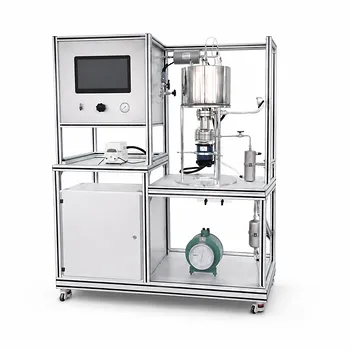
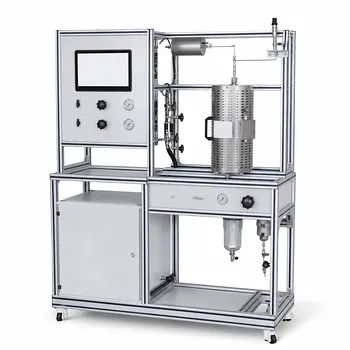
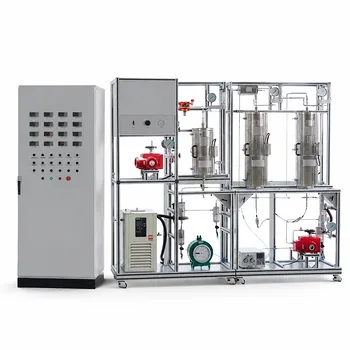
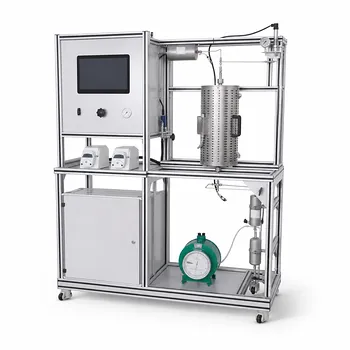
Accurate thermodynamic and kinetic data are critical for successful process scale-up and high-quality chemical engineering education. LABPARK offers advanced Educational and Vocational Unit Operations Pilot Plants tailored for chemical engineering, bioprocess & biotech, and environmental & water treatment applications.
Whether you are a university training the next generation of engineers, a research institute validating new pathways, or an enterprise scaling up production, our systems are built to eliminate sampling errors and ensure data integrity.
Contact LABPARK today to discover how our pilot plants can elevate your research and training capabilities!
Related Products
- Fixed-Bed Chemical Reaction and Gas Dust Tar Removal Unit Operations Pilot Plant
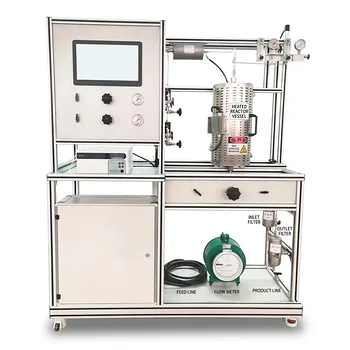
- Fixed Bed Gas Solid Catalytic Reaction Educational Pilot Plant
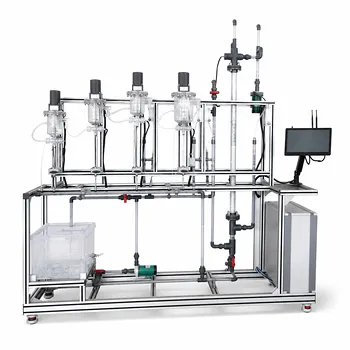
- Multi-Reactor Educational Pilot Plant for Reaction Engineering Unit Operations
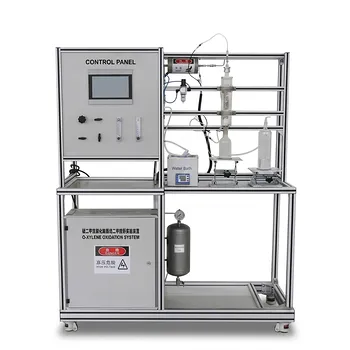
- O-Xylene Oxidation to Phthalic Anhydride Educational Unit Operations Pilot Plant
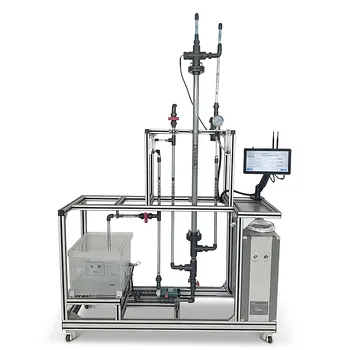
- Residence Time Distribution and Reactor Flow Characteristics Determination Educational Pilot Plant
People Also Ask
- When to transition from PID to adaptive control in pilot plants? Key process indicators.
- How do deviations in estimating latent heat impact pilot plant thermal systems? Avoid hardware mis-sizing.
- Why Compare Predicted and Experimental Excess Enthalpy? Key to Accurate Pilot Plant Scale-up
- Why Use PTFE & Hastelloy in Chemical Pilot Plants? Prevent Corrosion & Ensure Safety
- How to study gasification in pilot plants? Compare exit gas composition & efficiency