Selecting pressure measurement instruments for corrosive or hazardous chemicals in an educational lab isn’t just about accuracy—it’s a foundational exercise in chemical safety and materials science. The immediate, surface-level answer is that you must critically match the instrument’s wetted materials (bourdon tubes, diaphragms, seals) to the chemical’s corrosion profile, while embedding rigorous safety protocols like oil-free cleaning for oxygen service or using inert isolation for fluoride compounds. A single material oversight can lead to an instrument rupture, a toxic leak, or a catastrophic explosion right in the student workspace.
The core takeaway: Material compatibility is the first line of defense, and it must be evaluated against every chemical species in your process. Beyond the metal or polymer choice, the design must integrate fail-safe pressure relief, isolation techniques, and media-specific cleaning to transform a fragile measurement point into a robust safety barrier. For educational settings, this becomes a living lesson that operational safety and material science are inseparable.
The Critical Role of Wetted Materials in Pressure Instruments
The sensing element and any seal that touches the process fluid define the safety boundary. In a chemistry lab, a standard bourdon tube can become a time bomb if its alloy reacts with the media.
How Specific Chemicals Demand Specific Metals
The primary rule is to avoid reactive pairings. As the core reference states, ammonia aggressively corrodes copper and brass alloys. Using a standard brass gauge on an ammonia line guarantees rapid failure. Instead, you must switch to a carbon steel or stainless steel pressure element. This isn’t a mere preference—it’s a chemical prohibition.
Moving Beyond Generic Stainless Steel
For more aggressive or teaching-critical media, even 304 or 316 stainless steel may not be enough. Supplementary pilot-plant experience shows that sensitive reagents like hydroxylamine or concentrated acids demand truly inert wetted parts. In these cases, you need PTFE (Teflon) dip tubes, Kalrez gaskets, or PTFE-lined diaphragms to maintain process integrity and prevent metal-ion contamination—a lesson itself in surface chemistry.
The Fluorine Anomaly: When Metal Reacts to Protect Itself
Highly reactive fluorine (F₂) and anhydrous HF defy conventional logic. They react violently with most materials, yet modern equipment often uses copper or nickel-copper alloys. These metals form a passive, protective fluoride layer (like CuF₂) that halts further corrosion. This teaches students that “resistance” isn’t always about inertness, but about creating a stable, self-limiting reaction layer—provided the system remains rigorously moisture-free.
The Non-Negotiable Safety Rules for Specific Hazardous Media
Material choice is only half the battle. Certain chemicals bring process hazards that require an entirely new level of protocol, as the core guidance on oxygen service makes unmistakably clear.
The Oxygen Explosion Hazard
Oxygen-rich systems demand specialized oxygen pressure gauges that are strictly free of oil. Any trace of organic grease, even from a fingerprint during assembly, can ignite under pressure and cause a metal fire or explosion. The explicit instruction is to thoroughly clean these gauges with a solvent like carbon tetrachloride before installation, ensuring zero organic residue. In a teaching lab, these gauges must be clearly labeled, dedicated, and never swapped with general-purpose units.
Hermetic Sealing for Lethal Gases
When dealing with anhydrous HF or fluorine, the pressure instrument cannot simply be a threaded connection. The supplementary safety guidance stresses the need for hermetic sealing, robust moisture exclusion, and physical isolation. This translates to using all-welded diaphragm seals with inert fill fluids (like fluorinated oils) and metal-to-metal seals, rather than polymeric O-rings that could be attacked and leak toxic gas into the learning environment.
Integrating Overpressure Protection into the Instrument Loop
Every pressure transmitter or gauge on a pressurized educational rig (e.g., 10 or 25 bar) must be backed by a certified pressure relief valve or burst disc. The instrument itself might have a specific pressure rating, but the safety system must be an independent barrier that protects both the student and the sensor from a process upset, a central lesson in pilot-plant design.
Understanding the Design Trade-offs for Educational Rigs
In a teaching laboratory, you’re not just specifying an industrial component; you’re selecting a pedagogical tool. This creates inherent tensions between safety, learning, and cost.
Mechanical Clarity vs. Chemical Isolation
A simple bourdon tube gauge with a clear scale is an unmatched tool for teaching the direct relationship between pressure and mechanical deflection. However, for a corrosive or hazardous stream, this direct contact is unacceptable. You must trade that visual simplicity for a diaphragm seal with a capillary fill system, which converts the pressure measurement into a safe, isolated hydraulic signal. The educational value then shifts from "seeing the tube move" to "understanding process containment."
Cost-Effective Training vs. True Material Fidelity
Carbon steel pressure elements are economical for training rigs that only ever run non-corrosive water. However, if the educational goal is to simulate realistic industrial conditions with actual process chemicals, you must invest in stainless steel 304/316 or even polymer-lined instruments. Using a cheaper material that fails early teaches a false lesson about operational reliability. The budget-conscious trade-off is to strategically place the more exotic (and expensive) instruments only on the streams that truly demand them, while standard stainless steel serves the bulk of the system.
Visual Observation vs. Containment
Supplementary references highlight the value of transparent glass sections for observing phenomena like flooding. For pressure measurement, this educational visibility must come from electronic transmitters that log data for analysis, not from exposing a hazardous fluid to a fragile instrument. The safety protocol is non-negotiable: reserve robust, encased sensors for hazardous loops and move the "visual learning" to digital screens and downstream low-pressure equipment.
Making the Right Choice for Your Educational Goal
Your selection of a pressure instrument must align with the specific learning outcome and the hazard level of the chemicals used.
- If your primary focus is fundamental safety with common corrosives (acids/bases/ammonia): Choose gauges with 316 stainless steel wetted parts and ensure every instrument installation includes a clearly visible tag listing its material compatibility. Replace any brass or copper components immediately.
- If you are training students on oxygen-enriched or pure oxygen systems: Mandate dedicated, oil-free oxygen-service gauges. Implement a strict check-out/check-in cleaning procedure that students must learn and document, reinforcing the "zero contaminant" protocol.
- If you want to teach advanced material science through unit operations: Install a few instruments with intentionally different but documented materials (e.g., a Monel or PTFE-lined diaphragm) on non-critical service for side-by-side comparison, while the primary loop on the hazardous chemical uses the most robust, fail-safe isolation.
- If you are operating pilot-scale reactors with highly reactive media (fluorine, HF): Select instruments with copper or nickel-alloy wetted parts and all-welded, hermetic diaphragm seals. The pressure measurement must be a completely isolated, purged system that candidates the complex passivation chemistry lectures.
By treating each pressure instrument selection as a multi-faceted case study in corrosion, safety design, and pedagogical intent, you transform a simple hardware choice into one of the most powerful teaching moments in the engineering curriculum.
Summary Table:
| Chemical / Media | Key Hazard | Recommended Materials | Essential Safety Protocol |
|---|---|---|---|
| Ammonia | Corrodes copper/brass | Carbon steel, Stainless steel | Strict prohibition of brass/copper |
| Acids & Hydroxylamine | Severe corrosion | PTFE, Kalrez, PTFE-lined diaphragms | Chemical isolation & diaphragm seals |
| Fluorine / HF | Extreme reactivity | Copper, Nickel-copper alloys | Hermetic sealing, dry system (passivation) |
| Oxygen Service | Exploded organic residue | Oil-free cleaned metals | Dedicated oil-free cleaning & labeling |
Equip Your Lab with Industry-Grade Safety — Choose LABPARK
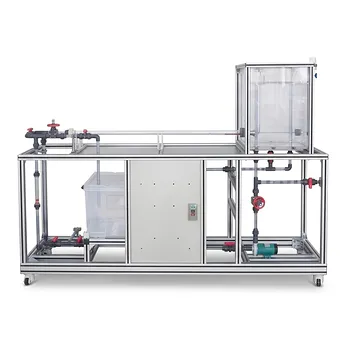
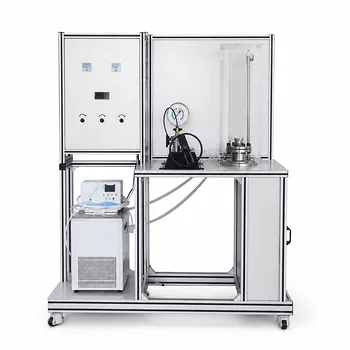
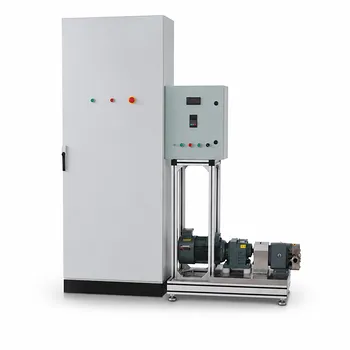
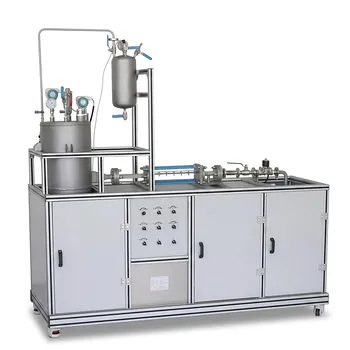
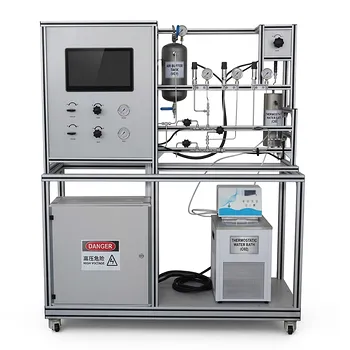
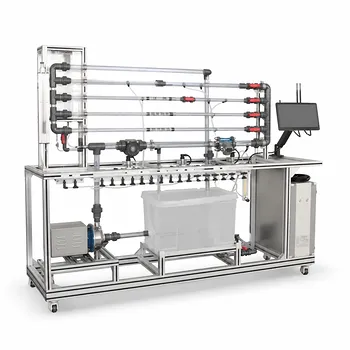
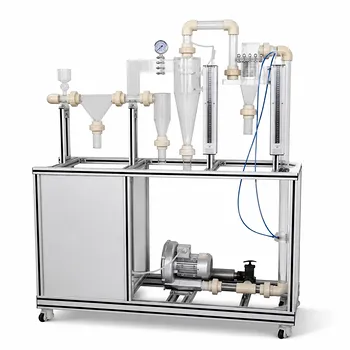
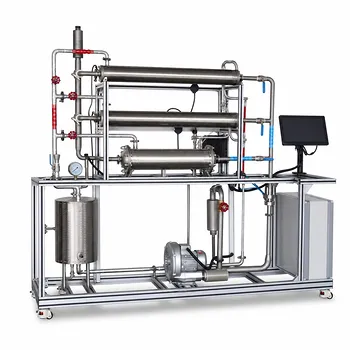
Designing safe, reliable educational rigs requires the right material choices. LABPARK offers specialized Educational and Vocational Unit Operations Pilot Plants in:
- Chemical Engineering (engineered with corrosion-resistant, code-compliant instrumentation)
- Bioprocess & Biotech
- Environmental & Water Treatment
We help universities, research institutes, and enterprises bridge the gap between classroom theory and industrial reality with safely designed, high-fidelity pilot plants.
Maximize student safety and training efficiency. Contact us today to design your custom pilot plant!
Related Products
- Constant Pressure Filtration Educational Unit Operations Pilot Plant
- Educational Compression Refrigeration Performance Determination Unit Operations Pilot Plant
- Bernoulli Equation Demonstration Unit Operations Pilot Plant
- Agitation and Mixing Educational Unit Operations Pilot Plant
- Binary System Vapor Liquid Equilibrium Data Determination Educational Unit Operations Pilot Plant
People Also Ask
- How do educational unit operations pilot plants bridge theory and design? Bridge the Engineering Gap
- How do educational unit operations pilot plants address safety and waste management when scaling up?
- Why splitting a filtration batch doesn't always reduce cycle time? Pilot Plant Insights
- Why Demo Constant-Rate to Constant-Pressure Filtration on a Pilot Plant? Key Practical Insights
- How can researchers identify and resolve filter medium blinding? Optimize Your Pilot Plant Runs