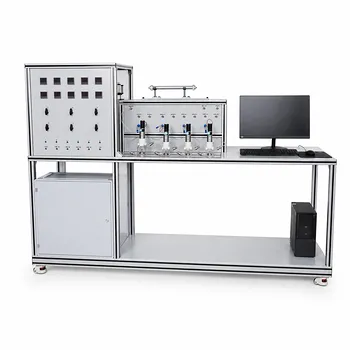
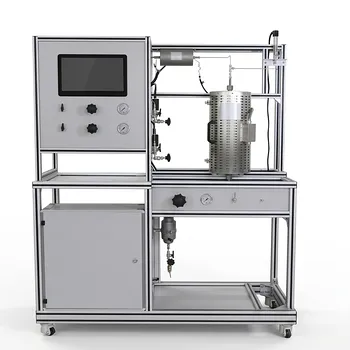
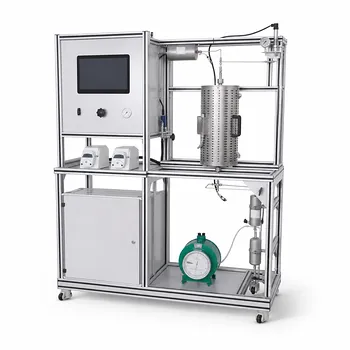
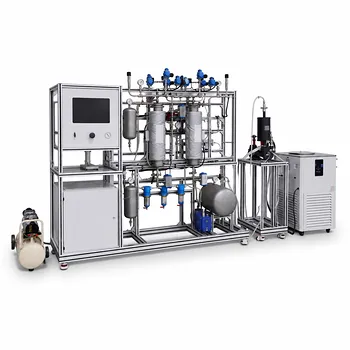
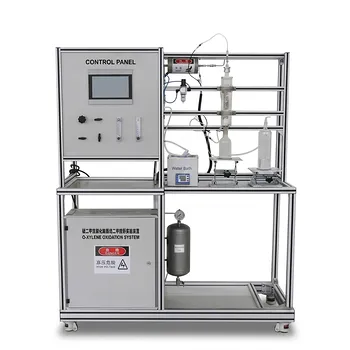
Catalyst deactivation is the silent killer of process efficiency. A gas-phase catalytic reaction pilot plant turns this abstract threat into a visible, measurable phenomenon. It teaches that deactivation springs from two core origins: physical breakdown—which generates dust, plugs the bed and raises pressure drop—and chemical changes, such as the migration of molten active species, sintering, coking and poisoning. Maintenance concepts then come to life through pressure‑drop monitoring, routine catalyst screening, temperature control to prevent thermal runaway, controlled regeneration burns, and the use of protective guard beds. Together, these show how industrial catalysts achieve lifetimes of 5 to 20 years.
A pilot plant isn’t just a reactor—it’s a time machine. It compresses decades of catalyst aging into hours of observable data, revealing that managing activity loss is never a one‑off fix. It’s a continuous loop of diagnosis, compensation, and rejuvenation.
Decoding Catalyst Death: Physical and Chemical Mechanisms
When the Catalyst Crumbles
Under gas‑phase flows, catalyst pellets suffer attrition and fracture. The resulting dust does not simply exit—it accumulates, plugs void spaces, and sends pressure drop soaring. This physical breakdown is a direct, early warning of deactivation. In the pilot plant, students connect rising differential pressure to bed integrity loss, learning that a plugged bed starves downstream sections and can force emergency shutdowns.
The Hidden Migration of Active Species
At elevated temperatures, active phases can become mobile. Vanadium‑based catalysts, for example, see molten vanadium oxide migrate, redistribute, or evaporate, permanently lowering activity. Beyond this, chemical deactivation paths multiply: sintering fuses metal nanoclusters into larger, low‑area particles; coking lays down carbonaceous deposits that block pores; poisoning by feed impurities irreversibly occupies active sites. The pilot plant allows these mechanisms to be isolated and studied by manipulating temperature, feed composition, and run duration.
Reversible vs. Irreversible Deactivation: A Critical Diagnostic Distinction
Not all activity loss is forever. Running a pilot plant reveals that some deactivation—like oxidation of platinum surfaces—can be reversed through reduction treatments, while sintering or vanadium migration is largely permanent. Teaching this dichotomy prepares engineers to choose between regeneration protocols and catalyst replacement, a decision with massive economic weight in full‑scale plants.
From Symptoms to Strategy: Monitoring Deactivation in Real‑Time
Pressure Drop: The First Warning Sign of Bed Plugging
The simplest yet most urgent diagnostic is differential pressure. A rising pressure drop across the catalyst bed screams physical blockage. By logging this signal continuously, students learn to correlate sudden jumps with dust release events and predict the need for screening or bed replacement.
Conversion Decline: Quantifying Activity Loss
As catalyst activity fades, reactant conversion falls. The pilot plant’s online analyzers turn this decline into a direct measure of the active fraction (a). Comparing fresh and aged runs demonstrates how deactivation erodes the catalyst’s ability to provide an alternative reaction pathway with lower activation energy. This visceral loss of performance anchors the entire maintenance conversation.
Constant‑Conversion Temperature Ramping: A Kinetic Diagnostic
A powerful teaching mode is the constant‑conversion, variable‑temperature operation. As the catalyst ages, operators slowly raise the inlet temperature to keep conversion steady. The rate of temperature increase becomes a kinetic fingerprint of deactivation speed ((k_d)) and order ((d)). Students map the required temperature ramp profile, learning to balance exponential reaction‑rate gains against the material limits of the reactor and catalyst.
Maintenance Protocols That Extend Catalyst Life
Thermal Discipline: Staying Below the Meltdown Threshold
The primary reference on vanadium catalysts stresses that controlling operating temperatures prevents thermal degradation. In the pilot plant, students set hard upper bounds on heating jackets and feed preheaters. They see that exceeding the threshold doesn’t just hurt activity—it can trigger runaway sintering or molten‑phase migration, damaging the bed beyond regeneration.
Catalyst Screening to Remove Fines
Periodic screening—physically separating intact pellets from dust—is a frontline maintenance act. The pilot plant makes this tangible. After a long run, students empty the bed, sieve the catalyst, weigh the fines, and quantify the loss of mechanical integrity. They directly connect this hands‑on task to the pressure‑drop history they collected earlier.
Regeneration: Controlled Coke Burn‑Off
For carbon‑laden catalysts, the pilot plant can demonstrate thermal regeneration. By flowing a controlled, oxygen‑poor air or (N_2/O_2) mixture at elevated temperature, students burn off coke without causing a dangerous exotherm. This procedure restores activity and models the industrial cycle‑time management that keeps fixed‑bed processes profitable.
Shielding the Bed: Guard Beds and Upstream Purification
Prevention beats cure. The pilot plant can be configured with a sacrificial guard bed at the inlet or an adsorption column to scrub poisons. Students see how a small amount of cheap catalyst catches irreversible contaminants, protecting the main bed. They also explore temperature‑programmed operation—gradual heating to compensate for slow deactivation—as a software‑based shield against activity loss.
Understanding the Trade‑offs in Pilot Plant Operation
The Temperature Trap: Compensating Activity vs. Exceeding Limits
Raising temperature recovers conversion, but the activation energy gain is a double‑edged sword. Push too high, and you accelerate sintering or exceed the reactor’s metallurgical maximum. The pilot plant teaches that the optimal temperature ramp is always a compromise between activity recovery and long‑term damage.
Regeneration Cyclability vs. Structural Integrity
Every burn‑off cycle restores activity but also subjects the catalyst to thermal stress. Repeated high‑temperature excursions can gradually sinter the support, shorten the practical lifespan, and increase dust formation. Students learn to graph activity recovery against cumulative regeneration cycles, revealing a declining return on investment.
Accelerated Testing vs. Realistic Lifetime Prediction
To see effects in a classroom timeframe, conditions are often harsh—high temperature, high feed rate. Yet this acceleration can over‑emphasize certain mechanisms (like sintering) while under‑representing slow poisons. The pilot plant demands a critical discussion: what you measure in 50 hours is a model, not a perfect replica, of the 10‑year industrial reality.
Making the Most of the Pilot Plant for Education and Research
After a brief recap of the concepts, align specific pilot‑plant exercises with your instructional goal.
- If your primary focus is fundamental deactivation pathways: Design experiments that isolate one mechanism at a time—run without poisons, then with a doped feed; vary space velocity to study series coking; hold high temperature to induce sintering. Let students plot activity vs. time and identify the kinetic model ((-\frac{da}{dt} = k_d a^d)).
- If your primary focus is industrial troubleshooting: Emphasize pressure‑drop monitoring, screening, and guard‑bed configuration. Have students respond to a simulated upset—a sudden pressure spike—by diagnosing the cause and prescribing a maintenance action.
- If your primary focus is regeneration and cycle management: Run multiple deactivation‑regeneration cycles, track activity recovery, and challenge students to determine the economic optimum for catalyst replacement based on the declining efficiency of each burn‑off.
A gas‑phase catalytic pilot plant turns textbook deactivation curves into sweat‑on‑the‑glasses reality. It teaches that catalyst lifetime is never a given—it is a variable you manage, protect, and extend through disciplined operation and insightful maintenance.
Summary Table:
| Deactivation Type | Primary Causes | Diagnostics & Maintenance |
|---|---|---|
| Physical Breakdown | Pellet attrition, dust accumulation, bed plugging | Pressure drop monitoring, catalyst screening |
| Chemical Changes | Sintering, coking, poisoning, active phase migration | Temperature control, regeneration burns, guard beds |
| Activity Loss | Blocked active sites, reduced surface area | Conversion decline analysis, constant-conversion temperature ramping |
Empower Your Chemical Engineering Lab with LABPARK
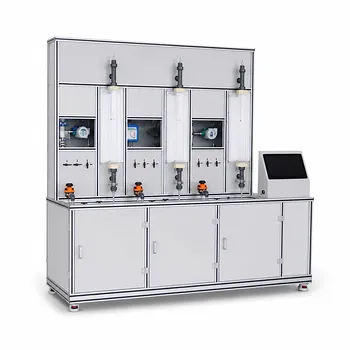
Bridging the gap between textbook kinetics and real-world industrial operations requires hands-on experience. LABPARK provides state-of-the-art Educational and Vocational Unit Operations Pilot Plants designed specifically for universities, research institutes, and enterprises.
Our advanced pilot plants in chemical engineering, bioprocess & biotech, and environmental & water treatment empower your students and researchers to:
- Visualize Complex Processes: Observe real-time catalyst deactivation, pressure drops, and regeneration cycles.
- Gain Practical Skills: Master maintenance protocols, thermal discipline, and diagnostics in a controlled environment.
- Accelerate R&D: Conduct reliable scale-up studies and kinetic modeling with industrial-grade instrumentation.
Ready to elevate your engineering curriculum or research capabilities? Contact LABPARK today to request a custom quote and discover how our pilot plants can transform your lab.
Related Products
- Fixed Bed Gas Solid Catalytic Reaction Educational Pilot Plant
- Micro-Scale Gas-Solid Catalytic Reaction Educational Pilot Plant
- Fluidized Bed Gas Solid Catalytic Reaction Educational Pilot Plant
- Fixed-Bed Chemical Reaction and Gas Dust Tar Removal Unit Operations Pilot Plant
- Gas Phase Mixing and Residence Time Distribution Determination Educational Unit Operations Pilot Plant
People Also Ask
- How do reactor pilot plants safely study gas-solid reactions? Master kinetics with thermal & flow control.
- How does the Mears criterion evaluate transport resistance? Key Guide to Intrinsic Kinetics
- Fluidized vs. Fixed Bed Reactors: Comparing Heat & Complexity in Pilot Plants
- Why is a multibed configuration necessary for exothermic reactions? Optimize your pilot plant trajectory.
- What are the differences between pseudohomogeneous and heterogeneous models in pilot plants?