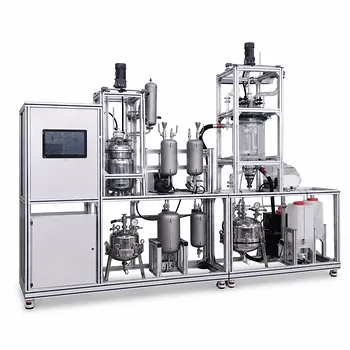
Single-electron transfer mechanisms are practically used to design, operate, and scale advanced oxidation processes in environmental and water treatment pilot plants. Metal ions such as manganese, iron, and copper transfer electrons to organic pollutants or co-oxidants, producing reactive radical intermediates that break down persistent contaminants. Pilot plants make this chemistry operationally useful by testing catalyst regeneration, oxidant dosing, reaction kinetics, dissolved oxygen transfer, and precipitation control under realistic flow conditions.
Metal-catalyzed oxidation is not simply a one-step reaction. Its practical value comes from managing repeated electron-transfer cycles in which the metal is regenerated and reactive intermediates are produced at a controlled rate.
How Single-Electron Transfer Drives Oxidation
The Metal Ion Starts the Reaction
In a single-electron transfer, a transition-metal ion transfers or accepts one electron from another species. For example, manganese(III) can oxidize an organic substrate by removing one electron and generating an unstable organic radical.
This differs from a direct two-electron oxidation because the initial product is often reactive and short-lived. The first electron-transfer step therefore begins a reaction sequence rather than completing pollutant destruction.
Radical Intermediates Continue the Breakdown
The organic radical formed during the first step can react with a second metal ion, dissolved oxygen, hydrogen peroxide, or another oxidant. These follow-up reactions can cause bond cleavage, oxygen insertion, oxidative dehydrogenation, and further conversion of the original pollutant.
The treatment objective is usually not merely to create radicals, but to direct the sequence toward smaller, less hazardous, and more biodegradable products.
Catalyst Regeneration Sustains the Process
For continuous oxidation, the reduced metal must be re-oxidized. A representative manganese cycle involves the regeneration of Mn(III) from Mn(II), while iron and copper systems use related changes between oxidation states.
Dissolved oxygen, hydrogen peroxide, or another secondary oxidant can provide the required regeneration step. Without effective regeneration, the metal becomes trapped in its reduced form and the process loses catalytic activity.
What Pilot Plants Measure
Pollutant Degradation Kinetics
Pilot plants allow engineers to measure contaminant removal under controlled metal concentrations, oxidant doses, pH conditions, residence times, and flow rates. These measurements show whether the reaction remains effective outside a small laboratory vessel.
Kinetic data can be used to determine how quickly the target pollutant disappears and whether degradation is limited by chemical reaction, mass transfer, mixing, or catalyst regeneration.
Oxidant Demand and Dosing
Oxidants must be supplied in sufficient quantity to sustain the electron-transfer cycle and complete radical reactions. Excess dosing, however, can increase operating cost and may consume reactive species in side reactions.
Pilot testing helps establish practical dosing strategies for hydrogen peroxide, dissolved oxygen, or other secondary oxidants. It also reveals how the required dose changes with contaminant concentration and water composition.
Catalyst Regeneration
A central pilot-plant question is whether the metal catalyst can be continuously returned to its active oxidation state. This is particularly important for manganese systems, where Mn(II) must be re-oxidized to Mn(III), and for iron-based systems involving Fe(II)/Fe(III) cycling.
The plant can test whether regeneration is fast enough for the selected reactor volume and hydraulic residence time. It can also identify operating conditions that cause the cycle to stall.
Dissolved Oxygen Mass Transfer
Oxygen-dependent systems require more than a favorable chemical reaction. Oxygen must transfer from the gas or liquid phase into the water rapidly enough to support the catalytic cycle.
Pilot units can evaluate aeration, mixing, and oxygen-transfer performance under realistic hydraulic conditions. This is important for iron- or cobalt-dioxygen systems and for processes in which dissolved oxygen participates in radical generation or catalyst regeneration.
Solids Formation and Metal Retention
Iron and other transition metals can form hydroxide precipitates when water chemistry changes. Precipitation may remove the catalyst from solution, obstruct equipment, or create a metal-bearing residual stream.
Pilot operation helps engineers determine whether pH adjustment, chelation, mixing, or solids separation is required. It also supports evaluation of dissolved-metal discharge and residuals management.
How the Chemistry Informs Process Design
Choosing the Metal System
Manganese, iron, copper, and cobalt systems can support different oxidation pathways and operating conditions. The selection depends on the target contaminants, available oxidants, water matrix, metal stability, and treatment objectives.
A suitable metal is not necessarily the one with the strongest oxidation chemistry. It must also be regenerable, controllable, recoverable, and compatible with downstream treatment.
Controlling Radical Production
The rate of radical formation must be high enough to degrade contaminants but controlled enough to limit wasteful oxidant decomposition and unwanted by-products. Single-electron transfer provides the mechanistic framework for understanding this balance.
Pilot plants allow operators to vary metal and oxidant concentrations while observing degradation rates, intermediate formation, and residual oxidant levels.
Managing Chelating Agents
Chelating agents can keep metals available in solution and help reduce metal hydroxide precipitation. They do not necessarily stop metal-catalyzed oxidation, however.
Their effect is often to slow the reaction by changing the metal complex's structure and the energy required for ligand rearrangement. Pilot testing is therefore needed to determine whether chelation improves overall treatment performance or merely changes the reaction rate and metal fate.
Matching Reactor Conditions to the Reaction
Reaction chemistry and hydraulic design must be considered together. Mixing, residence-time distribution, oxygen transfer, and contact between pollutants and catalysts all affect how completely the electron-transfer sequence proceeds.
A pilot plant provides evidence for selecting reactor volume, staged oxidant addition, aeration intensity, and separation requirements before full-scale construction.
Understanding the Trade-offs
Faster Oxidation Can Increase Chemical Consumption
Increasing metal or oxidant concentrations may accelerate degradation, but it can also increase chemical demand and promote nonproductive reactions. High oxidant levels may be consumed by background organic matter rather than the target contaminant.
The best operating point is therefore based on treatment performance per unit of chemical input, not maximum instantaneous reaction rate.
Chelation Improves Stability but Changes Reactivity
Chelating agents can help maintain dissolved metals and reduce precipitation. At the same time, they may slow electron transfer or alter which reactive intermediates are formed.
This creates a design trade-off between catalyst availability, reaction speed, chemical cost, and residual-metal control.
Radical Chemistry Can Reduce Selectivity
Highly reactive radicals can attack many compounds in the water matrix. This is useful for broad contaminant destruction but can make the process less selective and increase oxidant consumption.
Where selective oxidation is important, pilot testing should examine intermediate products rather than relying only on disappearance of the original pollutant.
Laboratory Performance May Not Scale Directly
Bench-scale reactions often have ideal mixing, high contact efficiency, and tightly controlled water chemistry. Full-scale water contains competing constituents and has more complex hydraulic behavior.
Pilot plants reduce this scale-up uncertainty by testing the same reaction under continuous-flow conditions and with representative wastewater.
Metal Residuals Require Separate Control
A process may achieve strong organic-pollutant removal while still producing unacceptable dissolved or particulate metal residuals. Catalyst recovery, precipitation control, and downstream solids handling must therefore be included in the process evaluation.
Making the Right Choice for Your Goal
Pilot-plant work should connect the electron-transfer mechanism to measurable operating decisions.
- If your primary focus is contaminant destruction: Optimize metal and oxidant dosing against degradation kinetics, intermediate formation, and oxidant utilization.
- If your primary focus is continuous catalytic operation: Demonstrate reliable regeneration of the reduced metal to its active oxidation state under the intended hydraulic residence time.
- If your primary focus is industrial scale-up: Measure performance under representative flow, mixing, oxygen-transfer, water-matrix, and solids-formation conditions.
- If your primary focus is metal discharge control: Evaluate chelation, precipitation prevention, catalyst recovery, and downstream separation together rather than treating them as separate problems.
- If your primary focus is process cost: Compare removal performance, oxidant demand, catalyst losses, aeration requirements, and residuals handling at each operating condition.
Understanding single-electron transfer turns advanced oxidation from a reaction concept into a controllable treatment process that can be measured, optimized, and scaled with defensible engineering data.
Summary Table:
| Key area | What pilot plants evaluate | Process value |
|---|---|---|
| Contaminant degradation | Removal kinetics, intermediates, and reaction pathways | Confirms treatment effectiveness |
| Oxidant dosing | Hydrogen peroxide, dissolved oxygen, and co-oxidant demand | Controls chemical cost and efficiency |
| Catalyst regeneration | Re-oxidation of reduced manganese, iron, or copper species | Sustains continuous catalytic activity |
| Oxygen transfer | Aeration, mixing, and dissolved oxygen availability | Supports oxidation and regeneration cycles |
| Metal stability | Chelation, precipitation, catalyst retention, and residual metals | Reduces fouling and discharge risks |
| Reactor design | Residence time, flow patterns, staged dosing, and mixing | Improves scale-up reliability |
| Process optimization | Removal, chemical use, aeration, catalyst loss, and residuals | Identifies the best operating point |
Design a More Reliable Oxidation Pilot Plant
LABPARK helps universities, research institutes, and enterprises turn metal-catalyzed oxidation research into measurable process data. Our Environmental and Water Treatment Pilot Plants support testing of contaminant degradation, metal catalyst regeneration, oxidant dosing, dissolved oxygen transfer, hydraulic residence time, precipitation control, catalyst recovery, and downstream solids management.
Use representative flow conditions to compare manganese-, iron-, copper-, and other metal-based systems, validate treatment performance, reduce scale-up uncertainty, and establish defensible operating costs before full-scale construction. Contact LABPARK to discuss a pilot plant configured for your target contaminants, water matrix, reactor conditions, and treatment objectives.
Related Products
- Methane Cracking Educational Unit Operations Pilot Plant
- O-Xylene Oxidation to Phthalic Anhydride Educational Unit Operations Pilot Plant
- Electrochemical Water Treatment Educational Unit Operations Pilot Plant
- Methanol Synthesis and Catalyst Performance Evaluation Educational Unit Operations Pilot Plant
- Photocatalytic Membrane Separation and Degradation Unit Operations Pilot Plant
People Also Ask
- How do ethane vs naphtha cracking influence teaching pilot plant analytical configurations? Key Design Guide
- How can flow-NMR be integrated with pilot plant reactors to monitor kinetics? A Complete Guide
- How do cracking temperature and residence time affect olefin yield? Pilot Plant Guide
- How do reactor pilot plants define QbD design space? Master chemical process scale-up.
- How to use non-molecule-specific sensors in pilot plants? Unlock real-time multiphasic reaction tracking.