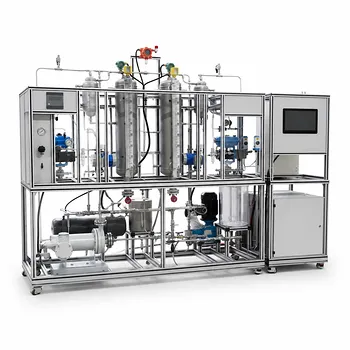
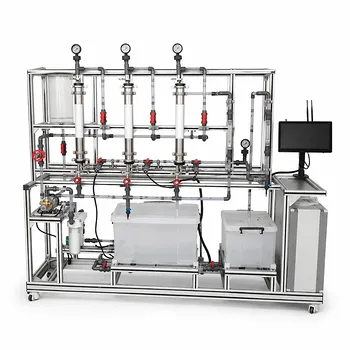
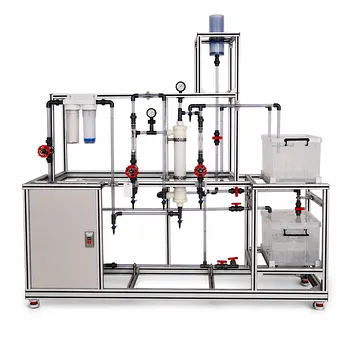
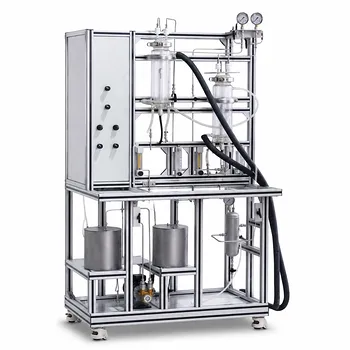
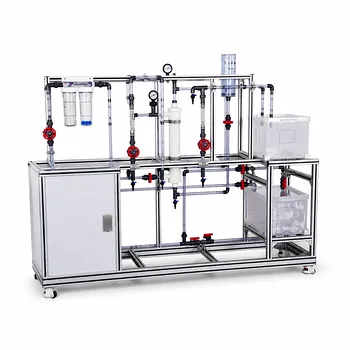
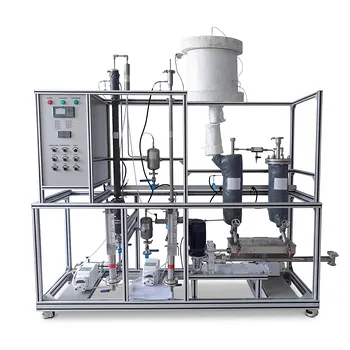
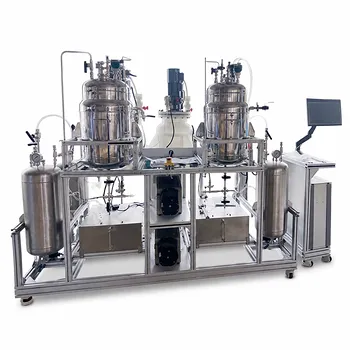
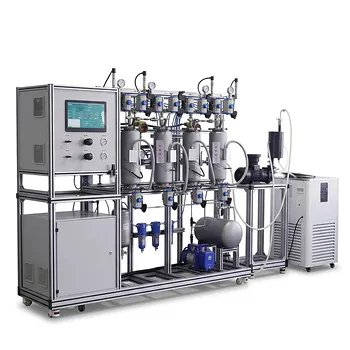
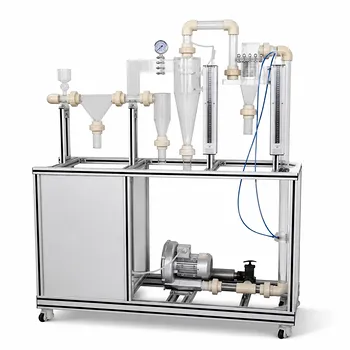
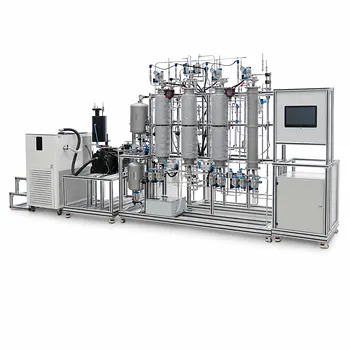
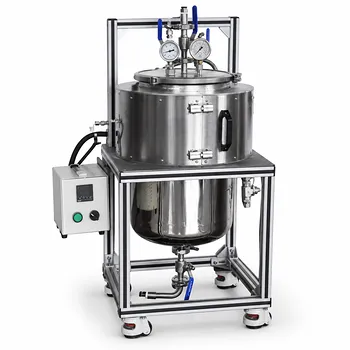
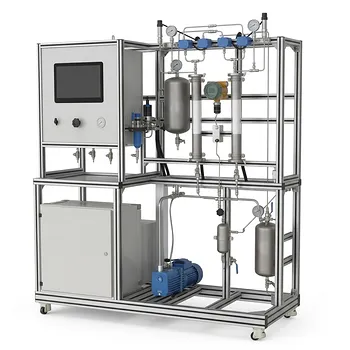
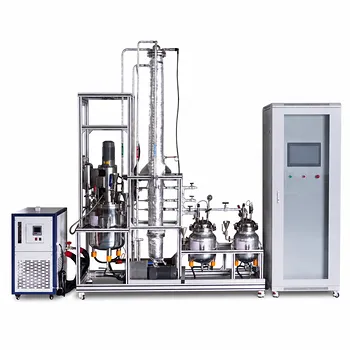
The primary educational and research value lies in bridging theoretical thermodynamics with tangible process optimization. In hydrogenation processes, the buildup of inert gases like methane silently sabotages efficiency by lowering hydrogen partial pressure. A membrane separation pilot system makes this invisible constraint visible, demonstrating how to recover and recycle valuable hydrogen from purge streams. This showcases a critical unit operation and, more importantly, teaches the direct link between resource recovery, reactor throughput, and product quality.
A membrane pilot system for hydrogen recovery is not just a piece of equipment; it’s a pedagogical instrument that transforms a simple separation into a system-level lesson. It forces researchers and students to confront the real-world trade-offs between purity, recovery, energy consumption, and process economics, making abstract engineering principles concrete and measurable.
Teaching the Invisible Constraint: Partial Pressure and Inert Buildup
The core challenge in any hydrogenation or hydrotreating simulation is managing the gas loop. The primary reference correctly identifies that this is where the most valuable lesson begins. You aren’t just separating gases; you’re demonstrating why separation is economically and chemically necessary.
Seeing the Thermodynamic Ceiling
In a closed-loop reactor system, inert gases continuously accumulate. This buildup directly reduces the partial pressure of the reactant, hydrogen.
Without a management strategy, this diluting effect imposes a thermodynamic ceiling on the reaction rate. The pilot system makes this abstract concept visible, allowing students to measure the direct impact of impurity levels on the driving force of the reaction.
From Purge Stream to Value Stream
The traditional solution is to purge a portion of the gas to waste, which also vents expensive hydrogen. A membrane system frames this not as waste treatment, but as a vital process intensification step.
The unit demonstrates how to direct these pressurized purge gases to a membrane. The resulting separation creates a hydrogen-rich permeate for recycle and a retentate stream that concentrates and rejects the inerts, directly illustrating the concept of a yield penalty and its solution.
Tangible Lessons in Resource Recovery and Process Intensification
Moving beyond theory, the membrane pilot system excels as a hands-on tool for teaching modern engineering priorities: resource efficiency and process optimization. Its value is in making these goals quantifiable.
Demonstrating Hydrogen Recycle
Unlike a black-box simulation, a physical membrane plant provides kinetic and steady-state data on hydrogen recovery. Researchers can physically trace the hydrogen’s path, measuring flow rates and concentrations at the inlet, permeate, and retentate.
This visual, tactile demonstration of recycling a key reactant reinforces the principles of a circular process economy far more effectively than a spreadsheet model. It proves that what was once considered a loss is a recoverable asset.
Quantifying the Yield Penalty Reversal
The primary educational victory is enabling students to quantify the "yield penalty" reversal. By varying the purge rate or membrane area, they directly observe the consequential change in hydrogen partial pressure within the reactor simulator.
They can then log the corresponding increase in reactor throughput or improvement in product quality. This firm data link connects a downstream separation unit directly to the upstream reactor performance, a cornerstone of holistic process design.
A Versatile Research Platform for Advanced Separation Science
As noted in the supplementary references, the membrane unit itself provides a fertile ground for fundamental research, thanks to its modular design and advanced materials. It’s a robust platform for exploring transport phenomena and system design.
Exploring the Mechanics of Membranes
The system typically uses advanced thin-film composite membranes with a rubbery polymer permselective layer. This offers a compact, skid-mounted unit that demonstrates a high separation efficiency without the complex operating procedures of traditional methods.
Researchers can investigate the fundamental solution-diffusion mechanism governing transport. The pilot unit provides an ideal testbed for evaluating new membrane materials under realistic, high-pressure mixed-gas conditions rather than idealized single-gas tests.
Comparing Separation Technologies
A key educational exercise is integrating the membrane unit with or comparing its performance against other established systems like adsorption, absorption, or condensation. The supplementary references highlight the membrane’s inherent advantages in this matchup.
By contrasting data, students learn the practical trade-offs of capital and operating costs. The membrane system’s lower energy footprint and simple, passive operation often come as a revealing contrast to the thermal and mechanical complexity of alternative technologies.
Configuring Multi-Stage Systems for Deeper Inquiry
The system’s value for advanced research grows exponentially when configured as a two-stage series setup. As highlighted in the supplementary references, this is particularly relevant for simulating high-pressure processes like ammonia plant purge gas recovery.
A two-stage setup allows researchers to explore a critical optimization puzzle. The first stage recovers hydrogen at a higher pressure, minimizing recompression costs. The second stage then scavenges the remaining hydrogen from the first stage's retentate at a lower pressure, pushing recovery yields beyond 90%.
Understanding the Trade-offs: Purity vs. Recovery vs. Energy
The most profound educational value of this pilot system is its unforgiving physical demonstration of real-world trade-offs. This section is essential for developing the judgment of a professional engineer, as there is never a single "right" answer.
The Energy Cost of Perfect Recovery
Pressure is the driving force for membrane separation. The permeate, or recovered hydrogen, inevitably emerges at a lower pressure than the feed.
This creates the fundamental tension at the heart of the system: maximizing hydrogen recovery can lead to a low permeate pressure, which then demands significant energy for a recompressor to reinject the gas into the high-pressure reactor. A two-stage membrane system makes this relationship explicit, forcing a balance between recovery yield and compressor power consumption.
The Inert Trap
A membrane is not a perfect barrier; it achieves separation due to differences in permeation rates. While highly effective, some slower-permeating inert gases will still enter the permeate stream.
Similarly, a fraction of the valuable hydrogen is always lost in the retentate. The pilot plant vividly illustrates that chasing ultra-high purity can cripple recovery, and vice versa. The goal shifts from ideal separation to an economic optimum that considers the cost of the lost hydrogen versus the impact of recycled inerts on reactor efficiency.
Making the Case for Your Pilot Plant Curriculum or Research Goal
The integration of a membrane system must directly serve your specific academic or research objectives. The value proposition shifts depending on what you are trying to prove or teach.
- If your primary focus is teaching core chemical engineering principles: Use the single-stage setup to create a direct, measurable link between inert gas buildup, falling partial pressure, and the resulting reactor yield penalty.
- If your primary focus is applied research in process optimization: Leverage a two-stage membrane configuration to generate a complex data landscape and solve a real-world optimization problem between hydrogen recovery yield, permeate pressure, and energy costs.
- If your primary focus is materials science and separation technology: Center the research on the membrane unit itself as the core reactor, systematically testing new polymeric or thin-film composite membranes under authentic, high-pressure mixed-gas feed streams.
A membrane pilot system is ultimately a tool for teaching structured decision-making under uncertainty, turning students and researchers from passive observers of a theoretical process into active, competent problem-solvers for a resource-constrained world.
Summary Table:
| Focus Area | Key Educational Value | Key Research Value | Practical Trade-offs |
|---|---|---|---|
| Gas Loop Control | Visualizes inert buildup & partial pressure | Evaluates new membrane materials under pressure | Purity vs. recovery yield |
| Resource Recovery | Teaches mass balance & recycling loops | Compares membranes with adsorption/condensation | Permeate pressure vs. recompression energy |
| Optimization | Connects separation to reactor yield | Explores multi-stage & series configurations | Capital cost vs. operating footprint |
Bring Real-World Process Engineering to Your Lab with LABPARK
Bridge the gap between textbook thermodynamics and hands-on industrial practice. LABPARK provides premium Educational and Vocational Unit Operations Pilot Plants in chemical engineering, bioprocess & biotech, and environmental & water treatment for universities, research institutes, and enterprises.
Whether you want to demonstrate hydrogen recovery dynamics or conduct advanced membrane separation research, our pilot systems offer the modularity, reliability, and precision your program demands.
Contact LABPARK today to discuss your custom laboratory and pilot plant requirements!
Related Products
- Alkaline Membrane Water Electrolysis Educational Pilot Plant Unit Operations Training System
- Multifunctional Membrane Separation Educational Pilot Plant with Ultrafiltration, Nanofiltration, Reverse Osmosis
- Ultrafiltration Membrane Separation Educational Pilot Plant
- Multi-Functional Membrane Separation Educational Pilot Plant for Unit Operations Lab
- Photocatalytic Membrane Separation and Degradation Unit Operations Pilot Plant
People Also Ask
- How do chemical engineering pilot plants demonstrate electrolysis? Bridge Theory & Industrial Scale
- How do alkaline and PEM electrolysis technologies differ in pilot plant operations?
- Why is the selection of electrode materials critical when configuring or operating educational electrolysis pilot plants?
- Bipolar vs Monopolar Electrolysis: Key Configuration Details to Analyze in Pilot Plants
- Which Electrolysis Pilot Plant Parameters Ensure Safety & Efficiency? Key Controls Explained