The definitive procedure for trace copper measurement in industrial thermal unit feedwaters and cooling waters relies on a solvent-extraction colorimetric method. You react the water sample with sodium diethyldithiocarbamate to form a yellow-brown copper complex, extract this into carbon tetrachloride, then measure its light transmittance at 440 mµ with a spectrophotometer. The concentration is read off a standard calibration curve, delivering the sensitivity needed to catch corrosion-driven copper before it damages heat exchangers or boilers.
A solvent-extraction colorimetric method using sodium diethyldithiocarbamate and carbon tetrachloride is the primary analytical procedure for trace copper in pilot-plant feedwaters and cooling waters. It handles common interferences with ammonium citrate, and for seawater or brines, a preliminary dithizone extraction is mandatory to concentrate and isolate the copper.
Why Trace Copper Monitoring Matters in Thermal Pilot Plants
Copper ions in feedwater or cooling water act as a direct early-warning signal for corrosion. Thermal pilot plants rely on copper alloys in heat exchanger tubes, pump impellers, and condenser bundles. When these components corrode, copper dissolves into the water, and unchecked release can trigger galvanic corrosion that pits and erodes downstream equipment.
The Role of Copper in Corrosion Mechanisms
Dissolved copper isn’t just an indicator of lost metal – it’s an active participant. Even trace levels can plate onto steel surfaces, creating local galvanic cells that accelerate pitting. Monitoring gives you the data to adjust chemical treatment programs, decide on passivation steps, and validate materials selection before full-scale deployment.
Pilot Plant Sensitivity Requirements
In pilot settings, copper concentrations often sit in the low µg/L (ppb) range. Colorimetric solvent-extraction methods are chosen because they concentrate the analyte and provide the needed detection limits without resorting to expensive ICP instrumentation that may not be available on-site.
The Sodium Diethyldithiocarbamate Colorimetric Method – Step by Step
The reference procedure delivers a robust, repeatable measurement by isolating copper from a complex water matrix. Here’s how it works.
Core Chemical Principle
Sodium diethyldithiocarbamate reacts with copper(II) ions in an alkaline medium to form a stable, hydrophobic copper diethyldithiocarbamate complex. The complex is intensely yellow-brown and absorbs strongly at 440 mµ (440 nm). Because it’s non-polar, it partitions quantitatively into an organic solvent, which both separates it from the aqueous sample and pre-concentrates it for measurement.
The Standard Procedure for Feedwaters and Cooling Waters
- Sample Preparation: Collect a representative water sample. Ensure all glassware is acid-washed to prevent copper contamination or adsorption.
- Interference Masking: Add ammonium citrate solution to the sample. This chelates iron and other metals that would otherwise form turbid precipitates or competing colored complexes, ensuring selectivity.
- pH Adjustment: Make the solution alkaline with ammonium hydroxide. The copper-dithiocarbamate complex forms only under alkaline conditions, where the reagent remains stable and reactive.
- Color Development & Extraction: Introduce a measured volume of sodium diethyldithiocarbamate reagent, then add an exact amount of carbon tetrachloride (CCl₄). Shake vigorously for two minutes. This mechanical extraction transfers the colored copper complex entirely into the carbon tetrachloride layer.
- Phase Separation & Clarification: After shaking, allow the layers to separate. Drain or pipette the lower organic layer through a plug of glass wool (to remove any entrained water droplets) into a cuvette.
- Spectrophotometric Measurement: Measure the transmittance (or absorbance) at 440 mµ using a spectrophotometer zeroed against a reagent blank. Convert the reading to copper concentration via a previously established calibration curve prepared from standard copper solutions carried through the identical extraction procedure.
Adaptation for Saline Waters – The Dithizone Pre-Extraction
Highly saline waters, such as seawater or brine blowdown, present a different challenge. The high ionic strength and dissolved solids can change extraction efficiency and interfere with the diethyldithiocarbamate reaction.
For these matrices, a preliminary extraction with dithizone in chloroform is mandatory. This step isolates and concentrates the total copper from the bulk saline sample. The dithizone complex extracts copper selectively into chloroform; the organic layer is then stripped, and the copper is transferred to an aqueous phase suitable for the final diethyldithiocarbamate procedure. This two-step sequence ensures that even in aggressive brines, your final 440 mµ measurement remains interference-free and accurate.
Understanding the Trade‑offs – Limitations and Precautions
No analytical procedure is without its caveats. Recognizing these keeps your data trustworthy.
Solvent Hazards and Handling
Carbon tetrachloride is toxic and an ozone‑depleting substance. While it’s the prescribed solvent for its high extraction efficiency and clarity at 440 mµ, it must be handled in a fume hood with appropriate personal protection. Some modern adaptations use chloroform or other solvents, but if strict adherence to the reference method is required, CCl₄ remains standard. Always verify local regulations.
Iron Interference Control
Even with ammonium citrate, extremely high iron concentrations can challenge the masking capacity. Pale color or slow phase separation might signal incomplete iron chelation. In such cases, increasing the citrate addition or pre‑reducing iron may be needed, though this deviates from the standard procedure. Always run a matrix‑matched blank to catch subtle interference.
Extraction Precision
The two‑minute shaking step is not arbitrary – it ensures equilibration. Under‑shaking leads to incomplete extraction and low recovery. Over‑vigorous or extended shaking can cause emulsion formation, especially in samples containing surfactants or organic films. If emulsions occur, a small addition of a desiccant or longer settling time after filtration through glass wool often resolves the problem.
Calibration and Matrix Effects
A standard calibration curve prepared in clean water may not perfectly reflect the extraction efficiency in a real cooling water matrix. For best accuracy, use standard additions – spike known amounts of copper into actual samples and measure the recovery. This validates that ammonium citrate and salinity don’t bias the extraction yield.
Making the Right Choice for Your Analytical Goal
Your path depends on the water type and what you need from the data.
- If your primary focus is routine monitoring of low‑salinity feedwaters: Follow the standard diethyldithiocarbamate/CCl₄ method with ammonium citrate masking. It’s fast, sensitive, and requires only a basic spectrophotometer.
- If your primary focus is cooling waters with moderate dissolved solids but not full seawater: Stick with the same standard procedure but increase ammonium citrate slightly and validate with a single standard addition to confirm recovery.
- If your primary focus is seawater, brine, or highly variable matrices: Never skip the dithizone pre‑extraction. The two‑step process is the only way to ensure copper is isolated from the salt matrix before the final color reaction.
- If your primary concern is field‑based or low‑toxicity alternatives: Evaluate whether the method can be adapted to safer solvents like chloroform, but you must re‑validate the extraction time and wavelength, as the complex’s extinction coefficient can shift slightly.
Mastering this analytical procedure turns a simple color change into an early‑warning system that protects your pilot plant’s metallurgy – and that direct, actionable data is worth every careful extraction step.
Summary Table:
| Water Type | Method & Reagents | Key Analytical Steps | Primary Purpose |
|---|---|---|---|
| Feedwaters & Cooling Waters | Sodium diethyldithiocarbamate, Ammonium citrate, CCl₄ | Mask iron with citrate, adjust pH, extract with CCl₄, measure at 440 nm | Routine trace copper monitoring & galvanic corrosion prevention |
| Saline Waters & Brines | Dithizone in chloroform (pre-extraction) + standard method | Preliminary extraction to isolate copper, strip, then run standard colorimetric method | Eliminate high-salinity matrix interferences for accurate readings |
Optimize Your Research and Training with LABPARK Pilot Plants
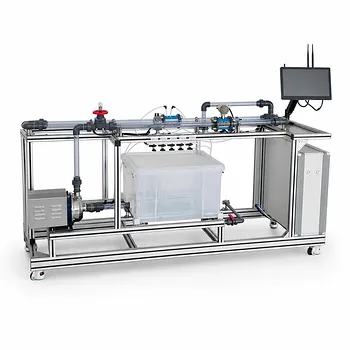
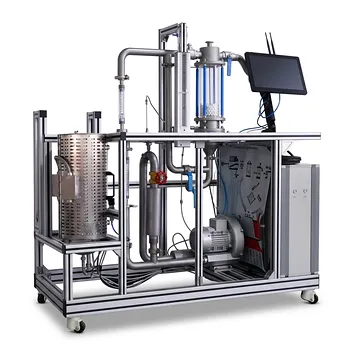
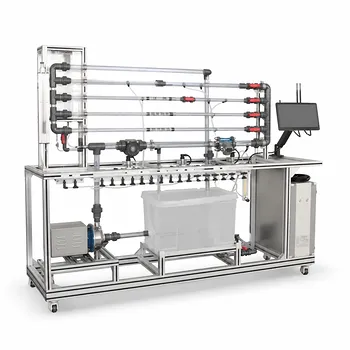
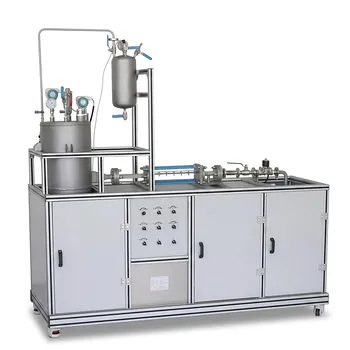
Accurate water monitoring is critical to maintaining pilot-scale thermal systems. LABPARK provides premium Educational and Vocational Unit Operations Pilot Plants in chemical engineering, bioprocess & biotech, and environmental & water treatment. Engineered specifically for universities, research institutes, and enterprises, our pilot plants deliver reliable, industrial-grade testing environments to help you master process control and corrosion prevention.
Ready to upgrade your lab's capabilities? Contact LABPARK today to find the perfect pilot plant solution for your institution.
Related Products
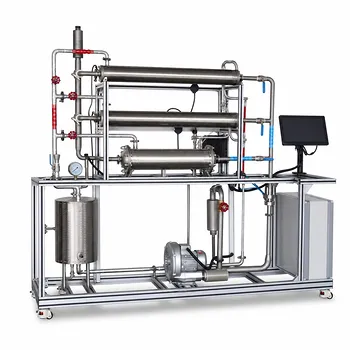
- Comprehensive Heat Transfer Coefficient Determination Educational Unit Operations Pilot Plant
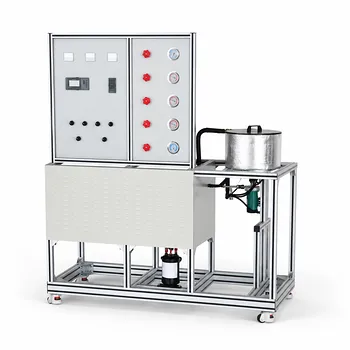
- Educational Compression Refrigeration Performance Determination Unit Operations Pilot Plant
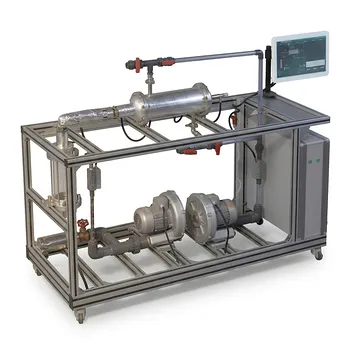
- Shell and Tube Heat Exchanger Heat Transfer Coefficient Determination Educational Pilot Plant
- Electrolyte Distillation Purification and Formulation Educational Pilot Plant
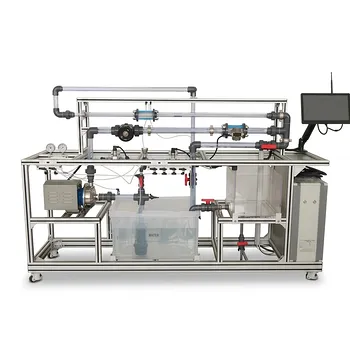
- Centrifugal Pump Performance and Orifice Flowmeter Calibration Educational Pilot Plant
People Also Ask
- When is ε-NTU preferred over LMTD in pilot plants? Predict heat exchanger performance without iteration.
- Why is the prevention of scale formation on heat exchanger surfaces a critical learning objective? Key Lessons
- How do unit conversions affect pilot plant calibration? Avoid errors in heat transfer data analysis
- How does thermal conductivity affect pilot plant performance? Optimize heat transfer & accuracy
- Why is emissivity critical in heat transfer pilot plants? Bridge the Gap Between Theory & Industrial Design