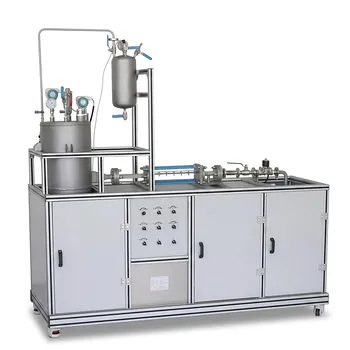
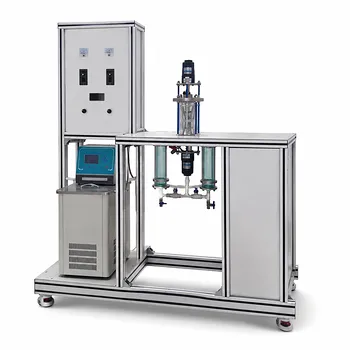
An online acoustic chemometric measurement system is built on three foundational pillars: hardware, acquisition software, and chemometric tools. The hardware captures acoustic signatures from the process, the software digitizes and conditions the signal, and the chemometric models translate that data into real-time process parameters. In educational or research pilot plants, the most efficient path is often a turnkey analyzer that packages these components into a single, robust unit, minimizing setup complexity while delivering industrial-grade reliability.
The core components are sensors, cabling, a data acquisition unit with amplifiers, plus dedicated software for signal processing and multivariate analysis. However, the true art lies not in listing parts, but in selecting an architecture that guarantees model simplicity, covers the full operating envelope during calibration, and keeps chemical insight at the center—all while handling the electrical noise and safety demands unique to pilot environments.
The Three Essential Component Categories
Every online acoustic chemometric system—whether built from scratch or delivered as a turnkey unit—rests on three interdependent modules. Understanding each one prevents the "black box" trap that plagues many pilot installations.
Hardware: Sensors, Cables, and Signal Conditioning
The acoustic sensor is your system's ear. It converts the process's mechanical vibrations into an electrical voltage. This sensor must be robust enough for the pilot plant's temperature, pressure, and chemical environment.
Signal cabling and amplifiers are equally critical. Long cable runs introduce electrical noise that can drown out the subtle acoustic patterns you're trying to measure. An amplifier mounted close to the sensor boosts the signal before noise can corrupt it, preserving the data integrity needed for reliable chemometrics.
Finally, the data acquisition (DAQ) unit converts the amplified analog signal into digital data. Its sampling rate and resolution must match the acoustic frequency range of interest.
Data Acquisition Software: From Raw Signal to Digital Data
Once digitized, raw acoustic waveforms need immediate processing. Data acquisition software performs tasks like Fast Fourier Transforms (FFT), filtering, and windowing.
This step extracts the acoustic features that will serve as inputs for your predictive models. The software must be stable enough to run continuously without memory leaks or crashes—reliability is paramount when measurements directly influence process control decisions.
Chemometric Software: Turning Acoustic Fingerprints into Process Insights
Chemometric software is the brain of the system. It applies multivariate calibration models—typically Partial Least Squares (PLS) regression—to correlate acoustic features with the actual process parameters you care about (e.g., concentration, particle size, reaction end-point).
This software also manages model validation, outlier detection, and the real-time output of predicted values. Its sophistication directly determines how accurately you can track fast-changing process conditions.
Why a Turnkey Analyzer is Often the Smart Start
In educational and research settings where time and integration ease are paramount, a turnkey analyzer system that bundles hardware and software becomes a powerful enabler.
Mitigating Electrical Noise and Complexity
A turnkey unit typically houses the sensor, amplifier, and signal processing electronics in a single, compact body. This close-coupling minimizes the cable length between the sensor and the amplifier, which drastically cuts down induced electrical noise.
It also eliminates the need for local programming to stitch together different hardware and software components. You avoid the frustrating integration hurdles that can delay research by weeks.
Explosion-Proof and Industrial Signal Outputs
Many pilot plants involve flammable solvents or dusts, making explosion-proof certification a non-negotiable safety requirement. A commercial turnkey analyzer often carries this certification by design, removing a significant regulatory burden from the research team.
Equally valuable is the ability to output predicted process values in a standard industrial format, like 4-20 mA signals. This lets your acoustic system communicate seamlessly with the plant's existing distributed control system (DCS), mimicking a simple transmitter and enabling closed-loop control without custom coding.
Understanding the Trade-Offs
Every technical choice brings hidden consequences. Acknowledging them ensures your system serves your goals rather than dictating them.
The Simplicity vs. Accuracy Dilemma
A core principle for online reliability is to keep the chemometric model as simple as possible. While a complex, non-linear model might fit your calibration data better in the lab, it often fails miserably online when process conditions drift slightly. Choosing simplicity means you may sacrifice a tiny fraction of predictive accuracy under ideal conditions for a method that remains robust and interpretable when the real world gets messy.
Calibration Coverage vs. Time and Resource Investment
Robust models demand calibration data that covers the entire expected response space—every temperature, every flow rate, every raw-material lot you'll ever encounter. Achieving this full coverage is resource-intensive, sometimes requiring months of designed experiments. The trade-off is clear: if you cannot cover the full space, you must define—and live within—a limited validity envelope. Operating outside that envelope risks generating a meaningless number that still looks convincing on a screen.
The Black Box Risk: When Domain Knowledge Takes a Backseat
Turnkey systems can become "black boxes" that shield you from the underlying algorithms. This conflicts with the principle of integrating chemical domain knowledge with statistical analysis. If you cannot inspect the feature extraction or challenge the model's logic with your own understanding of the chemistry, you risk building a system that latches onto a spurious acoustic correlation—like a rhythmic pump stroke—rather than a true process signature. The remedy is to demand transparency and relentlessly sanity-check outputs against offline reference samples.
Making the Right Choice for Your Research or Educational Pilot Plant
Align your component selection and system architecture with your primary operational goal. A one-size-fits-all answer does not exist.
- If your primary focus is rapid deployment and minimal integration hassle: Invest in a turnkey acoustic analyzer with built-in chemometrics, mounted as close to the process as possible. Its 4-20 mA output will let you treat it like a standard process transmitter, getting you from installation to meaningful data in days.
- If your primary focus is fundamental research into acoustic chemometrics itself: Build a modular system with separate high-quality sensors, a flexible DAQ, and open chemometric software. This gives you full control over signal processing algorithms and model tuning, but demands significant programming and calibration design effort upfront.
- If your primary focus is safe operation in a hazardous zone: Prioritize hardware with the correct explosion-proof certification above all else. Choose a turnkey system that has already undergone this certification, rather than designing a custom enclosure, to avoid lengthy and expensive safety reviews.
- If your primary focus is creating a model that will be handed off to a manufacturing team: Focus relentlessly on model simplicity and exhaustive calibration coverage. Document every failure mode and clearly define the valid operating region, so the manufacturing team never encounters a silent analytical failure.
Your acoustic system is not just a collection of sensors and software—it is a lens through which you will see your process. Build it with an unwavering commitment to data integrity, and the insights will follow.
Summary Table:
| Component Category | Key Elements | Primary Function |
|---|---|---|
| Hardware | Sensors, amplifiers, DAQ units, cabling | Captures and conditions raw acoustic signals from the process. |
| DAQ Software | FFT, filtering, windowing algorithms | Digitizes waveforms and extracts key acoustic features. |
| Chemometric Software | PLS regression models, validation tools | Translates acoustic features into real-time process parameters. |
Accelerate Your Process Research with LABPARK
Building advanced online measurement systems requires robust, reliable foundational infrastructure. LABPARK provides state-of-the-art Educational and Vocational Unit Operations Pilot Plants in chemical engineering, bioprocess & biotech, and environmental & water treatment. Tailored specifically for universities, research institutes, and enterprises, our pilot systems ensure your research is backed by industrial-grade accuracy, safety, and seamless integration.
Ready to elevate your pilot plant capabilities? Contact LABPARK today to discuss your project requirements!
Related Products
- Orifice and Venturi Flowmeter Calibration Educational Pilot Plant for Fluid Mechanics Laboratory
- Educational Compression Refrigeration Performance Determination Unit Operations Pilot Plant
- Multifunctional Membrane Separation Educational Pilot Plant with Ultrafiltration, Nanofiltration, Reverse Osmosis
- Fluid Friction Resistance Determination Educational Unit Operations Pilot Plant
- Multi-Functional Membrane Separation Educational Pilot Plant for Unit Operations Lab
People Also Ask
- What is the difference between static and stagnation pressure? Master Pilot Plant Flow Measurement
- How do pilot plants demonstrate siphon pressure variations? Visualizing Bernoulli's Energy Balance
- How do fluid mechanics training pilot plants facilitate the visualization and calculation of laminar and turbulent flows?
- How to update chemometric calibration models in pilot plants? Best practices for process engineers.
- Why are the laws of similitude critical in fluid flow pilot plants? Scale Up Safely