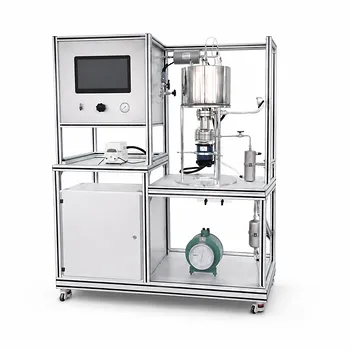
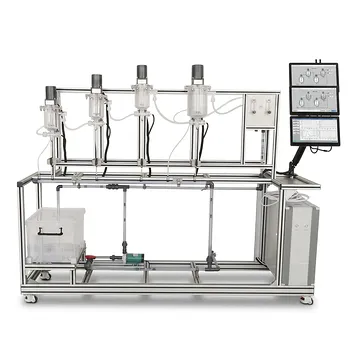
The fundamental divergence between aerobic and anaerobic bioreactor pilot plants lies in how they manage the electron acceptor. In an aerobic system, the design is dominated by the relentless challenge of delivering enough oxygen—a sparingly soluble gas—to respiring cells. In contrast, an anaerobic system’s design is defined by the absolute exclusion of oxygen, shifting the engineering focus away from gas-liquid mass transfer and entirely toward precise environmental and metabolic control. This single distinction cascades into almost every physical design choice and control strategy you will implement.
The core educational value of studying both pilot plants is not in learning two different sets of equipment, but in understanding how a single, fundamental biological constraint—the need for or toxicity of oxygen—dictates the entire engineering solution, from impeller design to control architecture.
The Core Design Imperative: Solving the Oxygen Problem
The physical architecture of a bioreactor is a direct reflection of its most critical rate-limiting step. For aerobic processes, this is almost universally oxygen mass transfer. For anaerobic processes, it is the maintenance of a strictly controlled, oxygen-free environment.
The Agitation Imperative in Aerobic Design
In an aerobic pilot plant, the stirrer is not just for mixing; it is a precision tool for gas dispersion. The system is a gas-liquid-solid multiphase challenge where oxygen's low solubility means the liquid film around a gas bubble is the primary resistance to transfer.
The design, therefore, centers on the oxygen mass transfer coefficient (kLa) . A high kLa requires a high-power-input motor driving a Rushton turbine or similar radial-flow impeller. These flat-bladed discs excel at shearing the incoming gas stream into the smallest possible bubbles, maximizing the interfacial surface area for transfer. Baffles on the vessel wall are non-negotiable; they prevent the formation of a vortex, converting high power input into chaotic turbulence, not just swirl.
The Simplicity Imperative in Anaerobic Design
An anaerobic bioreactor, used for ethanol or butanol production, strips away this complexity. Its design follows the completely mixed reactor model with a singular focus on homogeneity. Since there is no need for high-rate gas dispersion, the vessel is often a simple, sealed tank with a low-shear, axial-flow marine impeller. The goal is gentle homogenization to keep biomass suspended and ensure uniform temperature and nutrient distribution without the high shear forces that can damage cells in some processes.
The critical design element shifts from the sparger-impeller interaction to the sealing system. Every port, flange, and mechanical seal must guarantee a perfect gas barrier, not to keep oxygen in, but to keep it out and to contain valuable gaseous products.
Process Control Strategies: Two Opposing Worlds
With the physical designs set, the operational control logic follows suit. One set of sensors takes on paramount importance, while another becomes almost irrelevant.
Aerobic Control: Mastering the Cascade
The primary control loop in an aerobic process is a dissolved oxygen (DO) cascade. The engineer sets a DO setpoint, and the control system orchestrates variables in a sequential cascade to meet it. First, agitation speed ramps up to increase the kLa. If agitation maxes out, the airflow rate increases. If additional oxygen demand persists, the system might enrich the air with pure oxygen or increase the vessel’s back-pressure to enhance solubility.
All other controls serve this master loop. Temperature control become a significant challenge, as the high-power agitation required for oxygen transfer generates a massive heat load, demanding robust cooling jackets and often chilled water systems.
Anaerobic Control: The Chemical Maestro
In an anaerobic bioreactor, the dissolved oxygen probe provides a confirmation of sterility but drives no dynamic control. The master control loops are strictly for pH and temperature. Anaerobic fermentations often produce organic acids, requiring precise base addition to prevent pH crashes. This control is exquisitely sensitive because the metabolic pathways of organisms like Clostridium or Saccharomyces are highly pH-dependent.
Furthermore, the control focus expands to the gas headspace. Here, an oxidation-reduction potential (ORP) probe becomes critical, acting as a real-time chemical indicator of anaerobicity. The education shifts from mass transfer kinetics to metabolic pathway thermodynamics. Students monitor manometers or gas analyzers not to ensure supply, but to quantify the production rate of valuable gases like CO₂ and H₂.
The Educational Laboratory as a Unified System
A well-designed bioprocess engineering education program uses these contrasting plants as a complete pedagogical tool, exposing students to the entire spectrum of transport phenomena.
A Spectrum of Mass Transport Regimes
When combined, the two pilot plants illustrate two critical, and often opposing, transport limitations. The supplementary benefit comes from comparing them with more niche systems. For instance, an immobilized-cell packed bed bioreactor or a low-shear airlift fermenter, which uses density differences for gentle circulation, can sit between these extremes. An airlift provides oxygen without destructive shear, while a fluidized bed offers exceptional mass transfer for a stationary biocatalyst phase. Showing all three configurations reveals that the stirred tank versus anaerobic tank is just the starting point of a larger design continuum driven by biological sensitivity.
Understanding the Trade-offs
No single system is ideal, and understanding their blind spots is essential for objective training.
The Hidden Costs of High-Intensity Aerobic Design
The drive to maximize oxygen transfer is not without penalty. High shear zones near Rushton impeller tips can lyse delicate mammalian cells or filamentous bacteria. This requires either modified impellers or a move to lower-shear systems. The intense heat generation also means the pilot plant’s utility demand for cooling is disproportionately high, a critical scaling consideration.
The Inherent Productivity Limits of Anaerobic Design
While seemingly simpler, anaerobic systems suffer from a different problem: product inhibition. The ethanol, butanol, or organic acids they produce are often toxic to the very organisms making them. The educational focus shifts from a design problem (how to get oxygen in) to a process strategy problem (how to get the toxic product out), often by integrating pervaporation or solvent extraction units into the pilot plant setup.
Making the Right Choice for Your Educational Goal
The selection of a pilot plant for teaching must align with your core curricular objective. Both are essential for a complete education, but their deployment maps to specific learning outcomes.
- If your primary focus is teaching transport phenomena and unit operations: Prioritize the aerobic stirred-tank reactor. Its complex gas-liquid interactions, power number correlations, and cascade control logic offer an unmatched platform for teaching fundamental chemical engineering principles.
- If your primary focus is teaching metabolic engineering and industrial microbiology: The anaerobic bioreactor is your essential tool. Its design simplicity removes the oxygen-transfer variable, forcing students to confront the intricacies of redox balance, pathway yield coefficients, and the direct link between pH and metabolic flux.
- If your primary focus is on advanced biomanufacturing and whole-process design: Integrate both. The sequence of a feed-stock preparation unit, an aerobic biomass growth reactor, and an anaerobic product formation reactor teaches the critical concept that a modern bioprocess is rarely a single organism in a single vessel.
A holistic bioprocess engineering education cannot exist with just one type of reactor; it is in the contrast between the "messy" physical challenge of aeration and the "stringent" chemical discipline of anaerobiosis that true engineering intuition is forged.
Summary Table:
| Feature | Aerobic Bioreactors | Anaerobic Bioreactors |
|---|---|---|
| Primary Challenge | Oxygen mass transfer ($k_La$) | Oxygen exclusion & hermetic sealing |
| Impeller & Agitation | High-shear (Rushton turbine + baffles) | Low-shear (axial-flow marine impeller) |
| Primary Control Loops | Dissolved Oxygen (DO) cascade | pH, temperature, & headspace ORP |
| Educational Focus | Transport phenomena & unit operations | Metabolic engineering & kinetics |
Elevate Your Bioprocess Engineering Lab with LABPARK
Are you looking to bridge the gap between theory and hands-on practice? LABPARK provides premium Educational and Vocational Unit Operations Pilot Plants in chemical engineering, bioprocess & biotech, and environmental & water treatment. Specifically designed for universities, research institutes, and enterprises, our advanced pilot plants empower students and researchers to master transport phenomena, metabolic engineering, and cascade control systems.
Ready to upgrade your laboratory's training capabilities? Contact LABPARK today to discuss your custom pilot plant requirements!
Related Products
- Internal Circulation Gradient Free Catalytic Reaction Educational Pilot Plant
- Fixed-Bed Chemical Reaction and Gas Dust Tar Removal Unit Operations Pilot Plant
- Multi-Reactor Educational Pilot Plant for Reaction Engineering Unit Operations
- Fluidized Bed Gas Solid Catalytic Reaction Educational Pilot Plant
- Rising and Falling Film Evaporation Educational Unit Operations Pilot Plant
People Also Ask
- Why is thermal management a major challenge in methane oxidative coupling? Reactor Solutions for Pilot Plants
- Why is a multibed configuration necessary for exothermic reactions? Optimize your pilot plant trajectory.
- Fluidized vs. Fixed Bed Reactors: Comparing Heat & Complexity in Pilot Plants
- How can researchers use Mears criteria in a catalytic reactor pilot plant to determine transfer resistance?
- How do catalytic reactor pilot plants help students study catalyst performance and mitigate coking?