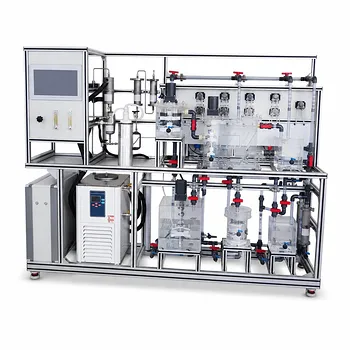
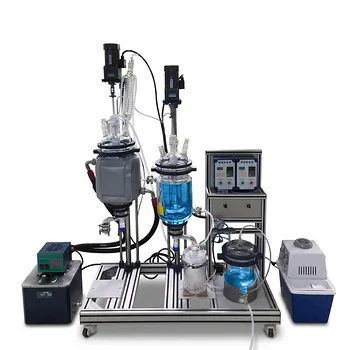
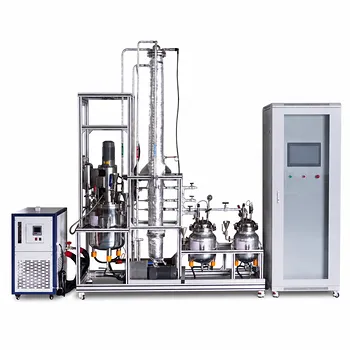
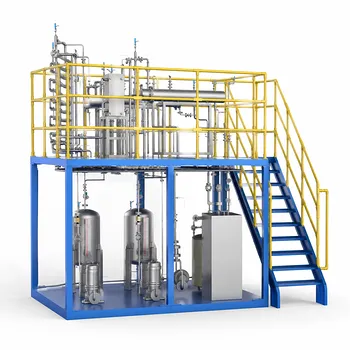
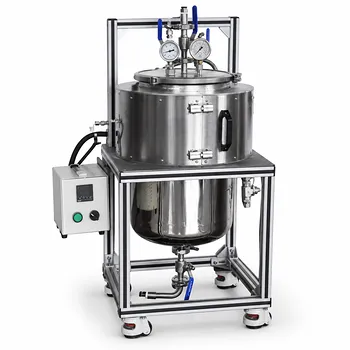
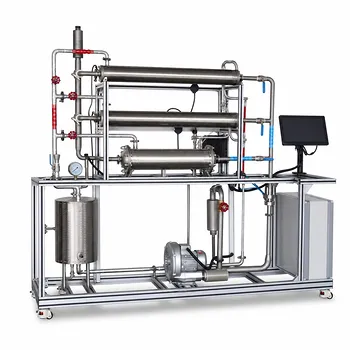
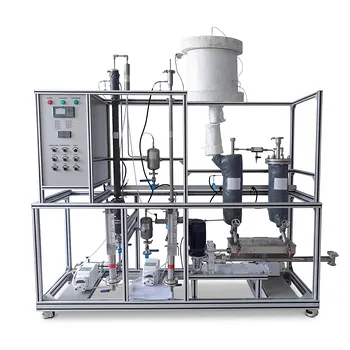
Coking in thermal cracking tubes creates a cascade of operational penalties that directly threaten throughput, efficiency, and safety. The immediate impacts are a sharp rise in tube wall temperature due to increased thermal resistance, a higher pressure drop across the reactor, and a measurable loss in olefin selectivity. Chemical engineering pilot plants address this by allowing students to simulate these exact symptoms—using integrated pressure and temperature transmitters—and then perform hands-on decoking operations with steam-air mixtures under controlled conditions.
Coking turns the reactor into a less efficient, higher-risk asset. Pilot plants transform this industrial problem into a teachable moment: students witness the physics of fouling, practice the decoking sequence safely, and internalize the maintenance mindset that keeps real crackers running.
The Critical Operational Impacts of Tube Coking
Coke deposition is not a subtle nuisance—it is a process-altering event that rewrites the operating envelope of a thermal cracking furnace. Understanding its mechanics is the foundation for any effective decoking procedure.
Increased Thermal Resistance and Tube Wall Temperature
Coke layers act as an insulating blanket on the inner tube surface. The same heat input now generates a much higher tube metal temperature, often pushing the material closer to its metallurgical limits. This accelerates creep and fatigue, reducing tube life and increasing the risk of unscheduled shutdowns. In a pilot plant, students see this as a rising temperature reading on a transmitter even though the furnace duty remains constant—a clear, quantifiable signal of coking.
Elevated Pressure Drop Across the Reactor
As coke narrows the flow path, the reactor behaves like a smaller-diameter pipe. The pressure drop rises non-linearly, forcing compression systems upstream to work harder. This higher back-pressure suppresses the desired cracking reactions that favor olefin yield. The consequence is a double blow: more energy consumption and less valuable product. Pilot plant setups with differential pressure cells let students correlate the onset of coking with a steady climb in pressure drop, creating an intuitive link between fouling and fluid dynamics.
Decreased Olefin Selectivity and Accelerated Secondary Reactions
A coked surface and a restricted flow promote longer residence times and higher partial pressures of hydrocarbons. Secondary reactions—dehydrogenation, cyclization, polymerization—become dominant, consuming ethylene and propylene to form heavy tars and additional coke. This feedback loop degrades yield and shortens the run length even further. In a teaching reactor, monitoring product gas composition while simulating a coked tube demonstrates how selectivity plummets, cementing the principle that decoking is not only a maintenance chore but a yield-protection imperative.
Compressed Decoking Cycles and Forced Operational Turns
The severity of coking directly dictates how often a furnace must be taken offline. While a standard cracking coil might sustain a 40–45 day run, high-severity or millisecond-capable designs with smaller tube diameters can slash the decoking cycle to just 7–15 days. This operational reality—fewer online days, more frequent steaming—changes manpower planning, utility costs, and equipment stress. Pilot plants can be configured with different tube diameters to let students compare the coking cadence and internalize the trade-off between yield intensity and run length.
How Pilot Plants Enable the Teaching of Decoking Procedures
A well-designed chemical engineering pilot plant does more than demonstrate coking; it provides a safe, repeatable environment where students acquire the procedural muscle memory required for industrial decoking.
Simulating Coking with Real-Time Data
The pilot reactor is instrumented with pressure transmitters and multiple thermocouples along the tube length. Students monitor a live dashboard that mimics the control room of a commercial cracker. As a simulation introduces a pre-defined fouling factor or physically restricts flow, the displayed pressure drop rises and tube skin temperatures climb. This data stream forces students to diagnose the root cause—coke—without the ambiguity of a real plant, sharpening their analytical skills.
Hands-On Execution of a Steam-Air Decoke
Once the simulated coking reaches a trigger level, students initiate the decoking sequence. They introduce a steam-air mixture and carefully control the exothermic burn-off of carbon deposits. The pilot plant’s temperature controls become critical: too lean a mixture, and the coke burns too slowly; too rich, and the temperature can spike dangerously, potentially damaging the tube. By adjusting the air-to-steam ratio and tracking the decoking endpoint (typically when the tube temperature normalizes or CO₂ production falls), students gain direct experience in the step-by-step logic that every shift operator must master.
Integrating Process Safety and Maintenance Protocols
Decoking is an inherently hazardous operation—it combines high temperatures, flammable gases, and potential hot spots. Pilot plants introduce lock-out, tag-out, gas detection, and emergency shutdown procedures directly into the curriculum. Students learn that decoking is not a standalone event; it interlinks with isolation valves, depressurization, and purge cycles. This holistic safety training ensures that the transition from lab to plant is seamless and mentally prepared.
Understanding the Trade-offs in Coking Management
Teaching decoking in isolation misses the bigger picture. The real lesson lies in managing the competing demands of yield, run length, and equipment stress—trade-offs that every process engineer must weigh.
Yield Intensity vs. Run Length: The Millisecond Crunch
Pilot plants often demonstrate that smaller tube diameters and extremely short residence times (0.05–0.10 seconds) boost ethylene yield dramatically. However, these same aggressive conditions intensify coke formation, forcing decoking every 1–2 weeks instead of every 6 weeks. Students learn that there is no free lunch: pushing for maximum olefin output demands a rigorous, more frequent maintenance rhythm. This trade-off becomes a design discussion—whether the extra product volume offsets the increased downtime and tube wear.
Steam Dilution: Coke Suppression at an Energy Cost
Steam acts as a diluent that reduces hydrocarbon partial pressure, suppressing secondary reactions and coke buildup. But adding more steam increases the utility load for generation, separation, and condensation downstream. Pilot plants with variable steam-to-feed ratios let students see how a 30% steam addition can halve the coking rate, yet they also observe the corresponding spike in demineralized water consumption and cooling duty. This cost-benefit analysis teaches that decoking frequency is a function of upstream process choices, not merely a cleaning schedule.
Physical vs. Chemical Decoking Methods
Beyond steam-air decoking, pilot plants can expose students to alternative methods like hydrokinetic cleaning or catalytic decoking. Each approach carries its own risk profile: mechanical pigging may scratch tubes, while chemical agents can be corrosive. The teaching objective is to let students evaluate life-cycle tube integrity against decoking speed, fostering an evidence-based selection of the right method for a given furnace metallurgy and coke type.
Making the Right Choice for Your Training Goal
How you utilize a chemical engineering pilot plant depends on whether your primary aim is foundational understanding, operator skill building, or process optimization research.
- If your primary focus is building a deep, conceptual understanding of coking: Ensure the pilot setup provides clear, real-time visualization of pressure drop and temperature rise, so students can connect fouling theory to observable process symptoms.
- If your primary focus is developing operator-level decoking proficiency: Prioritize a pilot plant that mirrors industrial control logic, allowing repetitive, hands-on practice of the steam-air sequence with integrated safety interlocks.
- If your primary focus is teaching the trade-offs between reactor design and coking: Use interchangeable tube diameters and configurable residence times to let students experiment, then compare run-length data and decoking frequency to make their own engineering judgments.
- If your primary focus is exploring advanced decoking techniques or feedstock impacts: Look for a reactor system with customizable burn-off temperature profiles and the ability to switch between physical and chemical decoking methods, paired with feedstock diversification.
A pilot plant that faithfully reproduces the pressure, temperature, and procedural reality of tube coking does more than teach a technique; it instills a safety-first, efficiency-driven mindset that protects both the plant and the people who run it.
Summary Table:
| Operational Impact | Process Consequence | Pilot Plant Teaching Method |
|---|---|---|
| Thermal Resistance | Higher tube wall temperatures & creep risk | Monitor skin temperatures via thermocouples |
| Pressure Drop | Increased back-pressure & lower olefin yield | Track pressure variations using DP transmitters |
| Selectivity Loss | Secondary reactions (tars/coke buildup) | Analyze product gas composition changes |
| Operational Downtime | Compressed decoking cycles (7-15 days) | Simulate steam-air burn-off under safe conditions |
Equip Your Lab for Hands-On Process Engineering Success
At LABPARK, we help universities, research institutes, and enterprises bridge the gap between theory and industrial practice. We provide high-quality Educational and Vocational Unit Operations Pilot Plants specializing in chemical engineering, bioprocess & biotech, and environmental & water treatment.
Our advanced pilot systems allow students and operators to safely simulate real-world challenges—like tube coking, pressure drops, and thermal cracking—while mastering critical maintenance procedures like steam-air decoking.
Ready to elevate your training curriculum or research capabilities? Contact LABPARK today to explore our customizable pilot plant solutions!
Related Products
- Thermal Desorption Exhaust Gas and Tail Water Treatment Educational Pilot Plant
- Methane Cracking Educational Unit Operations Pilot Plant
- Potassium Salt Thermal Dissolution and Crystallization Separation Educational Unit Operations Pilot Plant
- Dual Mode Heat Transfer Pilot Plant for Unit Operations Training
- Carbon Material Thermal Pretreatment Multiphase Separation Educational Pilot Plant
People Also Ask
- How is P, M, and B alkalinity applied in pilot plants? Prevent Boiler Scaling & Corrosion
- What are inline fluorescence sensor risks, and how can they be managed? Key Strategies
- Lime-Soda vs. Cation Exchange Softening: How Do Effluent Characteristics Compare in Pilot Plants?
- How is iron concentration monitored to evaluate corrosion and filtration efficiency in water treatment pilot plants?
- How do anodic & cathodic inhibitors protect heat exchangers? Optimize Your Water Treatment Pilot Plant