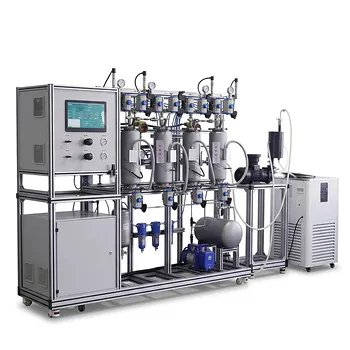
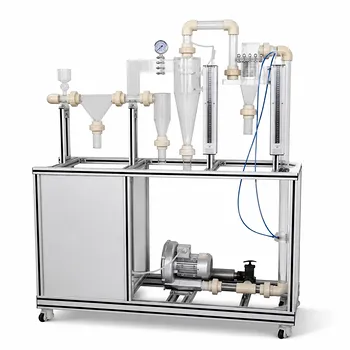
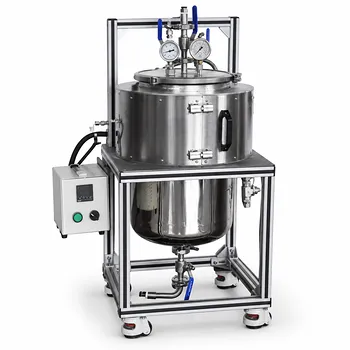
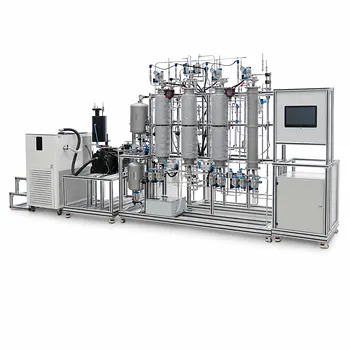
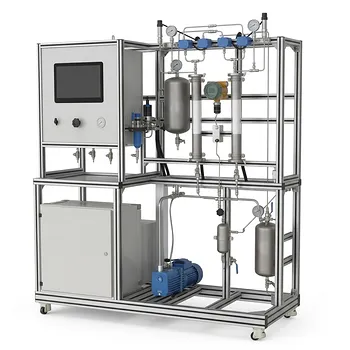
The battle against declining performance in any membrane separation pilot plant is won on two fronts—how you treat the feed and how you engineer the fluid dynamics at the membrane surface. These strategies are not just operational tweaks; they are the essential controls that determine whether your pilot plant yields scalable data or simply demonstrates a fundamental processing failure. The explicit answer lies in pretreatment, flow optimization, material selection, and cleaning, but the deeper solution requires understanding how to orchestrate these elements for a specific separation goal.
While fouling mechanisms range from crystalline scaling to biological growth, the underlying trigger is always an unfavorable interaction between the feed solution and the membrane surface. Effective mitigation in a pilot-scale operation is a systematic campaign of keeping foulants away from the module, reducing their adhesion, and removing them the moment performance dips.
Decoding the Fouling Challenge in Pilot Operations
A pilot plant’s purpose is to stress-test a separation process, which inherently accelerates fouling. You aren’t just running a process; you are intentionally probing its failure limits to build a reliable industrial design.
Understanding the Root Causes
Fouling is not a single event but a complex accumulation driven by concentration polarization, pore blocking, and gel layer formation. The driving force is the inevitable interaction between the membrane material and the feed stream’s organic, inorganic, and biological constituents.
Concentration polarization creates a localized high-solute zone right at the membrane surface. This concentrated boundary layer increases osmotic pressure and accelerates the deposition of colloids and macromolecules.
The Four Faces of Fouling
Recognizing the specific enemy dictates your choice of weapon. The deposits you see are most often a combination of these distinct mechanisms.
- Inorganic Fouling (Scaling): This occurs when dissolved salts like calcium carbonate or silica precipitate onto the surface after exceeding their solubility limits.
- Organic Fouling: Natural organic matter, proteins, and humic substances adsorb onto the membrane via hydrophobic and electrostatic forces, forming a slick, hydraulically resistant film.
- Biofouling: Microorganisms attach, multiply, and secrete extracellular polymeric substances (EPS), creating a living biofilm that cements other foulants in place.
- Colloidal/Particulate Fouling: Suspended silt, clay, or aggregated organic matter physically blocks the pores or settles into a cake layer on the surface.
Validating a Systematic Mitigation Strategy
Your pilot plant is the platform to validate a sequence of interventions. The workflow should move from the most passive, cost-effective methods to the most aggressive.
Optimizing the Feed Through Pretreatment
You must intercept the foulant load before the first membrane module is challenged. Feed pretreatment is the single most effective area to invest your operational effort.
- Primary Filtration: Use depth filters or pre-screens to remove large particulates that would instantly clog your channel spacers.
- Chemical Conditioning: Adjusting pH can prevent scaling salts from precipitating. Coagulants and flocculants can be dosed to aggregate fine colloids into larger, less membrane-adhesive particles.
- Advanced Pre-filtration: Deploying a loose ultrafiltration (UF) or microfiltration (MF) guard membrane scours out the fine particles and microbes that would otherwise blind the main pilot unit.
Engineering Fluid Dynamics with Operating Parameters
You control the physical forces that dislodge foulants. Increasing the cross-flow velocity generates turbulent shear at the membrane surface, sweeping away the concentration polarization layer before it can solidify.
However, turbulence promoters and baffles can achieve a high mass transfer coefficient without the high energy cost of pumping the entire stream at extreme velocities. You must also critically control the transmembrane pressure (TMP) . Operating below the critical flux—where a slight increase in TMP does not cause a rapid, irreversible flux decline—prevents the formation of a dense, compressible gel layer.
Engineering the Membrane Surface
Material selection is a passive defense that pays continuous dividends. Anti-fouling membranes function by resisting the initial adhesion event.
- Hydrophilic Modification: Grafting hydrophilic vinyl monomers onto polymers like polysulfone or polyacrylonitrile (PAN) creates a hydration layer that repels hydrophobic foulants like proteins and oils.
- Charge Modification: Incorporating quaternary ammonium groups gives the membrane a cationic surface. This creates an electrostatic barrier that actively repels similarly charged organic macromolecules and colloids.
Intervening with Strategic Cleaning
When preventative measures fail, aggressive remediation is required. Chemical cleaning is a reactive strategy that must be validated for compatibility with your specific membrane chemistry to avoid de-lamination or pore swelling.
Acids dissolve inorganic scale, bases hydrolyze organics, and surfactants emulsify stubborn oils. For sensitive pilot studies in bioprocessing, enzymatic cleaners provide a targeted mechanism to digest the EPS matrix of a biofilm without attacking the polymer backbone of the membrane. In pressure-driven systems, a brief physical backwash with water or permeate, sometimes enhanced with air scouring, provides a frequent, low-impact reset.
Understanding the Trade-offs
No single strategy operates in a vacuum, and many conflict with the primary economic metrics of your pilot study.
- Pumping Energy vs. Shear Damage: Higher crossflow reduces fouling but increases energy consumption and risks shearing delicate large-molecule products (like in protein concentration).
- Chemical Dosage vs. Membrane Life: Strong oxidants and concentrated acids rapidly restore flux, but each aggressive cleaning cycle slowly degrades the membrane’s selective layer, eventually sacrificing solute rejection.
- Vapor Permeation as a Bypass: If you are dealing with an extremely fouling-prone liquid for separation (like during pervaporation), configuring the pilot as a vapor permeation unit vaporizes the feed first. This completely prevents liquid-phase foulant contact with the membrane, though it shifts the energy burden to an integrated distillation or vaporization step.
Making the Right Choice for Your Goal
Your specific application dictates which mitigation strategy must be the centerpiece of your pilot trial.
- If your primary focus is validating a biotech separation or sensitive protein: Prioritize gentle hydrodynamic control and enzymatic cleaning. Avoid harsh chemical cycles that could contaminate the product or denature it.
- If your primary focus is demonstrating a robust water treatment train: Integrate a multi-stage pretreatment scheme (coagulation + UF guard) and map out automated backwashing cycles triggered by real-time TMP monitoring.
- If your primary focus is studying fundamental fouling mechanisms: Isolate one variable at a time. Use a highly controlled synthetic feed to test the anti-adhesive properties of a specific membrane surface charge modification without the noise of a complex natural water matrix.
Turn your pilot plant into a decision-making tool, using it not just to observe the inevitable fouling curve, but to systematically break it.
Summary Table:
| Strategy | Primary Mechanism | Best Suited For |
|---|---|---|
| Pretreatment | Particle filtration & chemical conditioning | Scaling & particulate removal |
| Flow Optimization | Adjusting cross-flow velocity & TMP | Reducing concentration polarization |
| Surface Modification | Hydrophilic & electrostatic coatings | Resisting organic & bio-adhesion |
| Strategic Cleaning | Chemical, enzymatic, & physical backwash | Periodic flux recovery |
Optimize Your Membrane Separation Research with LABPARK
Scaling up separation processes requires robust, reliable, and highly controllable equipment. LABPARK provides state-of-the-art Educational and Vocational Unit Operations Pilot Plants across chemical engineering, bioprocess & biotech, and environmental & water treatment. Developed specifically for universities, research institutes, and enterprises, our pilot plants empower you to effectively study fouling mitigation, test real-world parameters, and gather high-fidelity data.
Ready to elevate your laboratory's capabilities? Contact LABPARK today to find the perfect pilot plant solution for your research and training needs!
Related Products
- Multi-Functional Membrane Separation Educational Pilot Plant for Unit Operations Lab
- Photocatalytic Membrane Separation and Degradation Unit Operations Pilot Plant
- Ultrafiltration Membrane Separation Educational Pilot Plant
- Multifunctional Membrane Separation Educational Pilot Plant with Ultrafiltration, Nanofiltration, Reverse Osmosis
- Hollow Fiber Ultrafiltration Membrane Separation Educational Pilot Plant
People Also Ask
- What are the key differences in membrane configurations? Choose the Right Unit Operations Pilot Plant
- How Do Pervaporation, Vapor, and Gas Permeation Differ in Pilot Plants? Key Comparison
- What are the advantages of membrane separation pilot plants? Energy-saving process intensification.
- Pervaporation vs. Vapor Permeation: Handling Suspended Solids in Membrane Pilot Plants
- How do PEI, PVDF, and PSU membranes compare in pilot plants? Find the best fit.