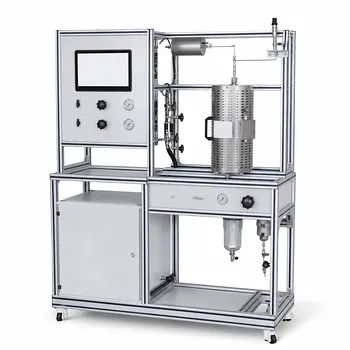
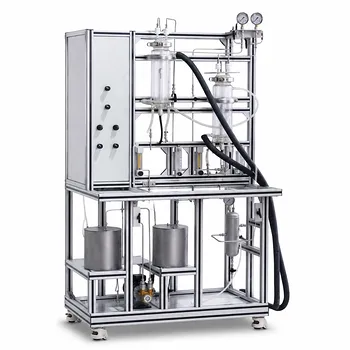
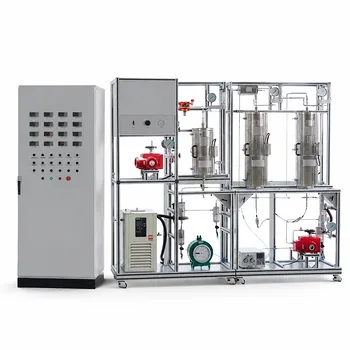
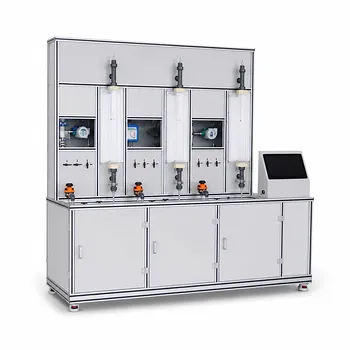
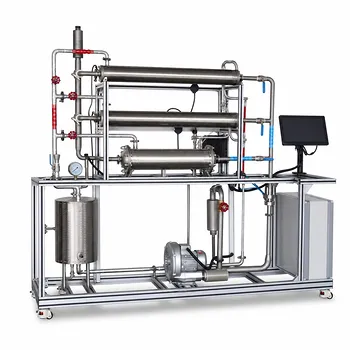
The fundamental operational difference lies in how material flows through time. A batch reactor is a closed, unsteady-state system where everything happens in sequence—charge, react, discharge. A continuous reactor is an open, steady-state system with a constant inflow and outflow. A semi-continuous reactor is a hybrid, starting like a batch but with one stream added or removed over time, making it an unsteady-state system that mimics continuous control. For pilot-scale processes, your selection becomes a direct strategic choice between flexibility, safety, and the type of operational control you need to study.
Selecting a pilot-scale reactor isn't about finding the "best" general-purpose mode; it's about matching the operational characteristics to your core objective—whether that's inherent safety for hazardous chemistry, flexibility for multi-product development, or mastering industrial steady-state control.
Moving Beyond Definitions: Matching the Mode to the Mission
The core differences aren't just academic; they dictate everything from safety protocols to the skills your operators will learn. In a pilot plant, the reactor’s operational mode is the single biggest factor shaping your curriculum, your data quality, and your risk profile.
The Time and State Factor
This is the root difference that creates all other operational distinctions.
-
Batch Operation: The Master of Flexibility In batch mode, all reactants are charged, and the reactor becomes a closed system. Concentration and temperature change over time until the reaction is complete. This makes it the ideal tool for studying reaction kinetics, transient heat transfer, and batch cycle optimization in a single vessel. It's unmatched for small-scale, multi-product training in pharmaceuticals or fine chemicals, where you might run three different syntheses in the same reactor in a single week.
-
Continuous Operation: The Steady-State Champion A continuous reactor, like a CSTR or tubular reactor, operates as an open system with feed and product streams running constantly. The goal is a steady state where conditions at any point in the reactor are stable. Operationally, this shifts the focus to residence time distribution (RTD), flow dynamics, and continuous process control loops. It's the only way to teach 24/7 industrial production methods, where a pilot plant can achieve 90-95% utilization and deliver rock-steady product quality.
-
Semi-Continuous Operation: The Precision Regulator Also known as semi-batch or fed-batch, this mode starts with one reactant in the vessel and adds another gradually. It’s a controlled unsteady-state operation. Its primary operational purpose is controlled feeding to limit a reactant's concentration, directly managing the reaction rate and heat generation. This is not a compromise; it’s a deliberate strategy to optimize selectivity in complex reactions and control dangerous exotherms.
The Critical Safety Dimension
Your reactor choice is an inherent safety decision, and this is where operational mode has life-or-death implications.
Mitigating Thermal Runaway Risk
For highly exothermic reactions, the mode controls the maximum possible energy release.
- Batch reactors are inherently vulnerable. If a reaction risks a thermal runaway, a standard batch mode is the most dangerous choice because all potential energy is present in the vessel simultaneously with limited heat transfer capacity.
- Semi-batch is the active safety tool. By feeding the limiting reactant slowly, you directly control the rate of heat generation. If a cooling failure occurs, stopping the feed instantly stops the reaction.
- Continuous reactors offer the pinnacle of safety. For fast, highly exothermic reactions—like nitration, which releases >100 kJ/mol—a continuous tubular reactor is the safest solution. It minimizes the online hazardous inventory to a tiny fraction of an equivalent batch vessel, providing superior heat transfer and stable steady-state operation.
Inventory Minimization
This is the safety principle of minimization in practice. A continuous tubular pilot reactor holds a much smaller volume of hazardous material at any instant than a batch stirred tank of the same daily capacity. In an incident, a small inventory is easier to isolate and contains far less destructive energy.
Structuring a Versatile Pilot Plant Curriculum
A well-designed pilot plant doesn't pick one mode; it creates a system where contrasting operations teach the deepest lessons.
-
Contrasting Batch and CSTR: Having both allows a direct, tangible comparison. In the batch pilot plant, students grapple with a transient, time-dependent profile, learning to optimize a heating/cooling ramp and reaction hold time. In the CSTR, the lesson shifts entirely to steady-state error, flow disturbances, and the startup/shutdown procedures needed to reach that stable operating point.
-
Flexible Distillation Integration: This principle extends to unit operations like rectification. A truly versatile pilot column features flexible piping and multiple feed points. In this way, students can run a complete continuous operation, feeding raw material to a middle plate and observing the separate rectifying and stripping sections. With a valve change, the same system becomes a batch operation, charging the reboiler directly and watching the overhead composition deplete over time. This physical experience cements the abstract differences.
Understanding the Trade-offs
An objective advisor must be clear about the downsides. A choice for one mode is a simultaneous rejection of another mode's benefits.
- Batch Mode's Limitations: The flexibility comes at a cost of high labor, complex cleaning validation between products, and potential for batch-to-batch variation that can obscure true process effects. Scaling up a batch process is also a fundamentally different engineering challenge than scaling up a continuous one.
- Continuous Mode's Rigidity: The safety and consistency are offset by complexity. Feed control systems must be highly precise to maintain a stable reaction. Startup and shutdown are procedurally complex. It's a far less flexible tool for a research environment where you want to test ten different formulations in a month.
- The Hybrid Approach's Complexity: While a pilot plant that combines a batch reactor with a continuous downstream unit (like a distillation column) is the most realistic industrial simulation, it introduces a complex scheduling puzzle. Students must learn to manage the interface between a transient batch unit and a steady-state continuous separator, a notoriously difficult industrial challenge.
How to Choose the Right Mode for Your Pilot Plant
Your selection is a direct consequence of your primary objective. Let the goal dictate the operational mode.
- If your primary focus is inherent safety with hazardous chemistry: Select a continuous or semi-batch mode above all else. The reduction in online inventory and superior thermal control are non-negotiable and should drive the entire design.
- If your primary focus is versatile training on diverse products: Choose a batch system. Its ability to quickly switch between different chemistries and focus on formulation-specific cycle optimization in a single vessel is unmatched.
- If your primary focus is replicating large-scale industrial dynamics: You must choose a continuous system. Only this mode can teach the nuances of steady-state process control loops, residence time distribution, and true 24/7 operational discipline.
- If your primary focus is optimizing reaction selectivity and yield: Implement a semi-continuous setup. The ability to precisely control the instantaneous concentration of a key reactant through a programmed feed profile is your most powerful tool.
Your reactor's operational mode is the physical embodiment of your process philosophy, so let your core technical challenge dictate the hardware, and the educational or development goals will follow.
Summary Table:
| Reactor Type | Operation State | Primary Advantage | Safety Profile | Best Used For |
|---|---|---|---|---|
| Batch | Unsteady-state (Closed) | Maximum process flexibility | Vulnerable to thermal runaway | Multi-product training & kinetics |
| Continuous | Steady-state (Open) | Consistent quality & high throughput | High safety (minimal online inventory) | Industrial replication & RTD study |
| Semi-Continuous | Hybrid Unsteady-state | Precise reaction rate control | High safety (feed control halts runaway) | Exothermic reactions & yield optimization |
Elevate Your Practical Education and Research with LABPARK
Choosing the right reactor configuration is vital for safety, teaching efficiency, and process scale-up. LABPARK designs and manufactures high-performance Educational and Vocational Unit Operations Pilot Plants for chemical engineering, bioprocess & biotech, and environmental & water treatment.
We empower universities, research institutes, and enterprises with customized, safe, and realistic pilot-scale solutions. Contact LABPARK today to discuss your system requirements with our experts!
Related Products
- Multi Functional Catalytic Reaction and Reactor Evaluation Educational Unit Operations Pilot Plant
- Residence Time Distribution and Reactor Flow Characteristics Determination Educational Pilot Plant
- Tubular Reactor Flow Characteristics Determination Educational Unit Operations Pilot Plant
- 100L Continuous Loop Hydrogenation Educational Unit Operations Pilot Plant
- Multi-Stage Stirred Tanks in Series Residence Time Distribution and Mixing Performance Determination Educational Pilot Plant
People Also Ask
- What reaction engineering principles are shown in a catalytic reactor pilot plant? SO2 Oxidation Guide
- Why is FTIR integration in catalytic pilot plants important? Real-Time Student Insights
- How to analyze active metal distribution & identify catalyst poisoning in pilot plants? Expert Diagnostic Guide
- How do temperature limits and WHSV influence catalytic reactor optimization? Scale-Up Guide
- What operational insights do catalyst pellet concentration profiles provide? Optimize Reactor Yield