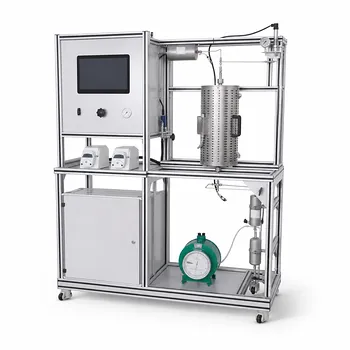
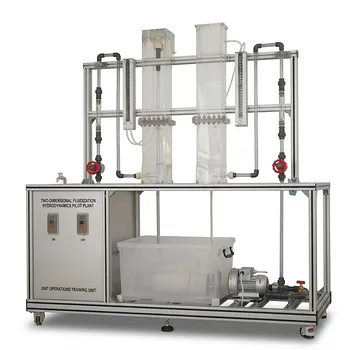
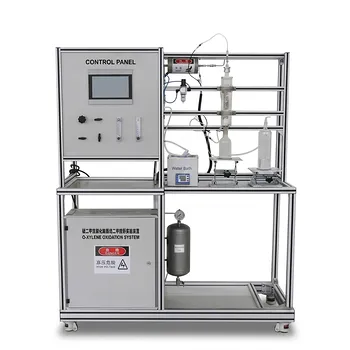
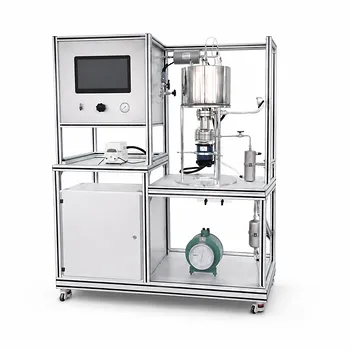
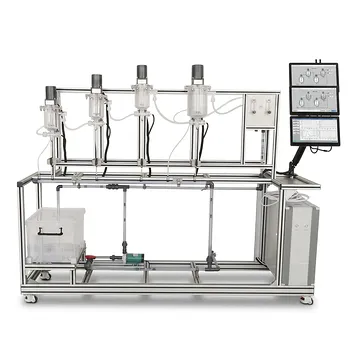
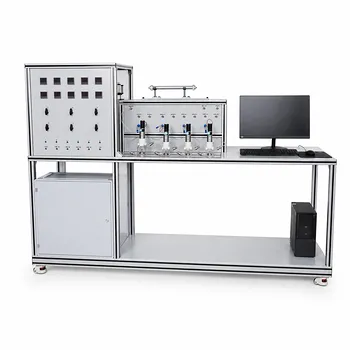
When you need to maintain a precise temperature profile during catalytic reaction studies, the single most impactful choice you’ll make is between a fixed-bed and a fluidized-bed reactor pilot plant. Fixed-bed reactors deliver the simplicity and plug-flow behavior ideal for kinetic modeling, but they struggle with heat removal and can develop damaging hot spots. Fluidized-bed reactors virtually eliminate thermal gradients through violent solid mixing, yet introduce catalyst attrition and complex fluid dynamics that demand careful engineering.
The core distinction is that fluidized-bed reactors provide near-isothermal operation and effortless catalyst handling at the expense of particle integrity and backmixing, while fixed-bed reactors offer superior plug-flow conversion and mechanical simplicity but risk localized overheating. Your selection hinges on whether you prioritize thermal precision or straightforward scale-up.
Heat Transfer and Temperature Control: The Defining Difference
This single factor often dictates the viability of an entire catalytic study. The fundamental challenge is removing the heat released by exothermic reactions before it can degrade the catalyst or skew kinetic data.
How Hot Spots Form in Fixed-Bed Reactors
A fixed-bed reactor contains a stationary mass of catalyst. The heat generated within the bed must travel through the particle packing to the tube wall, which creates significant resistance. As a result, axial and radial temperature gradients naturally develop, with the centre line becoming far hotter than the wall. These localized overheated zones, or hot spots, can irreversibly damage the catalyst and, in severe cases, trigger a thermal runaway. Even when safe operation is possible, hot spots distort kinetic measurements, making it nearly impossible to derive true intrinsic reaction rates.
The Fluidized-Bed Solution: Isothermal by Design
In a fluidized-bed unit, the upward gas flow suspends the solid catalyst particles, causing them to churn like a boiling liquid. This intense mixing constantly redistributes heat across the entire bed. The result is a virtually uniform bed temperature—there is no centre-line hot spot because no particle stays in one place long enough to overheat. The heat transfer coefficient in a fluidized bed typically reaches around 200 W/(m²·°C), dwarfing the values achievable in a fixed bed. In fact, a multi-tubular fixed-bed design can require up to ten times the heat exchange surface area of a fluidized bed to handle the same heat removal duty, making the latter significantly more effective for strongly exothermic chemistry like benzene oxidation or acrylonitrile synthesis.
Catalyst Handling and Mechanical Integrity
The physical fate of your catalyst particles differs dramatically between the two configurations, impacting both operating costs and experimental continuity.
Fixed-Bed: Permanent Placement, Slow Replacement
In a fixed-bed reactor, the catalyst sits undisturbed under process flow. Catalyst attrition is minimal, and the particles retain their original shape over long runs. Because the flow approaches plug flow, the highest possible conversion per pass is attainable for a given catalyst mass. The downside is that catalyst loading and unloading are entirely manual and time-consuming. If the catalyst deactivates during a study, you must shut down the plant, unpack the bed, and reload fresh material—an operation that can take hours and introduce variability into your experimental runs.
Fluidized-Bed: Continuous Circulation and Inevitable Wear
The same particle motion that gives a fluidized bed its thermal uniformity also grinds the catalyst against itself and the reactor walls. Catalyst attrition produces fine dust that must be captured by cyclones or filters to prevent loss and downstream contamination. To survive this environment, you must use high-strength catalyst formulations and often smaller particles (below 300 µm) to achieve smooth fluidization. However, the fluidized state allows you to add or withdraw catalyst particles during operation without interrupting the reaction. This continuous handling capability is invaluable when studying processes where catalyst activity declines quickly or where the catalyst must be circulated between a reaction zone and a separate regeneration unit.
Flow Dynamics and Scale-Up Challenges
The internal flow pattern determines how well you can interpret your pilot plant data and use it to design a full-scale facility.
Fixed-Bed: Predictable Plug Flow
A fixed-bed reactor closely approximates plug flow, meaning that the reactants flow through the bed as a coherent front with minimal axial mixing. This predictable hydrodynamic pattern makes it straightforward to build an accurate kinetic model and to scale up your results using standard chemical reaction engineering principles. For most catalytic reaction studies aimed at developing fundamental kinetic expressions, a fixed-bed pilot plant is the default—and often the correct—starting point.
Fluidized-Bed: Complex, but Rich with Learning
The fluidized state is far from a simple plug. Gas can bypass solids as bubbles, while solids recirculate internally, creating significant backmixing. This backmixing reduces the overall conversion per pass and can lower selectivity toward desired intermediate products. However, for advanced research and process engineering education, these very complexities are an asset. Operating a fluidized-bed pilot plant forces you to study gas-solid fluidization regimes, bubble dynamics, and residence time distribution—topics central to industrial processes like fluid catalytic cracking. The apparent catalyst activity can also be higher because the smaller particle sizes used eliminate intraparticle mass transfer limitations, a built-in teaching point about transport phenomena.
Understanding the Trade-offs
Neither reactor type is universally superior. Each comes with a set of inherent compromises that you must manage to achieve a successful pilot plant study.
Fixed-bed limitations: The poor radial heat transfer can cause thermal runaway in highly exothermic reactions. Cyclic operations amplify thermal stress, accelerating catalyst degradation. Special catalyst loading strategies—like grading the bed with inert diluents—are often needed, adding complexity. In adiabatic configurations, you must split the reactor into multiple stages with interstage quenching or heating, which increases system volume and cost.
Fluidized-bed limitations: Catalyst attrition and fine particle entrainment demand robust gas-solid separation equipment. The fluidization process requires a narrow particle size distribution and precise control of gas velocity, adding operational complexity. Scale-up is far less predictable than for fixed-bed designs; the transition from lab-scale fluidization to a commercial unit remains challenging. The backmixing that gives temperature uniformity also limits the maximum single-pass conversion and can degrade selectivity.
Safety note: In both systems, exothermic reactions require rigorous hazard analysis. Fluidized beds mitigate hot-spot-related runaway risks, but introduce dust explosion hazards if the catalyst fines become airborne. Fixed-bed designs must incorporate reliable temperature sensing and emergency quench systems to detect and halt a propagating hot spot.
Making the Right Choice for Your Pilot Plant Study
Your decision should be driven by the primary objective of your work. Use the following goal-based guidelines as a starting point.
- If your primary focus is intrinsic kinetic modeling and scale-up simplicity: A fixed-bed reactor gives you the plug-flow behavior and mechanical simplicity that make data interpretation transparent.
- If your primary focus is studying strongly exothermic reactions that demand tight temperature control: Choose a fluidized-bed reactor. Its inherent thermal uniformity eliminates hot spots and lets you safely explore a broad range of operating conditions.
- If your primary focus is continuous catalyst evaluation or developing a circulating catalyst process: The fluidized-bed’s ability to add and remove catalyst during operation is a decisive advantage, despite the added mechanical complexity.
- If your primary focus is vocational training or advanced chemical engineering education: Operating both reactor types provides the richest learning experience—a fixed-bed teaches classical reaction engineering, while a fluidized-bed introduces real-world multiphase fluid dynamics and heat management challenges.
The best pilot plant configuration is the one that aligns your experimental needs with the fundamental physics of each reactor type, turning design limitations into deliberate, well-controlled learning opportunities.
Summary Table:
| Feature | Fixed-Bed Reactor | Fluidized-Bed Reactor |
|---|---|---|
| Temperature Control | Prone to hot spots; poor radial heat transfer | Near-isothermal; excellent heat transfer |
| Catalyst Handling | Manual replacement; minimal attrition | Continuous flow; high attrition/dust |
| Flow Dynamics | Predictable plug-flow (easier scale-up) | Complex backmixing (harder scale-up) |
| Best For | Kinetic modeling & simple reactions | Highly exothermic reactions & rapid deactivation |
Choose the Perfect Pilot Plant for Your Research
Whether your project demands the plug-flow predictability of a fixed-bed or the thermal uniformity of a fluidized-bed system, LABPARK has the solution. We design and manufacture state-of-the-art Educational and Vocational Unit Operations Pilot Plants in chemical engineering, bioprocess & biotech, and environmental & water treatment.
We help universities, research institutes, and enterprises build reliable, scalable, and safe experimental setups. Contact us today to discuss your pilot plant requirements!
Related Products
- Multi Functional Catalytic Reaction and Reactor Evaluation Educational Unit Operations Pilot Plant
- Fluidized Bed Gas Solid Catalytic Reaction Educational Pilot Plant
- Fixed Bed Gas Solid Catalytic Reaction Educational Pilot Plant
- Multi-Reactor Educational Pilot Plant for Reaction Engineering Unit Operations
- Fixed-Bed Chemical Reaction and Gas Dust Tar Removal Unit Operations Pilot Plant
People Also Ask
- What reaction engineering principles are shown in a catalytic reactor pilot plant? SO2 Oxidation Guide
- Why is FTIR integration in catalytic pilot plants important? Real-Time Student Insights
- How to analyze active metal distribution & identify catalyst poisoning in pilot plants? Expert Diagnostic Guide
- How do temperature limits and WHSV influence catalytic reactor optimization? Scale-Up Guide
- Why is XPS Critical for Catalytic Reactor Pilot Plants? Optimize Catalyst Performance