Knowledge Chemical Engineering Education What are the advantages of inorganic vs polymeric membranes in pervaporation pilot plants?
Author avatar

Tech Team · LABPARK

Updated 1 month ago

What are the advantages of inorganic vs polymeric membranes in pervaporation pilot plants?


Inorganic membranes dominate where polymeric membranes fail chemically or thermally — yet their adoption in pervaporation pilot plants is a careful dance between extreme resilience and practical constraint. They offer resistance to aggressive solvents and temperatures up to 250°C without swelling, making them uniquely suited for non‑ideal feeds that would instantly degrade a polymeric film. However, their high fabrication complexity, acid sensitivity in zeolite forms, and sealing challenges introduce both capital and operational hurdles that directly impact pilot‑plant design and training outcomes.

Pervaporation pilot plants using inorganic membranes gain almost absolute solvent and thermal tolerance, but that performance comes with high initial cost, delicate module assembly, and a restricted pH window unless you move to advanced silica chemistries.

Why Inorganic Membranes Excel in Harsh Pervaporation Environments

Thermal Stability That Redefines the Operating Envelope

Polymeric pervaporation membranes like PVA struggle above 90°C and soften or dissolve near their glass transition.
Inorganic membranes — built from zeolites, amorphous silica, or ceramics — routinely operate at 250°C and beyond, enabling high‑temperature dehydration of solvents such as dimethylformamide (DMF) or N‑methyl‑2‑pyrrolidone (NMP) without carrier cooling.

This thermal headroom means pilot plants can test reaction‑coupled separations (e.g., esterification with simultaneous water removal) that are impossible with a polymer module.

Unmatched Resistance to Aggressive Neutral Solvents

The true differentiator is chemical inertness.
Inorganic membranes do not swell, plasticize, or dissolve when exposed to aprotic solvents like DMF or dimethyl sulfoxide (DMSO), which readily attack polymer backbones.
This stability makes them less sensitive to rapid changes in feed concentration and temperature, giving researchers consistent separation factors even during process upsets.

Mechanical Integrity Under Cyclic Stress

The sintered ceramic or stainless‑steel tube supports used in inorganic membranes deliver high mechanical strength.
They tolerate frequent backflushing, steam sterilisation, and pressure fluctuations far better than delicate polymeric flat sheets or hollow fibres, reducing unexpected shutdowns during long‑term pilot campaigns.

The Hidden Costs of Extreme Stability

High Fabrication Complexity and Initial Capital

The surface‑level limiting factor is cost, but the deeper penalty is manufacturing intricacy.
Inorganic membranes require multiple precision coating steps on rigid tubular supports, followed by controlled calcination.
Module assembly then demands careful sealing with graphite or metal O‑rings to prevent bypassing — a far cry from the simple potting of hollow‑fibre polymer modules.

A single inorganic module can cost 5–10 times more than a polymeric equivalent, which forces pilot‑plant managers to justify the investment against a narrower experimental scope.

Acid Sensitivity — The Achilles’ Heel of Hydrophilic Zeolites

The primary reference nails a critical blind spot: hydrophilic zeolite membranes degrade rapidly in acidic environments.
Even mild pH excursions below 6 can leach aluminium from the framework, collapsing the selective pores.
This restriction locks zeolite‑based pervaporation modules into a narrow pH 6–8 window, whereas many pharmaceutical streams containing active pharmaceutical ingredients (APIs) operate at pH 2–4.

Alternative Inorganic Chemistries Partially Bridge the Gap

Microporous silica membranes tolerate pH down to 2–3, dramatically expanding the range of acidic dehydration demonstrations possible in a teaching or R&D pilot plant.
However, this chemical broadening comes with its own trade‑off: silica is more susceptible to hydrothermal instability in condensing steam, so careful start‑up and shut‑down procedures are essential to prevent pore collapse.

Understanding the Core Trade‑offs in Pilot‑Plant Design

Operating Flexibility vs. Long‑Term Durability

Polymeric membranes are easy to replace and reconfigure — a spiral‑wound element can be swapped in minutes.
Inorganic modules are heavier, brittle, and demand meticulous handling; a cracked ceramic tube during assembly can halt a pilot run for weeks.
Yet an inorganic membrane that survives a year of DMF dehydration will outlast several polymeric sets, lowering the total cost of ownership only if the pilot schedule fully uses that longevity.

Cleaning Protocol Intolerance

Aggressive clean‑in‑place (CIP) chemicals are often used to remove fouling.
While inorganic membranes shrug off high‑concentration NaOH or oxidisers that would destroy polysulfone, the zeolite variants cannot cope with acidic CIP agents.
This forces a membrane‑specific CIP design: silica membranes can handle acidic washes, but steam‑sensitive silica might demand a pre‑drying step that complicates training exercises.

Educational Value of Dual‑Module Pilot Rigs

Supplementary references repeatedly stress that equipping a pilot plant with both organic and inorganic modules creates the richest learning environment.
Students can directly observe how a PVA membrane’s separation factor plummets when they spike the feed with 5% DMF, while a neighbouring zeolite module holds performance steady.
That head‑to‑head visualisation of chemical degradation teaches material selection far more powerfully than any textbook chart.

Making the Right Choice for Your Pilot‑Plant Goals

Every pervaporation pilot plant sits on a spectrum between versatile teaching tool and process‑development hardpoint. Your membrane selection should follow that goal.

  • If your primary focus is demonstrating extreme‑condition separations: Prioritise inorganic silica or zeolite membranes capable of sustained operation at 150–250°C in aggressive solvents, and budget for the necessary module handling training.
  • If your primary focus is maximising experimental throughput with varied feeds: Maintain a core set of polymeric modules for rapid swaps and low‑cost operation, then add a single inorganic station for head‑to‑head stability comparisons.
  • If your primary focus is pharmaceutical‑stream processing with acidic APIs: Select microporous silica membranes over zeolites to avoid pH collapse, and invest in robust steam‑management protocols to protect the silica layer.
  • If your primary focus is vocational training on industrial cleaning practices: Include both ceramic (alkali‑resistant) and polymeric (acid‑compatible) modules to illustrate how CIP chemical choices dictate membrane lifetime.

Build your pilot‑plant inventory around the worst‑case chemical and thermal challenge you intend to teach — and let the membrane material follow that mission, not the other way around.

Summary Table:

Feature Inorganic Membranes (Zeolite/Silica) Polymeric Membranes (e.g., PVA)
Thermal Stability High (up to 250°C+) Limited (typically < 90°C)
Solvent Resistance Excellent (no swelling in DMF/DMSO) Poor (swells/dissolves in harsh solvents)
pH Range Restrictive (Zeolite: pH 6–8; Silica: pH 2–3) Wide (depends on polymer selection)
Capital Cost High (5–10x higher fabrication cost) Low to moderate
Durability & Handling Brittle, complex sealing, long lifespan Flexible, easy replacement, shorter lifespan

Optimize Your Unit Operations Training with LABPARK

Choosing the right membrane technology is critical for both research accuracy and pilot-plant longevity. LABPARK provides premium Educational and Vocational Unit Operations Pilot Plants in chemical engineering, bioprocess & biotech, and environmental & water treatment. Designed specifically for universities, research institutes, and enterprises, our modular pilot rigs help students and researchers compare organic and inorganic membranes in real-world scenarios.

Ready to elevate your laboratory’s capabilities? Contact us today to discuss your pilot plant requirements!

Related Products

People Also Ask

Related Products

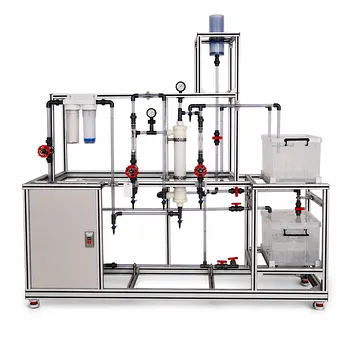
Ultrafiltration Membrane Separation Educational Pilot Plant

Ultrafiltration Membrane Separation Educational Pilot Plant

This ultrafiltration membrane separation educational pilot plant enables undergraduate students to process PVA solutions, study hollow fiber membrane dynamics, and perform quantitative analysis with spectrophotometry for hands-on learning of unit operations and industrial maintenance and membrane cleaning protocols.

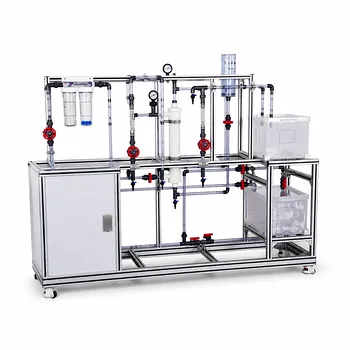
Multifunctional Membrane Separation Educational Pilot Plant with Ultrafiltration, Nanofiltration, Reverse Osmosis

Multifunctional Membrane Separation Educational Pilot Plant with Ultrafiltration, Nanofiltration, Reverse Osmosis

An integrated laboratory bench-scale membrane separation system for higher education engineering labs combining Ultrafiltration, Nanofiltration, and Reverse Osmosis processes. Features industrial PLC control with touch-screen HMI, transparent piping, and academic assessment software. Ideal for chemical and environmental engineering curricula.

Multi-Functional Membrane Separation Educational Pilot Plant for Unit Operations Lab

Multi-Functional Membrane Separation Educational Pilot Plant for Unit Operations Lab

The Multi-functional Membrane Separation Educational Unit Operations Pilot Plant is an integrated bench-scale laboratory system designed for teaching undergraduate engineering education. It features Ultrafiltration, Nanofiltration, and Reverse Osmosis modules in a compact, mobile unit for practical hands-on learning.

Hollow Fiber Ultrafiltration Membrane Separation Educational Pilot Plant

Hollow Fiber Ultrafiltration Membrane Separation Educational Pilot Plant

Explore our hollow fiber ultrafiltration membrane separation educational pilot plant for hands-on learning of industrial ultrafiltration processes, flux analysis, fouling mitigation, and process control. Compact, customizable, and built for engineering labs.

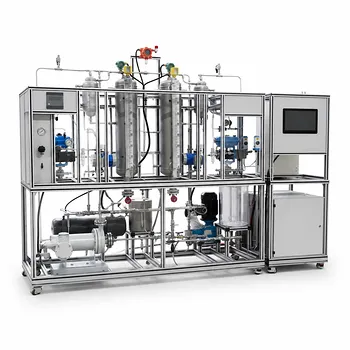
Multi Functional Membrane Crystallization Educational Unit Operations Pilot Plant

Multi Functional Membrane Crystallization Educational Unit Operations Pilot Plant

Integrated bench-scale membrane crystallization pilot plant for engineering education. Provides hands-on training in advanced separation technologies, combining membrane distillation crystallization and process intensification. Features variable scaling vessels, industrial-grade flow control, and interactive digital data acquisition. Customizable for university labs.

Photocatalytic Membrane Separation and Degradation Unit Operations Pilot Plant

Photocatalytic Membrane Separation and Degradation Unit Operations Pilot Plant

Bench-scale pilot plant integrating photocatalytic degradation with membrane separation for engineering education. Study advanced oxidation, microfiltration, and hybrid processes using industrial sensors. Features safety light-blocking curtain, low-noise compressor, and durable stainless-steel construction.

Alkaline Membrane Water Electrolysis Educational Pilot Plant Unit Operations Training System

Alkaline Membrane Water Electrolysis Educational Pilot Plant Unit Operations Training System

Hands-on educational pilot plant for alkaline membrane water electrolysis hydrogen production, integrating unit operations training with industrial PLC control, real-time data logging, customizable design, durable 316L stainless steel construction, explosion-proof safety, and modern 5G connectivity for university laboratories.

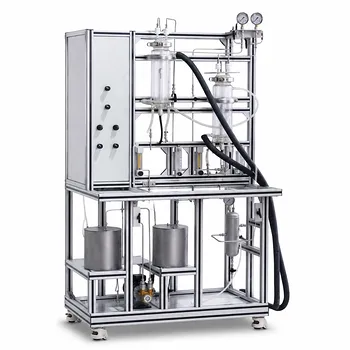
Supercritical High-Gravity Flash Evaporation Educational Unit Operations Pilot Plant

Supercritical High-Gravity Flash Evaporation Educational Unit Operations Pilot Plant

Bench-scale integrated teaching system for advanced separation and mass transfer, combining supercritical high-gravity flash evaporation with heating, chemical reaction, and material collection, featuring modular design, Stainless Steel 316L construction, transparent visualization, touchscreen control, and safety systems for chemical engineering education.

Natural Product Extraction Unit Operations Training Pilot Plant

Natural Product Extraction Unit Operations Training Pilot Plant

Integrated natural product extraction pilot plant for chemical engineering training bridges theory and industrial practice with modular extraction and evaporation/concentration units, hybrid touchscreen and manual control, realistic process simulation, and self-contained softened water and vacuum utilities.

Educational Unit Operations Pilot Plant for Intraparticle Diffusion Effective Factor Measurement

Educational Unit Operations Pilot Plant for Intraparticle Diffusion Effective Factor Measurement

Designed for chemical engineering university labs, this pilot plant allows hands-on determination of catalyst particle intraparticle diffusion effective factors and gas-solid reaction kinetics using a fixed-bed tubular reactor with industrial touchscreen control, bridging theory and practical reactor design.

Rising and Falling Film Evaporation Educational Unit Operations Pilot Plant

Rising and Falling Film Evaporation Educational Unit Operations Pilot Plant

Hands-on educational pilot plant for studying rising and falling film evaporation, flow regimes, and heat transfer. Customizable for university labs with industrial instrumentation and data acquisition. Enables comparative evaluation of evaporation modes and energy efficiency.

High-Gravity Emulsification and Mass Transfer Educational Pilot Plant

High-Gravity Emulsification and Mass Transfer Educational Pilot Plant

This integrated educational pilot plant utilizes rotating packed bed technology to demonstrate high-gravity emulsification and mass transfer, providing engineering students with hands-on experience in process intensification and unit operations through a modular, customizable design with digital monitoring.

Absorption and Desorption Educational Unit Operations Pilot Plant

Absorption and Desorption Educational Unit Operations Pilot Plant

Dual packed column absorption and desorption pilot plant for chemical engineering education, offering real-time mass transfer coefficient measurement, durable mobile frame, industrial touch-screen interface, and customizable design for varied laboratory curricula, enabling hands-on study of gas absorption and stripping.

Polymerization Granulation and Pellet Processing Educational Unit Operations Pilot Plant

Polymerization Granulation and Pellet Processing Educational Unit Operations Pilot Plant

Integrated pilot plant for teaching polymer processing from polymerization to pelletizing. Includes 30L reactor, hydrolyzer, extruder-granulator, vibration dryer, crusher, and sieve. Atmospheric pressure operation for safety, corrosion-resistant SS, customizable for chemical and polymer engineering education. Ideal for university labs.

Packed Bed Absorption Educational Unit Operations Pilot Plant

Packed Bed Absorption Educational Unit Operations Pilot Plant

Study gas-liquid absorption, pressure drop, flooding, and mass transfer coefficients with this pilot plant. Transparent packed column, industrial touchscreen, real-time sensor data, automated analysis. Investigate two-phase flow, loading points, column efficiency. Comprehensive data logging and assessment software included.

Multi-Functional Special Distillation Educational Pilot Plant

Multi-Functional Special Distillation Educational Pilot Plant

Versatile multi-functional special distillation pilot plant for chemical engineering education. Supports continuous, vacuum, azeotropic, reactive, extractive distillation. Transparent glass columns enable real-time visual observation of hydrodynamics and separation processes.

Dual-Mode Gas Absorption and Desorption Unit Operations Training Pilot Plant

Dual-Mode Gas Absorption and Desorption Unit Operations Training Pilot Plant

Industrial-scale pilot plant for gas absorption and desorption training in chemical engineering. Features dual-mode operation with real and simulated materials, transparent columns for flow visualization, and customizable design. Supports independent or combined loops for hands-on unit operations experiments.

Green Anhydrous Ethanol Refining Practical Training Pilot Plant

Green Anhydrous Ethanol Refining Practical Training Pilot Plant

Advanced integrated pilot plant for university labs demonstrating extractive distillation to produce high-purity absolute ethanol from crude feedstock, featuring multi-column continuous operation, closed-loop solvent recycling, and customizable controls for hands-on engineering education, ideal for chemical engineering training and research.

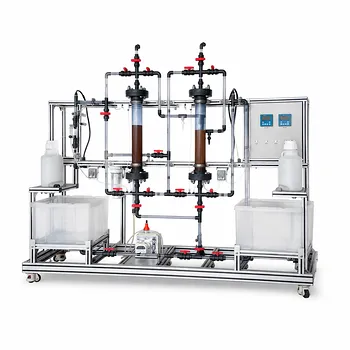
Ion Exchange Water Purification Educational Pilot Plant for Engineering Unit Operations

Ion Exchange Water Purification Educational Pilot Plant for Engineering Unit Operations

This bench-scale ion exchange pilot plant trains engineering students in water purification. Dual transparent columns simulate industrial softening and demineralization. Students observe fluid dynamics, perform resin regeneration, and analyze breakthrough curves. The corrosion-resistant frame ensures durability in unit operations experiments.

Continuous Sieve-Plate Distillation Pilot Plant for Unit Operations Laboratory Education

Continuous Sieve-Plate Distillation Pilot Plant for Unit Operations Laboratory Education

Integrated pilot-scale teaching system for continuous sieve-plate distillation studies. Visual demonstration of tray hydraulics, flexible feed positions, and automatic reflux control for hands-on unit operations education in engineering labs. Designed for higher education engineering laboratories.


Leave Your Message