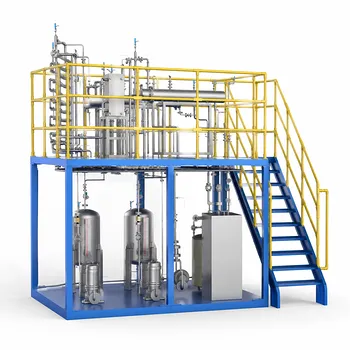
Safety in a chemical engineering pilot plant is not a feature—it is the foundation.
An educational pilot plant laboratory requires a layered safety approach that integrates rigorous administrative controls, engineered safety systems, and strict operational protocols. At a minimum, this means mandatory documented safety training for all users, the installation and clear marking of emergency utility shut-offs and first-aid stations, the use of certified personal protective equipment (PPE), and the strict rule that any procedure generating hazardous vapors must be conducted inside a fume hood.
A successful lab doesn't just prevent accidents; it teaches students to think like professional engineers. This requires a systematic integration of inherent safety design, preemptive hazard analysis, and a culture of personal accountability that mirrors industrial standards.
Building a Foundation of Competence
No pilot plant can be safe without well-trained operators. The human element is the first and most critical layer of defense.
Mandating Documented Training and Commitment
All students and operators must complete a comprehensive safety education program before entering the lab. This training must cover chemical hazards, equipment-specific risks, and emergency response procedures. The process should conclude with a pass/fail safety examination. Finally, every individual must sign a formal safety commitment form. This documentation creates a clear record of responsibility and ensures that safety culture is established from day one.
Mastering Emergency Response Through Familiarity
Knowing where safety equipment is located is useless if you cannot operate it under stress. Training must be practical and hands-on. Students must physically locate and demonstrate proficiency with every emergency system, including master shut-off valves for water, electricity, and gas lines. They must know the activation sequence for eyewash stations and emergency showers and the exact location of fire extinguishers and first aid kits. This physical familiarity can save seconds during a real emergency.
Designing the Lab for Inherent Safety
A truly safe lab is engineered to be safe by design. This means selecting the right materials and integrating automatic protection systems.
Selecting Materials to Prevent Catastrophic Failure
Material compatibility is a non-negotiable safety factor. The materials for reactors, pipelines, and storage tanks must be chemically inert to the fluids being processed to prevent corrosion, leaks, or a catastrophic rupture. While carbon steel is economical for non-corrosive training fluids, stainless steel (such as 304 or 316) is essential for handling corrosive chemicals in an educational environment. It prevents rust and ensures long-term structural integrity, especially in humid labs where multiple experiments are run over years.
Integrating Process Containment and Visual Feedback
Pilot plants should be designed for both safety and pedagogy. Any experiment that could generate toxic, volatile, or irritating gases must be conducted exclusively within a certified fume hood. At the same time, the equipment should feature transparent sections—like glass columns in distillation or absorption units—wherever safe operating pressure limits allow. These windows enable students to visually observe critical hydrodynamic phenomena like flooding or weeping, without compromising the system's physical containment.
Implementing a Multi-Layered Automatic Safety Shield
Educational pilot plants must mimic industrial loss prevention systems. This involves a hierarchy of engineered controls. The base layer is inherent safety through pressure-rated equipment design. Above this sits a Basic Process Control System (BPCS) to monitor temperature, pressure, and flow. If a deviation occurs, critical alarms alert the student operator to intervene. If the situation escalates past a safe threshold, an automatic safety interlock system should trigger a controlled shutdown. As a final protective layer, pressure relief valves and burst discs must be installed to prevent a catastrophic equipment rupture if all other systems fail.
Laying the Groundwork: Utilities and Infrastructure
A pilot plant's safety is only as strong as the infrastructure that feeds it. Overlooking utility requirements is a common and dangerous mistake.
Aligning Utility Connections with Safety Limits
Before installation, you must verify that the laboratory’s infrastructure matches the unit’s design basis. Critically evaluate the maximum available electrical capacity (voltage, phase, and amperage) to prevent overloads. Ensure the cooling water supply has sufficient flow rate and pressure to handle exothermic reactions. For units requiring steam, confirm the steam generator’s pressure and quality match the equipment’s rating. A failure in a utility like cooling water can trigger a runaway reaction if not accounted for in the safety analysis.
Establishing Safe Drainage and Ventilation
Process areas must have ventilation systems that prevent the accumulation of flammable or toxic vapors. Safe drainage systems are equally crucial. The floor plan must include drains capable of handling potential chemical spills without spreading contamination or creating a slip hazard. These systems must be chemically compatible with the waste streams they might carry.
Enforcing Operational Protocols
Engineered systems are the last line of defense; the first line is the operator’s daily discipline.
Adhering to a Rigorous PPE Matrix
Lab coats and splash-proof goggles are the minimum uniform, not the full solution. PPE must be task-specific. This means matching the glove to the hazard. Use chemical-resistant gloves for liquid transfers, heat-resistant gloves for handling hot process piping, and cut-resistant gloves when installing or removing sharp-edged components. Wearing one type of glove for the wrong task provides a false sense of security and can lead to a serious injury.
Institutionalizing Checks, Reporting, and Disposal
Standard operating procedure must enforce a closed-loop safety cycle. Every experiment must begin with a pre-lab report where students review the principles, steps, and specific precautions. Any equipment malfunction, no matter how minor, must be logged and reported immediately via a clear protocol. At the end of every session, a thorough safety check of all utility lines is mandatory before leaving the facility. Finally, a strict waste disposal protocol, categorizing chemicals by hazard class for proper containment, is non-negotiable to prevent dangerous incompatible mixtures.
Understanding the Trade-offs
Designing for maximum safety and pedagogy involves navigating several inherent tensions.
The Cost of Corrosion Resistance
Stainless steel (304/316) provides superior safety and longevity over carbon steel but at a significantly higher capital cost. However, for a shared educational lab where the chemical inventory changes frequently, the versatility and failure-prevention offered by stainless steel typically justify the investment by preventing future leaks and catastrophic degradation.
Visibility vs. Pressure Containment
Visual observation is a powerful teaching tool, but glass components are inherently weaker than metal. A glass distillation column limits your safe operating pressure and requires careful placement to avoid accidental mechanical impact. The safety rule here is absolute: never exceed the glass component’s pressure rating, and ensure metal safety shields are in place if there's any risk of over-pressurization.
Maintenance of the Safety System
A safety interlock is useless if a previous class disabled it and it was never reset. The operational complexity of a multi-layered safety system demands a robust maintenance and pre-startup verification protocol. The trade-off for having advanced automatic safety shutdowns is the institutional commitment to ensuring they are 100% functional before any student is allowed to operate the equipment.
Making the Right Choice for Your Goal
Your implementation strategy should be driven by your educational objectives and practical constraints.
- If your primary focus is teaching fundamental process principles: Start with inherently safer, non-corrosive systems using carbon steel with transparent sections. Your operational protocols and hazard analysis training are the core lesson.
- If your primary focus is simulating real-world industrial practice: Invest in stainless steel systems rated for higher pressures and integrated with a full multi-layered safety system (alarms, interlocks, and relief valves). The curriculum must then map exactly to these industrial control and shutdown protocols.
- If your primary focus is maximum student safety and liability reduction: Over-engineer the administrative controls. Use the strictest PPE matrix, require 100% reporting compliance, and implement a formal lock-out/tag-out procedure for maintenance and utility checks after every single session.
A thoughtfully designed pilot plant lab saves lives and builds a culture of safety that students will carry into their entire careers.
Summary Table:
| Safety Category | Key Requirements | Primary Purpose |
|---|---|---|
| Training & Admin | Mandatory exams, signed commitment forms, emergency drills | Cultivates safety culture & competence |
| Material Selection | Stainless steel (304/316), transparent safety glass | Prevents leaks & allows safe observation |
| Engineered Controls | Fume hoods, BPCS, alarms, safety interlocks, relief valves | Provides automated hazard mitigation |
| Utilities & Infrastructure | Verified electrical/cooling capacity, safe drainage & ventilation | Ensures process stability under stress |
| Operational Protocols | Task-specific PPE matrix, pre-lab reports, utility checks | Standardizes daily disciplined practices |
Build a Safe & Industry-Ready Educational Lab with LABPARK
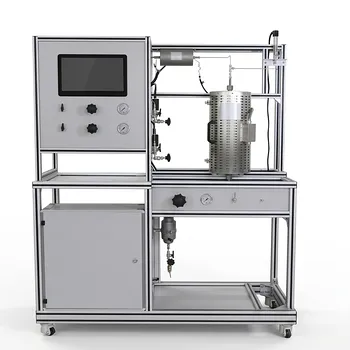
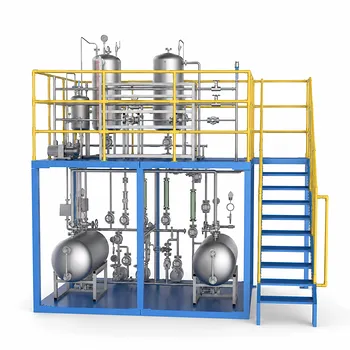
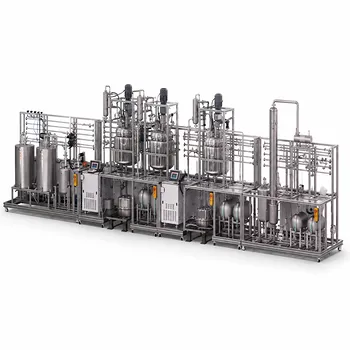
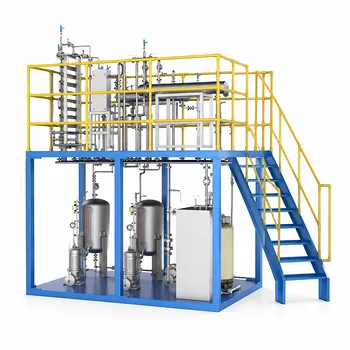
Ensuring student safety while delivering hands-on engineering experience requires expertly designed equipment. LABPARK provides state-of-the-art Educational and Vocational Unit Operations Pilot Plants in chemical engineering, bioprocess & biotech, and environmental & water treatment.
Tailored for universities, research institutes, and enterprises, our pilot plants integrate multi-layered safety controls—such as high-grade stainless steel construction, process alarms, and automatic safety interlocks—to meet strict academic and industrial safety standards.
Ready to upgrade your laboratory infrastructure safely? Contact LABPARK today to consult with our experts on your custom pilot plant needs.
Related Products
- Carbon Dioxide Hydrogen Methanol Synthesis Educational Unit Operations Pilot Plant
- Multi Pump Fluid Transport Process Piping Unit Operations Training Pilot Plant
- Natural Product Extraction Unit Operations Training Pilot Plant
- Multi-Modal Distillation Unit Operations Training Pilot Plant
- Multi-Reactor Educational Pilot Plant for Reaction Engineering Unit Operations
People Also Ask
- How do temp & pressure affect methanol synthesis pilot plants? Optimize equilibrium and catalyst performance.
- Why is a purge system necessary when operating a gas recirculation loop in a methanol synthesis pilot plant? (Guide)
- Why do modern methanol pilot plants operate at lower pressures? Catalyst & Feed Requirements Explained
- What are the operational requirements for catalyst activation? Safe Methanol Pilot Plant Operation
- Why is the chemical plant startup schedule crucial? De-risk scale-up with pilot plants.