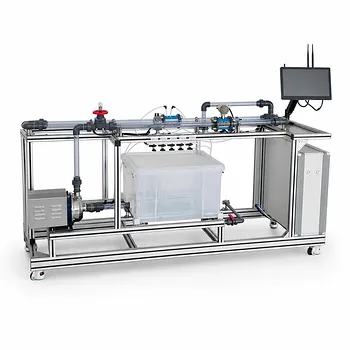
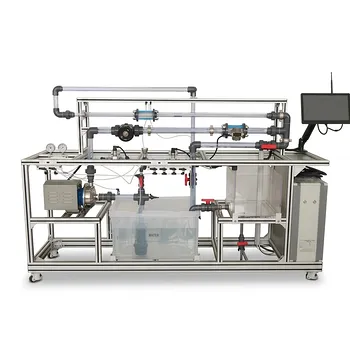
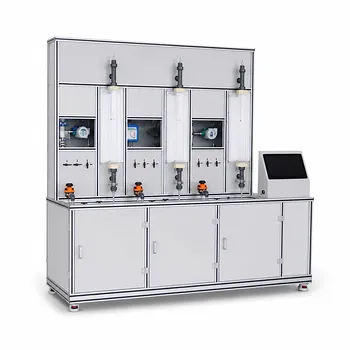
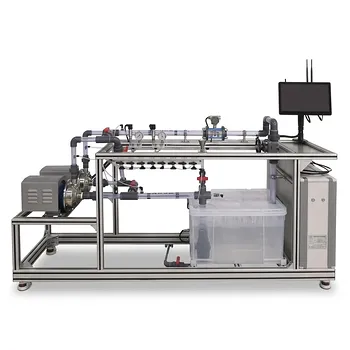
At its core, the difference lies in how the analytical sensor physically interacts with the process stream. In-line interfaces measure directly inside the reactor or pipe without removing a sample, on-line interfaces automatically divert a slipstream to an external analyzer, and at-line interfaces rely on a human or automated grab sample that is analyzed quickly nearby. These three configurations are the backbone of process analytical technology (PAT) in bioprocess and chemical pilot plants, enabling real-time or near-real-time data without disrupting the experiment.
Choosing between in-line, on-line, and at-line monitoring is a trade-off between data immediacy, sample integrity, and system complexity. Mastering these interfaces equips you to design pilot plant experiments that mirror industrial reality while teaching the core principles of process control and measurement latency.
The Three Core Monitoring Interfaces Defined
In-line: Direct, Continuous Measurement
In-line monitoring places the sensor directly into the process stream or vessel. The probe is in intimate contact with the sample—think of a pH or dissolved oxygen probe inserted straight into a bioreactor. Non-invasive versions (like clamp-on flow cells or spectroscopic windows) also qualify, as long as no sample is physically removed from the main loop.
Because the measurement is instantaneous and continuous, in-line interfaces provide the highest data density. They enable real-time closed‑loop control and reveal dynamic changes that would be lost in a grab sample. In pilot plants, common in-line instruments include transmission or reflectance spectroscopy probes, conductivity cells, and temperature sensors.
On-line: Automated Slipstream Analysis
An on-line interface diverts a side stream from the main process into an external analyzer. This slipstream passes through an autonomous sample conditioning system that may adjust pressure, flow, temperature, or dilution before the measurement. After analysis, the sample may or may not be returned to the process—often it goes to waste for hygienic or chemical compatibility reasons.
On-line systems decouple the analyzer from the harsh in‑situ environment. They allow complex operations like flow injection analysis (FIA) with biosensors, where a precise volume of sample is injected, diluted, and reacted to quantify a target analyte such as penicillin‑V during fermentation. The result is a fast, repeatable measurement (often within seconds) with minimal manual intervention.
At-line: Proximate Grab Sampling
At-line analysis is the modern, streamlined version of traditional lab testing. An operator or an automated sampler physically removes a sample and carries it to an instrument stationed right next to the pilot plant. The analysis is completed quickly enough that the data is still relevant to the ongoing run—typically minutes, not hours.
Think of a technician filling a vial and measuring moisture content on a loss‑on‑drying balance, or placing a droplet into a portable spectrometer. At-line interfaces preserve the flexibility of off‑line lab work but keep the measurement lag short enough for process supervision. They are ideal when the sensor is too delicate to withstand the process stream or when you need to validate on‑line results before committing to full automation.
Implementing These Interfaces in Pilot Plants
A successful implementation goes far beyond simply choosing a plug‑and‑play sensor. Three characteristics of the process stream must be carefully evaluated to design a reliable and representative sampling interface.
Assessing the Process Stream’s Physical Nature
Single‑phase or multi‑phase? A clear liquid is straightforward, but a slurry, a gas‑liquid dispersion, or a viscous polymer melt demands special probe geometry and robust material selection. Verify the stream’s viscosity and monitor the temperature and pressure at the sampling point. If you allow these to change drastically during conditioning or transport, your measurement may no longer represent the actual process.
Accounting for Chemical Reactivity and Equilibrium
Is the stream at chemical equilibrium, or is it still reacting? If you measure a fast reaction mid‑stream, a long sample transfer time will miss the true kinetics. Corrosiveness dictates metallurgical specifications—stainless steel, Hastelloy, or even PTFE‑lined components may be required. If the analyte degrades upon exposure to oxygen or light, in‑line optical probes with short path lengths may be the only viable choice.
Matching Optical Properties to Sensor Design
For optical measurements, the fluid’s clarity, scattering behavior, and absorbance directly control the required path length. A highly absorbing fermentation broth might need a transmission probe with a sub‑millimeter gap, while a diffuse, scattering slurry might call for a reflectance probe. Ignore these optical properties and you’ll get sensor saturation or a signal‑to‑noise ratio that is too low to use.
Understanding the Trade-offs
Each interface brings a distinct set of compromises. Recognizing them prevents costly redesigns and ensures the data you collect actually serves your purpose.
Latency vs. Data Richness
In‑line sensors eliminate lag entirely, giving you millisecond response times that are essential for safety interlocks or feedback control. On‑line systems introduce a few seconds to minutes of delay due to transport and conditioning—acceptable for monitoring trends, but a risk for fast kinetic studies. At‑line methods give you data in minutes, which is fine for slow processes but leaves you blind to transient events.
Sample Alteration and Handling Errors
Every time you remove a sample from its native environment, you risk altering its temperature, pressure, or composition. On‑line slipstreams actively condition the sample, which can strip dissolved gases or change the equilibrium. At‑line grab samples are vulnerable to human error during transfer and preparation. In‑line measurement is the gold standard for true representativeness, but it places the instrument directly in the line of fire of aggressive chemistry.
Complexity and Operational Burden
An in‑line probe seems simple, but it requires sterilization, cleaning, and recalibration without taking the reactor offline. On‑line systems add pumps, valves, and conditioners that demand preventive maintenance and can be a source of leaks. At‑line analysis appears low‑tech but consumes operator time and can become a bottleneck as sample frequency increases. Budget your engineering hours and long‑term maintenance costs, not just the purchase price.
Making the Right Choice for Your Pilot Plant
Your goal determines which interface—or combination—becomes the backbone of your data acquisition strategy.
- If your primary focus is real‑time closed‑loop control or safety‑critical monitoring: Favor in‑line sensors. The direct, continuous signal gives you the immediacy required to adjust actuators without overshoot.
- If your primary focus is complex, multi‑parameter analysis where sample conditioning is essential (e.g., dilution, reagent addition, phase separation): Choose on‑line sampling systems. They let you couple rugged sample handling with sophisticated laboratory‑grade analyzers.
- If your primary focus is method development, teaching, or protecting delicate instruments: Use at‑line grab sampling. It keeps the sensor out of the harsh process, allows manual verification, and builds operator intuition before you commit to full automation.
By matching the monitoring interface to your specific process constraints and learning objectives, you transform your pilot plant from a simple collection of unit operations into a powerful teaching tool that reflects the true complexity of industrial‑scale process understanding.
Summary Table:
| Interface | Measurement Location | Latency | Best Use Case |
|---|---|---|---|
| In-line | Directly inside the reactor/pipe | Real-time (None) | Closed-loop control & safety |
| On-line | Diverted external slipstream | Seconds to minutes | Complex analysis with dilution |
| At-line | Nearby offline analyzer | Minutes | Method development & manual checks |
Ready to optimize your process control and monitoring? LABPARK designs and delivers state-of-the-art Educational and Vocational Unit Operations Pilot Plants for chemical engineering, bioprocess & biotech, and environmental & water treatment. We help universities, research institutes, and enterprises implement advanced PAT interfaces to bridge the gap between theory and industrial reality. Contact us today to custom-build your next pilot plant and elevate your research and training capabilities!
Related Products
- Orifice and Venturi Flowmeter Calibration Educational Pilot Plant for Fluid Mechanics Laboratory
- Centrifugal Pump Performance and Orifice Flowmeter Calibration Educational Pilot Plant
- Continuous Batch Extractive Distillation Educational Pilot Plant
- Natural Product Extraction Unit Operations Training Pilot Plant
- Two Phase Flow Pattern Velocity Resistance Measurement Educational Pilot Plant
People Also Ask
- What is the difference between static and stagnation pressure? Master Pilot Plant Flow Measurement
- How do pilot plants demonstrate siphon pressure variations? Visualizing Bernoulli's Energy Balance
- How do fluid mechanics training pilot plants facilitate the visualization and calculation of laminar and turbulent flows?
- How to update chemometric calibration models in pilot plants? Best practices for process engineers.
- Why are the laws of similitude critical in fluid flow pilot plants? Scale Up Safely