The core advantage is delivering laboratory-grade spectroscopic analysis directly into the brutal, vibration-filled reality of a chemical plant without the fragility that typically accompanies precision optics. By replacing moving diffraction gratings with a solid-state crystal, Liquid Crystal Tunable Filters (LCTFs) provide a no-moving-parts, software-defined spectral engine. This translates to a process analyzer that doesn't drift out of alignment from pump vibrations, can re-tune to a different wavelength in milliseconds, and can survive the constant thermal cycling of a pilot plant environment.
While traditional spectroscopy struggles with the shock and vibration of unit operations, LCTFs trade mechanical complexity for electronic agility. The result is an analytical tool that can jump instantly between critical wavelengths for real-time process control or scan rapidly to build dense historical datasets, all while fundamentally resisting the physical degradation that kills process instruments.
Why Mechanical Simplicity is a Process Control Revolution
Survival in Hostile Environments
The most immediate advantage is sheer survival. Chemical engineering pilot plants are not quiet laboratories. Pumps, compressors, and grinding mills generate constant, broadband vibration. A traditional monochromator relies on a finely balanced grating rotating on a motorized stage; these micro-movements quickly wear bearings and cause wavelength calibration to shift. An LCTF has no such vulnerability. Its tuning mechanism is purely electronic, varying the refractive index of a liquid crystal layer to filter light. This makes it inherently shock-tolerant and alignment-free, eliminating the number one failure mode of process spectrometers.
Uninterrupted Real-Time Data Streams
This mechanical simplicity directly enables continuous, reliable integration into unit operations. In processes like fluidized bed drying or high-shear wet granulation, you cannot stop the machine to recalibrate an analyzer. The LCTF’s stability ensures the analytical signal remains consistent over multi-day runs, providing an unbroken stream of Critical to Quality Attributes (CQAs) like moisture content or particle size. Without this reliability, you have a data gap, and you lose the design space definition that PAT promises.
The Speed and Agility of Software-Defined Wavelength Selection
From "Scanning" to "Random Access"
A traditional scanning instrument must physically rotate through a range of wavelengths, wasting time collecting data where no chemical information exists. LCTFs operate via the electro-optic effect, tuning to any specific wavelength in the near-infrared (NIR) or Raman range in less than a second. This random-access capability is a paradigm shift for reaction monitoring. Instead of waiting for a full spectrum, you can configure the system to ping-pong between, say, 1450 nm (water) and 1680 nm (API form) every 100 milliseconds, creating a real-time chemical dashboard that perfectly tracks the endpoint of a blending operation.
Massive Data Density for Deep Process Understanding
The same speed that enables random access also allows for blisteringly fast full-spectral scans. According to the reference data, operators can collect over 80,000 spectra in a few minutes. In a pilot plant context, this is transformative. You are no longer taking a single snapshot; you are recording a high-definition movie of your entire process. This massive data density allows researchers to catch transient states—like the brief overwetting phase in granulation—that a slower instrument would completely miss. It directly supports the creation of a robust design space, defining the precise operational window where product quality is consistent despite raw material variations.
Direct Alignment with PAT and Educational Goals
Bridging the Gap from QA to In-Process Control
The supplementary references highlight the shift from post-production quality assurance to active in-process control. LCTFs are the physical embodiment of this shift. Their fast, non-destructive measurement turns a unit operation into a transparent vessel. For complex blends, the ability to monitor homogeneity in real time allows a process engineer to precisely terminate the blending step when the target standard deviation is achieved, preventing both under-blending (quality risk) and over-blending (energy waste, particle attrition).
An Ideal Teaching Tool for Process Dynamics
In an academic or research pilot plant, the instant visual feedback from an LCTF-based PAT module is invaluable for cementing theoretical concepts. Students can inject a tracer, and within milliseconds the spectral response updates on screen. The direct correlation between a process change (e.g., increasing temperature) and a molecular signal (e.g., shifting hydrogen bonds) is made tangible, without the analytical delay that obscures cause-and-effect.
Understanding the Trade-offs
The Resolution and Sensitivity Equation
No technology is a silver bullet. While LCTFs excel at speed and ruggedness, they often have a broader spectral bandwidth than a high-end diffraction grating. For applications demanding the resolution of narrow gas-phase rotational lines, a traditional system might still be preferred. Additionally, the liquid crystal layer can introduce some polarization sensitivity, which may slightly reduce throughput in light-starved applications, though this is rarely the limiting factor in PAT given the use of strong NIR sources and sensitive detectors.
Cost and Spectral Range Complexity
Building an LCTF is a precision electro-optical manufacturing feat, so the initial capital cost per module is typically higher than a simple fixed-filter photometer. Moreover, a single LCTF crystal often covers a specific spectral segment, so designing an instrument for a very broad range (e.g., 900–2500 nm) may require multiple cascaded stages, adding complexity. However, this cost is offset by the near-elimination of mechanical maintenance and downtime, which is the true operating cost in a tough process environment.
Making the Right Choice for Your PAT Integration
Your decision to use an LCTF should be driven by the specific physical and analytical demands of your unit operation. Prioritize the technology based on your primary process goal.
- If your primary focus is process ruggedness and minimizing recalibration: Solid-state LCTFs are the only logical choice, as they eliminate the mechanical wear that vibration-sensitive dispersive optics succumb to.
- If your primary focus is tracking a blindingly fast reaction or endpoint: The random-access speed of an LCTF is unmatchable by scanning hardware, giving you the sub-second response needed to stop on target.
- If your primary focus is building a deep empirical model of a new process: The ability to collect tens of thousands of spectra rapidly allows you to map the design space with a density that reveals transient phenomena and ensures model robustness.
- If your primary focus is ultra-high spectral resolution for pure gas-phase work: You should evaluate if a traditional but well-isolated FT-IR or grating-based system might offer the necessary bandwidth sharpness, accepting the associated fragility.
By prioritizing electronic stability over mechanical precision, LCTFs transform spectroscopic PAT from a delicate experiment into a hardened, industrial-grade control loop component.
Summary Table:
| Feature | LCTFs (Solid-State) | Traditional Spectroscopy |
|---|---|---|
| Tuning Mechanism | Purely electronic (no moving parts) | Mechanical rotation of gratings |
| Vibration Tolerance | Highly rugged & shock-tolerant | Sensitive to misalignment & drift |
| Scanning Speed | Milliseconds (random-access tuning) | Seconds (sequential scanning) |
| Maintenance Needs | Near-zero calibration requirements | Frequent maintenance & calibration |
Elevate Your Chemical Engineering Lab with LABPARK
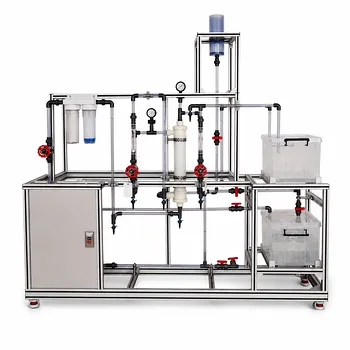
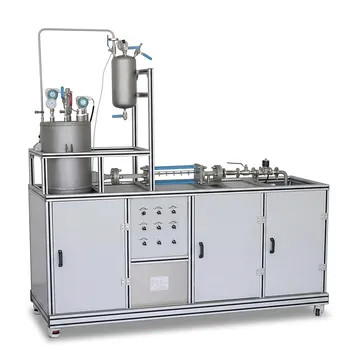
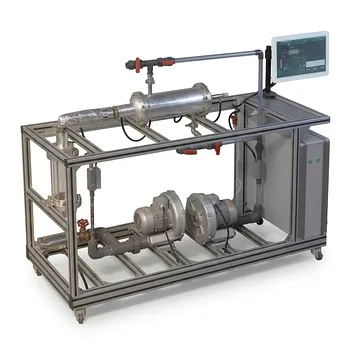
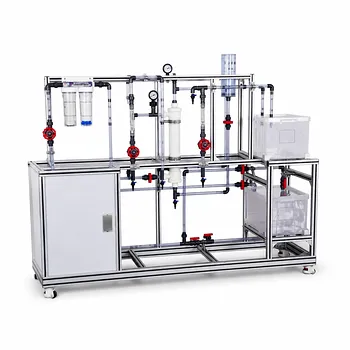
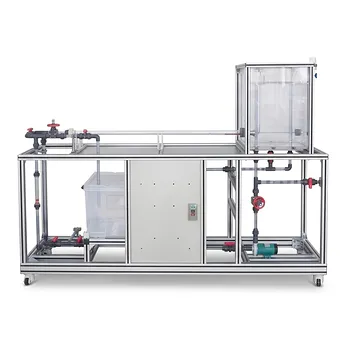
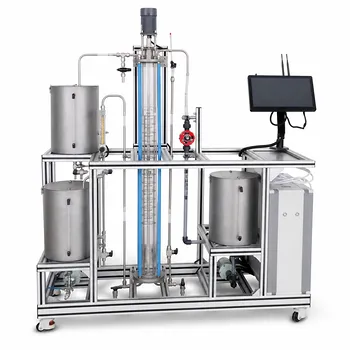
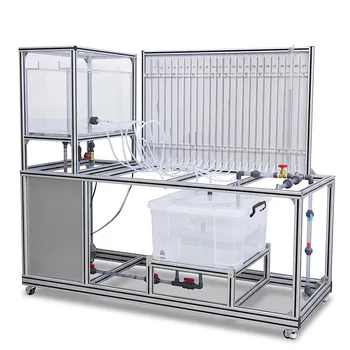
Integrating advanced PAT tools like LCTF spectroscopy requires robust, industrial-grade platforms. LABPARK provides state-of-the-art Educational and Vocational Unit Operations Pilot Plants in chemical engineering, bioprocess & biotech, and environmental & water treatment. Designed specifically for universities, research institutes, and enterprises, our pilot plants help you bridge the gap between classroom theory and real-world industrial process control.
Ready to upgrade your research and training capabilities? Contact LABPARK today to discuss your custom pilot plant needs with our engineering experts!
Related Products
- Constant Pressure Filtration Educational Unit Operations Pilot Plant
- Hot Filtration Educational Unit Operations Pilot Plant Laboratory System
- Multifunctional Membrane Separation Educational Pilot Plant with Ultrafiltration, Nanofiltration, Reverse Osmosis
- Ultrafiltration Membrane Separation Educational Pilot Plant
- Orifice and Venturi Flowmeter Calibration Educational Pilot Plant for Fluid Mechanics Laboratory
People Also Ask
- How do educational unit operations pilot plants bridge theory and design? Bridge the Engineering Gap
- How do educational unit operations pilot plants bridge theory and industrial process development? Hands-On Learning
- How do unit operation requirements differ between traditional chemical processes and bioprocesses? Build Better Pilot Plant Curricula
- How do educational unit operations pilot plants address safety and waste management when scaling up?
- Why splitting a filtration batch doesn't always reduce cycle time? Pilot Plant Insights