The definitive method is potentiometric titration with silver nitrate.
In pilot plant experiments, spent caustic scrubber solutions are analyzed by diluting a sample in an alkaline titration solvent and titrating with standard silver nitrate while monitoring the potential between a silver electrode and a high-pH-resistant glass electrode. The initial potential classifies the dominant sulfur species—above 500 mV signals sulfides, between 100 mV and 400 mV signals only mercaptides. The titrant volume consumed to the first break points yields sulfide concentration, and the second break point gives total sulfides plus mercaptides, from which mercaptide concentration is calculated by difference.
Accurately quantifying sulfides and mercaptides is not just a routine check—it is the key to understanding scrubber efficiency, remaining caustic capacity, and the viability of downstream regeneration. The potentiometric silver nitrate method, when executed with careful electrode selection and alkaline sample conditioning, provides this essential speciation in one single, information-rich titration.
Why This Specific Method Matters for Pilot Plant Work
The Chemistry Underlying the Analysis
In a caustic scrubber, hydrogen sulfide (H₂S) and mercaptans (RSH) react with sodium hydroxide to form sodium sulfide (Na₂S) and sodium mercaptides (NaSR). As scrubbing proceeds, the hydroxide concentration drops while these spent species accumulate. A simple pH measurement does not distinguish between them, nor does it tell you how much scrubber capacity is left—only a titration that precipitates these species as insoluble silver salts can do that.
Silver ions (Ag⁺) react selectively:
2Ag⁺ + S²⁻ → Ag₂S↓(black precipitate, sulfide)Ag⁺ + RS⁻ → AgSR↓(mercaptide precipitate)
Because silver sulfide is much less soluble than silver mercaptide, sulfide precipitates first, producing a sharp potential change. This is the foundation of the two-break method.
Information You Can’t Get Anywhere Else
A single titration run reveals three critical pieces of data:
- The sulfide concentration – the fraction of the spent caustic that is completely exhausted and cannot be regenerated by air oxidation.
- The mercaptide concentration – the fraction that can be regenerated to hydroxide by catalytic oxidation.
- A direct indicator of upstream scrubber performance – a high sulfide-to-mercaptide ratio may indicate that the scrubber is being overloaded with H₂S or that the caustic circulation rate needs adjustment.
The Potentiometric Titration Procedure in Detail
Sample Handling and Preparation
Spent caustic is highly alkaline and often contains dissolved gases. Always use sealed sample containers and analyze immediately after collection to prevent oxidation of sulfides by air. To prepare the titration sample:
- Dilute a measured aliquot with an alkaline titration solvent (typically de‑oxygenated deionized water adjusted with sodium hydroxide to maintain pH above 12). This keeps all sulfides in the non‑volatile, fully ionized form and prevents loss of H₂S gas.
- Add a small amount of sodium sulfide anti‑oxidant if the analysis cannot be performed immediately, although best practice is to titrate without delay.
Electrode Setup and Initial Potential Diagnosis
The method uses two electrodes connected to a high‑impedance potentiometer:
- A silver billet electrode (acting as the indicating electrode for silver ion activity)
- A glass electrode rated for pH 11–14, serving as the reference half‑cell under these strongly alkaline conditions
Calibration is critical. While you are not measuring pH directly, the glass electrode’s potential offset must be standardized. Pre‑calibrate the electrode pair in a 0.1 M NaOH solution to establish a stable baseline potential. During titration, continuously stir the solution at a constant, moderate rate to maintain a uniform environment at the electrode surfaces.
Before adding any titrant, read the initial potential.
- If the value is above 500 mV, the sample contains free sulfide ions.
- If it lies between 100 mV and 400 mV, only mercaptides are present, and the first break will be absent.
This immediate diagnosis shapes how you interpret the subsequent titration curve.
Executing the Titration and Identifying Break Points
Titrate with standardized 0.01 M or 0.1 M silver nitrate, depending on expected concentrations. Use a microburette for high accuracy. Record potential after each addition, allowing the signal to stabilize.
Expect two distinct inflection points:
- First potential break (sulfide endpoint): A sharp negative peak in the first derivative of the potential curve. The volume of AgNO₃ consumed to this point corresponds to the sulfide concentration.
- Second potential break (mercaptide endpoint): A second, usually less dramatic inflection. The total volume to this point represents sulfides plus mercaptides.
Calculate concentrations:
Sulfide (as S²⁻, mg/L) = (V₁ × N × 16,030) / sample volume (mL)
Mercaptide (as RS⁻, mg/L) = ((V₂ - V₁) × N × molar mass of mercaptan) / sample volume
Where V₁ = volume to first break, V₂ = volume to second break, N = normality of AgNO₃. Use the specific molar mass of the mercaptan present (e.g., methyl mercaptan, 48.1 g/mol).
Interpreting the Results in the Context of Your Pilot Plant
Connecting Titration Data to Scrubber Health
The ratio of sulfides to mercaptides directly reflects what is happening in the absorber column.
- A high sulfide fraction means the scrubbing solution is being spent predominantly by H₂S. This may be intentional if your feed gas is sour, but in a mixed mercaptan‑H₂S stream, it may indicate that the mass‑transfer zone for mercaptan removal is insufficient.
- A low sulfide, high mercaptan profile is typical of a well‑designed desulfurization unit treating refinery or natural gas liquids, where H₂S has been largely removed upstream.
Using the Data for Regenerator Operation
In units that send spent caustic to a regenerator, the titration is even more indispensable. The regenerator oxidizes mercaptides back to hydroxide and disulfides via 2RS⁻ + ½O₂ → RSSR + 2OH⁻, but sulfides do not regenerate—they must be purged and sent to a separate oxidizer. By monitoring the sulfide and mercaptide levels before and after the regenerator, you can:
- Verify that the mercaptide concentration drops to near zero after regeneration.
- Detect any cross‑contamination of sulfide that would reduce regenerative efficiency.
- Correctly adjust the spent‑caustic bleed rate to maintain system mass balance.
Understanding the Trade‑offs and Pitfalls
The Must‑Know Limitations of the Electrode Setup
Using a glass electrode as a reference in high‑pH solutions introduces sodium ion error. At pH values above 12, the glass membrane becomes responsive to sodium ions, causing a potential offset. You must either apply the manufacturer‑supplied correction factor (based on the observed pH and sodium ion concentration) or use a more robust double‑junction reference electrode with a ceramic frit that resists clogging from silver‑sulfide precipitates. For the most demanding pilot work, a combined silver/sulfide ion‑selective electrode paired with a proper reference electrode yields fewer artifacts.
Common Interferences and How to Avoid Them
- Air oxidation: Sulfide is easily oxidized by dissolved oxygen to thiosulfate, which will not precipitate with silver nitrate under these conditions and leads to falsely low sulfide readings. Always use freshly boiled, cooled nitrogen‑purged water for the alkaline solvent.
- Polysulfides: In partially oxidized samples, polysulfides (Sₓ²⁻) may form, giving complex titration curves with additional breaks. If suspected, treat a separate sample with a reducing agent before titration.
- Steam condensation in regenerator lines: If you sample from the regenerator loop, dilution by condensed steam will lower the apparent concentrations. Monitor the sodium content gravimetrically or via conductivity to normalize your results.
When a Simpler Check Is Enough
For a rapid, rough evaluation of available caustic capacity—not speciation—older wet‑chemistry methods serve well. Titrate a sample to the phenolphthalein endpoint (pH ~8.3) and then to the methyl orange endpoint (pH ~4.5). The first gives free hydroxide plus half the carbonate, the second total alkalinity. However, this gives no information on sulfur species and cannot distinguish between sulfidic and mercaptidic spent caustic. Reserve this method for quick field checks, and rely on the potentiometric silver nitrate titration for all material‑balance and performance calculations.
Making the Right Choice for Your Monitoring Goal
Apply the silver nitrate potentiometric method as the primary analytical backbone, but tailor your sampling frequency and calibration rigor to your specific objective.
- If your primary focus is tracking scrubber breakthrough in real‑time: Sample the spent caustic at the scrubber outlet every 15‑30 minutes during transient runs. Focus on the initial potential reading and the first break volume, as sulfide appearance often signals approaching breakthrough.
- If your primary focus is regenerator efficiency optimization: Analyze a paired set—one sample before, one after the regenerator. Calculate mercaptide conversion from the V₂–V₁ difference. An incomplete second break after regeneration indicates residual mercaptides and the need to increase air flow, temperature, or catalyst injection.
- If your primary focus is material balance closure across the entire pilot plant: Perform the full titration on all liquid streams entering and leaving the system, including drain streams and sulfide‑oxidizer effluent. Cross‑check silver nitrate consumption with total sulfur balances derived from gas‑phase analyzers to validate your data integrity.
A single titration curve, properly interpreted, tells you not only what is in your spent caustic but exactly how your pilot plant is performing—and what to adjust next.
Summary Table:
| Parameter | Description | Operational Significance |
|---|---|---|
| Titrant | Standard Silver Nitrate ($AgNO_3$) | Precipitates sulfur species selectively |
| Electrodes | Silver billet + high-pH glass reference | Measures potential changes accurately |
| Initial Potential | >500 mV (Sulfide present); 100-400 mV (Mercaptide only) | Diagnoses dominant species immediately |
| Endpoints | 1st break (Sulfide); 2nd break (Sulfide + Mercaptide) | Enables separate concentration calculations |
Optimize Your Chemical Engineering & Water Treatment Research with LABPARK
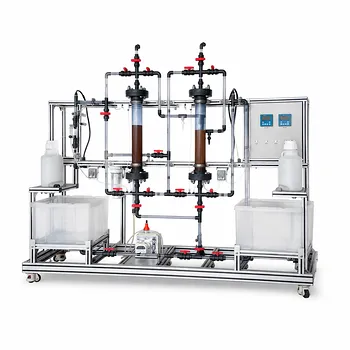
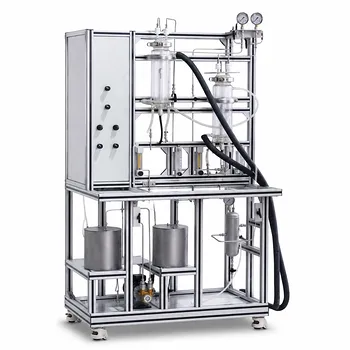
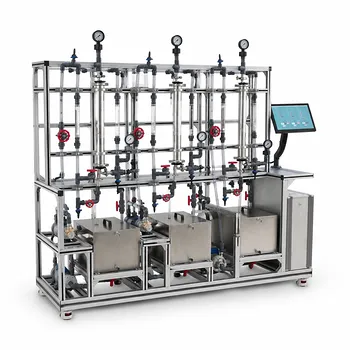
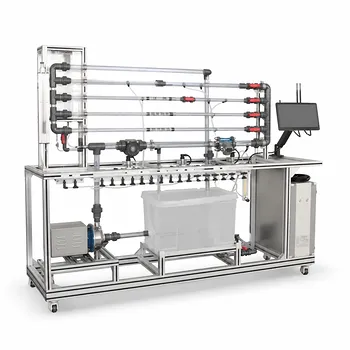
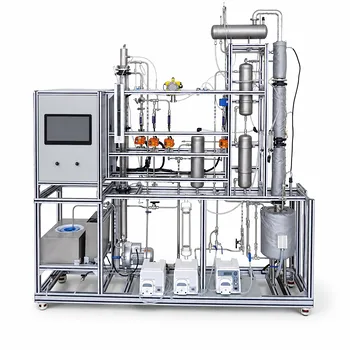
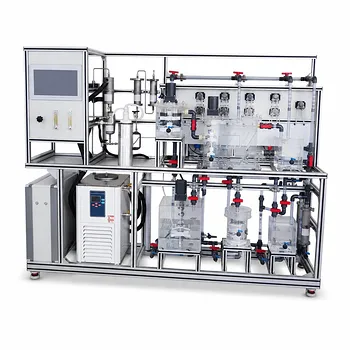
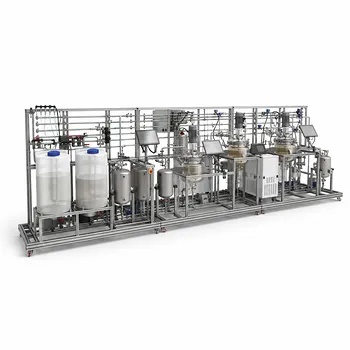
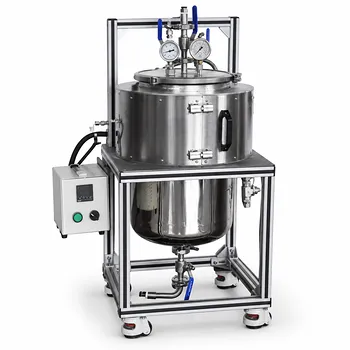
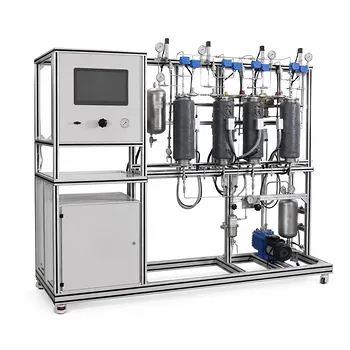
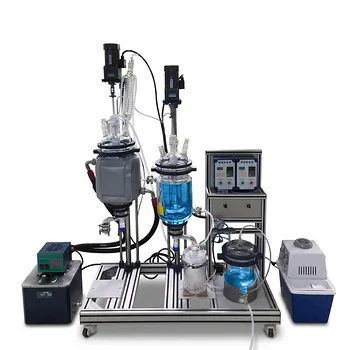
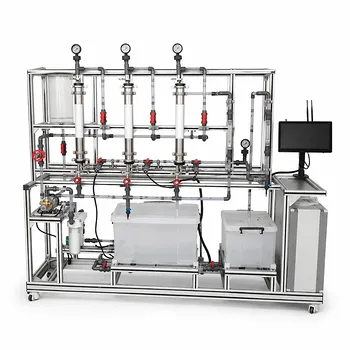
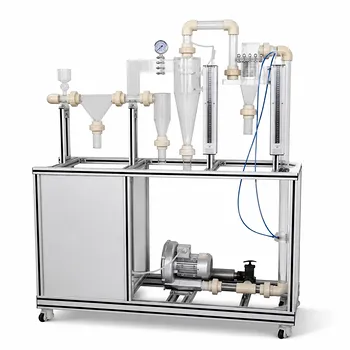
Accurate analysis is only half the battle—having the right experimental setup is key to reliable data. LABPARK provides premium Educational and Vocational Unit Operations Pilot Plants in chemical engineering, bioprocess & biotech, and environmental & water treatment.
Designed for universities, research institutes, and enterprises, our pilot plants help you simulate real-world scrubbing and regeneration processes with high precision.
Ready to elevate your laboratory operations? Contact us today to find the perfect pilot plant solution for your institution!
Related Products
- Constant Pressure Filtration Educational Unit Operations Pilot Plant
- Ion Exchange Water Purification Educational Pilot Plant for Engineering Unit Operations
- Photocatalytic Membrane Separation and Degradation Unit Operations Pilot Plant
- Fixed-Bed Chemical Reaction and Gas Dust Tar Removal Unit Operations Pilot Plant
- Multi-Functional Membrane Separation Educational Pilot Plant for Unit Operations Lab
People Also Ask
- How do educational unit operations pilot plants bridge theory and design? Bridge the Engineering Gap
- How do educational unit operations pilot plants address safety and waste management when scaling up?
- Why splitting a filtration batch doesn't always reduce cycle time? Pilot Plant Insights
- Why Demo Constant-Rate to Constant-Pressure Filtration on a Pilot Plant? Key Practical Insights
- How to select solid-liquid separation equipment for pilot plants? A Step-by-Step Guide