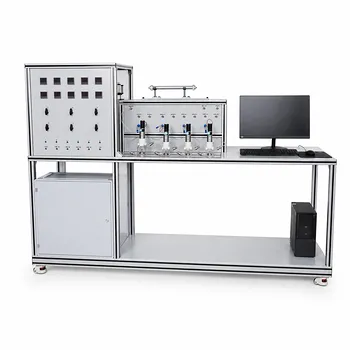
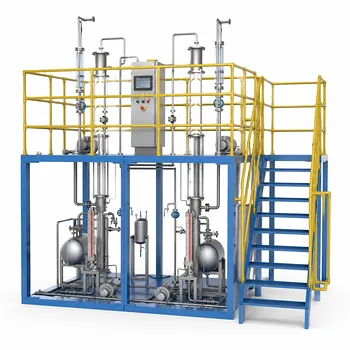
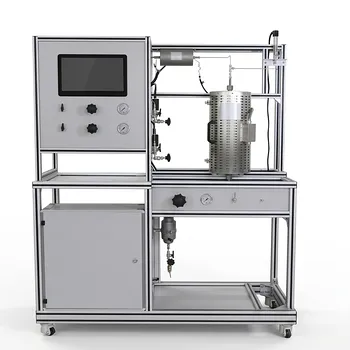
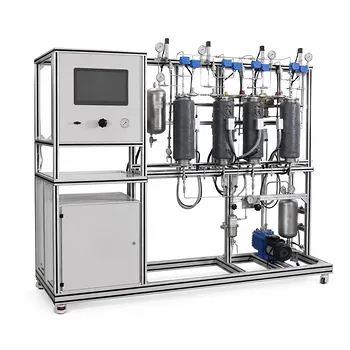
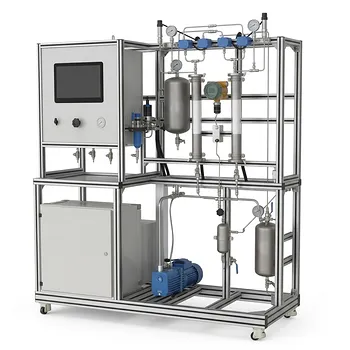
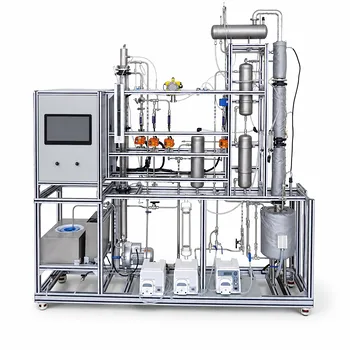
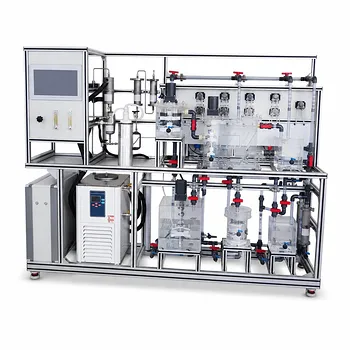
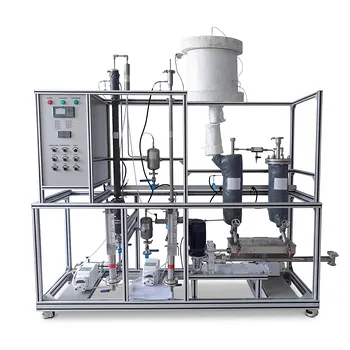
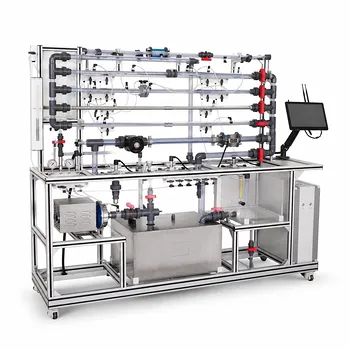
Understanding an IGCC system isn't about memorizing a flowchart—it’s about seeing the transformation of solid fuel into clean electricity happen right in front of you. In vocational and university laboratories, gasification and gas-cleaning pilot plants demonstrate the entire Integrated Gasification Combined Cycle (IGCC) process flow by breaking it into modular, hands-on unit operations. Students physically feed fuel into a gasifier, watch high-temperature reactions produce raw syngas, and then operate the cooling, particulate removal, and acid gas scrubbing steps that turn that dirty effluent into a turbine-ready fuel. By integrating these modules with a combustion turbine simulator and a steam turbine loop (powered by waste heat recovery), the pilot plant compresses an industrial-scale power plant into a single, observable, and controllable learning station.
Pilot plants demystify the IGCC journey by isolating each step—gasification, syngas cooling, filtration, chemical cleaning, and power generation—while showing how heat integration and material flows connect them. This hands-on framework transforms abstract theory into immediate, tactile lessons in energy conversion and environmental control.
The Modular Anatomy of an IGCC Pilot Plant
A well-designed educational pilot plant replicates the full IGCC sequence as a chain of distinct, visually transparent unit operations. Each module is engineered to let a student manipulate key variables and witness the downstream consequences—just as operators do in a commercial plant.
Gasification: The Heart of Syngas Production
The process begins with a high-temperature entrained-flow gasifier. Coal, biomass, or a surrogate solid fuel is injected with a controlled amount of oxygen and steam. Students can vary temperature and the oxygen-to-fuel ratio, directly watching how the gas-solid reaction converts carbon-rich feedstock into raw synthesis gas, primarily hydrogen and carbon monoxide.
This is not just a black box. The reactor’s design—often with a transparent viewing port or real-time gas analyzer—allows learners to connect feedstock properties to syngas composition. They see that too little oxygen leads to unburned carbon, while too much shifts the product toward carbon dioxide, immediately illustrating the thermodynamic constraints of gasification.
Syngas Cooling and Particulate Removal
Raw syngas exits the gasifier at extreme temperatures, laden with molten ash and other impurities. The next module routes it through a syngas cooler, a heat exchanger that generates high-pressure steam. This step teaches two lessons at once: heat recovery boosts overall efficiency, and rapid cooling prevents formation of sticky tars that would foul downstream equipment.
After cooling, the gas enters a series of cyclones and barrier filters. Cyclones spin the flow to throw out heavier particulates, while fine filters capture sub-micron dust. The pilot plant’s transparent housings or easily removable filter elements let students inspect the captured solids and correlate pressure drop with filter loading—a direct lesson in maintenance and operational monitoring.
Gas Cleaning: Removing Sulfur and Other Contaminants
The cooled, dust-free syngas still contains acid gases like hydrogen sulfide (H₂S) and sometimes carbon dioxide. To demonstrate this purification stage, pilot plants incorporate a selective solvent absorption column. The syngas flows counter-current to a chemical solvent that captures H₂S, producing a clean gas and a rich solvent stream that can be regenerated.
Many teaching setups also include a catalytic shift converter upstream. Here, steam reacts with carbon monoxide over a catalyst to produce extra hydrogen and CO₂. This module deepens understanding of gas composition control: students can adjust the steam-to-CO ratio and see how shift conversion changes the final hydrogen yield.
Power Generation Integration
With purified syngas in hand, the pilot plant mimics the combined cycle. A small combustion turbine simulator—often a microturbine or a burner linked to a dynamometer—burns the clean gas to produce electricity. Meanwhile, the steam generated earlier in the syngas cooler and any additional waste heat recovery boilers drives a steam turbine module. By monitoring electrical output from both turbines, students quantify how the IGCC’s double generation cycle achieves efficiencies far beyond a simple gas engine.
The Hidden Lesson: Wastewater and By-Product Management
A complete IGCC education goes beyond gas and power. Pilot plants that include a water treatment train address the dirty reality of gas cleanup. The scrubbing and condensation steps produce a highly contaminated wastewater containing dissolved ammonia, phenols, tarry organics, and fly ash.
Treating the Gas Liquor
Dedicated modules let students apply gravity separation to split oily and tarry phases from water, followed by filtration of sub-micron solids. A gas-stripping column can then remove dissolved H₂S and ammonia. This hands-on experience with complex industrial wastewater shows future engineers that environmental performance is built into the IGCC design—not an afterthought. It turns abstract regulations into concrete unit operations that must be controlled and optimized.
Understanding the Trade-offs and Limitations
While pilot plants are powerful teaching tools, they are simplifications. No educational system can replicate the high pressures (often 30–70 bar) and thermal stresses of a commercial IGCC. Reactions may be slowed, and some side-product formations (like tar cracking dynamics) behave differently at small scale.
Furthermore, safety constraints often limit the use of real coal or hazardous solvents. Surrogates and non-toxic absorbents are common, which can shield students from the true handling challenges. However, these trade-offs are a feature for learning, not a flaw—they allow failure, investigation, and repetition without the catastrophic consequences of a full-scale upset.
Making the Most of the Pilot Plant for Learning
The ultimate value of an IGCC pilot plant depends on the learning objectives you bring to it. Whether you are a student, an instructor, or a technician, you can tailor the experience to meet distinct goals.
If your primary focus is process engineering and integration: Manipulate the gasifier temperature and the steam injection rate while measuring syngas composition, then trace how those changes cascade through the shift converter and turbine output. Focus on energy balances across the entire chain.
If your primary focus is environmental control and water treatment: Spend extra time on the gas scrubbing and wastewater modules. Vary the solvent flow in the absorber to see breakthrough of H₂S, and experiment with stripping gas rates to optimize ammonia removal.
If your primary focus is operational and safety training: Practice the cold start-up and shutdown sequences for each module, noting how pressure surges or condensed tars can create hazards. Learn to read filter pressure drop curves as a predictor of equipment failure.
By isolating variables and physically tracing material flows, the pilot plant turns a schematic diagram into a lived experience—the surest path to deep, lasting understanding of clean energy from solid fuels.
Summary Table:
| IGCC Pilot Plant Module | Key Process Demonstrated | Educational & Training Value |
|---|---|---|
| Gasification Reactor | High-temp gas-solid reaction (fuel to syngas) | Teaches thermodynamic constraints & feedstock composition effects |
| Cooling & Filtration | Heat recovery & particulate removal | Demonstrates heat integration & monitoring of filter pressure drops |
| Gas Cleaning Column | Solvent absorption & catalytic shift conversion | Teaches acid gas (H₂S/CO₂) removal & chemical composition control |
| Power Generation | Combined cycle (gas & steam turbines) | Allows calculation of system efficiencies & energy balances |
| Water Treatment | Gravity separation & gas stripping | Provides hands-on experience in managing complex industrial wastewater |
Bring Industrial-Scale IGCC Training to Your Laboratory
Bridge the gap between complex thermodynamic theory and hands-on operational skills with LABPARK. We provide advanced Educational and Vocational Unit Operations Pilot Plants designed specifically for universities, research institutes, and enterprises.
Our custom-engineered systems for chemical engineering, bioprocess & biotech, and environmental & water treatment deliver:
- Hands-On Process Mastery: Direct interaction with gasification, gas cleaning, and industrial wastewater treatment loops.
- Safe Educational Design: Scale-appropriate systems engineered for student safety while maintaining industrial process fidelity.
- Modular Flexibility: Easily adaptable configurations to align with your specific curricula or research goals.
Equip your students and researchers with the tools they need to succeed in clean energy and environmental technology. Contact LABPARK today to design your custom pilot plant solution!
Related Products
- Fixed-Bed Chemical Reaction and Gas Dust Tar Removal Unit Operations Pilot Plant
- Gas Phase Mixing and Residence Time Distribution Determination Educational Unit Operations Pilot Plant
- Dual-Mode Gas Absorption and Desorption Unit Operations Training Pilot Plant
- Carbon Dioxide Hydrogenation Methanol Synthesis Educational Unit Operations Pilot Plant
- Carbon Dioxide Hydrogen Methanol Synthesis Educational Unit Operations Pilot Plant
People Also Ask
- When to transition from PID to adaptive control in pilot plants? Key process indicators.
- How do deviations in estimating latent heat impact pilot plant thermal systems? Avoid hardware mis-sizing.
- Why Compare Predicted and Experimental Excess Enthalpy? Key to Accurate Pilot Plant Scale-up
- How to study gasification in pilot plants? Compare exit gas composition & efficiency
- Why Use PTFE & Hastelloy in Chemical Pilot Plants? Prevent Corrosion & Ensure Safety