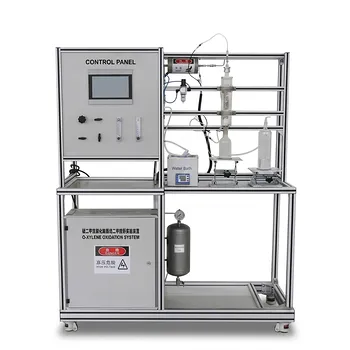
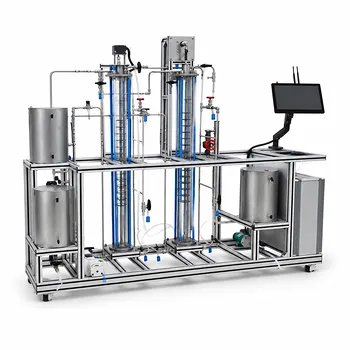
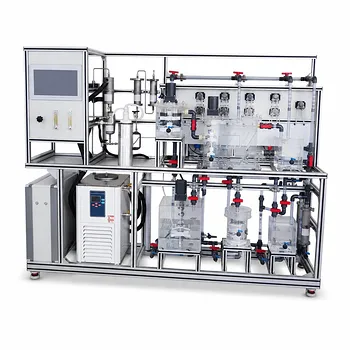
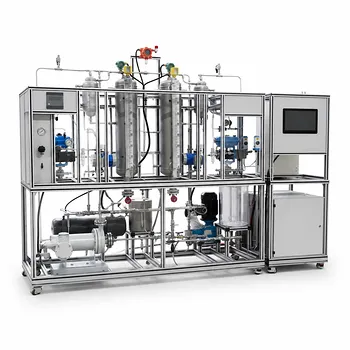
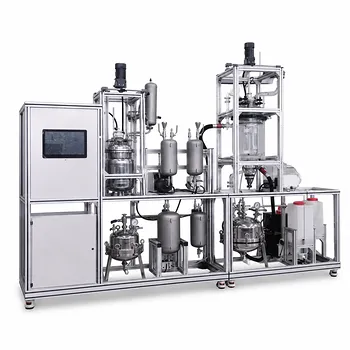
Corrosion-resistant materials and real-time redox control are the defining features of a pilot plant designed for oxidative leaching. These systems must handle aggressive, low-pH slurries and highly oxidizing chemical species like ferric iron or manganese compounds without compromising safety or data accuracy.
The immediate answer is clear: a pilot plant for oxidative hydrometallurgy must be built from alloys or polymers that will not degrade, and it must integrate automated sensors and dosing pumps that maintain the exact electrochemical potential required for rapid, selective metal dissolution. Without these two design pillars, the plant will either fail catastrophically or generate useless process data.
Oxidative leaching pilot plants demand two non-negotiable design elements: complete material resistance to hot, acidic, oxidizing slurries (titanium, PTFE, or borosilicate glass for all wetted parts) and closed-loop oxidation-reduction potential (ORP) control using real-time sensors and precision reagent dosing. Everything else—safety systems, data logging, scalability—rests on this foundation.
The Hostile Environment You’re Designing For
Oxidative leaching is not a gentle chemistry experiment. It is an intentional, accelerated corrosion process that dissolves metals from ores or concentrates.
A Perfect Storm of Degradation
The liquid phase is typically a strong mineral acid (pH < 1) at elevated temperatures. Simultaneously, you are maintaining a high redox potential using oxidants like ferric sulfate, manganese dioxide, or hydrogen peroxide. This combination of low pH, high temperature, and high oxidizing power attacks most standard stainless steels in hours.
Why Standard Materials Fail Instantly
Common 316L stainless steel relies on a passive chromium oxide layer for protection. In oxidative leaching, the high redox potential pushes the steel into the transpassive region, dissolving that protective layer and leading to rapid pitting and stress corrosion cracking. Your pilot plant would literally dissolve along with your target metal.
Material Selection: Your First Line of Defense
Choosing the right materials of construction is not a cost decision—it is an existence decision for the pilot plant. Every single component that contacts the slurry or vapor must be evaluated.
The Gold Standard: Titanium
Titanium is the workhorse for oxidative leaching because it forms a remarkably tenacious, self-healing titanium dioxide layer that resists both acidic and oxidizing conditions. It is essential for the reactor body, agitator shaft and impellers, and all thermowells or sensor housings. The wetted parts of any dynamic equipment—pumps, valves, seals—must be titanium as well.
The Inert Polymer and Glass Layer
Where titanium is cost-prohibitive or chemically incompatible with specific oxidants, polytetrafluoroethylene (PTFE) and borosilicate glass provide near-universal chemical resistance. PTFE linings and gaskets protect reactor closures, while borosilicate glass is often used in downstream piping and condenser sections where visual verification of cleanliness or fugitive crystal formation is critical.
Precision Control: Why ORP and pH Sensors are Non-Negotiable
Leaching kinetics are exponentially sensitive to the solution’s electrochemical potential. Guessing the oxidant addition rate is the fastest way to ruin an experiment.
The Speed of Sensing
Automated oxidation-reduction potential (ORP) sensors with noble-metal electrodes are the pilot plant’s eyes and ears. These sensors measure the ratio of oxidizing to reducing species in solution in real time, directly quantifying the driving force for metal dissolution. Without this feedback, you cannot distinguish between a healthy, active leach and a stagnant, passivated slurry.
The Brain and the Muscle
The ORP sensor signal must be wired to a precise dosing pump via a control algorithm. If the potential dips below the target, the pump incrementally adds oxidant. If it spikes too high, the pump idles. This closed-loop system prevents dangerous over-dosing that could waste reagents or generate excess heat. A matched pH transmitter controls acid addition to stabilize the chemical environment.
Scaling Up Safely: Integrating Monitoring and Containment
Moving from a beaker to a pilot scale introduces risks of toxic mist, pressure build-up, and runaway reactions. The design must account for these without compromising the core control loop.
Total System Integration
The "safe, monitored conditions" required for a pilot plant demand more than sensors. The ORP and pH loops must be interlocked with safety alarms that trigger automated oxidant cut-off valves. If the temperature or pressure drifts beyond set bounds, the system must revert to a safe state by stopping the agitation and halting all chemically active feeds.
Containing the Corrosive Atmosphere
Oxidative leaching often generates corrosive aerosols or mists. A closed reactor with a dedicated overhead condenser ensures these vapors are condensed and returned as reflux. This protects the operating environment, maintains the liquid inventory for accurate mass balances, and prevents fugitive corrosive gas from destroying surrounding structural steel or electrical enclosures.
Understanding the Trade-offs in Pilot Plant Design
A corrosion-proof, precisely controlled pilot plant is not a compromise-free proposition. Acknowledging these trade-offs is essential for making an intelligent investment.
The Cost and Complexity of Titanium
Fabricating reactors and agitators from titanium is significantly more expensive than glass-lined steel. However, a failed 316L reactor that contaminates a high-value slurry with iron and chromium produces data that is worse than useless—it is misleading. The cost of correct materials is the price of scientifically valid data.
Sensor Fouling in High-Solids Slurries
ORP probes are sensitive, and a thick, abrasive ore slurry will foul electrodes or cause measurement drift. The design must include easily accessible retraction ports for regular sensor extraction, cleaning, and recalibration without having to cool and drain the entire reactor. Neglecting this is the most common operational failure mode in pilot leaching campaigns.
Material Compatibility with Specific Oxidants
Titanium is not universally immune. It can be attacked by hot, concentrated hydrochloric acid or certain fluoride-containing chemistries. If your specific oxidative leach uses chloride-based or fluoride-enhanced chemistry, you must validate the material choice through rigorous immersion coupon testing before finalizing the plant design.
Making the Right Choice for Your Development Goal
The specific configuration of your pilot plant should directly reflect the key performance metric you are trying to prove for scale-up. Use the following guide to set your priorities:
- If your primary focus is demonstrating maximum metal recovery: Prioritize the most precise, automated ORP dosing loop with the fastest possible sensor response time to follow the exact kinetic optimum.
- If your primary focus is evaluating long-term economic viability: Design for robust durability with titanium internals and a well-designed sensor cleaning/calibration protocol to prove a stable, low-maintenance continuous operation.
- If your primary focus is screening multiple ore types and chemistries: Choose a flexible glass reactor configuration with a modular PTFE piping system that allows rapid reconfiguration without cross-contamination, even if it limits maximum temperature and pressure.
A pilot plant that marries true chemical inertness with rigorous, automated redox control gives you something far more valuable than just a working machine—it gives you data you can trust to design the full-scale plant.
Summary Table:
| Design Feature | Recommended Solution | Key Operational Benefit |
|---|---|---|
| Material Selection | Titanium, PTFE, Borosilicate Glass | High resistance to low-pH, hot, and highly oxidizing slurries |
| Process Monitoring | Real-time ORP and pH sensors | Precise chemical potential tracking to optimize leaching kinetics |
| Reagent Control | Automated dosing pumps & algorithms | Prevents dangerous over-dosing and optimizes reagent usage |
| Safety Systems | Interlocks & closed condenser loop | Minimizes runoff risks and contains corrosive aerosols/mists |
Scale Up Your Chemical Engineering Processes with LABPARK
Building a reliable pilot plant for harsh chemical reactions requires precision engineering and the right materials. LABPARK designs and delivers robust, high-performance Educational and Vocational Unit Operations Pilot Plants tailored for chemical engineering, bioprocess & biotech, and environmental & water treatment.
Whether you are a university developing academic curriculum, a research institute testing new hydrometallurgical pathways, or an enterprise scaling up to production, our custom pilot systems ensure maximum corrosion resistance, precise process control, and complete operational safety.
Ready to design your next pilot system? Contact LABPARK today to discuss your project requirements!
Related Products
- O-Xylene Oxidation to Phthalic Anhydride Educational Unit Operations Pilot Plant
- Photocatalytic Membrane Separation and Degradation Unit Operations Pilot Plant
- Comprehensive Liquid-Liquid Extraction Pilot Plant for Engineering Education
- Methane Cracking Educational Unit Operations Pilot Plant
- Fixed-Bed Chemical Reaction and Gas Dust Tar Removal Unit Operations Pilot Plant
People Also Ask
- What materials fit high-temp oxidation pilot plants? Key Hastelloy & Titanium Requirements
- Under what conditions can axial diffusion be neglected? Reactor Simulation Guide
- What limitations exist in high-temp pilot reactor design? Key Material & Safety Rules
- How are sensitivity functions applied to parameter estimation in chemical reactor pilot plants? Guide
- What pressure parameters ensure pilot plant safety? Analyze reactor profiles & gas evolution.