The answer lies in the critical competition between interparticle attraction and air entrapment.
At the pilot scale, interparticle attractive forces—primarily Van der Waals—drive initial agglomeration but can backfire. If the external deformation forces applied during compaction are too low to break these agglomerates and expel the air they trap, the tablet retains a porous, weakened internal structure. That residual void network is the root cause of cracking, turning the very forces meant to bond the powder into the architect of its failure.
Tablet cracking is not a failure of bonding; it is a failure of air removal during consolidation. Van der Waals forces rapidly bridge particles at a surface separation of ~100 nm, forming loose agglomerates that incarcerate air. To produce a crack-free tablet, external compaction must overcome those bridges, deform the particles, and evacuate the entrapped voids before final interparticle bonds can set.
How Interparticle Forces Drive Consolidation (and Instability)
The Dominance of Van der Waals Forces in the Early Stage
When a small compressive load is applied to a powder bed, molecular and electrostatic interactions already exist. But as the intersurface distance drops to approximately 100 nm, Van der Waals forces suddenly become the dominant attractive mechanism. At this threshold, particles leap into short-range contact, forming agglomerates almost instantly. These agglomerates are the first structural units of the compact, but they are far from robust.
The Critical Link Between Agglomeration and Void Formation
The problem is geometric: rapid, localized agglomeration happens before the bulk powder bed can rearrange. This traps air-filled spaces (voids) within the growing solid network. Rather than being squeezed out, air pockets become encased inside the fragile agglomerate skeleton. If consolidation halts here, the tablet’s internal architecture is akin to a loosely packed sponge, full of stress-concentrating defects.
Overcoming Agglomerates Through Elastic and Plastic Deformation
To stabilize the bed, these early agglomerates must be dismantled. External forces must drive elastic and plastic deformation to push particles past the Van der Waals bridge, collapse the agglomerate structure, and force the trapped air out. This dual action—breaking the initial bridges while deforming particles into closer contact—shifts the system from a porous agglomerate network to a dense, coherent solid.
Why Insufficient Consolidation Causes Tablet Cracking
The Void-Weakness Cascade
When consolidation is insufficient, the compact retains those large air spaces. These voids act as built-in notches in the material. Under any handling stress or during ejection from the die, stress concentrates at the void edges, easily initiating a crack. Because the solid regions between voids are often just the original, weak agglomerates, there is little energy-dissipating mechanism to stop crack propagation. The result is capping or lamination—the tablet literally tears itself apart from the inside.
The Missing Ingredient: Deformation-Driven Air Expulsion
A crack-free tablet demands that interparticle attractive forces be managed, not just harnessed. Consolidation control in a pilot plant means using the press parameters to force the bed through a regime where plastic flow and brittle fragmentation break down agglomerates and seal the remaining gaps. This is why monitoring the balance between internal forces (Van der Waals) and external forces (applied pressure and deformation) is non-negotiable.
The Three Mechanisms of True Interparticle Bonding
Cold Welding: Bonds at 50 Nanometers
When compressive forces bring clean particle surfaces within ~50 nm, molecular or electrostatic attractive forces can initiate cold welding. This creates genuine solid-state bridges without melting, dramatically increasing the mechanical strength of the consolidated bed. Cold welding is the endpoint of successful air removal and close particle approach.
Fusion Welding: Frictional Heat as a Bonding Agent
During compression, frictional heat at particle contact points can cause local melting of surface asperities. Upon unloading, the molten spots solidify, forming strong fusion welds. This mechanism is especially relevant at higher pressures and with low-melting-point materials, and it can rapidly densify a structure that has already expelled most of its air.
Recrystallization: Solution-Assisted Bonding
High compressive load increases particle solubility at contact points in the presence of residual moisture. This leads to dissolution and subsequent recrystallization, forming solid bridges as the liquid film evaporates or is reabsorbed. While common in pharmaceutical formulations, it requires careful moisture control to avoid over-wetting and sticking.
The Specific Surface Area Window: Too Little and Too Much Compression
Initial Fragmentation Boosts Bonding Sites
As compressive force rises, granule fragmentation and particle rearrangement increase the specific surface area (SSA). A larger SSA presents more bonding-available surfaces, and both tablet hardness and tensile strength rise linearly during this phase. In a pilot-scale study, this is the sweet spot where consolidation is working with, not against, the particle characteristics.
The Risk of Over-Compression
Very high compression forces can eventually decrease SSA as extensive plastic flow fuses particles together, eliminating internal surface area. At this extreme, the tablet may appear dense but can become brittle in a different mode—or develop internal elastic recovery stresses that later cause cracking. The optimal compression force is therefore a window: enough to expel voids and create bonds, but not so much that pore elimination robs the tablet of toughness.
Common Pitfalls to Avoid
- Relying solely on interparticle forces for bonding: Without sufficient deformation and air expulsion, Van der Waals agglomerates create a reservoir of internal voids, leading to low-strength, crack-prone tablets.
- Ignoring the transition between bonding mechanisms: Moving from cold welding to fusion welding requires different energy inputs. Pushing a material that favors cold welding into a fusion-dominated regime without adjusting speed and dwell time can generate internal stress fractures.
- Overlooking the SSA trend reversal: If your pilot data shows hardness plateauing or dropping while compression force climbs, you have likely entered the over-compression zone where bonding sites are disappearing—and the risk of ejection cracks rises.
Making the Right Choice for Your Pilot-Scale Process
Tailor your approach based on the material’s deformation character and your performance targets.
- If your primary focus is maximizing tablet tensile strength with a brittle material: Focus on inducing controlled fragmentation to sharply increase specific surface area, then apply enough pressure to trigger cold welding; you are aiming for the point just before SSA begins to drop.
- If your primary focus is eliminating capping and lamination in a plastic material: Ensure the compression dwell time is long enough to allow plastic flow and air escape; insufficient consolidation time is often the culprit, not the peak force.
- If your primary focus is training operators on the root causes of cracking: Use the void-agglomerate model as the central explanation—visualize the trapped air pockets and demonstrate how increasing deformation (not just peak pressure) eliminates them.
Solid dosage tablets do not fail because the powders won’t bond; they fail because the air never left. Control that air removal through informed deformation, and cracking becomes a process variable, not an inevitability.
Summary Table:
| Bonding Mechanism | Key Driver | Bonding Distance / Condition | Impact on Tablet Strength |
|---|---|---|---|
| Cold Welding | Molecular/electrostatic forces | Clean surfaces within ~50 nm | Substantially increases mechanical strength |
| Fusion Welding | Frictional heat | Melting of surface asperities | Rapidly densifies the compact |
| Recrystallization | Moisture & high load | Dissolution & recrystallization | Forms strong solid bridges |
Master Powder Compaction with LABPARK Pilot Plants
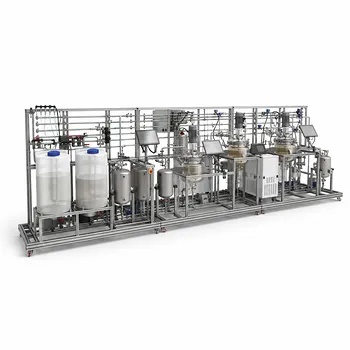
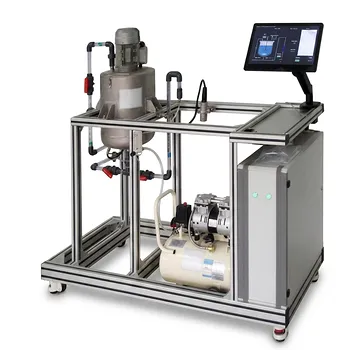
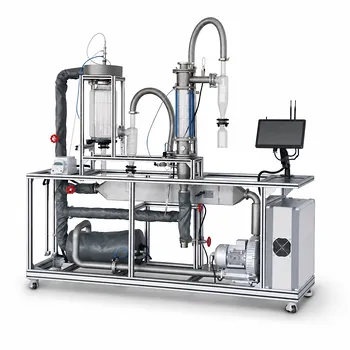
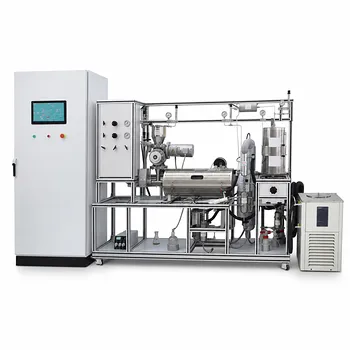
Optimizing unit operations like powder compaction and tableting requires hands-on, reliable equipment. LABPARK provides high-quality Educational and Vocational Unit Operations Pilot Plants in chemical engineering, bioprocess & biotech, and environmental & water treatment. Designed specifically for universities, research institutes, and enterprises, our systems help you bridge the gap between theory and practical industrial application.
Ready to enhance your research and training capabilities? Contact us today to find the perfect pilot plant for your lab!
Related Products
- Polymerization Granulation and Pellet Processing Educational Unit Operations Pilot Plant
- General Purpose Cosmetics Production Unit Operations Training Pilot Plant
- Agitation and Mixing Educational Unit Operations Pilot Plant
- Natural Product Extraction Unit Operations Training Pilot Plant
- Multi-Functional Drying Educational Unit Operations Pilot Plant
People Also Ask
- How do educational unit operations pilot plants bridge theory and design? Bridge the Engineering Gap
- How do educational unit operations pilot plants address safety and waste management when scaling up?
- Why Compare Predicted and Experimental Excess Enthalpy? Key to Accurate Pilot Plant Scale-up
- When to transition from PID to adaptive control in pilot plants? Key process indicators.
- How to study gasification in pilot plants? Compare exit gas composition & efficiency