Particle size distribution (PSD) is the single most important physical property dictating fluidization quality.
In a chemical engineering pilot plant, the PSD of the catalyst directly governs bed expansion, bubble behavior, gas-solid contact, and mass transfer. If the catalyst is too fine, excessive entrainment leads to high catalyst losses and downstream fouling. Conversely, particles that are too large cause the bed to collapse, producing poor fluidization, local hot spots, and rapid catalyst deactivation. The result is an unstable unit operation that cannot deliver reliable heat transfer, conversion, or product selectivity.
Stable fluidized bed operation is a delicate balance—PSD is the fulcrum. Too many fines and the catalyst escapes; too many coarse particles and the bed defluidizes, creating thermal runaway and destroying catalyst life. Only a carefully controlled distribution keeps your pilot plant in the sweet spot of efficient heat and mass transport.
How PSD Controls the Hydrodynamics of Fluidization
The fluidization state, pressure drop, and bed expansion ratio are direct functions of the catalyst’s size distribution. A stable, bubbling bed requires a specific balance of fines and larger particles.
Bed Expansion and the Risk of Defluidization
When the average particle size increases beyond a critical threshold, the bed expansion ratio drops sharply. For typical ammoxidation catalysts, this ratio should remain between 2.0 and 2.2. If it falls below that range, fluidization quality deteriorates—gas channels through stagnant regions instead of dispersing evenly. The result is a loss of the characteristic fluid-like behavior, with solids no longer circulating properly.
The Role of Fines in Smooth Fluidization
A sufficient population of fine particles (often in the 0–44 μm range) serves to lubricate the bed. These fines help minimize bubble size, reduce pressure fluctuations, and improve gas-solid contact. In practice, a typical PSD for propylene ammoxidation includes 25%–45% of particles under 44 μm, with 30%–60% in the 44–88 μm range and the remainder coarser. Removing fines too aggressively destabilizes the bed and increases the risk of slugging.
Gas-Solid Contact and Reaction Rate
Smaller particle fractions increase the effective gas-solid contact area, enhancing mass and heat transfer rates. However, this advantage only holds as long as the fines are not immediately elutriated. The PSD therefore determines how much reactive surface is maintained in the bed and for how long.
Thermal and Kinetic Consequences: Hot Spots and Catalyst Life
Poor fluidization, driven by an incorrect PSD, translates directly into thermal management failures and kinetic penalties.
Local Hot Spots and Temperature Control
When bed expansion falls because particles are too large, the mixing of solids slows dramatically. Hot spots form around the heat release zones, and the reactor can no longer maintain a uniform temperature. In exothermic reactions like ammoxidation, these local hot spots trigger uncontrolled temperature excursions that permanently deactivate the catalyst. The deep need here is for a PSD that guarantees enough bed expansion to sustain vigorous solids backmixing and thus isothermal operation.
Catalyst Deactivation and Attrition
Thermal degradation is not the only deactivation pathway. Particles that are too large also tend to experience higher mechanical stress during fluidization, accelerating attrition. Meanwhile, fines generation through attrition can shift the PSD toward excessive entrainment, creating a vicious cycle. A well-designed PSD accounts for both initial size and the mechanical strength needed to resist fragmentation.
Internal Diffusional Resistance
PSD is not only about hydrodynamics. As particle diameter increases, the diffusional path length inside catalyst pores grows, intensifying mass transport resistance. For consecutive reactions—such as the oxidehydrogenation of butene to butadiene—larger particles cause a measurable drop in the yield of the desired intermediate. By controlling catalyst particle size, pilot-plant operators can decouple chemical kinetics from diffusion effects and identify the optimal size at which intrinsic activity dominates.
Entrainment and Catalyst Retention: The Downside of Fines
While fines are essential for fluidization quality, an excess population presents a clear risk: progressive catalyst loss from the bed.
Elutriation and Downstream Separation Loads
Particles below the terminal velocity of the fluidizing gas are carried out of the bed. If the fraction of material under, say, 44 μm is too high, the elutriation rate skyrockets. Pilot plants typically measure this effect using cyclones or elutriator columns, quantifying the specific elutriation constant. A stable PSD is one where the fines fraction is high enough to lubricate the bed but low enough that the average solids residence time meets process requirements without excessive makeup.
The Impact on Solids Inventory and Process Economics
Frequent catalyst additions to compensate for entrainment losses disrupt steady-state operation, alter the bed inventory, and can change the effective PSD over time. For pilot plants intended to provide scalable reaction data, this drift undermines the ability to obtain reproducible results. Thus, PSD selection directly influences the long-term stability and reliability of the entire campaign.
Understanding the Trade-offs
Every particle size distribution represents a compromise between competing process demands. Acknowledging these trade-offs is essential for sound pilot-plant design and operation.
Fluidization Quality vs. Catalyst Retention
Fines promote smooth bubbling and bed expansion but increase carryover. Coarse particles suppress entrainment but degrade fluidization. The ideal PSD places the system on a plateau where fluidization is robust and elutriation is manageable, often using cyclones to return some fines to the bed.
Activity vs. Selectivity in Diffusion-Limited Regimes
Larger particles reduce internal transport limitations for certain rate-determining steps, but they simultaneously lower effective surface area and may harm selectivity in consecutive reactions. Pilot-plant studies must therefore resolve the particle size that yields the highest yield of the target product, not simply the highest conversion.
Mechanical Integrity and Attrition
Catalysts with high mechanical strength resist fragmentation, maintaining the target PSD. However, overly hard materials can still generate fines through surface abrasion. The PSD specification must be paired with attrition testing to ensure the distribution remains stable over the full runtime.
Applying This to Your Pilot Plant: A Goal-Oriented Guide
The “right” particle size distribution depends on what you are trying to optimize or study. Use these guidelines to frame your selection.
- If your primary focus is thermal management and avoiding hot spots: Prioritize a distribution that yields the target bed expansion ratio (e.g., 2.0–2.2) with enough fines in the 0–44 μm range to maintain vigorous solids mixing.
- If your primary focus is catalyst retention and steady inventory: Limit the fines fraction and implement efficient cyclones; expect to accept a slightly higher bubble size and slightly reduced gas-solid contact.
- If your primary focus is intrinsic kinetic studies or selectivity: Select a narrow particle size cut to minimize diffusional disguise, ensuring that measured rates reflect chemical kinetics rather than mass transfer limitations.
- If your primary focus is long-duration stability: Choose a mechanically robust catalyst with a PSD that compensates for expected attrition, keeping the bed’s hydrodynamic behavior within the stable window over time.
A stable fluidized bed reactor in a pilot plant is not a fixed target—it is a dynamic equilibrium maintained by a precisely engineered particle size distribution. Monitoring and controlling that distribution is what turns empirical trial into predictable, scalable performance.
Summary Table:
| Particle Size Range | Role & Benefits | Operational Risks if Imbalanced |
|---|---|---|
| Fine Particles (<44 μm) | Lubricates the bed, minimizes bubble size, and improves gas-solid contact. | Excessive entrainment, high catalyst loss, and downstream fouling. |
| Coarse Particles (>88 μm) | Reduces catalyst carryover and maintains stable reactor inventory. | Defluidization, gas channeling, local hot spots, and rapid catalyst deactivation. |
Optimize Your Fluidized Bed Pilot Operations with LABPARK
Achieving the perfect balance in fluidization hydrodynamics is essential for reliable scale-up and research data. LABPARK provides state-of-the-art Educational and Vocational Unit Operations Pilot Plants in chemical engineering, bioprocess & biotech, and environmental & water treatment designed specifically for universities, research institutes, and enterprises.
Whether you need to study catalyst kinetics, control bed expansion, or optimize reaction thermal dynamics, our robust pilot plants deliver the precision and reliability your team requires.
Ready to elevate your research, teaching, and process development? Contact LABPARK today to find the perfect pilot plant solution for your facility!
Related Products
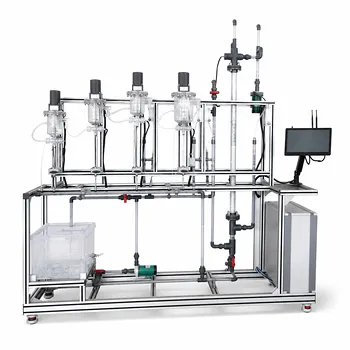
- Multi-Reactor Educational Pilot Plant for Reaction Engineering Unit Operations
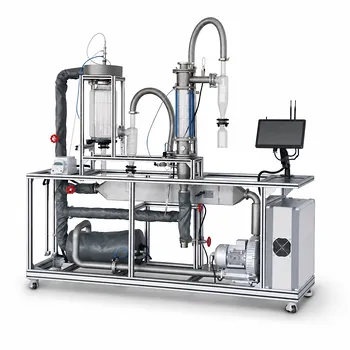
- Fluidized Bed Gas Solid Catalytic Reaction Educational Pilot Plant
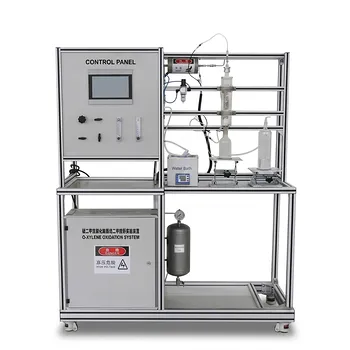
- Fixed Bed Gas Solid Catalytic Reaction Educational Pilot Plant
- Multi Functional Catalytic Reaction and Reactor Evaluation Educational Unit Operations Pilot Plant
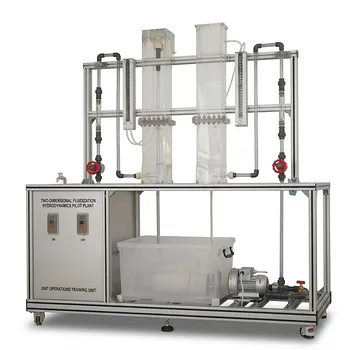
- Two-Dimensional Fluidization Hydrodynamics Educational Pilot Plant for Unit Operations Training
People Also Ask
- How do educational unit operations pilot plants address safety and waste management when scaling up?
- How do educational unit operations pilot plants bridge theory and design? Bridge the Engineering Gap
- Why Compare Predicted and Experimental Excess Enthalpy? Key to Accurate Pilot Plant Scale-up
- Why Use PTFE & Hastelloy in Chemical Pilot Plants? Prevent Corrosion & Ensure Safety
- How to study gasification in pilot plants? Compare exit gas composition & efficiency