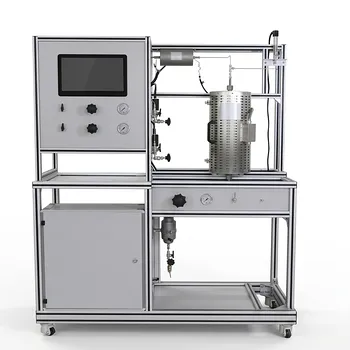
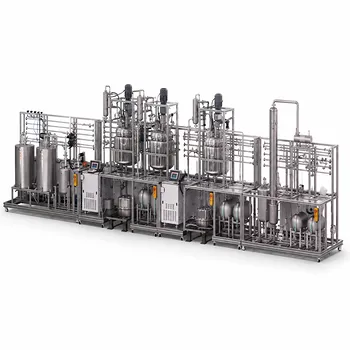
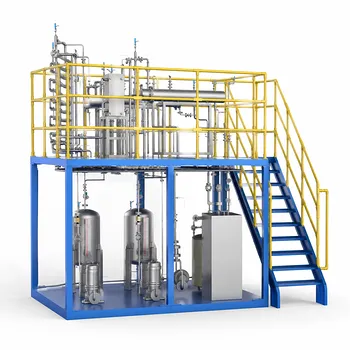
Your pilot plant’s safety depends on a deliberate stack of independent barriers—not on hoping that nothing goes wrong. The multi‑layer safety concept should be applied by first designing out hazards (inherent safety), then overlaying process control to keep variables within limits, independent alarms to alert operators, automatic shutdown (trip) interlocks when limits are breached, pressure relief and physical containment to protect people and the facility, and finally operational procedures and emergency plans. Every layer must be tailored to the specific unit operations through systematic hazard identification (HAZOP and LOPA) during design and continuously re‑validated during operation.
The layer‑of‑protection model for pilot plants translates into a practical, quantifiable architecture: shrink the intrinsic hazard, instrument it for control, warn before it becomes dangerous, force a safe shutdown if warnings are ignored, and physically capture what remains—all underpinned by rigorous hazard analysis and formal management of change. This approach protects researchers, students, and the building while maintaining the flexibility a pilot plant demands.
Laying the Foundation: Inherent Safety and Hazard Identification
The first line of defense is the process itself. Inherently safer design reduces the consequence of any failure before a single instrument is installed.
Minimize Hazard Inventory through Design
Every pilot‑scale unit operation—whether a reactor, distillation column, or absorption system—should be sized to hold the smallest practical inventory of hazardous materials. Short, small‑diameter piping, compact heat exchangers, and immediate quench or kill systems prevent large energy or toxic releases. Wherever possible, substitute high‑hazard solvents, catalysts, or reagents with less dangerous alternatives during the early research definition phase.
Systematic Risk Analysis Before Construction
Before a pilot plant is built or modified, apply HAZOP studies to identify deviations from the design intent (e.g., “No flow,” “More pressure”) and their consequences. Follow up with Layer of Protection Analysis (LOPA) to quantify the frequency of a deviation escalating beyond the control layer and to determine if additional independent protective layers—such as a safety instrumented function—are required. This semi‑quantitative method is particularly suited to pilot facilities, because it forces a clear, documented link between a specific hazard and each layer’s reliability.
Instrumented Protection Layers: Control, Alarms, and Shutdown
After the process is made as safe as possible at the design level, active instrumented barriers take over. These must be functionally separated so that a single failure does not defeat multiple layers.
BPCS Keeps the Process in the Safe Zone
The Basic Process Control System (BPCS) maintains temperature, pressure, level, and flow within the normal operating envelope. In a pilot plant, this is typically a PLC‑based system or a small DCS. While the BPCS reacts to process disturbances, it is itself not a safety system; it works only as long as sensors, final elements, and logic solvers remain functional and within their design range.
Critical Alarms as the Human Trigger
A dedicated alarm layer must operate independently of the BPCS. When a parameter crosses a pre‑set threshold (e.g., reactor temperature exceeding 5 °C above normal), an alarm must demand immediate operator action. In pilot settings with trainee operators, alarm rationalization is essential to avoid alarm floods that paralyze rather than protect. Every alarm should be mapped to a documented response procedure.
Safety Instrumented Functions (SIFs) and SIL Ratings
If the operator cannot reliably intervene in time, an automatic safety shutdown (trip) system must activate. In pilot plants handling exothermic reactions or flammable gases, these safety instrumented functions (SIFs)—such as automatic closure of a fuel gas valve or dump of a reactant—must meet a target Safety Integrity Level (SIL). Based on IEC 61511, typical pilot‑scale applications call for SIL 1 or SIL 2, corresponding to a probability of failure on demand between 10⁻² and 10⁻³. This ensures that interlocks function when needed, even if the BPCS has already failed.
Physical and Organizational Defenses: Relief, Containment, and Procedures
Beyond the electronic barriers, physical hardware and human systems provide the last independent layers before relying on emergency response.
Pressure Relief and Physical Containment
When all instrumented layers fail to prevent overpressure, pressure relief valves or rupture disks must open to prevent catastrophic vessel rupture. Their discharge must be routed to a safe location—often a catch tank or a scrubber for toxic releases. The next layer is physical containment: dikes, bunds, or sealed drainage to hold the maximum credible spill. Even a small pilot distillation column can release enough flammable liquid to cause a floor fire; secondary containment buys time.
Emergency Procedures and Operational Discipline
For a pilot plant, the “local emergency response” layer lives in printed, practised procedures. These must cover:
- Emergency shutdown triggers for runaway reactions or major leaks;
- Utility outage responses (loss of cooling water, power, inert padding);
- Major release containment and spill management;
- Waste disposal and cleanup to prevent cross‑contamination between experimental runs. Since pilot plants undergo frequent modifications, a formal Management of Change (MOC) process must re‑validate every layer before a new campaign begins. Pre‑startup safety reviews, updated HAZOP studies, and refresher training convert written procedures into living safeguards.
Understanding the Trade-offs and Practical Limitations
No single layer can be perfect, and pilot‑plant realities demand a balanced approach.
The Cost of Over‑Instrumentation vs. Research Agility
Piling on redundant sensors, logic solvers, and shutdown sequences can make the plant so brittle that minor instrument faults halt valuable experiments. Every additional interlock adds failure points and maintenance burden. The goal is to achieve a risk reduction factor that meets the laboratory’s tolerated risk level—established through LOPA—without smothering the flexibility researchers need to explore new chemistry.
Common Pitfalls: Alarm Floods and Bypassed Trips
In educational or high‑turnover pilot plants, poorly designed alarm systems can generate dozens of nuisance alarms, leading operators to silence or ignore them. Similarly, bypassed safety trips—often done informally to continue a time‑sensitive experiment—become unacceptably dangerous. A well‑applied layer concept includes administrative controls such as alarm flood testing, trip‑bypass authorization, and independent verification that all layers remain intact after each maintenance window.
How to Apply the Multi‑Layer Concept to Your Pilot Plant
Adapt the layer model to your specific unit operations, risk appetite, and operational tempo.
- If you are designing a new pilot plant: Start with a formal HAZOP on the P&IDs, then run a LOPA early in detailed engineering to define the required SIL for each safety instrumented function and to size relief and containment systems.
- If you are retrofitting an existing installation: Audit the current safeguards with a simplified LOPA. Identify gaps where a single failure could break through all active layers—then close the biggest gaps first, focusing on independent shutdown interlocks and physical containment.
- If your primary goal is training operators: Embed the layer philosophy directly into standard operating procedures. Make “what‑if” drill scenarios that assume the BPCS fails, forcing students to respond to alarms and—if they don’t—watch the automatic trip activate, so they internalize the independence of each layer.
- If your plant changes frequently (different campaigns): Enforce a rigorous management of change workflow that triggers a mini‑LOPA and a pre‑startup safety review for every new chemical system or equipment configuration. This ensures the safety layers evolve with the process.
A pilot plant’s safety is not a static checklist; it is a living architecture of deliberately independent barriers, continuously re‑evaluated through analysis and discipline—and that is the only way to safely explore the boundaries of chemical processes.
Summary Table:
| Safety Layer | Primary Function | Pilot Plant Application |
|---|---|---|
| Inherent Safety | Eliminate or minimize hazards at the source | Small inventories, safe solvent alternatives |
| Process Control (BPCS) | Maintain normal operating limits | PLC/DCS control of temperature, flow, and pressure |
| Critical Alarms | Alert operators to take manual action | Independent alarms with clear response procedures |
| Safety Instrumented Systems (SIS) | Automatic shutdown (trips) | SIL 1/2 interlocks for exothermic runaways |
| Physical Protection | Release relief and containment | Rupture disks, safety valves, bunds, and catch tanks |
| Procedures & Emergency | Administrative controls & response | Management of Change (MOC), emergency shutdown drills |
Build a Safer Learning and Research Environment with LABPARK
At LABPARK, we specialize in providing state-of-the-art Educational and Vocational Unit Operations Pilot Plants across chemical engineering, bioprocess & biotech, and environmental & water treatment. Designed specifically for universities, research institutes, and enterprises, our pilot plants integrate rigorous multi-level safety layers (from inherent design to advanced interlock systems) to protect your researchers and students without compromising on operational flexibility.
Ensure your laboratory meets the highest safety and pedagogical standards. Contact our engineering experts today to customize a safe, reliable pilot plant for your institution!
Related Products
- Carbon Dioxide Hydrogen Methanol Synthesis Educational Unit Operations Pilot Plant
- Multi Pump Fluid Transport Process Piping Unit Operations Training Pilot Plant
- Natural Product Extraction Unit Operations Training Pilot Plant
- Multi-Modal Distillation Unit Operations Training Pilot Plant
- Multi-Reactor Educational Pilot Plant for Reaction Engineering Unit Operations
People Also Ask
- How do temp & pressure affect methanol synthesis pilot plants? Optimize equilibrium and catalyst performance.
- Why is a purge system necessary when operating a gas recirculation loop in a methanol synthesis pilot plant? (Guide)
- Why do modern methanol pilot plants operate at lower pressures? Catalyst & Feed Requirements Explained
- What are the operational requirements for catalyst activation? Safe Methanol Pilot Plant Operation
- Why is the chemical plant startup schedule crucial? De-risk scale-up with pilot plants.