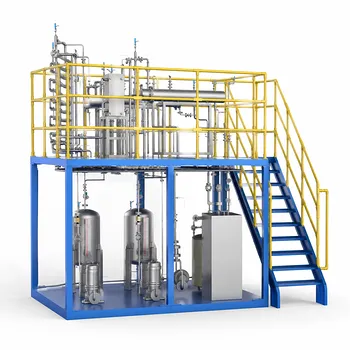
The most effective integration of safety layers begins long before a student touches a valve—it is embedded in the very design of the pilot plant. In a chemical engineering unit operations pilot plant, student and researcher safety is ensured by a deliberate, stacked sequence of independent protection layers that mimic industrial best practice. This architecture, rooted in the principles of loss prevention, moves from eliminating hazards at the source to containing a worst‑case event. When integrated into both the equipment design and the operating protocol, these layers create a resilient “Swiss cheese” model that protects inexperienced operators and builds lifelong safety habits.
A pilot plant’s safety is not a single gadget but a hierarchy of defenses. The innermost layer is inherently safer design, followed by a basic process control system, critical alarms with trained human intervention, automatic interlocks, and finally pressure relief. Each layer must be physically and procedurally integrated into the lab, and their value is fully realized only when students are taught not just how they work but why they are indispensable.
The Five Layers of Protection in a Pilot Plant
A pilot plant that operates safely for both students and researchers must incorporate five distinct, mutually reinforcing layers. Each layer addresses a different failure mode, from a slow drift in temperature to a runaway reaction.
1. Inherent Safety: Eliminate the Hazard Before It Exists
The most powerful layer is to design out the hazard altogether. Inherent safety means selecting chemicals, operating conditions, and vessel configurations that minimize the potential for harm.
- Use the least toxic, least flammable solvent that can still achieve the educational objective. For example, replace toluene with a higher‑flash‑point solvent where possible, or opt for aqueous systems.
- Keep inventories of hazardous materials as small as practical. Small‑scale pilot plants naturally limit the worst‑case inventory, but this principle should be applied consciously to every feed tank and reactor.
- Design for mild pressure and temperature ranges so that the gap between normal operation and equipment limits remains wide. This reduces the likelihood of ever needing the downstream protective layers.
When flammable solvents must be used, inherent safety includes inert gas blanketing—purging feed and product tanks with nitrogen to keep the oxygen concentration below the flammability limit. Integrate this directly into the vessel design, not as an after‑the‑fact add‑on, and comply with NFPA 69 standards for explosion prevention.
2. Basic Process Control System: The Automated Pilot
Above inherent design sits the Basic Process Control System (BPCS). This is the everyday brain that monitors and actively manipulates temperature, pressure, flow, and level to keep the plant within its safe operating envelope.
- A well‑designed BPCS in an educational pilot plant uses real‑time sensors and controllers (e.g., PID loops) to maintain steady‑state conditions, preventing the gradual deviations that can cascade into emergencies.
- Redundancy for critical measurements—such as dual temperature sensors in an exothermic reactor—adds early‑warning robustness without requiring an immediate shutdown.
- The BPCS must be fail‑safe: loss of air supply to a control valve should close it (or drive it to the safe position), and backup power should maintain essential monitoring and safety functions during a utility outage.
From a pedagogical standpoint, the BPCS gives students their first exposure to industrial automation, teaching them that continuous monitoring is the foundation of safe operation.
3. Critical Alarms and Trained Human Intervention: The Thinking Layer
When the BPCS cannot keep a variable within bounds, critical alarms must grab the operator’s attention. This layer is only as strong as the operator who hears the alarm.
- Set high‑ and low‑alarms (and often separate pre‑alarms) for temperature, pressure, level, and composition. These must be distinct, documented, and never ignored.
- The design of the pilot plant must support rapid human intervention: master shut‑off valves for water, electricity, and gas must be prominently marked and easily accessible. Emergency facilities—eye‑wash stations, showers, fire extinguishers, and first‑aid kits—must be visible and inspected regularly.
- All operations that can release toxic, volatile, or irritating gases must be conducted inside a properly functioning fume hood. This is a non‑negotiable integration of the facility layout with the alarm and intervention layer.
Rigorous training is the crucial link here. Every student must complete a formal safety induction, sign a safety commitment, and know the exact sequence of actions to take when a critical alarm sounds. The human layer works only when the human is present, competent, and unhurried.
4. Automatic Safety Shutdown (Interlocks): The Unthinking Guardian
If the operator does not—or cannot—respond in time, automatic safety shutdown systems must take over. These interlocks are hard‑wired or logic‑driven barriers that act without human permission.
- Temperature and pressure interlocks are essential in reactor and distillation units. For example, if a pressure transmitter detects a threshold 10% above the maximum operating limit, the interlock immediately cuts off the heat source and closes the feed valve.
- Interlocks should prevent known operator errors. A common configuration prevents opening a vessel drain while the vessel is pressurized, or disables the heater when the recirculation pump is off.
- Remote‑operable isolation valves and cut‑off valves on key feed and product lines let the interlock system quickly isolate hazardous inventories.
In a student‑run pilot plant, interlocks are the silent teacher: they protect the learner from the very real dangers of distraction or inexperience while demonstrating how industrial plants prevent severe accidents such as runaway reactions. For exothermic reactions, automated interlocks can instantly switch on the cooling jacket or activate a small‑scale mitigation scrubber to capture toxic vapors.
5. Pressure Relief and Physical Containment: The Final Barrier
When all control and shutdown layers fail or are overwhelmed, the plant must still avoid catastrophic rupture. Pressure relief systems—rupture disks and spring‑loaded relief valves—are the last engineered layer.
- Relief devices must be sized according to the worst‑credible overpressure scenario and vent to a safe location, not into a congested working area. Where flammable vapors are possible, the vent design must account for explosion mitigation per NFPA 68 (deflagration venting).
- In educational pilot plants handling toxic or volatile materials, integrate a small‑scale scrubber or quench system downstream of the relief path to neutralize and capture the released substances. This simulates the containment systems of a full‑scale industrial plant.
- Beyond the relief device, physical containment—such as bunds under solvent tanks—and a clear local emergency response plan form the outer ring that protects people and the environment if all other barriers have been breached.
Embedding Safety into the Operation: Beyond Hardware
Hardware layers are useless if they are not surrounded by a living safety culture. The following operational integrations are as critical as any interlock.
A Systematic Risk Assessment Before Every Campaign
Before a new experiment or unit operation begins, a structured five‑step risk assessment must be performed:
- Risk Identification: List the chemical hazards (toxicity, flammability), process hazards (runaway potential, pressure build‑up), and equipment hazards. Review material safety data sheets for every substance.
- Risk Analysis: Estimate the probability and severity of what could go wrong, even during foreseeable student errors.
- Risk Evaluation: Decide which risks are unacceptable and therefore demand additional controls.
- Risk Control: Add or strengthen layers—from improving ventilation and revising the operating procedure to upgrading PPE requirements.
- Report Generation: Documenting emergency response procedures, standard operating manuals, and waste treatment guidelines creates institutional memory and reduces reliance on a single informed individual.
This risk assessment is the blueprint that determines which safety layers need to be strengthened for a particular run.
Training, PPE, and Administrative Controls as the Glue
All layers depend on the people who interact with them. Therefore, the pilot plant must weave administrative controls into the fabric of every session:
- Mandatory safety training before entry, with periodic refreshers that explain the role of each safety layer—not just the “what” but the “why.”
- Prescribed personal protective equipment: lab coats, impact‑resistant goggles, and task‑appropriate gloves (chemical‑resistant, heat‑resistant, or cut‑resistant) are the last defense for the individual, and their use must be enforced.
- Pre‑startup safety checks: a checklist to verify that utility lines are intact, alarms are enabled, relief paths are clear, and emergency shut‑off valves are unobstructed before any run begins.
- End‑of‑session protocols: proper waste disposal, equipment failure reporting, and a final walk‑through to confirm that energy sources are isolated and the lab is left in a safe state.
Understanding the Trade‑offs: What Layering Cannot Solve
Implementing a multi‑layered safety approach in an educational setting carries its own set of tensions. An honest integration strategy must acknowledge them.
- Complexity versus learning: Over‑engineered interlocks can make a pilot plant opaque to students. If the plant shuts down automatically for every minor deviation, students never learn to interpret process trends or to intervene themselves. The design must find a balance where safety is not compromised but the educational value of hands‑on operation is preserved.
- Cost and maintenance: Redundant sensors, hard‑wired shutdown logic, and sophisticated relief systems increase capital and maintenance costs. For an academic lab, justifying these expenses requires a clear-eyed view that investing in layers of protection is cheaper than a single serious incident—both financially and reputationally.
- False sense of security: No layer is perfect. Students who assume “the interlock will save me” may take more risks. That is why the human layer—training and supervision—must continually reinforce that safety is a shared responsibility, not a black box.
- Adaptability to new experiments: A locked‑in set of interlocks designed for one reaction may be inadequate for a new research project. The pilot plant must be re‑assessed each time, and some layers (like BPCS set‑points) may need reconfiguration. The safety architecture must be flexible enough to update without requiring a complete rebuild.
Making the Right Choice for Your Educational Goals
The way you weight and implement these safety layers should reflect your program’s primary mission.
- If your primary focus is hands‑on operational feeling for students: Keep the BPCS intuitive and alarms visible; do not hide the process behind too many automated shutdowns. Strengthen the training and supervision layer so students learn by doing while staying safe.
- If your primary focus is demonstrating industrial‑scale safety systems: Integrate a full suite of interlocks, hard‑wired shutdown relays, and formal risk assessment documentation. Use this as a teaching tool to show how a professional plant operates.
- If your primary focus is handling highly energetic or toxic reactions: Weight your investment toward inherent safety, upgrading to inerted, small‑inventory reactors, and ensure the pressure relief and containment layers are robust and tested.
- If your primary focus is simplicity and reliability: Prioritize the innermost layers first—choose inherently safe chemistries and low‑hazard conditions—before adding complex interlocks. A simpler plant with fewer layers that are well understood is often safer than a complex one that is poorly maintained.
Safety in a student pilot plant is not a checklist to complete once; it is a layered, living system that adapts to every experiment and every new class. When you design the layers into the plant from the start and teach students to see them as enablers of discovery rather than nuisances, you protect people and cultivate the safety instinct that distinguishes a competent engineer.
Summary Table:
| Protection Layer | Core Function | Key Examples |
|---|---|---|
| 1. Inherent Safety | Eliminates or minimizes hazards at the source | Low inventories, mild operating conditions, nitrogen blanketing |
| 2. Process Control (BPCS) | Maintains normal safe operating conditions | PID loops, fail-safe control valves, redundant sensors |
| 3. Alarms & Intervention | Alerts operator for manual correction | High/low alarms, emergency utility shut-offs, fume hoods |
| 4. Interlocks (SIS) | Automatically shuts down to prevent accident | Temperature/pressure interlocks, automated isolation valves |
| 5. Relief & Containment | Prevents catastrophic overpressure rupture | Relief valves, rupture disks, quench tanks, bunds |
Build a Safer Educational Environment with LABPARK
At LABPARK, we design and manufacture state-of-the-art Educational and Vocational Unit Operations Pilot Plants in chemical engineering, bioprocess & biotech, and environmental & water treatment. Our systems are engineered with integrated, industrial-grade safety layers to protect your students and researchers while delivering hands-on learning.
Ready to upgrade your university, research institute, or enterprise facility? Contact our experts today to discuss your custom pilot plant requirements!
Related Products
- Carbon Dioxide Hydrogen Methanol Synthesis Educational Unit Operations Pilot Plant
- Multi Pump Fluid Transport Process Piping Unit Operations Training Pilot Plant
- Natural Product Extraction Unit Operations Training Pilot Plant
- Multi-Modal Distillation Unit Operations Training Pilot Plant
- Multi-Reactor Educational Pilot Plant for Reaction Engineering Unit Operations
People Also Ask
- How do temp & pressure affect methanol synthesis pilot plants? Optimize equilibrium and catalyst performance.
- Why is a purge system necessary when operating a gas recirculation loop in a methanol synthesis pilot plant? (Guide)
- Why do modern methanol pilot plants operate at lower pressures? Catalyst & Feed Requirements Explained
- What are the operational requirements for catalyst activation? Safe Methanol Pilot Plant Operation
- Why is the chemical plant startup schedule crucial? De-risk scale-up with pilot plants.