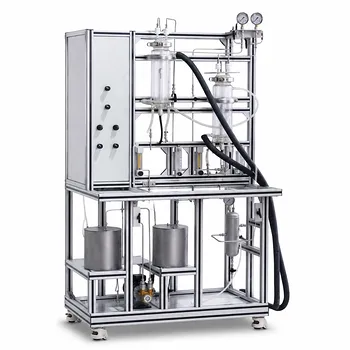
The choice between a fixed-bed (e.g., trickle-bed) and a slurry reactor for a multiphase pilot plant fundamentally hinges on catalyst particle size, heat management needs, and the acceptability of downstream catalyst separation. If your catalyst is coarse (typically >1 mm) and you need simple, continuous plug-flow operation without a filtration step, a fixed-bed design is the frontrunner. When you must use very fine catalysts (<1 mm), maintain razor-sharp isothermal control for a highly exothermic reaction, or handle a fouling feedstock, a slurry reactor becomes the superior—and often the only viable—choice.
The decision is not about finding a “better” reactor, but about aligning the reactor’s intrinsic strengths with the most unforgiving constraint of your specific reaction system. Fixed-bed reactors eliminate catalyst separation at the cost of limited heat transfer, while slurry reactors deliver unparalleled thermal uniformity but demand a robust solids-liquid separation step. A well-designed research pilot plant often uses modularity to let you study both paradigms, transforming reactor selection from a theoretical exercise into an experimentally grounded engineering decision.
Key Decision Drivers for Pilot Plant Reactor Selection
The underlying need is to design a pilot unit that faithfully reveals the true kinetic and transport behavior of your multiphase reaction. The reactor type becomes a lens through which you observe, and choosing the wrong one can distort results or cause operational failure. These five factors are your primary screening tools.
Catalyst Particle Size and Attrition Management
Catalyst size is the most deterministic criterion. Fixed-bed trickle-flow reactors require particles larger than approximately 1 mm to maintain a stable trickling regime and avoid excessive pressure drop. In these systems, the catalyst remains stationary, protecting the particles from physical degradation.
Slurry reactors, by contrast, are designed for fine catalyst powders (often <100 μm). These particles are suspended in the liquid phase, typically with mechanical agitation, to create a uniform mixture. The trade-off is clear: slurry operation introduces catalyst attrition due to particle‑particle and particle‑impeller collisions, which will gradually destroy the solid catalyst.
For a pilot plant, this means your catalyst’s mechanical strength and intended commercial form factor should guide the choice. If your ultimate process will use an extrudate or a monolith, testing in a fixed-bed is mandatory. If your process relies on a finely dispersed unsupported catalyst or a slurry‑phase bubble column, a pilot slurry reactor mirrors industrial reality.
Heat Transfer and Temperature Control
Slurry reactors are the gold standard for isothermal operation. The intense mixing suspending the catalyst also homogenizes the liquid temperature, creating near‑perfect thermal uniformity. This makes them ideal for strongly exothermic reactions, where even a localized temperature excursion can cause runaway, catalyst sintering, or hazardous hot spots.
Fixed‑bed reactors suffer from significant radial heat transfer resistance. In a trickle‑bed, heat generated at the particle surface must travel through the liquid film, the solid bed, and the reactor wall to be removed. This often leads to radial temperature profiles and, under strongly exothermic conditions, dangerous hot spots that deactivate the catalyst and bias kinetic measurements.
Pilot plants that study reactions like benzene hydrogenation or acrylonitrile synthesis often use slurry or fluidized‑bed configurations precisely to avoid thermal runaway. If your research demands intrinsic kinetic data free from temperature‑gradient artifacts, a slurry reactor’s isothermal behavior is a compelling advantage.
Feedstock Characteristics and Fouling
The physical nature of your feed can eliminate a reactor type instantly. Fixed‑bed trickle‑flow reactors are notoriously intolerant of feeds that contain solids, heavy organometallic compounds, or precursors that form solid by‑products. Such materials lead to plugging, channeling, and rapid, uncontrollable pressure drop rises.
Slurry reactors naturally manage solids and fouling species. The backmixed liquid phase continuously scours particle surfaces and suspends any solid reaction products along with the catalyst. For heavy feedstocks like vacuum residua or oils laden with metal‑contaminants that cause catalyst fouling, a slurry pilot unit is often the only practical choice to sustain long‑duration experiments without severe bed clogging.
Mass Transfer and Hydrodynamic Regime
The gas‑liquid mass transfer rate differs markedly between configurations. Trickle‑bed reactors operate with a thin liquid film flowing over the catalyst, leading to relatively low volumetric mass transfer coefficients (typically 0.01–0.1 s⁻¹). This makes them suitable only for reactions where gas‑to‑liquid transfer is not rate‑limiting.
Slurry reactors offer higher gas‑liquid mass transfer rates (roughly 0.03–0.3 s⁻¹) because the agitated suspension continuously breaks and renews the gas‑liquid interface. For fast reactions where mass transfer controls the overall rate, the slurry configuration provides a valuable performance cushion and allows you to probe true kinetics only after verifying that you are not starved.
Residence time distribution is another key difference. Fixed‑bed trickle‑flow reactors closely approximate plug flow, giving narrow residence time distributions that favor high conversion per pass. Slurry reactors are essentially well‑mixed in the liquid phase, which can be a benefit for heat management but may limit per‑pass conversion if not compensated by a larger reactor volume or recirculation.
Downstream Separation Complexity
The most operationally visible trade‑off is catalyst separation. In a fixed‑bed reactor, the catalyst stays inside the column; the product exits largely particle‑free, requiring no additional solid‑liquid separation step. This dramatically simplifies the pilot plant’s downstream layout and sample handling.
A slurry reactor mandates a dedicated separation loop. You must continuously filter or settle the catalyst from the product stream, often at elevated temperatures and pressures. This adds capital cost, complexity, and a potential failure point—but for fine catalysts, there is no alternative. The pilot plant must faithfully mimic this separation step to produce meaningful data for scale‑up.
Understanding the Trade‑offs: Fixed‑Bed vs. Slurry
Placing the two reactors side‑by‑side clarifies why no universal “best” exists. The table below distills the critical performance dimensions, drawing on comparative data from trickle‑flow, slurry, and modern structured‑reactor benchmarks to highlight the trade‑offs you must manage.
| Performance Attribute | Fixed‑Bed (Trickle‑Flow) | Slurry Reactor |
|---|---|---|
| Pressure drop | High (~50 kPa/m in typical multiphase flow) | Lower (due to smaller catalyst loading per unit volume) but pump energy shifts to agitation |
| Gas‑liquid mass transfer coefficient (kLa) | Low (0.01–0.1 s⁻¹) | Moderate (0.03–0.3 s⁻¹) |
| Heat transfer / temperature uniformity | Poor; radial gradients and hot spots possible | Excellent; near‑isothermal |
| Catalyst attrition | Negligible; bed is stationary | Significant; fines generation inevitable |
| Solids separation requirement | None; catalyst remains in the bed | Essential; requires external filtration/settling |
| Scale‑up predictability | Relatively straightforward with careful hydrodynamic modeling | Chaotic mixing behavior complicates scale‑up |
| Feed flexibility | Poor for solids‑containing or fouling streams | Robust; can handle heavy and fouling feeds |
For research pilot plants, the pressure drop penalty of a trickle‑bed is often acceptable for short‑duration tests, but it becomes a critical design parameter if the reaction pressure is high or the column is tall. The mass transfer advantage of the slurry reactor may be irrelevant if your reaction is kinetically controlled rather than mass‑transfer limited. Always map these attributes back to the single most restrictive requirement of your study.
Modular Pilot Plants: Learning by Direct Comparison
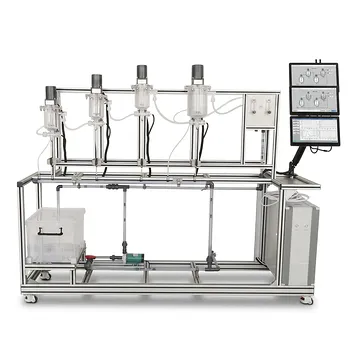
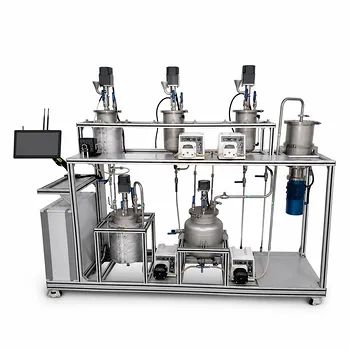
The primary reference rightly emphasizes that educational and research pilot plants frequently avoid a forced, single‑choice decision. Modular setups that can be re‑configured between fixed‑bed and slurry modes are a powerful research tool. They allow you to:
- Measure the same reaction under identical process conditions in both hydrodynamic regimes.
- Quantify the true impact of bypassing, backmixing, and mass transfer resistances.
- Give students and researchers a hands‑on understanding of why an industrial reactor might have been chosen.
This side‑by‑side capability turns reactor selection into a learning outcome itself, not just a logistical constraint. While a fully modular plant costs more upfront, it can dramatically reduce the number of pilot runs needed to de‑risk a novel process.
Making the Right Choice for Your Pilot Plant Study
Let your most stringent process requirement dictate the final configuration. The recommendations below map common research goals to the appropriate starting point.
- If your primary focus is obtaining intrinsic kinetic data on a coarse catalyst without separation steps: Select a fixed‑bed trickle‑flow reactor. It eliminates the cost and uncertainty of a slurry filtration loop while preserving plug‑flow behavior for reliable kinetic modeling.
- If your primary focus is studying a highly exothermic reaction or verifying isothermal operation: Choose a slurry reactor. Its superior heat management will prevent hot spots from distorting your kinetic results and protect the catalyst from thermal deactivation.
- If your primary focus is processing a heavy feedstock prone to fouling or containing residual solids: A slurry reactor is the only reliable option. The continuous backmixed environment mitigates clogging and allows you to run extended campaigns without bed blockage.
- If your primary focus is investigating a process that already uses a commercial slurry‑phase technology: Mirror the industrial design directly with a pilot‑scale slurry unit. This ensures that catalyst separation, attrition, and scale‑up behavior are studied under representative conditions.
- If your primary focus is pedagogical—teaching reactor selection through comparative experiments: Invest in a modular pilot plant that can be switched between fixed‑bed and slurry configurations. The ability to directly measure pressure drops, temperature profiles, and mass transfer coefficients for the same reaction on the same unit creates the deepest learning experience.
The right pilot plant reactor is not the one that seems easiest to build, but the one that faithfully translates your reaction’s most unforgiving demand into reliable data. Let the catalyst, the heat load, and the feed’s nature make the decision for you.
Summary Table:
| Reactor Type | Catalyst Size | Heat Management | Catalyst Separation | Best Used For |
|---|---|---|---|---|
| Fixed-Bed (Trickle-Flow) | Coarse particles (>1 mm) | Limited (prone to hot spots) | None required (catalyst is stationary) | Simple plug-flow operations & stable, non-fouling feeds |
| Slurry Reactor | Fine powders (<1 mm) | Excellent (isothermal control) | Mandatory (requires downstream filtration) | Highly exothermic reactions & fouling/viscous feeds |
Scale Up Successfully with LABPARK Pilot Plants
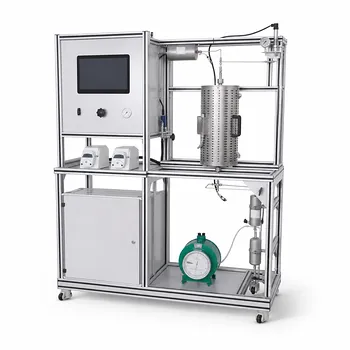
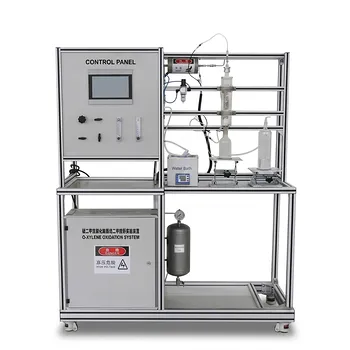
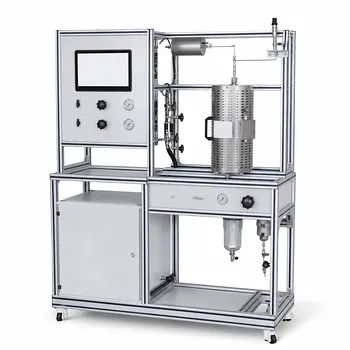
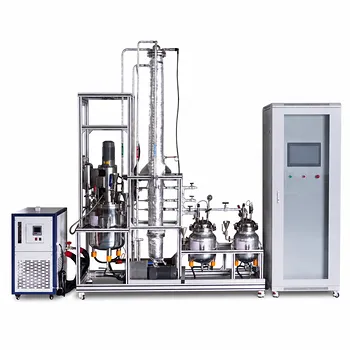
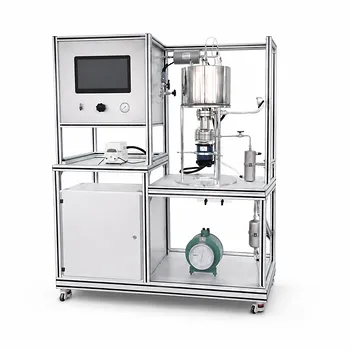
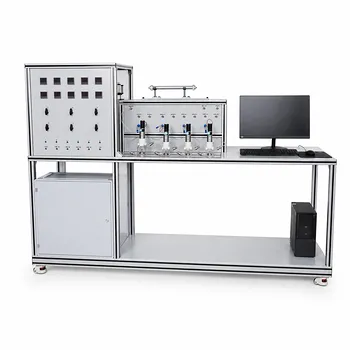
Choosing the right reactor setup is crucial for generating reliable kinetic and scale-up data. LABPARK provides advanced Educational and Vocational Unit Operations Pilot Plants in chemical engineering, bioprocess & biotech, and environmental & water treatment. Designed specifically for universities, research institutes, and enterprises, our modular systems allow researchers to compare fixed-bed and slurry configurations on a single platform.
Ready to equip your laboratory with flexible, high-performance pilot units? Contact our technical experts today to discuss your custom project requirements!
Related Products
- Multi-Reactor Educational Pilot Plant for Reaction Engineering Unit Operations
- Multi Functional Catalytic Reaction and Reactor Evaluation Educational Unit Operations Pilot Plant
- Fixed Bed Gas Solid Catalytic Reaction Educational Pilot Plant
- Fixed-Bed Chemical Reaction and Gas Dust Tar Removal Unit Operations Pilot Plant
- Educational Unit Operations Pilot Plant for Intraparticle Diffusion Effective Factor Measurement
People Also Ask
- How do educational unit operations pilot plants address safety and waste management when scaling up?
- How do educational unit operations pilot plants bridge theory and design? Bridge the Engineering Gap
- Why Compare Predicted and Experimental Excess Enthalpy? Key to Accurate Pilot Plant Scale-up
- How to study gasification in pilot plants? Compare exit gas composition & efficiency
- Why Use PTFE & Hastelloy in Chemical Pilot Plants? Prevent Corrosion & Ensure Safety