The reliability of your pilot plant data hinges on a deceptively simple ritual: managing the optical interface. The spectrophotometer quantifies concentration by reading light passing through a cuvette. Every fingerprint, scratch, micro-bubble, or drop of carryover on that optical surface distorts the physical measurement. Your maintenance strategy isn't just cleaning equipment; it's protecting the integrity of the light path from contamination.
Proper practice creates a controlled optical environment. For pilot plant operators, this means a non-negotiable workflow: condition the instrument, select a cuvette matched to your chemical system, use a touch discipline that protects optical faces, and confirm that your measurement sequence—from blanking to high-concentration samples—actively prevents cross-contamination. Mastering this transforms the spectrophotometer from a simple concentration meter into a trustworthy process analytical technology (PAT) sensor.
The Core Measurement Workflow for Reliable Data
Pilot plant environments are harsher than analytical labs. Vibration, humidity, and multi-user schedules can degrade instrument performance. A strict startup protocol is your first line of defense.
Conditioning the Instrument and Establishing a Baseline
A spectrophotometer's light source and detector require thermal stability for a consistent photon output. Drift is most significant during the warm-up phase.
Preheat the spectrophotometer before any testing begins. The manufacturer's recommended warm-up time—often 15 to 30 minutes—allows the lamp and electronics to reach thermal equilibrium. Skipping this step guarantees baseline drift between your blank and sample measurements.
Calibrate with a true blank reference solution. The blank must match the sample matrix as closely as possible, containing every component except the analyte of interest. This process mathematically zeroes out the absorbance of the solvent and reagents, isolating your target molecule's signal.
The Critical Rules of Cuvette Handling
The cuvette is a precision optical cell, not a test tube. Touching the clear windows is the single most common source of preventable error in student and pilot plant labs.
Touch only the frosted or opaque sides. Oils from your skin deposit a film that absorbs ultraviolet and visible light. Even a seemingly clean fingerprint can increase absorbance by 0.01 to 0.05 units, wrecking your concentration calculations for dilute process streams.
Fill to approximately two-thirds capacity. The liquid level must sit comfortably above the instrument's light beam height, typically around the cuvette's lower third. Underfilling causes the beam to intersect the liquid's meniscus, scattering light violently. Overfilling risks spilling corrosive process fluids into the sample chamber, which will eventually destroy the detector optics.
Pre-rinse the cuvette with your test solution. Before the final fill, rinse the cell two to three times with small portions of your sample. This displaces dilution from residual wash water, ensuring the absorbance you read actually represents your reactor's concentration.
Matching Cuvette Materials to Your Pilot Plant Chemistry
Material selection is dictated by your target wavelength and process fluid. Choosing wrong makes measurement physically impossible.
Wavelength Compatibility and Chemical Resistance
The molecular bonds in the cuvette itself must not absorb light in the region where your analyte does.
Quartz (fused silica) is mandatory for ultraviolet (UV) work below 350 nm. It transmits reliably from 190 nm to 2,500 nm. If you are monitoring aromatic compounds, proteins at 280 nm, or nitrates in water treatment pilot plants, you have no choice but to use quartz.
Optical glass is limited to the visible spectrum, roughly 340 nm to 2,500 nm. It blocks UV light completely. Glass is cheaper and perfectly adequate for colorimetric assays, like tracking dye tracers in residence time distribution studies or measuring colored metal complexes.
Specialty polymers (e.g., polystyrene) are available for single-use applications. These are common in bioprocess modules but scratch easily and are opaque to UV. Their use is restricted to specific, approved PAT workflows.
Optical Path Length Considerations
The Beer-Lambert Law states absorbance is directly proportional to path length. You can manipulate this to fit your concentration range.
Standard 1 cm cuvettes are suitable for most analytical-scale work. This is the assumed path length for most published extinction coefficients and calibration curves.
Use longer path length cells (2 cm, 5 cm, 10 cm) for dilute or weakly absorbing streams. In an educational absorption column where a CO2 indicator dye is faint, a 5 cm cell multiplies the signal by five, pushing the measurement into the instrument's accurate range (typically 0.1–1.0 absorbance units).
Use shorter path lengths or flow cells for highly concentrated streams. This avoids the non-linearity and stray light errors that plague absorbance readings above 2.0 or 3.0, without manually diluting your sample.
From Benchtop Discipline to Inline Process Monitoring
In manual lab analysis, you control every variable. In a pilot plant's recirculating loops, the measurement is subject to flow dynamics and fouling.
Manual Static Measurement Technique
When pulling grab samples from a reactor, your technique determines reproducibility.
Measure standard solutions from lowest to highest concentration. The contamination risk is statistical. A trace droplet of a 0.1 M standard carried over into a 0.001 M standard might double its absorbance. The reverse—a trace of dilute into concentrated—is a negligible error.
Blot, never wipe. After filling, inspect the optical windows. Use a lint-free lens paper to gently blot—capillary-drawn—any process fluid from the windows. Wiping a dry tissue across a window grinds microscopic dust into the glass, creating a haze of scratches that scatters light permanently.
Transitioning to Inline Flow Cells and PAT
Educational pilot plants increasingly use flow cells plumbed directly into unit operations. The cleaning discipline changes.
Integrating PAT teaches closed-loop control. In an esterification reactor or a chilled crystallization vessel, an inline UV-Vis probe provides a concentration profile every few seconds. This allows students to perform real-time kinetic analysis using the Beer-Lambert Law, far exceeding the data resolution of manual sampling.
Fouling is the primary maintenance challenge. Process fluids containing biomass (bioreactors), precipitates (water treatment), or proteins can coat the optical window of an inline probe. The maintenance protocol shifts from cuvette handling to automated cleaning cycles, air-purging, or retractable probe housings that allow for wiping without shutting down the process.
Understanding the Trade-offs
No single cuvette material or workflow fits every process. Your choice always involves a compromise between optical performance, chemical durability, and cost.
Quartz vs. Glass: Quartz offers universal wavelength coverage but is approximately five to ten times more expensive than optical glass. In a busy teaching lab, one broken quartz cuvette costs more than a whole box of glass ones. Reserve quartz exclusively for UV-mandatory assays.
Short vs. Long Path Lengths: A 5 cm cell amplifies signal, but it also amplifies the absorbance of any interferents in the matrix. It requires a larger sample volume, which is problematic for small-scale microreactors. A standard 1 cm cell consumes less sample and is easier to clean thoroughly, even if it sacrifices some sensitivity.
Static vs. Inline PAT: Manual cuvette measurements offer the highest accuracy if cleaned correctly, as you can visually inspect for bubbles. Inline flow cells eliminate sampling lag and human error, but they introduce the risk of bubble entrapment from pump cavitation. An undetected micro-bubble adhering to an inline flow cell window is a catastrophic, undetectable source of noise masquerading as process signal.
Making the Right Choice for Your Goal
If your primary focus is on educational lab fundamentals: Strictly enforce touch discipline (frosted sides only) and manual rinsing routines. Use glass cuvettes for visible-range experiments to manage consumable costs, but ensure students validate cell matching with a transmittance check before every run.
If your primary focus is on process analytical technology (PAT) integration: Move beyond static cuvettes. Select quartz flow cells with fiber optic couplings, and design your fluid loop with a bubble trap directly upstream of the detector. Establish a maintenance log to track baseline drift as the cell windows inevitably foul over a multi-day continuous campaign.
If your primary focus is on trace or UV-sensitive analysis (e.g., proteins, nitrates): Budget for matched-pair quartz cuvettes or high-quality quartz probes. Verify that your rinse protocol uses the blank matrix, not just water, and always confirm that detergent residue isn’t creating a false baseline from UV-absorbing surfactants.
Mastery of this one instrument teaches the core truth of all process monitoring: the data is only as good as the interface.
"The data is only as good as the interface."
— A trusted technical advisor
Summary Table:
| Cuvette Material | Wavelength Range | Key Applications | Key Pros & Cons |
|---|---|---|---|
| Quartz | 190 nm – 2,500 nm (UV-Vis) | Proteins, nitrates, aromatics, UV work | Universal transmission; highly expensive and fragile |
| Optical Glass | 340 nm – 2,500 nm (Vis-NIR) | Colorimetric assays, tracer studies | Cost-effective, durable; blocks UV light completely |
| Polymers | Visible spectrum | Single-use, disposable workflows | Low cost, no carryover risk; scratches easily, non-UV |
Elevate Your Research and Training Labs with LABPARK
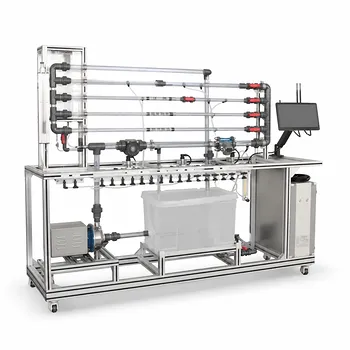
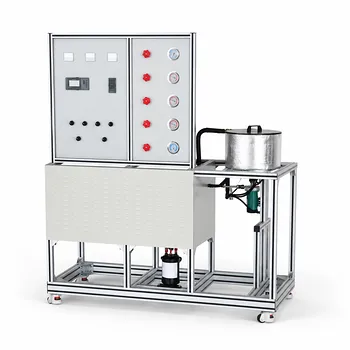
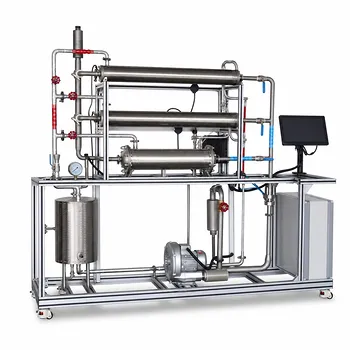
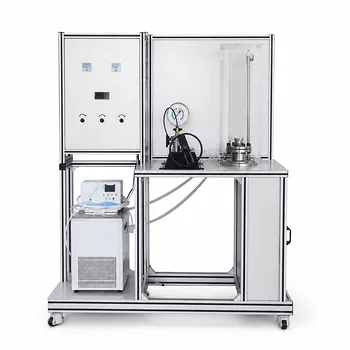
Precise analytical data is the backbone of successful process scale-up. LABPARK designs and provides premium Educational and Vocational Unit Operations Pilot Plants across chemical engineering, bioprocess & biotech, and environmental & water treatment disciplines.
We help universities, research institutes, and enterprises benefit from:
- Industry-Ready Training: Hands-on systems that teach real-world process control and troubleshooting.
- Seamless PAT Integration: High-quality setups compatible with inline sensors, flow cells, and automated data logging.
- Durable Construction: Long-lasting materials engineered to withstand rigorous educational and pilot-scale operations.
Ready to enhance your lab's capabilities and prepare the next generation of engineers? Contact LABPARK today to request a catalog or discuss your custom pilot plant needs!
Related Products
- Centrifugal Pump Performance and Orifice Flowmeter Calibration Educational Pilot Plant
- Orifice and Venturi Flowmeter Calibration Educational Pilot Plant for Fluid Mechanics Laboratory
- Two Phase Flow Pattern Velocity Resistance Measurement Educational Pilot Plant
- Shell and Tube Heat Exchanger Heat Transfer Coefficient Determination Educational Pilot Plant
- Tubular Reactor Flow Characteristics Determination Educational Unit Operations Pilot Plant
People Also Ask
- What features should instructors look for in pump & flowmeter pilot plants? Key Selection Guide
- Why start a centrifugal pump with a closed outlet valve? Protect your pilot plant motors.
- How to update chemometric calibration models in pilot plants? Best practices for process engineers.
- How can cavitation and slurry erosion be studied and mitigated using fluid transport and centrifugal pump pilot plants?
- How do pilot plants demonstrate siphon pressure variations? Visualizing Bernoulli's Energy Balance