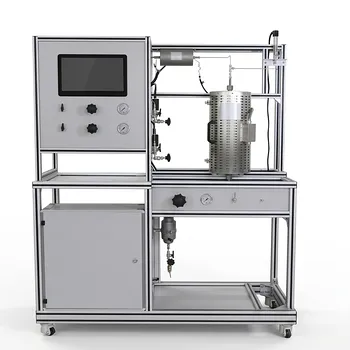
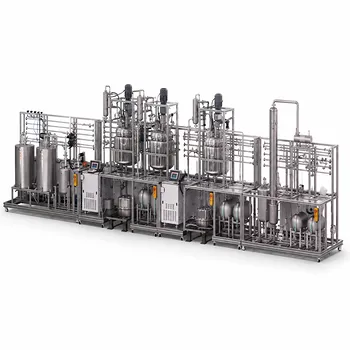
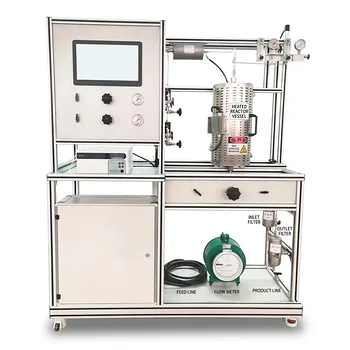
Nickel carbonyl (Ni(CO)₄) is an almost odorless, extremely toxic gas that can form silently during shutdown when carbon monoxide contacts nickel catalysts below 430 K. The primary defence in a pilot plant design is to thoroughly purge the reactor system with nitrogen throughout shutdown and cooling. Additionally, coked catalysts must be cooled below 320 K before dumping, or discharged into nitrogen‑inerted containers to eliminate both the toxic gas risk and the ignition hazard from pyrophoric deposits.
Designing a pilot plant to handle toxic gas hazards like nickel carbonyl is not about adding a single safety feature—it is about making the entire shutdown sequence inherently robust. The combination of a reliable nitrogen purge, precise temperature control, independent safety interlocks, and structured emergency procedures turns a potentially deadly chemical quirk into a well‑managed industrial learning operation.
Understanding the Nickel Carbonyl Hazard
The Chemical Mechanism
Nickel carbonyl forms when finely divided nickel catalyst comes into contact with carbon monoxide at temperatures below 430 K (about 157 °C). The reaction is thermodynamically favoured in the cooler ranges that occur during shutdown and idle periods.
The product is a colourless liquid that boils at 43 °C, releasing a vapour that is highly toxic even at parts‑per‑billion concentrations. Because it has virtually no warning odour, a release can go unnoticed until symptoms appear.
Why Shutdown is the Critical Moment
During normal operation, the exothermic reaction keeps the catalyst bed well above 430 K, so Ni(CO)₄ cannot persist. The hazard emerges the moment cooling begins and CO is still present.
Pilot plants often undergo frequent startup‑shutdown cycles for training or experiment changes. Every cooldown creates a window where CO and nickel can react—making the shutdown purge not a rare emergency measure but a routine, design‑level requirement.
Designing the Shutdown Purge System
Purging with Inert Nitrogen
The primary reference makes it explicit: the reactor system must be purged with nitrogen throughout the cooling phase. A simple nitrogen sweep displaces carbon monoxide, cutting off the reactant needed for carbonyl formation.
The purge must be designed as a continuous flow rather than a single pressurisation‑vent cycle. Dead legs, catalyst‑retaining screens, and sample lines need individual purge connections or careful dynamic flushing to avoid trapped CO pockets.
Temperature Thresholds and Cooling Protocols
Maintaining the reactor above 430 K during normal operation prevents formation, but the real safeguard is decoupling CO from nickel before the temperature can drop. This is achieved by starting the nitrogen purge while the reactor is still above 430 K, then allowing cooldown to proceed only after CO is below detectable limits.
Temperature monitoring should use multiple, independent sensors. An interlock can be designed to automatically initiate the purge if the temperature falls below a setpoint while CO is flowing—a direct layer of protection from the safety instrumented system philosophy.
Safe Handling of Coked Catalysts
Used catalyst often contains carbonaceous deposits (coke) that can be pyrophoric. The primary reference gives two clear rules: cool the catalyst to below 320 K before dumping, or discharge it into containers that have been purged and made inert with nitrogen.
The 320 K limit prevents auto‑ignition when the hot, coke‑covered catalyst hits air. Inerted containers maintain a nitrogen blanket during transfer, protecting operators from both fire and any residual absorbed carbonyl vapours.
Building a Multi‑Layered Safety Architecture
Inherently Safer Design Choices
The most reliable way to handle a toxic gas hazard is to avoid its formation entirely where possible. If the pilot plant function allows, choosing a catalyst that does not form volatile carbonyls, or operating in a temperature window that inherently suppresses it, eliminates the problem.
When nickel catalysts are indispensable, the next layer is to make the process robust against human error. Automated purge sequencing, hard‑wired low‑temperature alarms, and physical isolation valves that can be locked during maintenance all reduce reliance on operator vigilance alone.
Applying the Safety Instrumented System (SIS) Approach
A standard pilot plant safety system uses sensors, logic solvers, and final elements to respond to dangerous conditions. For Ni(CO)₄ risk, a dedicated low‑temperature switch can be installed independently of the primary control thermocouple.
If temperature falls below a critical setpoint while CO is present, the logic solver (e.g., a safety PLC) should immediately cut off the CO supply, open the nitrogen purge valve, and alarm. This independent shutdown path mirrors industrial loss prevention layers: automatic shutdown before human intervention is required.
Preventing Operator Errors Through Interlocks
In educational and vocational settings, operators are still learning. Programmable logic controllers (PLCs) should include hard interlocks that block valve operations which could bypass the purge sequence during shutdown.
For example, the interlock might prevent opening the catalyst dump valve until a nitrogen blanket is confirmed and the bed temperature is below 320 K. Such constraints not only protect personnel but also teach students the non‑negotiable discipline of industrial safety protocols.
Beyond the Reactor: Managing Effluent and Emergency Releases
Integrating Scrubbers and Safe Discharge Vents
Any toxic gas that is vented—whether from the purge effluent, relief valves, or sample lines—must be routed to a safe location. For highly toxic species like carbonyls, a simple elevated vent is insufficient.
The pilot plant discharge system should include gas scrubbers (e.g., a caustic scrubber or a thermal oxidizer) that destroy or neutralise the carbonyl before atmospheric release. A knockout drum upstream separates liquid droplets from the gas stream, ensuring a clean feed to the treatment stage and reflecting standard industrial environmental practice.
Emergency Shutdown and Utility Outage Plans
A nitrogen purge depends on a continuous supply of nitrogen. Utility failures (power outage, loss of instrument air, or loss of nitrogen pressure) must trigger a fail‑safe state.
Standard emergency procedures should detail: immediate isolation of CO, automatic backup nitrogen cylinders, and gravity‑driven venting to a safe location. Operators must be trained to execute these steps without relying on the control computer, reinforcing the human‑intervention layer.
Common Pitfalls and Trade‑offs
Incomplete Purging and Dead Legs
Pilot plants often have complex tubing with low‑flow zones. Dead legs can trap carbon monoxide, slowly releasing it during cooling and causing nickel carbonyl to form hours after what appears to be a successful purge. Design‑phase hydrogen or nitrogen tracing, along with commissioning leak checks using a tracer gas, makes these hidden dangers visible.
Over‑Reliance on Software Alarms
Basic process control system alarms are essential, but they share sensors and logic with the normal control loop. A single sensor failure can disable both control and warning. A physically separate low‑temperature switch with hard‑wired relay action provides the independent protection layer needed for this class of hazard.
Operational Cost and Complexity
Continuous nitrogen purging consumes gas and adds utility load. In a budget‑conscious educational plant, there is a temptation to reduce purge flow or skip the step during a quick cooldown. The design must therefore make the safe path the easiest path: automated purge cycles, visible flow indicators, and recorded training modules that clarify the lethal stakes.
Making the Right Design Choices for Your Pilot Plant
- If your primary focus is teaching industrial safety practices: Ensure the plant has a fully independent shutdown layer with hard‑wired interlocks. The pedagogical value of seeing a separate safety PLC act without operator input is immense and directly mirrors modern chemical plant design.
- If your pilot plant will run multiple different chemistries: Invest in a flexible inertisation and discharge system with quick‑connect nitrogen lines and a common scrubber that can handle a range of acidic or toxic breakdown products. A single design accommodates experiments from methanation to chlorination without reinventing the hazard controls.
- If you are scaling up a nickel‑catalysed reaction from bench to pilot: Prioritise a permanently plumbed nitrogen purge ring around the reactor and catalyst handling stations. Make the 320 K catalyst‑dumping rule a physical interlock by integrating temperature‑permissive switches on the dump valve, so students learn that industrial safety is engineered into the equipment, not merely written in a manual.
A pilot plant that handles toxic gas hazards with the layered, design‑driven approach described here transforms a potentially lethal risk into a powerful educational experience—where every nitrogen purge and interlock reinforces the engineering discipline that keeps real plants safe.
Summary Table:
| Hazard / Risk | Critical Threshold / Condition | Primary Design Solution |
|---|---|---|
| Nickel Carbonyl Formation | CO contacting nickel catalyst below 430 K | Continuous nitrogen purge initiated above 430 K |
| Pyrophoric Catalyst Ignition | Dumping hot, coked catalyst into air | Cool below 320 K or discharge into nitrogen-inerted containers |
| Trapped CO (Dead Legs) | Low-flow zones holding residual gas | Dynamic flushing and tracer gas leak testing |
| Control System Failure | Relying solely on basic process control alarms | Independent Safety Instrumented System (SIS) and hard-wired interlocks |
Build a Safer, Industry-Ready Learning Environment with LABPARK
Designing pilot plants that effectively manage toxic gas hazards like nickel carbonyl requires precise engineering and reliable safety layers. LABPARK provides advanced Educational and Vocational Unit Operations Pilot Plants in chemical engineering, bioprocess & biotech, and environmental & water treatment designed specifically for universities, research institutes, and enterprises.
Our systems integrate industrial-grade safety features, including automated nitrogen purge sequencing, independent safety instrumented systems (SIS), and physical safety interlocks. By choosing LABPARK, you ensure your students and researchers gain hands-on experience with modern, fail-safe industrial protocols.
Take the first step toward upgrading your laboratory safety and capabilities—contact our engineering experts today!
Related Products
- Carbon Dioxide Hydrogen Methanol Synthesis Educational Unit Operations Pilot Plant
- Multi Pump Fluid Transport Process Piping Unit Operations Training Pilot Plant
- Natural Product Extraction Unit Operations Training Pilot Plant
- Multi-Modal Distillation Unit Operations Training Pilot Plant
- Multi-Reactor Educational Pilot Plant for Reaction Engineering Unit Operations
People Also Ask
- How do temp & pressure affect methanol synthesis pilot plants? Optimize equilibrium and catalyst performance.
- Why is a purge system necessary when operating a gas recirculation loop in a methanol synthesis pilot plant? (Guide)
- Why do modern methanol pilot plants operate at lower pressures? Catalyst & Feed Requirements Explained
- What are the operational requirements for catalyst activation? Safe Methanol Pilot Plant Operation
- Why is the chemical plant startup schedule crucial? De-risk scale-up with pilot plants.