Diffusion is the silent engine of water treatment.** In virtually every environmental unit operation designed to remove dissolved contaminants, the principle of liquid diffusion governs how fast those molecules move from the bulk fluid to a reactive or separating surface. Activated carbon pores, membrane surfaces, and rising gas bubbles can only do their job once the target solute reaches them through the slow, random walk of diffusion. Because diffusion coefficients in liquids are tiny—often on the order of (10^{-10}) to (10^{-9},\text{m}^2/\text{s}) at room temperature—engineers must deliberately manipulate contact time, surface area, and fluid dynamics to make purification work.
Liquid diffusion is the rate-limiting step in processes like adsorption and aeration. To harness it, water treatment unit operations are designed not to speed up diffusion itself, but to shorten the distance a molecule must travel and to give it enough time to complete that journey. Everything from granular activated carbon columns to air-stripping towers is a response to the physical reality that contaminants move slowly through water.
The Fundamental Challenge: Why Diffusion Dictates Design
Slow Motion in a Crowded Liquid
Liquid diffusion is inherently sluggish compared to gas-phase diffusion. Solute molecules in water are constantly buffeted by collisions with the solvent, and strong cohesive forces and higher viscosity create a tight, resistant medium. This means that even a perfectly maintained treatment system can fail simply because a contaminant molecule cannot navigate the final micrometers to a reactive site fast enough.
The Surface-Contact-Time Trade-Off
Because diffusion takes time, every efficient unit operation presents a massive surface area and holds the water in contact with that surface long enough for mass transfer to occur. A pilot plant testing activated carbon, for instance, carefully selects flow rates and bed depths to ensure that the liquid residence time is longer than the characteristic time needed for a pollutant to diffuse from the center of a fluid channel into the deepest micropore.
Key Unit Operations That Depend on Liquid Diffusion
Activated Carbon Adsorption
Dissolved organic contaminants, like pesticides or taste-and-odor compounds, must travel by diffusion through the stagnant boundary layer around each carbon particle and then through the water-filled pores to reach sorption sites. The primary reference makes this explicit: wastewater treatment pilot plants rely on this diffusive journey. The choice of carbon particle size directly influences the diffusion path length—smaller grains shorten the distance, accelerating uptake.
Membrane Filtration
In processes such as nanofiltration or reverse osmosis, solute diffusion near the membrane surface controls how quickly rejected species accumulate and how effectively clean water permeates. Although the separation is pressure-driven, concentration polarization and pore-level transport are fundamentally diffusive processes. Pilot‑scale membrane units are used to study how temperature and viscosity shifts (by adjusting the liquid diffusion coefficient) alter fouling rates and rejection efficiency.
Aeration and Gas Transfer
When an air bubble rises through wastewater, dissolved gases like oxygen diffuse from the bubble into the surrounding liquid, while volatile contaminants like ammonia or hydrogen sulfide diffuse out of the liquid and into the gas bubble. The rate of oxygen transfer in an activated sludge basin, for example, is governed by the liquid‑phase diffusion coefficient at the gas‑liquid interface. Pilot‑plant aeration columns measure these diffusion‑limited rates to size full‑scale basins correctly.
Ion Exchange and Advanced Adsorbents
Ion exchange resins and specialized adsorbent beads follow a similar pattern: target ions diffuse from the bulk solution through a liquid film to the surface, then diffuse into the resin matrix to replace a pre‑loaded ion. Even in fast‑flowing columns, the local mass transfer at the bead surface is diffusion‑controlled, making the understanding of liquid‑phase diffusivity essential for predicting breakthrough curves.
Engineering Levers to Overcome the Diffusion Bottleneck
Temperature and Viscosity Control
The liquid diffusion coefficient increases with temperature and decreases with viscosity. Operating a pilot plant at a slightly elevated temperature (when permissible) can measurably accelerate contaminant uptake. In cold‑climate water treatment, however, diffusion slows dramatically, demanding longer contact times or larger equipment footprints.
Optimizing Flow Regimes and Mixing
While diffusion itself is molecular, the bulk fluid motion determines the thickness of the stagnant boundary layer around particles or membranes. Vigorous mixing reduces this layer, shortening the diffusion distance. Pilot plants test different flow rates to find the sweet spot where turbulence enhances mass transfer without causing excessive short‑circuiting or media abrasion.
Media Selection and Geometry
Fine‑grained activated carbon, thin‑film composite membranes, and high‑voidage packing in air strippers all exploit the same principle: reduce the diffusion path length. Engineers evaluate media with different pore sizes, particle diameters, and channel geometries because each millimeter of transport matters when diffusion coefficients are so small.
Understanding the Trade‑Offs
While diffusion can be harnessed, it also imposes hard limits. Longer residence times increase removal but reduce throughput—a treatment plant that holds water for hours to capture the last trace contaminant may be economically unviable. Finer media boosts surface area but increases head loss and pump energy, driving up operational costs. Heating water improves diffusion but is energy‑intensive and may alter the chemistry of the contaminants themselves. Every pilot‑plant study balances these trade‑offs to find a design that meets removal targets without over‑engineering the system.
Making the Right Choice for Your Goal
Whether you are scaling up a pilot plant or troubleshooting an existing unit, the role of liquid diffusion should guide your decisions:
- If your primary focus is maximizing contaminant removal: Prioritize sufficient residence time and select media with the highest practical surface area, even if it means a slightly larger footprint.
- If your primary focus is high throughput and energy efficiency: Find the minimum acceptable contact time through pilot testing and invest in mixing or flow distribution that prevents dead zones without excessive pressure drop.
- If your primary focus is scaling from pilot data to full scale: Keep residence time and surface‑area‑to‑volume ratios constant; do not simply scale flow rate linearly, because diffusion‑limited steps will not keep pace.
- If your primary focus is cold‑water treatment: Use pilot data to design for the worst‑case (lowest temperature) diffusion coefficients, as these will dictate the maximum contactor size needed.
By treating liquid diffusion not as an abstract concept but as the central constraint, you can design unit operations that reliably meet water quality goals without unnecessary cost.
Summary Table:
| Unit Operation | Diffusion Mechanism | Engineering Lever to Optimize |
|---|---|---|
| Activated Carbon Adsorption | Contaminants diffuse through boundary layer and water-filled micropores. | Reduce particle size, optimize contact time. |
| Membrane Filtration | Solute diffusion controls concentration polarization at the membrane surface. | Control temperature/viscosity, adjust feed flow. |
| Aeration & Gas Transfer | Gas molecules diffuse across the liquid-gas film interface. | Maximize surface area (bubble size), improve mixing. |
| Ion Exchange | Ions diffuse through liquid film and exchange within the resin matrix. | Optimize column flow rates, select uniform resin beads. |
Optimize Your Water Treatment Research & Training with LABPARK
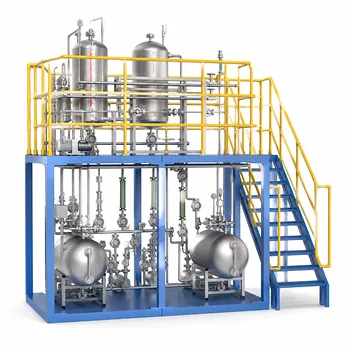
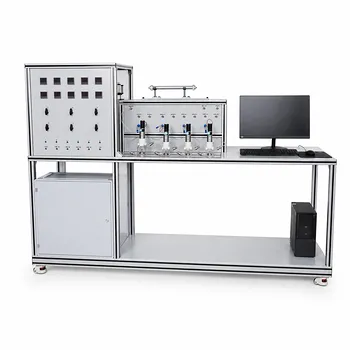
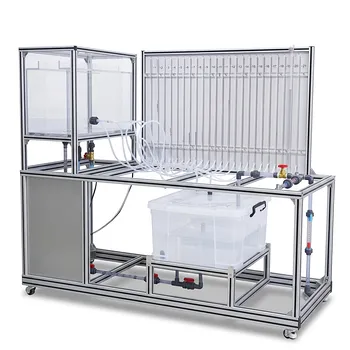
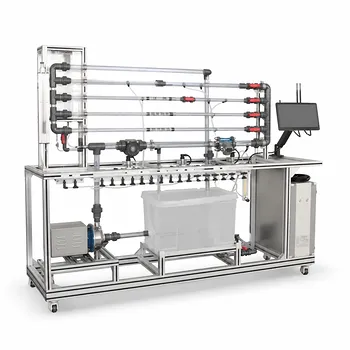
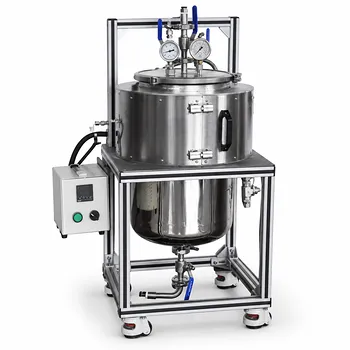
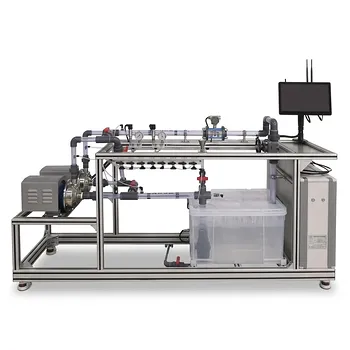
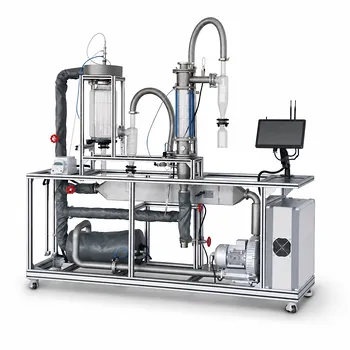
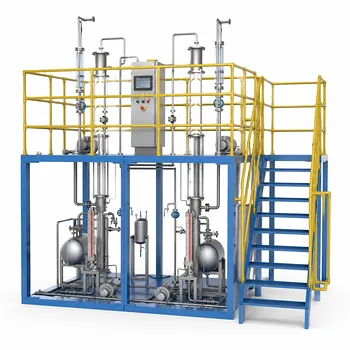
Are you looking to model diffusion-limited mass transfer in a real-world setting? LABPARK provides state-of-the-art Educational and Vocational Unit Operations Pilot Plants in chemical engineering, bioprocess & biotech, and environmental & water treatment.
Designed specifically for universities, research institutes, and enterprises, our pilot systems enable you to:
- Bridge the Gap: Translate theoretical transport phenomena and liquid diffusion principles into hands-on practice.
- Optimize Designs: Test real-world variables like temperature, viscosity, and flow regimes to mitigate diffusion bottlenecks.
- Scale with Confidence: Generate precise pilot data essential for scaling up adsorption, membrane, and aeration systems.
Equip your lab with the tools to master mass transfer. Contact us today to request a quote or custom design consultation!
Related Products
- Educational Unit Operations Pilot Plant for Intraparticle Diffusion Effective Factor Measurement
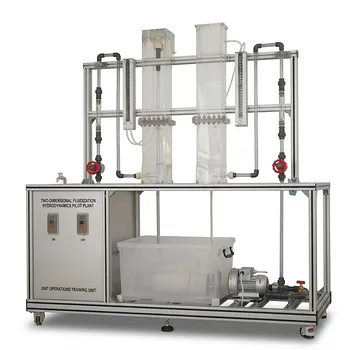
- Two-Dimensional Fluidization Hydrodynamics Educational Pilot Plant for Unit Operations Training
- Binary System Vapor Liquid Equilibrium Data Determination Educational Unit Operations Pilot Plant
- Quantitative Dosing and Liquid Flow Control Educational Unit Operations Pilot Plant
- Fluid Reynolds Number Demonstration Educational Unit Operations Pilot Plant
People Also Ask
- How do educational unit operations pilot plants bridge theory and design? Bridge the Engineering Gap
- How do educational unit operations pilot plants address safety and waste management when scaling up?
- Why is the chemical plant startup schedule crucial? De-risk scale-up with pilot plants.
- Why Compare Predicted and Experimental Excess Enthalpy? Key to Accurate Pilot Plant Scale-up
- Why Use PTFE & Hastelloy in Chemical Pilot Plants? Prevent Corrosion & Ensure Safety