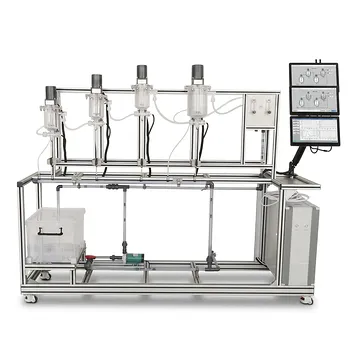
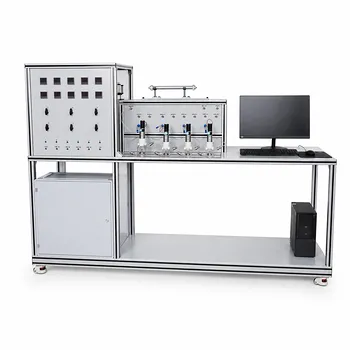
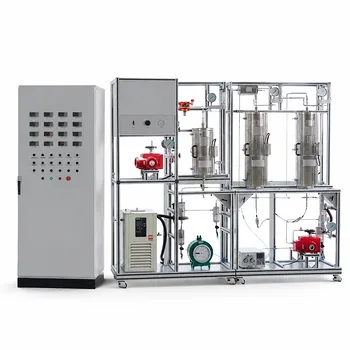
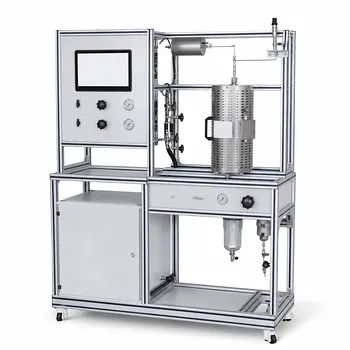
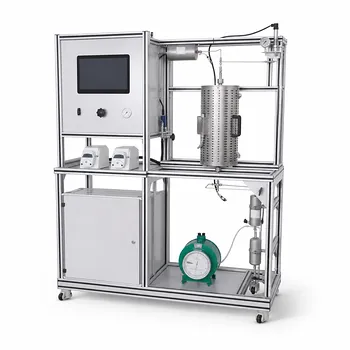
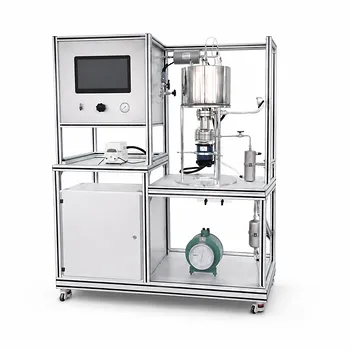
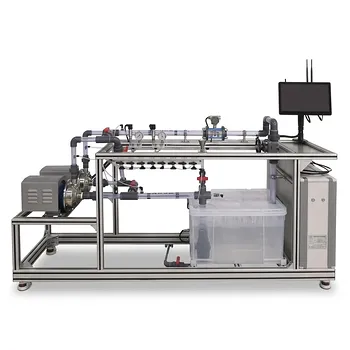
Understanding reaction kinetics and impurity pathways transforms sizing from guesswork into a precise engineering calculation. By quantifying the absolute reaction rates as a function of temperature, engineers directly model the required CSTR volume and residence time. Tracking both the desired product formation and undesired impurity pathways—such as parallel or consecutive side reactions—allows the reactor configuration to be optimized not just for conversion, but for maximum yield and selectivity in a pilot plant.
Kinetic models built from bench-scale data are the blueprint for pilot-plant CSTR design. Because they reveal how fast your target reaction proceeds and how quickly impurities form, you can accurately compute the volume needed to hit a specific production rate while keeping impurities below critical thresholds. This turns the reactor from a simple vessel into a tunable tool for yield optimization, process safety, and scalable commercial design.
The Foundation: Kinetic Modeling for Continuous Reactors
How Absolute Rates Drive Volume Calculations
Sizing a CSTR starts with the rate expression. For a given conversion target, the required reactor volume is directly proportional to the flow rate divided by the rate of reaction at the exit conditions. This means that without a reliable rate law as a function of temperature and concentration, volume estimation is arbitrary.
Temperature Dependence Fuels Operational Flexibility
The same reaction can shift from minutes to hours with a small temperature change. By fitting kinetic parameters (like the Arrhenius constants) across multiple isothermal experiments, you can simulate performance at temperatures that maximize throughput without triggering impurity formation. This data lets you predict the minimum CSTR volume needed at your pilot plant’s heat-transfer limits.
From Impurity Tracking to Selectivity Optimization
The Real Cost of Undesired Pathways
A reaction that reaches 99% conversion is worthless if 30% of the starting material morphs into a tough-to-remove impurity. Kinetics of impurity pathways—whether they form directly from reactants (parallel) or from the product (consecutive)—define the selectivity curve over time. In a CSTR, where the entire fluid operates at exit concentration, the steady-state impurity level is fixed by the very ratios your kinetic model predicts.
Choosing Volume to Maximize Yield, Not Just Conversion
If impurity formation accelerates at high product concentrations, extending residence time to push conversion higher will actually destroy your target molecule. By plotting the net yield as a function of residence time using full kinetic modeling, you can identify the optimum volume where product formation outpaces impurity generation. This optimum volume is often smaller than the volume needed for maximum conversion, making impurity tracking a direct cost and efficiency driver.
Configuration Matters: CSTRs in Series
Sometimes a single large CSTR’s backmixing is the enemy of selectivity—a product formed can immediately react to form waste because everything is well-mixed. The kinetic data may show that a narrower residence-time distribution is needed. Using a cascade of smaller CSTRs (for example, 3–5 in series) approximates plug-flow behavior without a physical PFR, improving selectivity while still leveraging the simplicity of stirred tanks. The individual volumes are sized based on the stepwise concentration profile predicted by the same kinetic model.
Pilot Plant Validation: Bridging Theory and Scale
From Batch Kinetics to Continuous Equivalent
In educational or lab-scale pilot plants, you often measure kinetics in a batch reactor first. The batch time-to-conversion is calculated from an integral equation; the CSTR space time is simply the concentration difference divided by the exit rate. By comparing these, you instantly see why a CSTR typically needs a larger volume—because the reaction always proceeds at the slowest, exit-concentration rate. Kinetic understanding quantifies this penalty, informing whether you accept a larger volume or pursue a cascade.
Using Tracer Studies to Confirm RTD Assumptions
The kinetic model assumes perfect mixing or a known residence-time distribution. Pilot plants with conductivity or dye-injection ports let you measure the actual RTD in real time. If the measured RTD deviates from ideal—due to dead zones or channeling—the volume predicted by kinetics will be off. This experimental verification closes the loop, allowing you to correct the sizing model with real fluid dynamics.
Safety, Stability, and the Hidden Sizing Criterion
Heat Generation Rates Dictate Cooling Needs and Volume Limits
For exothermic reactions, the rate of heat generation is a direct function of the same kinetics you used for sizing. The reactor must balance heat removal (via jacket or coils) with the maximum possible heat generation rate to avoid thermal runaway. When kinetic data combined with energy balances reveal steady-state multiplicity—multiple possible operating temperatures for the same volume and feed—the CSTR size must be chosen to ensure the stable, desired steady-state is the only one accessible, or at least that it can be controlled safely.
The Damköhler Number as a Link Between Kinetics and Stability
Changing the reactor volume or flow rate alters the dimensionless Damköhler number, which compares the reaction rate to the convective transport rate. High Da (large volume, low flow) can push the system into an unstable regime. Kinetic modeling allows you to pre-compute stable operating windows for a given CSTR volume, integrating process safety directly into the sizing decision.
Understanding the Trade-offs
Model Uncertainty vs. Optimal Design
Even carefully measured kinetics can deviate at scale due to imperfect mixing, trace catalyst poisoning, or heat-transfer limitations not present in the lab. Designing a CSTR right at the theoretical optimum volume leaves no cushion for error. A common pitfall is underestimating impurity pathways that only become significant at pilot-plant holdup times; it often pays to build in a 10–20% volume margin or install sampling ports to validate the model during early runs.
CSTR Cascade Complexity and Cost
While staging CSTRs improves selectivity and reduces total volume for a given conversion, it multiplies the number of pumps, agitators, and control loops. In a pilot plant, the added operational burden can delay experiments and increase maintenance. Kinetic modeling helps justify this complexity—you only add stages when the impurity data prove that a single tank would cause unacceptable yield loss.
Over-Focusing on a Single Impurity
Tracking one known side product might neglect the formation of new, trace-level impurities that appear only under continuous operation. The sizing strategy must therefore include regular analytical checks (e.g., GC–MS or inline spectroscopy) after startup to detect surprises. This adaptive approach is only possible when the initial kinetic framework is flexible enough to incorporate new reaction paths without a complete redesign.
Applying Kinetic Insight to Your Pilot Plant
Choose your primary goal, and let the kinetic data shape your CSTR sizing approach:
- If your primary focus is maximizing product yield: model the yield–residence time curve using both main-reaction and impurity kinetics, then size the CSTR (or cascade) so the steady-state operating point sits right on that peak.
- If your primary focus is rapid scale-up from existing batch data: convert batch kinetics into a continuous rate expression, calculate the required space time, and add volume buffers to account for the dilution effect and imperfect mixing—normally a factor of 1.2–1.5 over the ideal calculation.
- If your primary focus is process safety and thermal control: use the kinetic heat generation curve to verify that the selected volume and cooling area avoid multiple steady states, and ensure the Damköhler number stays within the stable region during startup and shutdown.
- If your primary focus is educational or training outcomes: have your students first measure the kinetics in the pilot plant’s batch mode, then design and test a CSTR configuration—using the same data to size the reactors—so they directly experience how kinetics drives all subsequent engineering decisions.
Armed with thorough kinetic and impurity data, your CSTR sizing sheet becomes a roadmap—not a guess—allowing you to navigate yield, safety, and scalability with engineering confidence.
Summary Table:
| Sizing Objective | Key Kinetic Input | Design Action & Outcome |
|---|---|---|
| Maximize Yield | Main vs. impurity pathways | Size CSTR at peak of yield-residence time curve to minimize waste |
| Rapid Scale-Up | Batch-to-continuous conversion | Convert rate expressions and add 1.2–1.5x volume buffer for mixing |
| Process Safety | Heat generation & Damköhler number | Select stable operating windows to prevent thermal runaway |
| Education & Training | Real-time RTD & batch kinetics | Teach students how kinetic data directly shapes reactor sizing |
Elevate Your Chemical Engineering Research & Education with LABPARK
Are you looking to bridge the gap between bench-scale kinetics and pilot-plant reality? LABPARK provides premium Educational and Vocational Unit Operations Pilot Plants in chemical engineering, bioprocess & biotech, and environmental & water treatment.
Specifically designed for universities, research institutes, and enterprises, our robust systems empower you to accurately model reaction kinetics, validate CSTR sizing, and master process safety dynamics.
Contact LABPARK today to find the perfect pilot plant solution for your lab!
Related Products
- Multi-Stage Stirred Tanks in Series Residence Time Distribution and Mixing Performance Determination Educational Pilot Plant
- Residence Time Distribution and Reactor Flow Characteristics Determination Educational Pilot Plant
- Gas Phase Mixing and Residence Time Distribution Determination Educational Unit Operations Pilot Plant
- Multi Functional Catalytic Reaction and Reactor Evaluation Educational Unit Operations Pilot Plant
- Multi-Reactor Educational Pilot Plant for Reaction Engineering Unit Operations
People Also Ask
- How does MRF model impeller rotation in CFD? Key Boundary Conditions Explained
- How can a CSTR pilot plant demonstrate reactor staging? Visualize volume savings.
- How does steady-state multiplicity affect the operation and safety of exothermic reactions within a CSTR pilot plant? - Guide
- What parameters to monitor transitioning from Batch to CSTR? Master Pilot Plant Setup
- Why is temperature regulation via a cooling jacket a critical feature in CSTR pilot plants used for laboratory training?