The siphon cycle frequency directly governs extraction speed by controlling how often saturated solvent is replaced with fresh solvent, thereby sustaining the concentration gradient that drives mass transfer. In educational pilot plants, this principle is demonstrated by scaling up the Soxhlet concept into industrial contactors where students can manipulate solvent flow rate, temperature, and contact time to observe their real-time impact on extraction efficiency and to calculate mass transfer coefficients.
The siphon cycle is a rhythmic refresh mechanism—too slow and the solvent saturates, killing the driving force; too fast and you may waste solvent or sacrifice valuable contact time. Unit operations pilot plants let students find this sweet spot, bridging textbook theory and industrial practice.
The Science of the Siphon Cycle in Solid-Liquid Extraction
The Concentration Gradient: The Engine of Extraction
Solid-liquid extraction hinges on a simple mass transfer principle: the solute diffuses from the solid into the liquid solvent because of a concentration difference. A steep gradient between the solute concentration inside the solid and that in the bulk solvent drives a high transfer rate. When the solvent becomes saturated, that gradient collapses and extraction grinds to a halt.
In a Soxhlet apparatus, the siphon cycle replaces the solvent at controllable intervals. Each cycle empties the extraction chamber, sending the solute-rich liquid back to the boiling flask, and recharges the chamber with freshly condensed, almost pure solvent. This instant reset of the liquid-phase concentration to near zero re-establishes a maximum driving force.
Why a Slow Cycle Cripples Efficiency
If the siphon cycles too infrequently, the solvent sits in contact with the solid too long. It gradually approaches its solubility limit. The concentration gradient decays exponentially, and the extraction rate slows proportionally. Long before the solid is fully depleted, the process becomes diffusion-limited and inefficient.
You’ll see this in a lab when an extraction that should take 20 cycles drags on for hours because the heater is set too low, slowing evaporation and syphoning. The solvent visually darkens earlier and stays dark, a direct sign of saturation.
The Role of Cycle Timing and Solvent Refresh Rate
The siphon frequency is essentially the solvent refresh rate. In a well-tuned Soxhlet extraction, the cycling is fast enough that the solvent never reaches more than a fraction of its saturation capacity. This maintains a pseudo-steady-state, high gradient.
From a chemical engineering perspective, you can model this as a series of contact stages with periodic liquid renewal. Each cycle acts like a theoretical stage where fresh solvent contacts the solid. The faster the cycles (up to a point), the more stages are accomplished per unit time, and the faster you reach the target recovery.
Bridging the Lab and the Plant: Demonstration in Pilot Plants
From Bench-Top to Industrial Extractors
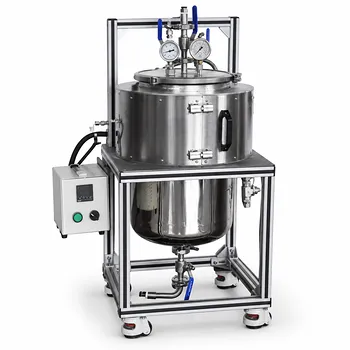
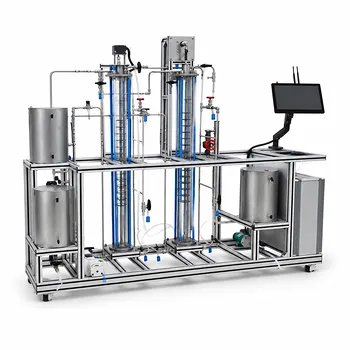
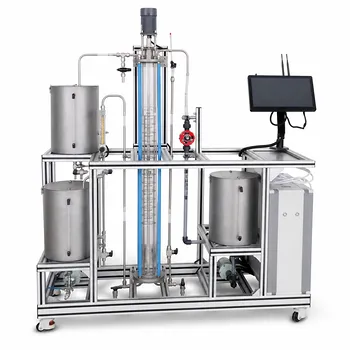
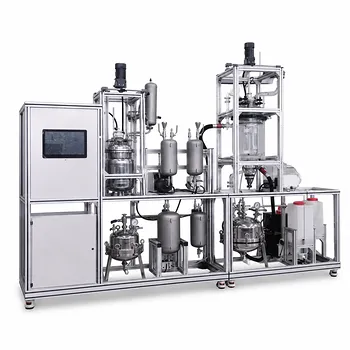
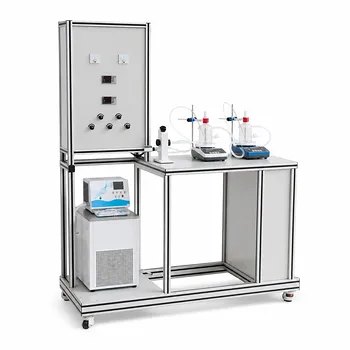
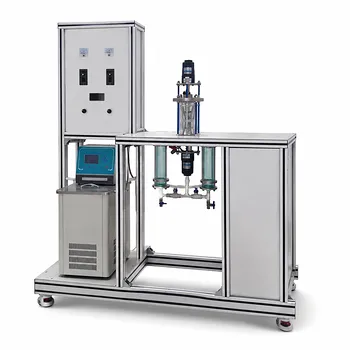
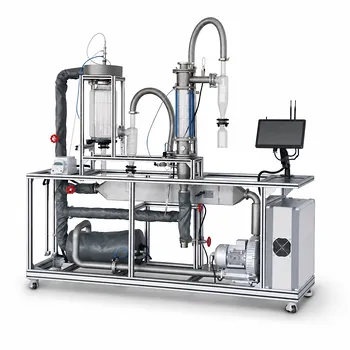
The siphon principle doesn’t vanish when you scale up. Instead of a glass syphon, industrial solid-liquid extraction uses cascades of stirred tanks, percolation columns, or continuous countercurrent extractors. In an educational unit operations pilot plant, these are miniaturized versions—agitated batch reactors or multi-stage leaching units—where students directly control what the siphon cycle represents: solvent flow rate and residence time.
Key Variables Manipulated in a Pilot Plant
A typical leaching pilot plant equipped with agitated vessels lets you adjust five primary variables that echo the siphon cycle’s effect:
- Solvent flow rate and cycle time – analogous to the siphon frequency, controlling how often the solid sees fresh liquid.
- Contact time per stage – too short and dissolution may be incomplete; too long and saturation reduces the gradient.
- Temperature – raising temperature increases solubility and diffusivity, but the pilot plant shows that without frequent refresh (higher flow), even hot solvent can eventually saturate.
- Particle size – smaller particles increase surface area and reduce diffusion path length, but the siphon-like renewal must be fast enough to carry away released solute.
- Agitation speed – influences the mass transfer coefficient at the solid-liquid interface, but its benefit is wasted if the bulk liquid isn’t renewed.
By running experiments with fixed solid loading and varying the solvent pump’s speed, students can plot recovery vs. flow rate and identify the point of diminishing returns—the optimum “cycle frequency” for that specific solid-solvent system.
Applying the Shrinking Core Model for Kinetics
In leaching pilot plants dealing with mineral ores or biological materials, the solute often leaves behind an inert solid matrix. The shrinking core model describes how the reaction front moves inward over time. Here, the solvent refresh rate determines whether the process remains reaction-controlled or becomes limited by diffusion through the spent solid layer.
A faster cycle (higher solvent velocity) sweeps away solute from the surface, keeping the liquid film resistance low. Students can measure leachate concentration over time at different flow rates and fit the data to the model, directly linking the siphon-like renewal to kinetic performance.
Understanding the Trade-offs
The Optimization Problem: Speed vs. Solvent Economy
Siphon frequency is not a “more is always better” parameter. Excessively rapid cycling—whether via fast syphoning in a Soxhlet or high solvent flow in a pilot plant—carries penalties:
- Solvent waste and cost. More cycles mean greater solvent evaporation and condensation loads, or, in a pilot plant, higher solvent consumption and reboiler duty.
- Insufficient contact time per cycle. If the solvent doesn’t spend long enough in contact with the solid, dissolution may be incomplete, giving a false sense of progress but poor overall recovery per volume of solvent.
- Dilution of extract. Extremely high flow rates produce very dilute leachates, increasing downstream separation costs.
A pilot plant experiment reveals the sweet spot: the frequency that maximizes solute recovery per unit of solvent consumed. Students often plot extraction efficiency vs. solvent-to-solid ratio for different cycle times to visualize the economic optimum.
The Saturation Plateau in Real Pilot Plants
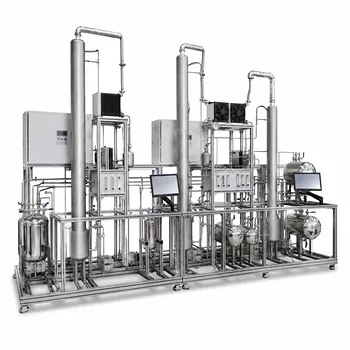
Unlike a Soxhlet’s discrete cycles, continuous countercurrent pilot plants maintain an internal concentration profile. If the solvent flow is too slow, one or more stages approach equilibrium and stop contributing. However, increasing the flow also changes the residence time distribution and may cause channeling in packed beds. The pilot plant’s instrumentation (in-line density meters, conductivity probes) makes these deviations visible, teaching the limits of idealized stage models.
Insights from Liquid-Liquid Extraction Parallels
The supplementary references on stage efficiency for liquid-liquid extraction offer a valuable cross-application. In multi-stage leaching pilot plants, each contactor stage has an efficiency that depends on physical properties (viscosity, interfacial tension analogies in solid-liquid can be thought of as wettability and pore diffusion). A suboptimal siphon-like flow pattern can reduce actual stage efficiency far below 100%, even if the overall number of theoretical stages seems sufficient. This demonstrates why scaling up requires more than just replicating glassware.
Making the Right Choice for Your Goal
- If your primary focus is maximizing speed: Use a high siphon cycle frequency (fast solvent refresh) to maintain a steep concentration gradient, but monitor the leachate concentration to avoid over-diluting the product.
- If your primary focus is solvent economy: Find the lowest flow rate or cycle time that still keeps the solvent below ~70–80% of its saturation concentration. Pilot plant data can pinpoint this break-even point.
- If your primary focus is teaching mass transfer fundamentals: Use the pilot plant’s flexibility to demonstrate both extremes—a painfully slow cycle that plateaus early, and a wasteful fast cycle—before guiding students to the optimum. This instills an intuitive feel for the trade-off.
- If your primary focus is scaling up a known extraction: Measure mass transfer coefficients at pilot scale by manipulating the equivalent siphon cycle variable (solvent flow per stage), then use dimensionless numbers (Sherwood, Schmidt, Reynolds) to confidently design an industrial unit.
When you treat the siphon cycle not as a quirk of glassware but as a fundamental control knob for renewal rate, the entire solid-liquid extraction process becomes a predictable, optimizable unit operation—and the pilot plant becomes your most trusted teacher.
Summary Table:
| Siphon Cycle Frequency / Flow Rate | Extraction Speed & Mass Transfer | Solvent Economy | Ideal Application |
|---|---|---|---|
| High (Fast Cycle) | Maximum; keeps concentration gradient steep | Low; dilutes extract & wastes solvent | Speed-driven R&D |
| Low (Slow Cycle) | Poor; solvent saturates, gradient decays | High; minimizes solvent usage | Cost-sensitive production |
| Optimized (Sweet Spot) | Balanced; maintains pseudo-steady state | High; economic optimum | Scaled unit operations |
Bring Unit Operations Theory to Life with LABPARK
Are you looking to provide hands-on experience in mass transfer and extraction kinetics? LABPARK designs and manufactures premium Educational and Vocational Unit Operations Pilot Plants for chemical engineering, bioprocess & biotech, and environmental & water treatment.
We empower universities, research institutes, and enterprises to bridge the gap between classroom theory and industrial application. Contact us today to find the perfect pilot plant solution for your lab!
Related Products
- Hot Filtration Educational Unit Operations Pilot Plant Laboratory System
- Comprehensive Liquid-Liquid Extraction Pilot Plant for Engineering Education
- Educational Rotary Disc Liquid-Liquid Extraction Pilot Plant
- Gallium and Indium Selective Extraction Educational Pilot Plant
- Fluidized Bed Gas Solid Catalytic Reaction Educational Pilot Plant
People Also Ask
- How to Determine Specific Cake (r) & Filter Medium (Rm) Resistance Using Filtration Pilot Plant Data
- How can researchers identify and resolve filter medium blinding? Optimize Your Pilot Plant Runs
- How to select solid-liquid separation equipment for pilot plants? A Step-by-Step Guide
- Why Demo Constant-Rate to Constant-Pressure Filtration on a Pilot Plant? Key Practical Insights
- How do Buchner funnels & leaf filters differ in filtration scale-up? Key Differences Explained