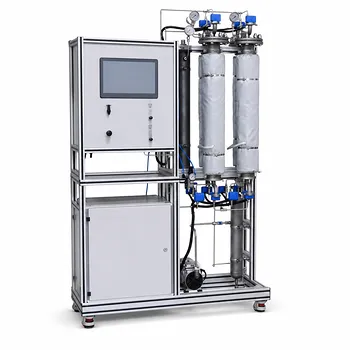
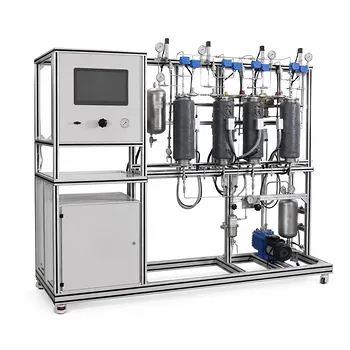
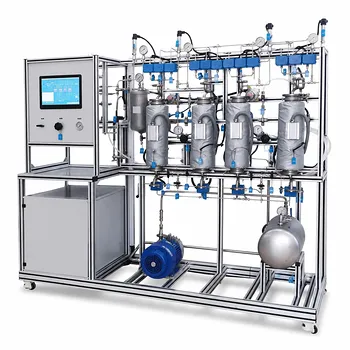
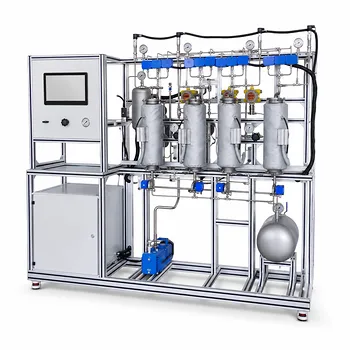
The phase equilibrium constant, m, is not a fixed number—it shifts dramatically with operating temperature and pressure. In a packed column absorption pilot plant, m = E/p (where E is Henry’s constant). As you increase the system temperature, E rises, so m gets larger; conversely, lowering the total pressure also makes m larger. A larger m tells you that the solute prefers the gas phase—solubility in your liquid solvent drops. This directly weakens the mass‑transfer driving force, meaning your pilot column must either be significantly taller or run with a much higher liquid flow rate to hit the same absorption target.
The phase equilibrium constant is a moving target shaped by temperature and pressure. In a pilot‑scale packed column, a higher m (caused by higher temperature or lower pressure) reduces the solute’s solubility, shrinks the concentration driving force, and forces you to compensate with more packing or more solvent. Understanding this relationship is the key to designing meaningful experiments and troubleshooting poor absorption performance.
How Temperature and Pressure Reshape m
The equilibrium constant for a solute‑solvent pair is a measure of the solute’s “willingness” to leave the gas and enter the liquid. It directly reflects Henry’s Law behavior.
The Temperature Effect: Hotter Systems Push Solute Out
When you raise the temperature of the absorption liquid, the solute’s equilibrium partial pressure goes up for the same liquid‑phase concentration.
This makes E—and therefore m—increase. A larger m means the gas‑phase mole fraction must be higher to keep the same liquid loading, essentially making the gas more difficult to absorb.
In practical pilot‑plant terms, heating the solvent supply or letting the column run hot dramatically reduces the solubility capacity of your solvent. The solute “prefers” to stay in the gas stream.
The Pressure Effect: Lower Total Pressure Magnifies m
Because m = E/p, holding the Henry’s constant E fixed while decreasing total system pressure p forces m upward.
At lower operating pressures, the equilibrium line in an operating diagram steepens. This is a common challenge in vacuum‑stripping configurations or when a pilot plant is run at sub‑atmospheric conditions to simulate specific industrial processes.
The Real‑World Impact on Your Pilot Column
Understanding m is not an academic exercise—it directly changes what you measure and how you must operate your packed column.
Shrinking the Driving Force for Mass Transfer
Absorption depends on a concentration difference between the bulk gas and the equilibrium condition at the gas‑liquid interface. A larger m means that, for a given liquid composition, the equilibrium gas concentration is higher.
This reduces the solute’s thermodynamic tendency to leave the gas phase, weakening the mass‑transfer rate throughout the entire column.
Demanding More Packed Height or Solvent Flow
When the driving force falls, the column must work harder to achieve the same outlet gas purity. In a pilot plant, two operational levers become obvious:
- Increase the packed bed height: More packing provides additional residence time and interfacial area to close the gap created by the weaker driving force.
- Increase the liquid‑to‑gas ratio (L/G): Flushing more solvent through the column lowers the average liquid‑phase solute concentration, re‑establishing a larger driving force.
Both actions have direct cost, space, and scaling implications that you must tie back to the measured m values.
Recognizing m as a Design‑Verification Tool
During a pilot‑scale campaign, measuring inlet and outlet compositions and operating temperature/pressure allows you to back‑calculate effective m values. These can be compared against published Henry’s Law data to verify column hydraulics, detect channelling, or spot measurement errors.
If your apparent m is higher than expected, the column is likely underperforming relative to thermodynamic potential—a sign of kinetic or fluid‑dynamic limitations.
Chemical Absorption: A Way to Fight Back Against High m
The primary reference describes physical absorption, but supplementary insight reveals a powerful strategy often tested in pilot plants: using a reactive solvent.
How a Chemical Reaction Lowers the Apparent Equilibrium Constant
When the solute reacts with an active component in the liquid (e.g., acid gas + alkaline solution), the free solute concentration at the interface drops. This suppresses the equilibrium partial pressure, effectively reducing the apparent Henry’s constant by a factor of (1 + K' c_B⁰).
In operating diagrams, this translates to a much shallower equilibrium line, dramatically increasing the driving force even at low liquid‑phase loadings. The apparent m becomes smaller, and the column suddenly has plenty of “thermodynamic muscle” to pull solute out of the gas.
What This Looks Like in a Pilot Plant
When a student or researcher switches from water (physical) to a reactive solvent, they observe:
- Sharper outlet purity with the same packing height.
- Ability to operate at higher temperatures (which otherwise inflate m) without losing performance.
- Higher liquid‑phase loading capacity, which changes the shape of the operating line and the number of transfer units required.
This contrast makes the pilot column an excellent teaching tool for demonstrating how thermodynamics set the ceiling, but chemistry can reshape it.
Understanding the Trade‑offs
An engineer evaluating a pilot absorption process must weigh several critical factors tied to m.
- Physical solvents are simple but sensitive to m: Any temperature rise or pressure drop directly hurts performance, forcing increased solvent circulation costs or taller, more expensive columns.
- Reactive solvents tame m but bring complications: They often require corrosion‑resistant materials, solvent regeneration loops, and careful management of by‑products. The pilot plant is the place to quantify these side‑effects.
- Low‑pressure operations magnify poor solubility: A solvent that works beautifully at elevated pressure may fail entirely in a vacuum‑pressure pilot unit because m skyrockets.
- Pilot‑scale experiments are often intentionally run at varying m: This is not a malfunction—it’s how you map the operating envelope and develop scale‑up correlations for industrial designs.
How to Apply This to Your Pilot‑Plant Work
Your goal in operating a packed column absorption pilot plant determines how you should think about and respond to changes in m.
- If your primary focus is mapping design data for scale‑up: Deliberately vary both temperature and pressure in a systematic way. For each condition, measure the minimum liquid flow and packed height required to hit your target. This directly converts m values into equipment sizing parameters.
- If your primary focus is teaching absorption principles: Contrast a physical‑solvent run with a chemical‑absorption run at the same elevated temperature. Show how high m destroys performance in one case, while the reactive chemistry overrides the equilibrium penalty. Use back‑calculation to connect chromatograph readings to the driving force.
- If your primary focus is troubleshooting poor column performance: Measure the liquid outlet temperature and column pressure profile. If the bed is running hotter than expected (exothermic reaction, poor cooling) or the pressure drop is unusually low, you have found a likely root cause: an inflated m that has shrunk your driving force.
- If your primary focus is solvent selection for a new process: Use the pilot plant to generate true m curves for candidate solvents at realistic operating pressures and temperatures, not just from literature. The observed mass‑transfer performance often reveals a better solvent than the one with the theoretically lowest m, because other factors like viscosity and surface tension matter.
The phase equilibrium constant is the most powerful single number for predicting and controlling your packed column’s absorption capacity—master its sensitivity to temperature and pressure, and you master the pilot plant itself.
Summary Table:
| Operating Condition | Effect on Constant (m) | Solute Behavior | Pilot Plant Impact & Adjustments |
|---|---|---|---|
| Temperature Increase | Increases | Solute solubility drops; prefers gas | Requires higher liquid flow (L/G) or taller packing. |
| Pressure Decrease | Increases | Solute solubility drops; prefers gas | Requires higher liquid flow (L/G) or taller packing. |
| Using Reactive Solvent | Decreases (apparent) | Reacts in liquid phase; solubility rises | Achieves high absorption efficiency with less packing. |
Scale Up Your Engineering Capabilities with LABPARK
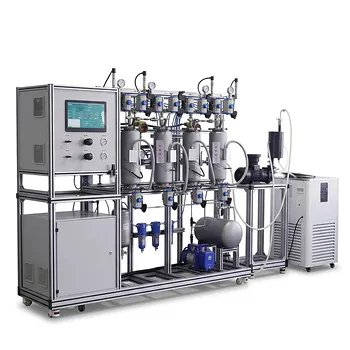
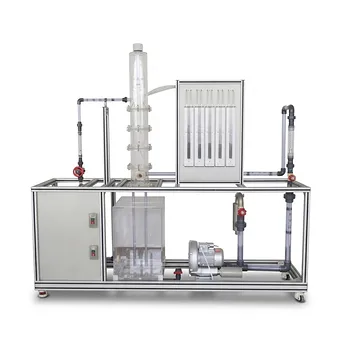
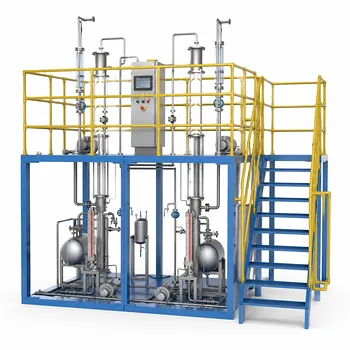
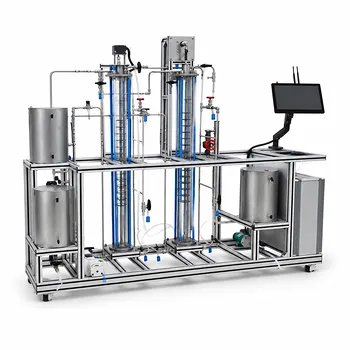
To help your students and researchers master complex thermodynamic principles like phase equilibrium, LABPARK provides premium Educational and Vocational Unit Operations Pilot Plants in chemical engineering, bioprocess & biotech, and environmental & water treatment. Built for universities, research institutes, and enterprises, our pilot plants deliver reliable, industrial-grade learning experiences.
Ready to enhance your lab's training and research capabilities? Contact LABPARK today to discuss your project!
Related Products
- Packed Bed Absorption Educational Unit Operations Pilot Plant
- Absorption and Desorption Educational Unit Operations Pilot Plant
- Multimodal Absorption and Desorption Pilot Plant for Unit Operations Training
- Bench Scale Dual Column Gas Separation and Capture Educational Pilot Plant
- Pressure Swing Adsorption Educational Unit Operations Pilot Plant
People Also Ask
- How Do Flow Regimes Transition in Packed Bed Pilot Plants? Key Scale-up Insights
- How does reactant concentration determine absorption column control? Gas-film vs. dual-film.
- How is the packing height of an absorption column calculated? Master HTU & NTU Concepts
- How does static vs. operating holdup affect pilot plant calibration? Avoid Critical Scale-Up Errors
- Why is counter-current flow selected for gas absorption? Maximize Pilot Plant Efficiency