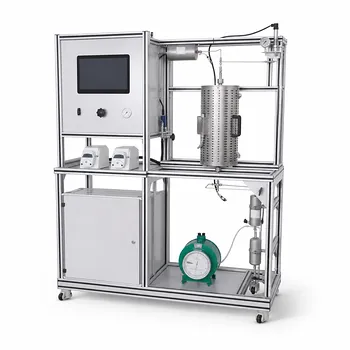
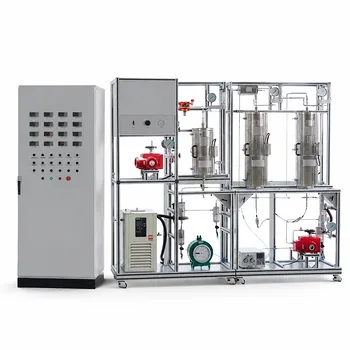
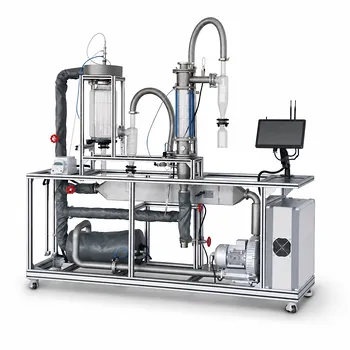
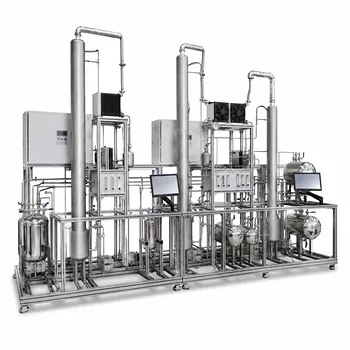
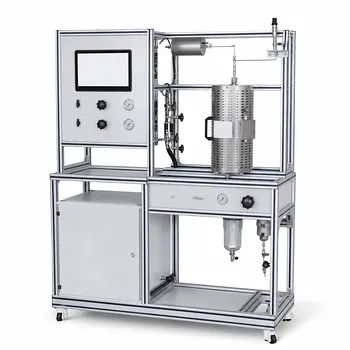
By engineering safety at the molecular level, enzyme catalysis in bioprocess pilot plants fundamentally eliminates hazards at their source. It achieves safer chemical synthesis by replacing toxic, corrosive reagents with biodegradable proteins that operate under mild, water-based conditions. The direct safety improvement is demonstrated in processes like biodiesel production, where a dangerous chemical like sodium methoxide is swapped for a lipase enzyme, immediately removing the risk of catastrophic spills, toxic exposure, and hazardous waste generation.
Traditional chemical synthesis often accepts inherent risks—corrosive acids, flammable solvents, high pressure—as unavoidable costs. The core insight of biocatalysis is that these risks are not inherent; they are a design choice. By using enzymes to precisely lower a reaction's activation energy, pilot plants prove you can achieve high yields at ambient temperature and neutral pH, systematically removing the physical and toxicological hazards that define conventional chemistry.
Deconstructing the Source of Hazard: How Enzymes Change the Game
The safety profile of a process isn't just about wearing gloves. It's a direct function of the reaction's underlying chemistry. Enzyme catalysis changes the fundamental requirements of a reaction, removing the need for hazardous conditions.
The Reagent Problem: Replacing Toxic Agents with Biodegradable Catalysts
The most immediate safety gain is the elimination of hazardous reagents. Conventional chemistry often uses aggressively reactive substances to force a transformation.
For example, a classic biodiesel pilot plant process uses sodium methoxide, a highly caustic and flammable powder that reacts violently with water. A spill poses immediate burn and fire risks, and the resulting waste stream is hazardous. The enzyme-catalyzed alternative uses a lipase, a non-toxic, biodegradable protein. An operator's exposure risk goes from a chemical burn to, at worst, an allergen concern. The hazardous waste liability is virtually eliminated on the spot.
The Condition Problem: Redefining "Mild" through Activation Energy
The need for extreme conditions isn't a fact of nature; it's a consequence of a reaction's activation energy. This is the energy barrier that must be overcome for a reaction to start. Enzymes are masterful at lowering this barrier, which is the root cause of their inherent safety.
The supplementary research illustrates this perfectly. The decomposition of hydrogen peroxide has an activation energy of 75 kJ/mol. A chemical catalyst like platinum can lower it, but the enzyme catalase reduces it to just 25 kJ/mol. This massive reduction means the reaction can proceed rapidly at room temperature instead of requiring high heat. Running a process at 35°C instead of 200°C eliminates the risk of severe thermal burns, removes the energy for a runaway reaction, and allows for simpler, non-pressurized reactor designs. The hazard isn't controlled; it's circumvented.
The Selectivity Problem: Eliminating Side Reactions and Purification Risks
Impure products require extensive purification, which itself is a major source of solvent use, exposure, and waste. An enzyme’s exquisite specificity is a profound safety feature because it prevents hazardous waste at its source.
The "lock-and-key" mechanism of an enzyme means it often targets a single, specific molecule. This stereoselectivity means fewer unwanted by-products. The reference material notes enzyme-catalyzed processes can achieve 70–99% yields with high selectivity. A cleaner reaction mixture directly reduces the need for hazardous organic solvents in downstream purification. In a pilot plant, you can physically see the difference: fewer extraction steps with volatile solvents means fewer inhalation risks and less flammable liquid waste to manage.
A Pilot Plant's Eye View: Operational Safety in Context
A bioprocess pilot plant allows for a direct, side-by-side safety comparison that a spreadsheet cannot provide. It translates the abstract principles of green chemistry into tangible operational data.
Comparing Three Catalytic Worlds in One Facility
A well-designed pilot plant lets you run three classes of reactions, each with a distinct safety profile:
- Chemo-catalysis: Uses metals or acids at 50–1000 kg/m³. It doesn't require sterility, but often demands reactors rated for high temperature and pressure. The safety protocol is centered on physical hazard containment—managing high-pressure steam lines and preventing corrosive leaks.
- Classical Fermentation: Uses living cells. It operates under moderate conditions but introduces a biological safety burden: strict sterility to prevent contamination. An accidental release isn't a toxic spill, but it can ruin batches and requires rigorous cleaning.
- Enzyme Catalysis: Sits in a unique safety niche. Like fermentation, it uses mild, moderate conditions. However, the catalyst is a defined, non-living, biodegradable substance. The primary operational challenge isn't toxicity or a runaway bioreaction; it's simply maintaining the enzyme’s stability, a process economics problem, not a personnel safety crisis.
Translating Data into Safety Metrics
The pilot plant generates data that serves as a quantitative safety case study. By running an enzymatic hydrolysis of starch to sugars and comparing it to an acid-catalyzed version, students and researchers can directly measure:
- Energy Input: The enzymatic process at 40°C consumes far less heating energy than a high-pressure acid hydrolysis, directly correlating to a lower burn and explosion risk.
- Waste Profile: The neutralized acid waste contains salts and by-products, presenting a disposal challenge. The enzymatic waste stream is primarily an aqueous solution of sugars and biodegradable protein.
- Downstream Processing: A selective enzymatic reaction producing an API intermediate may eliminate the need for a hazardous solvent extraction step entirely, a risk removed that is captured in the simplified process flow diagram.
Understanding the Trade-offs and Operational Realities
Claiming enzyme catalysis is a flawless "silver bullet" for safety would be intellectually dishonest. Objectivity requires a clear-eyed view of its own unique challenges in a pilot setting.
The New Challenge: Containing the Biological, Not the Chemical
While you remove chemical toxicity hazards, you introduce a biological containment requirement. An enzyme reactor must often be run under sterile or sanitary conditions. An operator who previously managed the risk of a chemical burn must now learn aseptic technique to prevent microbial contamination that could degrade the enzyme and foul the reactor. You are swapping a chemical hazard for a bioprocess discipline.
The Stability Paradox
The very mildness that makes enzymes safe also makes them fragile. The primary pilot-scale challenge for enzyme catalysis is catalyst stability. Factors like trace heavy metals, extreme pH shifts, or even excessive shear force from a poorly configured impeller can denature the enzymes and kill the reaction. This means a process can fail economically without ever becoming "unsafe." The skill set shifts from managing reactive risk to mastering precise environmental control and gentle product handling, a discipline learned by integrating filtration units and membrane separation systems for gentle catalyst recovery.
Making the Right Choice for Your Goal
Your evaluation of safety is ultimately tied to your core objective. A bioprocess pilot plant provides the data to make the right decision for your specific context.
- If your primary focus is absolute hazard elimination: Prioritize enzyme catalysis. The replacement of toxic, corrosive reagents with biodegradable catalysts in ambient, water-based systems represents the most fundamental safety redesign possible.
- If your primary focus is product purity and reducing downstream risk: Leverage enzyme stereoselectivity. A high-yield, high-selectivity reaction minimizes the hazardous solvents and energy-intensive purification steps required for impure chemical synthesis, cutting risk across the entire process chain.
- If your primary focus is operational safety in a teaching environment: Use the pilot plant to run the direct comparison. Contrasting an acid-catalyzed hydrolysis with an enzymatic one provides an unforgettable, experiential lesson in how processing hazards shift from chemical to biological containment.
- If your primary focus is long-term process economics: Use the pilot plant to solve the enzyme stability challenge. Generate the data on immobilized enzyme recovery and reuse; solving this economic variable unlocks the full safety and cost-savings potential of a process that is inherently safer to run.
The true value of the pilot plant is its ability to make an abstract promise tangible, proving that the most effective safety strategy isn't better protective equipment, but a better-designed reaction.
Summary Table:
| Process Type | Operating Conditions | Primary Hazards / Challenges | Environmental Impact / Waste |
|---|---|---|---|
| Conventional Chemical | High temp/pressure, strong acids/bases | Thermal burns, runaway reactions, toxic spills | High waste, hazardous solvents needed |
| Classical Fermentation | Moderate conditions, sterile environment | Microbial contamination, batch spoilage | Low toxicity, high water usage |
| Enzyme Catalysis | Ambient temp/neutral pH, mild conditions | Enzyme stability, biological containment | Biodegradable waste, low solvent use |
Bring Safe, Next-Gen Bioprocess Training to Your Lab
Accelerate learning and research in green chemistry with LABPARK. We provide advanced Educational and Vocational Unit Operations Pilot Plants in chemical engineering, bioprocess & biotech, and environmental & water treatment for universities, research institutes, and enterprises.
Our systems help you safely demonstrate enzyme catalysis, control process stability, and reduce hazardous waste in a real-world setting.
Contact LABPARK today to discuss your laboratory's training and research needs!
Related Products
- Methanol Synthesis and Catalyst Performance Evaluation Educational Unit Operations Pilot Plant
- Multi Functional Catalytic Reaction and Reactor Evaluation Educational Unit Operations Pilot Plant
- Bio-fermentation Ethanol Production Practical Training Unit Operations Pilot Plant
- Carbon Dioxide Hydrogen Methanol Synthesis Educational Unit Operations Pilot Plant
- Ethylbenzene Dehydrogenation Educational Unit Operations Pilot Plant
People Also Ask
- Why is a purge system necessary when operating a gas recirculation loop in a methanol synthesis pilot plant? (Guide)
- How do temp & pressure affect methanol synthesis pilot plants? Optimize equilibrium and catalyst performance.
- Why do modern methanol pilot plants operate at lower pressures? Catalyst & Feed Requirements Explained
- What are the operational requirements for catalyst activation? Safe Methanol Pilot Plant Operation
- Why Compare Predicted and Experimental Excess Enthalpy? Key to Accurate Pilot Plant Scale-up