The fundamental distinction is that laboratory SLC qualification is predetermined by external standards, while pilot plant process analytics SLC is defined by the real process itself. In a traditional lab, you set system suitability specifications before any experiment begins, using traceable calibration standards, then verify the instrument against those static criteria. For a unit operations pilot plant, the sensor’s performance criteria are inseparably linked to the actual process dynamics—mixing, heat transfer, flow—that can only be characterized by taking real-time measurements in the live environment. Imposing rigid lab-style SLC gates prematurely stifles implementation and delays process insight.
Core takeaway: Pilot plant instrument qualification cannot be a copy‑paste of laboratory protocols. It must pivot from a prescription‑first to a process‑linked, risk‑based SLC where feasibility studies on the target equipment and a tailored quality‑and‑business risk analysis replace the traditional, externally calibrated specification.
The Laboratory SLC: A Prescriptive, Standards‑Driven Approach
In a controlled analytical laboratory, the System Life Cycle is linear and externally anchored.
Pre‑experiment specification sets the stage
Laboratory system suitability criteria—precision, accuracy, linearity—are typically established before any sample runs using certified reference materials or synthetic standards. The instrument is challenged against known values that are independent of the sample matrix or process variability.
Calibration and validation remain environment‑agnostic
Because the lab instrument operates in a stable, air‑conditioned room with trained personnel, its qualification rarely needs to account for ambient vibration, fluctuating line pressures, or aggressive wash‑media. The SLC focuses on software validation, audit trails, and method transfer—not on how the instrument physically survives a unit operation.
This approach works because lab data is retrospective
Samples are removed from the process, transported, and analyzed offline. The goal is to report a result on an inert, stable sample, so qualification can rely on predetermined performance limits without feedback from the original process stream.
The Pilot Plant SLC: A Process‑Linked, Risk‑Based Approach
When an analyzer or sensor becomes part of a unit operation—a reactor, a distillation column, a bioprocess skid—its SLC must be anchored in the process itself.
System specifications emerge from process data, not from a textbook
You cannot set a realistic signal‑to‑noise limit or a detection threshold until you have measured the actual background noise of a running agitator, the fouling tendency of the broth, or the temperature swing during a CIP cycle. Forcing a laboratory‑derived specification onto a pilot‑plant sensor before gathering process data often leads to irrelevant limits that either fail unnecessarily or overlook practical risks.
Feasibility studies replace premature validation
Instead of executing a full IQ/OQ/PQ script as you would in a lab, the pilot‑plant SLC begins with feasibility studies on the real equipment. You install the probe, collect raw spectra or signals under live process conditions, and then jointly define what “suitable” means. This step identifies sensor placement issues, interfering species, or physical stresses that no laboratory experiment could replicate.
Quality and business risk analysis is context‑specific
The primary reference is explicit: a quality and business risk analysis must be tailored to the sensor’s intended process environment, not to a generic lab template. For a pilot plant, that means:
- Quality risk: What critical quality attribute (CQA) is the sensor supposed to monitor? How much process drift can be tolerated before the measurement loses value?
- Business risk: How quickly do you need the data to make a scale‑up decision? What is the cost of delaying the experiment because of an overly rigid qualification protocol?
Sensors versus analyzers influence the SLC scope
Sensors (compact, self‑contained) integrate directly into a pilot‑plant skid with minimal utilities, so their SLC often focuses on plug‑and‑play signal verification and short‑term reproducibility during the campaign. Analyzers (rack‑mount systems, mass spectrometers) demand fixed installations, power conditioning, and expensive fiber routing; their SLC must therefore include robustness against installation‑induced variation from the start.
Why Rigid Lab‑Style SLC Delays Pilot‑Plant Progress
The environment is dynamic, not static
A pilot plant experiences temperature ramps, pressure swings, and multiphase flows that are absent in a laboratory. If you wait to fully qualify a probe against a lab‑derived specification, you risk discovering later that the sensor saturates under real shear or that the optical window fogs at a critical reaction point—knowledge you could have gained in the first hour of operation.
Premature rules freeze learning
Applying a final‑stage “system suitability test” too early turns the SLC into a compliance checkbox rather than a learning tool. Pilot plants exist to explore the unknown; their analytical SLC should first answer: “Can this instrument see what we need to see here?” and only later formalize the pass/fail criteria based on the collected evidence.
Understanding the Trade‑offs
Real‑time learning vs. regulatory formalism
A process‑linked SLC gives you immediate, actionable data—but the qualification documentation may look less polished than a lab‑based V‑model. The trade‑off is speed and relevance versus pre‑defined, auditable rigor. As the project moves closer to commercial manufacturing, the SLC can be tightened and extended, but initially the pilot plant benefits from an exploratory, risk‑based stance.
Unattended reliability demands different validation
Online process analyzers need far higher reliability for unattended operation than lab instruments. The SLC must therefore include long‑term drift under process conditions, not just a 4‑hour lab stability test. However, this reliability validation should be designed around the typical batch duration or campaign length, not around hypothetical lab endurance cycles.
The risk of under‑qualification
Skipping all structure is equally dangerous. Without a risk analysis, a sensor might give a plausible but wrong signal that goes undetected because no one ever defined failure boundaries based on process knowledge. The balanced approach is to first run feasibility tests, then rapidly establish in‑process specifications that are fit‑for‑the‑pilot‑purpose.
How to Apply This to Your Project
Start every pilot‑plant analytical qualification by asking what you truly need to answer, not by filling out a lab‑derived template.
- If your primary focus is early‑stage process exploration: Perform a hands‑on feasibility study first. Install the sensor, gather signals while the unit runs, and use that data to draft a risk‑based specification—only then lock the SLC requirements.
- If your primary focus is bridging from R&D to scale‑up: Validate the sensor’s response against pilot‑scale data already collected offline, and define a limited set of process‑linked suitability criteria. Defer full ruggedness testing until the process is locked, but document the rationale so the next phase can build on your learning.
- If your primary focus is teaching or academic pilot‑plant operation: Choose simple, self‑contained sensors with minimal utility needs. Their SLC can be a streamlined demonstration of real‑time verification—spend more time showing how process dynamics affect the signal than on exhaustive paperwork.
Let the process speak first, then write the instrument’s rules—that is the essence of a pilot‑plant‑ready SLC.
Summary Table:
| Feature | Laboratory SLC | Pilot Plant SLC |
|---|---|---|
| Primary Driver | External standards & traceable calibration | Real process dynamics & live environments |
| Validation Focus | Software, audit trails & static parameters | Live equipment feasibility & risk analysis |
| Data Nature | Retrospective (offline, stable samples) | Real-time (dynamic, inline process stream) |
| Environment | Static & controlled (air-conditioned lab) | Dynamic (temperature swings, vibration, fouling) |
Optimize Your Process Scale-Up with LABPARK
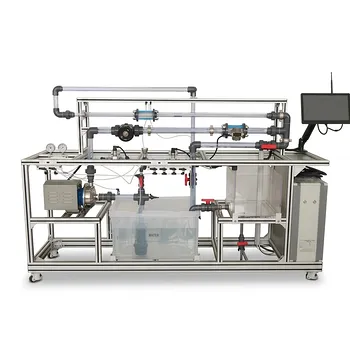
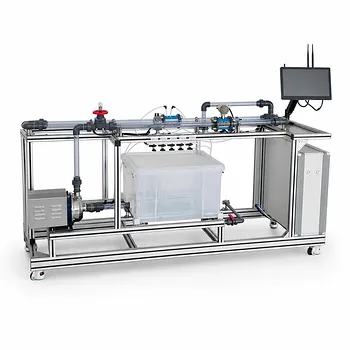
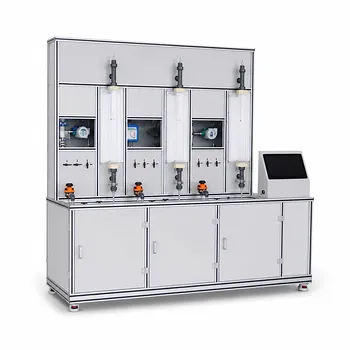
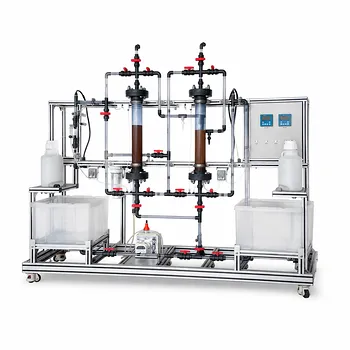
Transitioning from laboratory precision to pilot plant reality requires a process-aligned approach. LABPARK provides state-of-the-art Educational and Vocational Unit Operations Pilot Plants in chemical engineering, bioprocess & biotech, and environmental & water treatment tailored for universities, research institutes, and enterprises.
Whether you need robust instrumentation setup or custom pilot plant skid design, we can help you build systems engineered for dynamic process environments. Contact LABPARK today to discuss your project requirements!
Related Products
- Centrifugal Pump Performance and Orifice Flowmeter Calibration Educational Pilot Plant
- Continuous Batch Extractive Distillation Educational Pilot Plant
- Orifice and Venturi Flowmeter Calibration Educational Pilot Plant for Fluid Mechanics Laboratory
- Constant Pressure Filtration Educational Unit Operations Pilot Plant
- Two Phase Flow Pattern Velocity Resistance Measurement Educational Pilot Plant
People Also Ask
- What features should instructors look for in pump & flowmeter pilot plants? Key Selection Guide
- Why start a centrifugal pump with a closed outlet valve? Protect your pilot plant motors.
- How to update chemometric calibration models in pilot plants? Best practices for process engineers.
- How can cavitation and slurry erosion be studied and mitigated using fluid transport and centrifugal pump pilot plants?
- How do pilot plants demonstrate siphon pressure variations? Visualizing Bernoulli's Energy Balance