A cooling water leak into an overhead condenser is a high-speed pathway to column failure. Within minutes of the breach, salt-laden water enters the reflux stream, carrying sodium, calcium, magnesium, and aggressive chloride ions directly onto the rectification trays. These contaminants react with process acids to form insoluble scale deposits that choke bubble‑cap passages, while simultaneously triggering galvanic and chloride‑driven corrosion that can destroy steel internals in a single campaign.
The leak does not just contaminate the product—it turns your column into a reactor where every drop of cooling water creates cement‑like deposits and sets up a galvanic cell that rapidly eats away the metal. Early detection is not optional; it is the only way to prevent irreversible fouling and catastrophic corrosion.
How Cooling Water Contaminants Enter and Impact the Column
The Leak Pathway from Condenser to Tray
In a typical overhead condenser, cooling water passes through tubes while hot process vapors condense on the shell side.
When a tube leaks, the higher‑pressure water side forces dissolved salts and oxygen directly into the condensed distillate.
This contaminated liquid is then pumped back to the column as reflux, instantly distributing the problem across every tray.
Immediate Chemical Reactions with Process Acids
Many rectification processes contain residual or process-essential acids—hydrofluoric, sulfuric, or hydrochloric, for example.
Sodium ions from salt water immediately react with fluoride or sulfate ions to precipitate salts like sodium fluoride and calcium sulfate that are nearly insoluble in the organic or aqueous reflux.
These precipitates nucleate on metal surfaces and grow into thick, adherent scale layers, especially in the high‑temperature environment of the column.
The Dual Attack: Scaling and Corrosion Working in Tandem
Scaling That Cements Trays Shut
The newly formed insoluble salts collect preferentially on active tray areas—bubble caps, valve openings, and downcomers.
As deposits accumulate, they constrict flow paths, increase pressure drop, and eventually block vapor‑liquid mixing entirely.
This fouling not only destroys separation efficiency but also creates stagnant zones that amplify the corrosive environment underneath the scale.
Galvanic Corrosion: An Electrical Battery Inside Your Column
Salt water turns the process fluid into a conductive electrolyte.
This enables a galvanic couple between the steel tray metal and any more noble surface—such as imperfections, welds, or different alloys in the condenser—with the steel acting as the anode.
The resulting rapid electrochemical dissolution releases iron ions that precipitate as voluminous, iron‑rich rust deposits, further choking the trays and accelerating under-deposit corrosion.
Chloride‑Induced Chemical Attack
The high chloride levels from salt water directly attack the passive oxide layer on stainless steel components.
This initiates pitting corrosion and, under the tensile stresses typical of bolted or welded trays, can drive stress corrosion cracking.
In austenitic steels like 304 or 316, even a few parts per million of chlorides at column temperatures can be enough to cause sudden, brittle failure of critical components.
Operational Consequences for Pilot Units
Loss of Separation Performance and Invalid Data
Fouled trays and corroded internals change the column’s hydraulic residence time and contact efficiency, rendering mass‑transfer measurements useless.
For a pilot unit designed to generate scale‑up data, this means every experimental run after a leak becomes fundamentally unreliable.
Unscheduled Downtime and Financial Fallout
A leak that goes unnoticed for even a few hours can require full column disassembly, chemical cleaning, and tray replacement.
In research or process development environments, this disrupts project timelines and can destroy one-of-a-kind catalyst or product batches.
Understanding the Trade‑offs in Prevention Strategies
Sensor Sensitivity vs. False Shutdowns
Installing inline conductivity or ion‑selective sensors on the reflux line provides early warning of a leak, often within seconds.
However, normal composition swings or minor ingress from other sources can trigger false alarms, leading to unnecessary emergency shutdowns and expensive lost production time.
The trade‑off is between ultra‑low detection limits that prevent all damage and a slightly higher threshold that reduces nuisance trips.
Upgrading Materials: Cost vs. Absolute Protection
Switching condenser tubes to super‑austenitic stainless steel, duplex alloys, or titanium makes the system practically immune to seawater corrosion and chloride pitting.
The downside is a multiplied capital cost that may be impossible to justify for a pilot unit running short, single‑campaign projects.
Often, the most pragmatic path is to keep lower‑cost tubes and invest heavily in detection and maintenance rather than exotic metallurgy.
The Disruption of Routine Hydrostatic Testing
Regular pressure testing of the condenser bundle can identify thinning walls before a leak occurs.
Yet, each test requires a full shutdown, draining, and often physical removal of the exchanger bundle—an intrusive process that itself can damage gaskets and cause fatigue.
The balance lies in matching test frequency to the process’s risk level: high‑risk, long‑run distillations demand more frequent testing, even at the cost of occasional downtime.
Making the Right Choice for Your Pilot Operation
Based on the severity of the fouling and corrosion mechanisms, the optimal defense depends on your primary operational focus.
- If your primary focus is maximizing uptime and data integrity: Install a continuous, high‑sensitivity conductivity monitor directly in the reflux line with an automated alarm and interlock to a reflux bypass loop. This catches a leak before a single batch of contaminated reflux reaches the trays.
- If your primary focus is minimizing capital expenditure: Use robust, low‑alloy carbon steel with a documented schedule of quarterly hydrostatic testing and routine boroscope inspection of condenser tubes. Pair this with immediate shutdown protocols when a leak is even suspected.
- If your primary focus is eliminating scaling chemistry risk entirely: Pre‑treat the cooling water with a sodium‑ion softener to remove calcium and magnesium, and maintain a tight pH‑alkalinity balance. While this does not stop chloride corrosion, it starves the acid‑base scaling reactions of reactants.
- If your primary focus is corrosion immunity for long‑term campaigns: Upgrade the condenser tubes and column tray wetted parts to a high‑molybdenum, chloride‑resistant alloy (e.g., 254 SMO or Hastelloy C-276). Accept the higher initial cost as insurance against catastrophic thermal‑stress cracking.
A cooling water leak is never a trivial pinhole; it is a chemical and electrochemical assault on your column. By building a layered defense of detection, material selection, and operating procedures, you keep the chemistry of separation, not the chemistry of destruction, in control.
Summary Table:
| Impact Type | Key Mechanism | Operational Effect | Recommended Solution |
|---|---|---|---|
| Scaling | Precipitates (CaSO4, NaF) block tray openings | Vapor-liquid flow blockage & low efficiency | Continuous conductivity monitoring |
| Galvanic Corrosion | Salt water acts as conductive electrolyte | Rapid steel tray dissolution and rust buildup | High-alloy materials (e.g., Hastelloy) |
| Chloride Attack | Chlorides penetrate passive stainless steel layer | Pitting and stress corrosion cracking | Routine hydrostatic & boroscope tests |
Safeguard Your Research with LABPARK Pilot Plants
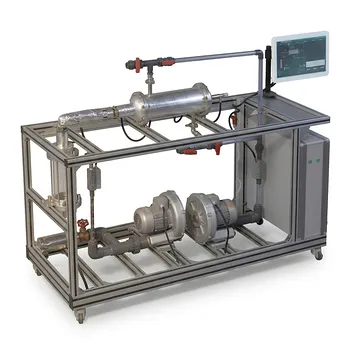
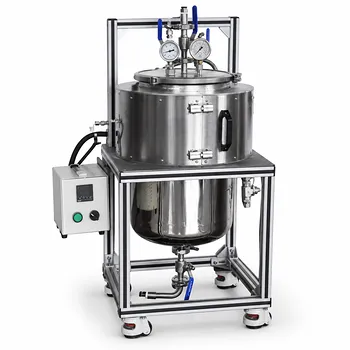
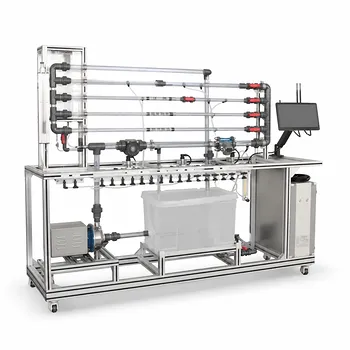
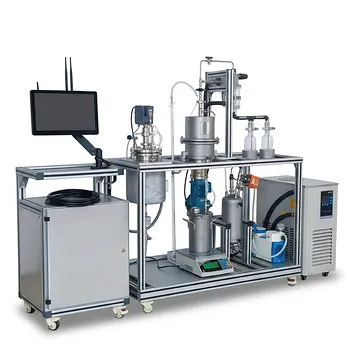
Prevent catastrophic column failures and secure reliable experimental data. LABPARK offers premium Educational and Vocational Unit Operations Pilot Plants in chemical engineering, bioprocess & biotech, and environmental & water treatment. Specifically tailored for universities, research institutes, and enterprises, our systems feature robust corrosion-resistant designs and precise monitoring to ensure long-term operational safety.
Contact our engineering experts today to select or customize the perfect pilot unit for your facility!
Related Products
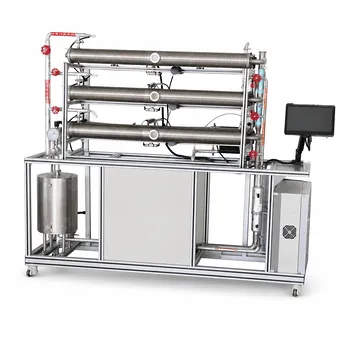
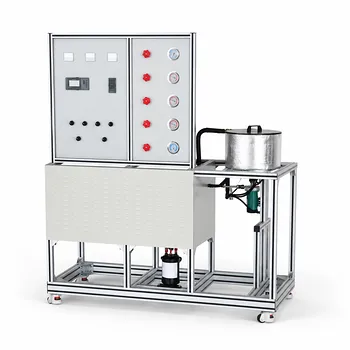
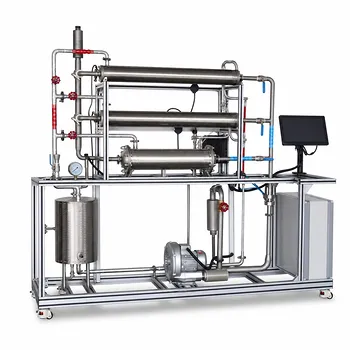
- Three-Tube Heat Transfer Educational Pilot Plant for Unit Operations Training
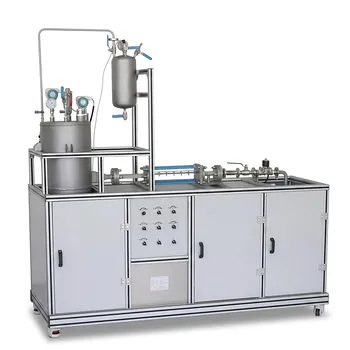
- Rising and Falling Film Evaporation Educational Unit Operations Pilot Plant
- Constant Pressure Filtration Educational Unit Operations Pilot Plant
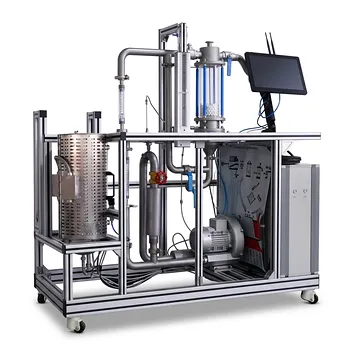
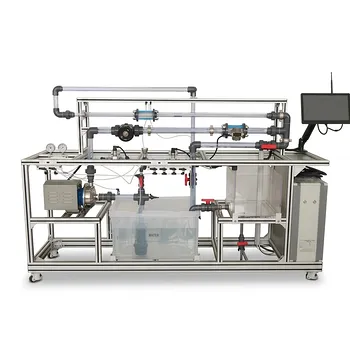
- Cavitation Phenomenon Demonstration and Analysis Educational Unit Operations Pilot Plant
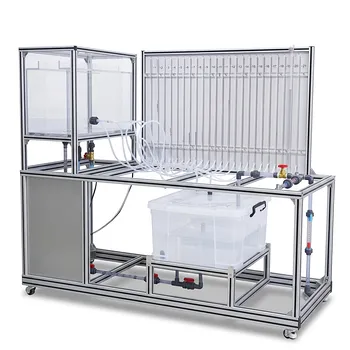
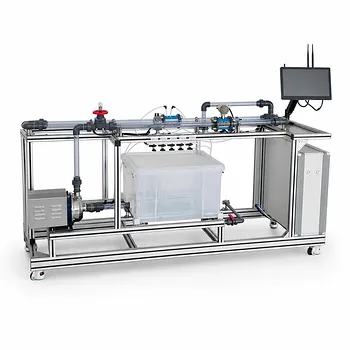
- Bernoulli Equation Demonstration Unit Operations Pilot Plant
People Also Ask
- When is ε-NTU preferred over LMTD in pilot plants? Predict heat exchanger performance without iteration.
- How does transitioning to a multi-shell heat exchanger affect required area? Optimize pilot plant design.
- How can a heat transfer pilot plant demonstrate waste heat recovery? Learn to optimize industrial thermal systems.
- What engineering trade-offs must students analyze in a heat transfer pilot plant? Balance performance & cost.
- How does cascade control achieve superior disturbance rejection in heat transfer pilot plants?