Knowledge Chemical Engineering Education How do track-etched membranes differ from stretched or phase-inversion membranes? Key Lab Selection Guide
Author avatar

Tech Team · LABPARK

Updated 1 week ago

How do track-etched membranes differ from stretched or phase-inversion membranes? Key Lab Selection Guide


Membrane selection isn't just about pore size—it's about pore structure. Track-etched membranes have straight, cylindrical pores with an exceptionally narrow size distribution, while stretched and phase-inversion membranes feature tortuous, interconnected pore networks. In lab-scale unit operations, track-etched membranes are the clear choice when you need precise particle size cut-offs, analytical consistency, or a flat surface for microscopic observation.

The defining difference lies in pore geometry: track-etched membranes provide a predictable, capillary-like pathway that enables true size-exclusion filtration, whereas stretched and phase-inversion membranes rely on a chaotic labyrinth that favors higher flow but sacrifices precision. Choose track-etched when analytical reliability trumps throughput.

Why pore structure directly determines how a membrane behaves

A membrane’s pore architecture governs everything from retention accuracy to fouling mechanics. Knowing these structural roots helps you match the filter to the experimental demand, not just the datasheet.

The straight, uniform path of track-etched membranes

Track-etched membranes are formed by bombarding a dense polymer film (usually polycarbonate or PET) with radioactive fission fragments, then chemically etching the latent tracks into open channels. This yields cylindrical pores that run perpendicular to the membrane surface, with minimal branching or variation in diameter.

The result is a pore-size distribution so tight that it often serves as a primary calibration standard. Because each pore is essentially a straight tube, particles can only pass if they are smaller than the narrowest constriction—the pore entrance itself.

The tangled labyrinth of stretched and phase-inversion membranes

Stretched membranes, such as those made from polypropylene or PTFE, rely on mechanical stretching to create slit-like openings within a partially crystalline structure. Phase-inversion membranes form through a precipitation process that solidifies the polymer into a sponge-like, three-dimensional mesh. In both cases, the pore network is highly tortuous and interconnected.

Fluid flows through a winding path where openings vary widely in both size and shape. This inherent randomness creates a broad pore-size distribution and makes it nearly impossible to assign a single, sharp cut-off rating.

How geometry reshapes filtration performance

The structural contrast leads to three critical performance differences. First, retention precision: track-etched pores capture all particles above the rated size at the surface, while tortuous networks may trap slightly larger particles deep inside or let them slip through wider side channels. Second, flow resistance: the straight-through design of track-etched membranes minimizes transmembrane pressure drop, but the low porosity (fewer pores per unit area) still limits overall flux. Third, clogging behavior: surface-only capture in track-etched membranes causes rapid caking and blinding, whereas depth entrapment in tortuous membranes offers greater dirt-holding capacity.

When track-etched membranes become the instrument of choice

In a lab setting, the functional demands rarely stop at “remove these particles.” You often need to count, quantify, or isolate them with unequivocal boundaries. That’s where structured pores earn their value.

Pinpoint separations and analytical validation

When an experiment requires absolute exclusion above a defined size—such as collecting all cells above 5 µm for RNA extraction—the sharp cut-off of track-etched membranes eliminates the risk of small particles sneaking through oversized channels. This interpretive confidence is essential for particle-size analysis, challenge testing, or any protocol that may later be reviewed or audited.

Capturing particles for imaging and culture

Because track-etched pores trap particles flatly on the smooth membrane surface, they are ideal for direct microscopic observation and counting. Organisms like Giardia cysts or microplastic beads can be enumerated without the optical distortion caused by particles sinking into the depth of a tortuous membrane. Similarly, the planar surface allows easy transfer of captured cells onto growth media.

Minimizing extractables and adsorption

Phase-inversion membranes often contain residual solvents, wetting agents, or manufacturing additives that can leach into filtrate or interfere with sensitive assays. Track-etched polycarbonate membranes, in contrast, are exceptionally clean and low-binding—a crucial advantage when working with low-concentration analytes or precious biological samples.

Understanding the trade-offs

No membrane solves every problem, and track-etched options are no exception. Their limitations must be weighed against the precision they offer.

  • Lower throughput: The low pore density of track-etched membranes results in much lower flux rates than a stretched PTFE or phase-inversion membrane of the same nominal pore size. For filtering large volumes quickly, the tortuous alternatives win decisively.
  • Surface blinding: Because all retention occurs at the surface, a single layer of captured particles can rapidly plug the membrane, demanding frequent replacement or triggering high backpressure.
  • Mechanical fragility: Thin polycarbonate films tear more easily under moderate pressure surges than the more robust phase-inversion sheets, requiring more careful handling and housing.
  • Cost per unit: The radiation-etching process makes track-etched membranes significantly more expensive per square centimeter. They are rarely economical for pilot-scale or production workflows.

Making the right choice for your lab-scale operation

Your selection should hinge on the primary scientific question, not on a one-size-fits-all ideal. Match the membrane to the measurement.

  • If your primary focus is analytical accuracy or particle counting: Use track-etched membranes to guarantee a sharp cut-off and a planar surface for microscopy or image analysis.
  • If your primary focus is high-throughput sample preparation or clarification: Choose a stretched or phase-inversion membrane; its higher porosity and depth filtration will process volumes faster and with less frequent replacement.
  • If your primary focus is low-adsorption precision work with precious samples: Lean toward track-etched polycarbonate to minimize leachables and sample loss, even if it slows filtration.
  • If your primary focus is a budget-conscious educational lab session: Reserve track-etched membranes for demos where structure matters, and rely on cheaper phase-inversion filters for routine media sterilization.

In the end, a track-etched membrane is not just a filter—it’s a precision metrology tool cloaked as a polymer disk. Use it when your answer depends on seeing exactly what you stopped.

Summary Table:

Feature Track-Etched Membranes Stretched & Phase-Inversion Membranes
Pore Geometry Straight, cylindrical, perpendicular channels Tortuous, interconnected winding labyrinth
Size Distribution Extremely narrow & uniform Broad and irregular
Retention Type Precise surface exclusion (sharp cut-off) Depth filtration (random path entrapment)
Flow Rate (Flux) Lower (due to lower porosity) Higher (due to high interconnected porosity)
Fouling / Clogging Rapid surface cake formation (blinding) High dirt-holding capacity inside depth
Ideal Applications Cell imaging, analytical assays, precise sizing High-throughput clarification, sample prep

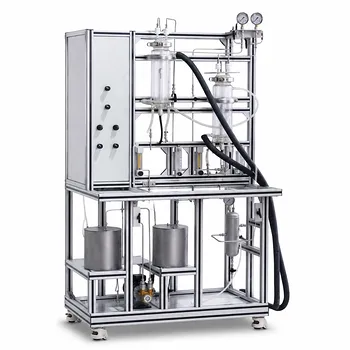
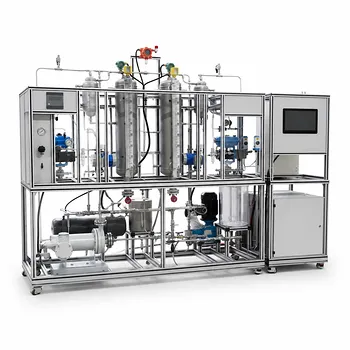
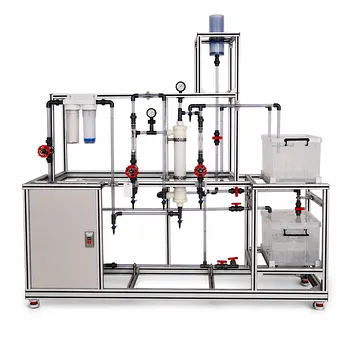
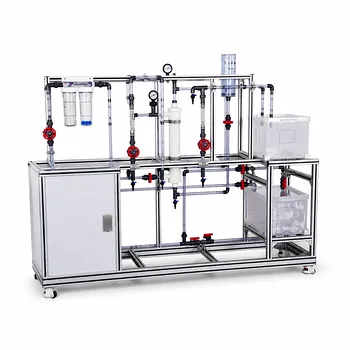
At LABPARK, we help universities, research institutes, and enterprises bridge the gap between laboratory science and industrial application. Our advanced Educational and Vocational Unit Operations Pilot Plants in chemical engineering, bioprocess & biotech, and environmental & water treatment are designed to give students and researchers hands-on experience with membrane filtration, separation technologies, and fluid dynamics.

Ready to elevate your engineering lab or research capabilities? Contact LABPARK today to find the perfect pilot plant solution for your facility!

Related Products

People Also Ask

Related Products

Multi-Functional Membrane Separation Educational Pilot Plant for Unit Operations Lab

Multi-Functional Membrane Separation Educational Pilot Plant for Unit Operations Lab

The Multi-functional Membrane Separation Educational Unit Operations Pilot Plant is an integrated bench-scale laboratory system designed for teaching undergraduate engineering education. It features Ultrafiltration, Nanofiltration, and Reverse Osmosis modules in a compact, mobile unit for practical hands-on learning.

Multifunctional Membrane Separation Educational Pilot Plant with Ultrafiltration, Nanofiltration, Reverse Osmosis

Multifunctional Membrane Separation Educational Pilot Plant with Ultrafiltration, Nanofiltration, Reverse Osmosis

An integrated laboratory bench-scale membrane separation system for higher education engineering labs combining Ultrafiltration, Nanofiltration, and Reverse Osmosis processes. Features industrial PLC control with touch-screen HMI, transparent piping, and academic assessment software. Ideal for chemical and environmental engineering curricula.

Photocatalytic Membrane Separation and Degradation Unit Operations Pilot Plant

Photocatalytic Membrane Separation and Degradation Unit Operations Pilot Plant

Bench-scale pilot plant integrating photocatalytic degradation with membrane separation for engineering education. Study advanced oxidation, microfiltration, and hybrid processes using industrial sensors. Features safety light-blocking curtain, low-noise compressor, and durable stainless-steel construction.

Alkaline Membrane Water Electrolysis Educational Pilot Plant Unit Operations Training System

Alkaline Membrane Water Electrolysis Educational Pilot Plant Unit Operations Training System

Hands-on educational pilot plant for alkaline membrane water electrolysis hydrogen production, integrating unit operations training with industrial PLC control, real-time data logging, customizable design, durable 316L stainless steel construction, explosion-proof safety, and modern 5G connectivity for university laboratories.

Multi Functional Membrane Crystallization Educational Unit Operations Pilot Plant

Multi Functional Membrane Crystallization Educational Unit Operations Pilot Plant

Integrated bench-scale membrane crystallization pilot plant for engineering education. Provides hands-on training in advanced separation technologies, combining membrane distillation crystallization and process intensification. Features variable scaling vessels, industrial-grade flow control, and interactive digital data acquisition. Customizable for university labs.

Constant Pressure Filtration Educational Unit Operations Pilot Plant

Constant Pressure Filtration Educational Unit Operations Pilot Plant

Hands-on educational pilot plant for constant pressure filtration. Classic plate and frame filter press allows students to study kinetics, determine specific cake resistance, perform cake washing and evaluate washing rates. Ideal for chemical engineering curriculum. Mobile, customizable, safety-compliant design.

Ultrafiltration Membrane Separation Educational Pilot Plant

Ultrafiltration Membrane Separation Educational Pilot Plant

This ultrafiltration membrane separation educational pilot plant enables undergraduate students to process PVA solutions, study hollow fiber membrane dynamics, and perform quantitative analysis with spectrophotometry for hands-on learning of unit operations and industrial maintenance and membrane cleaning protocols.

Hollow Fiber Ultrafiltration Membrane Separation Educational Pilot Plant

Hollow Fiber Ultrafiltration Membrane Separation Educational Pilot Plant

Explore our hollow fiber ultrafiltration membrane separation educational pilot plant for hands-on learning of industrial ultrafiltration processes, flux analysis, fouling mitigation, and process control. Compact, customizable, and built for engineering labs.

Rising and Falling Film Evaporation Educational Unit Operations Pilot Plant

Rising and Falling Film Evaporation Educational Unit Operations Pilot Plant

Hands-on educational pilot plant for studying rising and falling film evaporation, flow regimes, and heat transfer. Customizable for university labs with industrial instrumentation and data acquisition. Enables comparative evaluation of evaporation modes and energy efficiency.

Educational Compression Refrigeration Performance Determination Unit Operations Pilot Plant

Educational Compression Refrigeration Performance Determination Unit Operations Pilot Plant

This educational pilot plant for compression refrigeration performance determination offers dual COP evaluation, regenerative cycle comparison, and calorimeter calibration. Customizable for curriculum integration, it features environmentally conscious design. Supports thermodynamic mapping on pressure-enthalpy diagrams and synchronous monitoring with centralized instrumentation.

Centrifugal Pump Performance Determination Educational Unit Operations Pilot Plant

Centrifugal Pump Performance Determination Educational Unit Operations Pilot Plant

This lab system determines centrifugal pump performance curves for unit operations. Students configure dual pumps in series or parallel for hands-on learning. Includes industrial controls, clear piping, and data logging. Customizable for chemical, mechanical, and environmental engineering programs.

Cavitation Phenomenon Demonstration and Analysis Educational Unit Operations Pilot Plant

Cavitation Phenomenon Demonstration and Analysis Educational Unit Operations Pilot Plant

Advanced educational pilot plant for demonstrating and analyzing cavitation phenomena in fluid systems. Features a transparent acrylic Venturi test section, high-precision pressure and flow sensors, digital data acquisition, and integrated safety relief valves for engineering curricula.

Fluid Friction Resistance Determination Educational Unit Operations Pilot Plant

Fluid Friction Resistance Determination Educational Unit Operations Pilot Plant

Engineered bench-scale system for university engineering labs. Provides hands-on fluid mechanics experience: quantitative energy loss analysis, flow regime observation, friction coefficient determination. Features four-point pressure measurement, transparent sections, industrial touchscreen PLC, 3D virtual simulation. Ideal for chemical, mechanical, civil engineering.

Bernoulli Equation Demonstration Unit Operations Pilot Plant

Bernoulli Equation Demonstration Unit Operations Pilot Plant

Laboratory pilot plant for Bernoulli's equation demonstration with transparent PVC pipes, 23 piezometer tubes for pressure measurement, and hands-on experiments. Designed for engineering education to study energy conservation, hydraulic grade line, and localized losses in fluid steady-flow systems.

Water Electrolysis Hydrogen Production and Storage Educational Pilot Plant

Water Electrolysis Hydrogen Production and Storage Educational Pilot Plant

Integrated pilot-scale training system for higher education engineering labs. Features AWE/PEM electrolysis, adjustable DC power, PLC controls, gas-liquid separation, and pressurized hydrogen storage. Hands-on learning in green hydrogen, process control, and safety, ideal for chemical and energy departments.

Orifice and Venturi Flowmeter Calibration Educational Pilot Plant for Fluid Mechanics Laboratory

Orifice and Venturi Flowmeter Calibration Educational Pilot Plant for Fluid Mechanics Laboratory

Enhance fluid dynamics education with the Orifice and Venturi Flowmeter Calibration Educational Unit Operations Pilot Plant, featuring transparent orifice and Venturi meters, industrial sensors, touchscreen interface for real-time data analysis and automatic coefficient calculations in engineering student laboratories.

General Purpose Cosmetics Production Unit Operations Training Pilot Plant

General Purpose Cosmetics Production Unit Operations Training Pilot Plant

Integrated pilot-scale cosmetics production training plant for chemical engineering education featuring utility supply emulsification blending and filtration modules with dual touchscreen manual control customizable mobile design ideal for practical hands-on unit operations and advanced process control learning.

Comprehensive Heat Transfer Coefficient Determination Educational Unit Operations Pilot Plant

Comprehensive Heat Transfer Coefficient Determination Educational Unit Operations Pilot Plant

Advanced industrial-grade educational pilot plant for comprehensive heat transfer coefficient determination. Enables quantitative convective heat transfer analysis, evaluates double-pipe and shell-and-tube exchanger configurations, and includes digital data acquisition. Customizable for engineering curriculum. Ideal for engineering unit operations labs.

100L Continuous Loop Hydrogenation Educational Unit Operations Pilot Plant

100L Continuous Loop Hydrogenation Educational Unit Operations Pilot Plant

This 100L continuous loop hydrogenation pilot plant is designed for chemical engineering education, featuring 316 stainless steel construction, advanced gas-liquid mass transfer components, explosion-proof safety systems, and a 15.6-inch touchscreen with 5G connectivity, cloud data logging, bridging theory and industry.

Multi Functional Catalytic Reaction and Reactor Evaluation Educational Unit Operations Pilot Plant

Multi Functional Catalytic Reaction and Reactor Evaluation Educational Unit Operations Pilot Plant

Bench-scale educational pilot plant for catalytic reaction and reactor evaluation, integrating fixed bed, fluidized bed, and stirred tank reactors. Students compare reactor designs, evaluate catalysts, and study reaction kinetics and hydrodynamics. Perfect for unit operations labs in chemical engineering curricula.


Leave Your Message