In a pilot plant lab, a polarimeter’s accuracy is only as good as its operating conditions. Temperature control directly affects the fundamental chemical property you are measuring—the specific rotation of the sample—while optical path cleanliness determines whether the instrument can even capture a reliable reading. Without meticulous attention to both, measurement deviations become inevitable, undermining the quality control that biotech and food engineering processes depend on.
Polarimeter accuracy hinges on two non-negotiable factors: maintaining a stable, known temperature at the moment of measurement, and ensuring an absolutely clear optical path free from residue, moisture, and air bubbles. Even small lapses in either will translate directly into faulty data.
The Critical Role of Temperature Stability
A polarimeter does not just measure concentration; it measures how a chiral molecule rotates plane-polarized light, a property inherently tied to the thermal state of the sample.
Why Temperature Alters the Reading
The specific rotation of an optically active substance is temperature-dependent. A fluctuation of just a few degrees can change the molecular conformation or the equilibrium between different isomers, shifting the observed rotation and corrupting your result.
This is not a hypothetical risk. In a pilot plant, where samples may be drawn from reactors or holding tanks at varying temperatures, failing to bring the sample and the measurement cell to a controlled, consistent condition introduces systematic error that cannot be corrected after the fact.
Practical Steps for Precise Temperature Control
Start by understanding the target temperature specified in your pharmacopoeia or standard operating procedure. All pre-measurement handling must work to lock in that point. This means allowing the sample, the polarimeter tube, and the instrument itself to equilibrate in a stable ambient environment.
If your laboratory does not already have a dedicated thermostatic jacket or water bath for the polarimeter tube, invest in one. Relying on room temperature alone is a gamble, especially in pilot settings where HVAC systems may fluctuate. The measurement is only valid when you can confidently state the exact temperature at the moment the light passed through the sample.
The Imperative of a Clean Optical Path
A perfectly controlled temperature is worthless if the light beam is scattered, blocked, or refracted by physical contaminants. Optical path maintenance is a discipline, not a single action.
The Three-Rinse Protocol and Window Clarity
The inside of the polarimeter tube must be pristine. The primary reference specifies that the tube should be rinsed three times with the sample before the final fill. This displaces any residual solvent or previous solution that would dilute or contaminate the reading.
Equally critical are the outer glass windows. Fingerprints, a thin film of water, or a nearly invisible smear of dried sample will blur the field of view. This blurring makes it impossible to find a sharp null point, leading to operator-dependent errors that can easily be mistaken for instrumental drift.
Eliminating Bubbles and Blockages
An air bubble in the light path acts like a tiny lens, scattering the beam and producing a distorted, often non-reproducible measurement. You must systematically drive any bubbles into the tube’s expansion well or bubble trap before sealing the cell.
This step requires a deliberate visual inspection. Tilting the tube gently and tapping its side are simple habits that prevent the most common and easily avoided source of light-path disruption in a busy pilot laboratory.
Understanding the Trade-offs
Precision requires patience. The meticulous cleaning and temperature equilibration steps take time—time that may feel scarce during a pilot campaign. Cutting corners here, however, shifts the cost from “time” to “bad data.”
The Trap of “Fast Enough” Measurements
There is a natural tension between throughput and accuracy. If you shorten the temperature stabilization period or skip the third rinse because the sample “looked clean,” you introduce a non-statistical error that no amount of repetition can average out. The deep need here is not just measuring, but measuring correctly the first time.
When Ambient Control Fails
The primary risk is assuming that a stable room means a stable sample. A sample taken from a cold storage unit and immediately measured will show a different rotation than one allowed to equilibrate. The instrument itself can also act as a heat sink or source. The real-world trade-off is between the capital cost of active temperature control equipment and the operational cost of unreliable quality control decisions.
Making the Right Choice for Your Measurement Goal
Your specific quality-control objective dictates how you should prioritize these maintenance practices. Apply the following guidelines based on what your pilot work aims to achieve.
- If your primary focus is absolute purity or identification: Invest in strict temperature control at the +-0.1 °C level using a water-jacketed tube. Even a small temperature-induced deviation can misclassify a critical chiral intermediate.
- If your primary focus is batch-to-batch consistency or concentration checks: Standardize the entire cleaning and bubble-removal protocol immediately. A blurred or bubble-obstructed field of view is the fastest route to inconsistent, operator-dependent readings.
- If your primary focus is method transfer to production: Document the equilibration time and rinsing steps precisely. A pilot method that relies on a loosely controlled “room temperature” will fail to transfer to a manufacturing environment with different ambient conditions.
The true accuracy of your polarimeter is never a static property of the instrument; it is the direct result of how you prepare and present every single sample.
Summary Table:
| Factor | Impact on Accuracy | Best Practices |
|---|---|---|
| Temperature Stability | Alters molecular conformation & specific rotation; causes systematic errors. | Use thermostatic jackets; equilibrate sample, tube, & instrument. |
| Optical Path Cleanliness | Blurs field of view, scatters light, and causes non-reproducible readings. | Implement a 3-rinse protocol; eliminate bubbles in expansion wells. |
Optimize Your Pilot Plant Operations with LABPARK
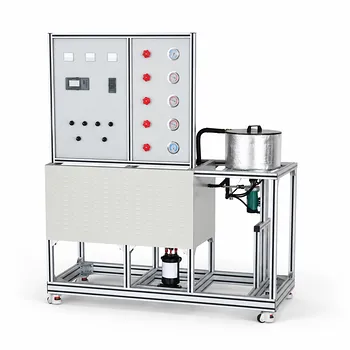
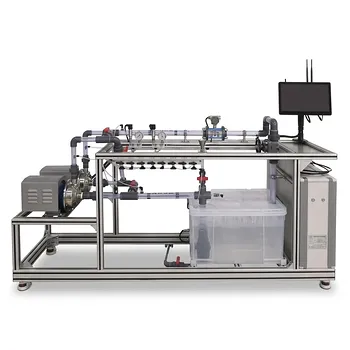
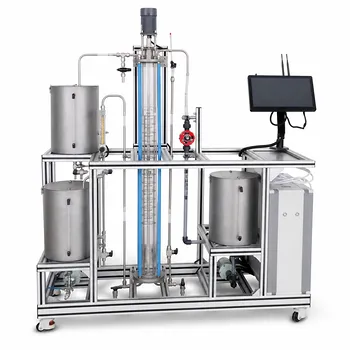
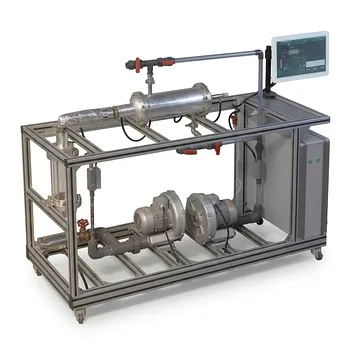
Achieving precise measurements in biotech, chemical, and environmental research requires state-of-the-art equipment and rigorous standards. LABPARK provides top-tier Educational and Vocational Unit Operations Pilot Plants in chemical engineering, bioprocess & biotech, and environmental & water treatment. Designed specifically for universities, research institutes, and enterprises, our pilot plants ensure reliable scale-up and precise process control.
Ready to elevate your laboratory's capabilities? Contact LABPARK today to discover how our tailored solutions can support your research and educational goals.
Related Products
- Centrifugal Pump Performance and Orifice Flowmeter Calibration Educational Pilot Plant
- Polymerization Granulation and Pellet Processing Educational Unit Operations Pilot Plant
- Orifice and Venturi Flowmeter Calibration Educational Pilot Plant for Fluid Mechanics Laboratory
- Rising and Falling Film Evaporation Educational Unit Operations Pilot Plant
- Educational Compression Refrigeration Performance Determination Unit Operations Pilot Plant
People Also Ask
- What features should instructors look for in pump & flowmeter pilot plants? Key Selection Guide
- Why start a centrifugal pump with a closed outlet valve? Protect your pilot plant motors.
- How to update chemometric calibration models in pilot plants? Best practices for process engineers.
- Why is continuous measurement preferred over manual sampling in pilot plants? Get real-time kinetic insights.
- Why is Peng-Robinson preferred over SRK? Enhance thermodynamic modeling in educational pilot plants.