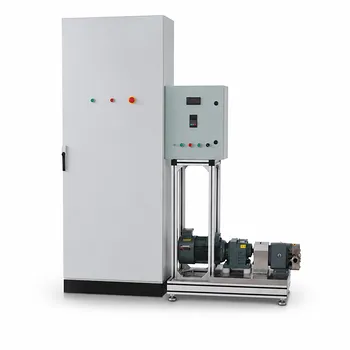
Smart temperature transmitters using HART or Fieldbus protocols are a game-changer for education because they transform a simple measurement point into a dynamic, interactive learning node.
Unlike traditional analog-only 4-20mA devices that only send a one-way signal, these smart transmitters enable bidirectional digital communication. In a chemical engineering or biotech pilot plant, this means students and instructors can remotely configure, calibrate, and diagnose the instrument from a centralized workstation or handheld communicator. The result is hands-on experience with the same digital infrastructure that drives modern Distributed Control Systems (DCS) and smart factories.
Smart temperature transmitters don't just change what students measure—they change how they learn. The core benefit is that bidirectional HART/Fieldbus communication turns temperature measurement into a teachable moment for modern industrial protocols, remote asset management, and the diagnostic thinking essential for safe, efficient process control.
Beyond the 4-20mA Loop: Why Digital Communication Matters in Education
A traditional analog transmitter is a black box. Students wire it, see a current signal, and manually convert it to temperature—but they never interact with the device itself. Smart transmitters open that box.
From Passive Observation to Active Instrument Management
With a HART or Fieldbus-enabled temperature transmitter, the learning experience shifts from simply reading a process value to managing an instrument. Students use handheld communicators or control software to perform tasks that mirror real plant operations:
- Set the sensor type (RTD, thermocouple) and measuring range.
- Adjust dampening to filter noisy signals.
- Perform zero-point and span calibration remotely.
- Assign tag names and engineering units.
- Retrieve detailed diagnostic data like sensor drift, internal temperature, and fault codes.
This active role teaches the logic of device configuration management—a fundamental skill for any controls engineer.
The Power of Bidirectional Communication
The magic is that digital communication rides on the same pair of wires. HART superimposes a high-frequency digital signal (Frequency Shift Keying) onto the 4-20mA analog current without disrupting it. This means students can run a classic analog control loop while simultaneously polling the device for status, re-ranging it on the fly, or running a diagnostic test.
The result? A pilot plant exercise no longer ends at "the temperature is 85°C." It extends into why the measurement might be uncertain, how to validate sensor health, and how to respond to a transmitter alert—exactly the thought process required to prevent batch failures in biotech reactors or thermal runaways in chemical unit ops.
HART vs. Fieldbus: Choosing the Right Training Platform
The choice between these two smart protocols directly shapes a student’s understanding of control system architectures.
HART: The Bridge Between Analog and Digital
HART retains the familiar 4-20mA point-to-point wiring and analog safety net. For educational programs that want to teach the evolution from legacy systems to smart instrumentation, HART is ideal. Students can first wire a simple loop, verify the analog signal, and then activate the digital layer using a 250-ohm minimum loop resistance and a modem. They see firsthand how digital intelligence can be retrofitted onto existing analog infrastructure—a common real-world scenario in older chemical plants.
Fieldbus: Immersion in Distributed Control
Foundation Fieldbus or Profibus takes the training to the next level. These are fully digital, multi-drop networks that eliminate the 4-20mA signal entirely. In a pilot plant, students connect multiple temperature transmitters, valve positioners, and flow meters on a single twisted-pair segment. They learn to design function blocks, schedule control loops between field devices, and grasp the concept of decentralized control (FCS). This is essential for biotech pilot plants where recipe-driven batch control and clean-in-place (CIP) sequences demand reliable peer-to-peer device communication.
Teaching Real-World Diagnostics and Predictive Maintenance
The diagnostic data from smart temperature transmitters enables a proactive operations mindset. For example, a student monitoring a distillation column can observe a gradual increase in the transmitter’s internal electronics temperature or a drift flag. This can prompt an investigation into sensor degradation or thermal stress before it causes a false reading. This level of asset awareness is exactly what modern chemical and biotech industries rely on to move from reactive maintenance to predictive strategies—and it can only be taught with smart instruments.
Understanding the Trade-offs and Pitfalls
Smart transmitters are powerful, but throwing students directly into a fully digital Fieldbus maze can create confusion without proper scaffolding.
Not All Complexity Is Beneficial
If the educational goal is simply to teach thermodynamics or fluid mechanics, the overhead of configuring a Fieldbus network can distract from the unit operation itself. The temptation to "play with settings" can also lead to accidental misconfiguration, causing lost lab time and safety concerns if critical temperature interlocks are compromised. A blended approach—using HART for standard operations labs and gradually introducing Fieldbus in dedicated control courses—often works best.
The Hidden Cost of Legacy Thinking
Conversely, schools that rely solely on 4-20mA analog transmitters risk graduating students who have never seen a device description (DD) file or a function block diagram. They will face a steep learning curve in an industry where even basic temperature loops are often intelligent. The trade-off of not adopting smart transmitters is that the training plant no longer reflects the digital reality of modern manufacturing.
Making the Right Choice for Your Pilot Plant
Ultimately, the decision should be driven by your curriculum's core learning objectives.
- If your primary focus is teaching fundamental process dynamics and control theory: Use HART-enabled temperature transmitters. They let you maintain the simple analog loop for classic PID tuning while introducing digital configuration and diagnostics as a supplement, bridging the analog-to-digital gap without overwhelming students.
- If your primary focus is preparing students for fully automated, Industry 4.0 biotech or chemical plants: Choose a full Fieldbus infrastructure. This will embed them in distributed control topologies, network management, and device interoperability—exactly the skills employers need in advanced biologics manufacturing and petrochemical modernizations.
- If your pilot plant undergoes frequent reconfiguration for diverse research projects: Prioritize the remote configuration capabilities of either protocol. The ability to instantly re-range a temperature transmitter or change sensor types from a control room saves enormous time and reduces wiring errors during student-led experiments.
By matching the intelligence of the temperature transmitter to the intelligence of the learning goal, you turn every temperature reading into a lesson that sticks long after the pilot plant shuts down.
Summary Table:
| Feature/Protocol | HART Protocol | Fieldbus (Foundation/Profibus) |
|---|---|---|
| Wiring Topology | Point-to-point (4-20mA loop + digital overlay) | Multi-drop digital segment (no analog loop) |
| Control Structure | Centralized DCS/PLC control | Decentralized/Field Control System (FCS) |
| Educational Focus | Transitioning from legacy analog to smart devices | Network configuration, function blocks, & interoperability |
| Best For | Fundamental process dynamics & basic PID labs | Advanced biotech, Industry 4.0, & recipe-driven batch processes |
Elevate Your Engineering Curriculum with LABPARK
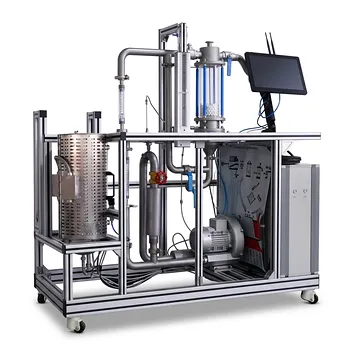
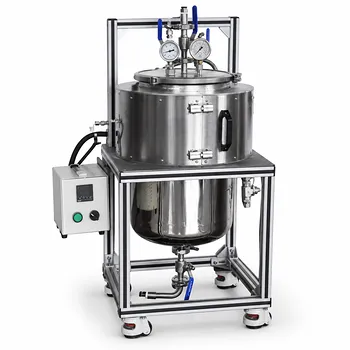
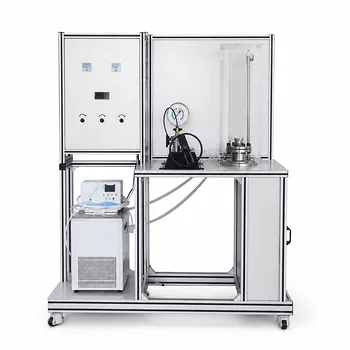
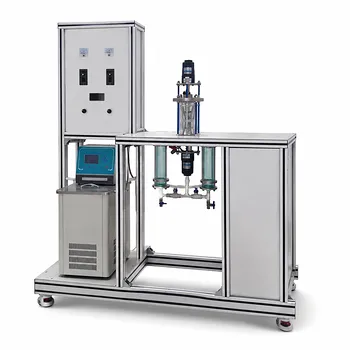
Prepare your students for the digital future of process industries. LABPARK provides state-of-the-art Educational and Vocational Unit Operations Pilot Plants in chemical engineering, bioprocess & biotech, and environmental & water treatment for universities, research institutes, and enterprises.
Our systems are fully compatible with modern industrial communication standards like HART and Fieldbus, ensuring your students gain direct, hands-on experience with the DCS architectures used in today's smart factories.
Contact LABPARK today to discuss your laboratory's training needs and custom pilot plant configurations!
Related Products
- Dual Mode Heat Transfer Pilot Plant for Unit Operations Training
- Comprehensive Multi-Modal Heat Transfer Unit Operations Pilot Plant for Engineering Training
- Comprehensive Heat Transfer Coefficient Determination Educational Unit Operations Pilot Plant
- Shell and Tube Heat Exchanger Heat Transfer Coefficient Determination Educational Pilot Plant
- Three-Tube Heat Transfer Educational Pilot Plant for Unit Operations Training
People Also Ask
- When is ε-NTU preferred over LMTD in pilot plants? Predict heat exchanger performance without iteration.
- Why is the prevention of scale formation on heat exchanger surfaces a critical learning objective? Key Lessons
- How do unit conversions affect pilot plant calibration? Avoid errors in heat transfer data analysis
- How is the thermal resistance of a thick-walled hollow cylinder calculated? Key Equations
- How to analyze heat exchanger CAPEX vs. OPEX in pilot plants? Optimizing Process Design Education