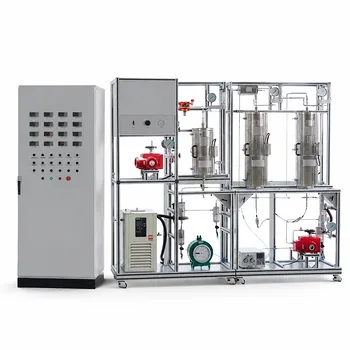
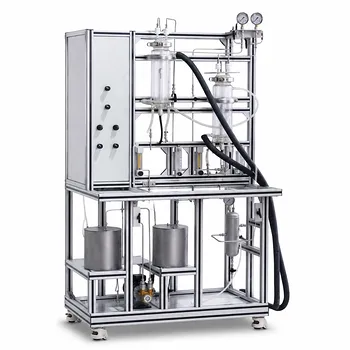
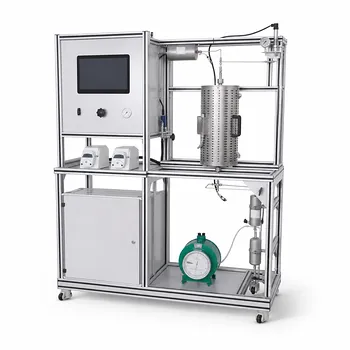
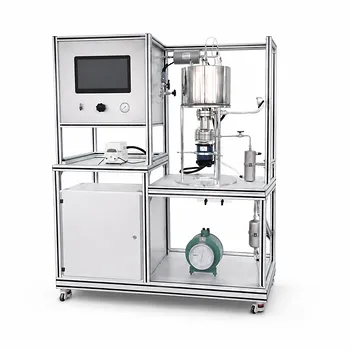
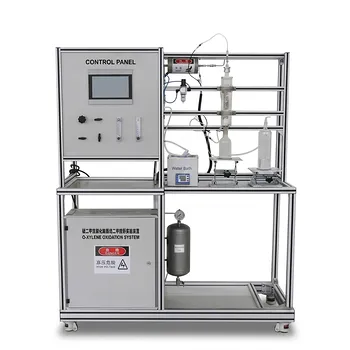
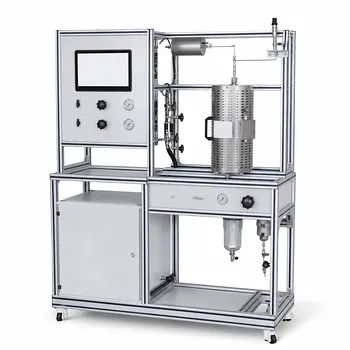
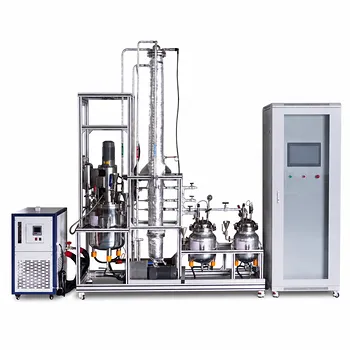
When a reaction releases immense heat, controlling temperature becomes the key to safety and product quality. In pilot-scale catalytic units for highly exothermic reactions—like selective oxidation or hydrogenation—heat removal is handled primarily through fluidized bed reactors with internal heat transfer tubes or multi-tubular fixed-bed reactors cooled by circulating molten salt or hot oil. These designs are supported by jacketed vessels, internal cooling coils, and dense networks of thermocouples to ensure precise thermal management and prevent runaway.
Pilot plants replicate industrial heat‑removal strategies at a smaller scale, using dedicated cooling surfaces and circulating thermal fluids to maintain near‑isothermal conditions. This gives researchers the control they need to safely study reaction kinetics, catalyst selectivity, and the thermodynamic limits that govern scale‑up.
The Critical Challenge of Exothermic Reactions
Highly exothermic catalytic reactions release enormous amounts of energy in a very small volume. Without deliberate and rapid heat removal, selectivity plummets, catalysts deactivate, and safety is compromised.
Why Temperature Control Defines Success
Oxidation and hydrogenation reactions follow a steep energy release curve. Unchecked hot spots can push a selective oxidation straight into total combustion—producing only CO₂ and water instead of the valuable intermediate. Temperature excursions also accelerate catalyst sintering, permanently destroying the active surface area.
The Pilot Plant’s Role
A pilot unit is not just a smaller version of a full‑scale plant. It is a research tool designed to reproduce the same heat transfer environment that the catalyst will experience at scale. By faithfully mimicking industrial cooling mechanisms, the pilot plant allows engineers to measure intrinsic kinetics, validate energy balances, and test thermal stability strategies long before capital is committed.
Core Reactor Configurations for Heat Management
Pilot plants for selective oxidation and hydrogenation predominantly rely on two heat‑removal architectures, often augmented with supplementary techniques for specific chemistries.
Fluidized Bed Reactors with Internal Heat Transfer Tubes
When a reaction demands uniform temperature and excellent heat transfer, the fluidized bed is a powerful choice. The vigorous mixing of catalyst particles eliminates radial and axial temperature gradients almost entirely.
Heat is removed by internal tube bundles through which a thermal fluid (hot oil or water/steam) circulates. Because the bed behaves like a well‑stirred boiling liquid, heat transfer coefficients can be an order of magnitude higher than in a fixed bed. For example, hydrogenation of nitrobenzene in pilot units often employs this configuration, with internal cooling tubes maintaining the bed at the precise temperature needed to avoid over‑hydrogenation.
Multi-Tubular Fixed-Bed Reactors with Circulating Coolant
This design directly mirrors the workhorse of the industrial partial‑oxidation world. The catalyst is packed inside multiple small‑diameter tubes, and a coolant (commonly molten salt or hot oil) flows around the tubes on the shell side.
The small tube diameter reduces the distance heat must travel, allowing rapid dissipation and maintaining near‑isothermal conditions along the reactor length. In the selective oxidation of propylene to acrolein or acrylic acid, a molten‑salt jacket—often operating at 300–400 °C—carries away the intense heat. The pilot plant simulates steam generation by routing the hot salt through a heat‑exchange loop, enabling researchers to study energy recovery under carefully controlled conditions.
Supplementary Cooling Methods
Pilot plants often incorporate additional heat‑management tools, especially when simulating complex multiphase or multi‑stage processes.
-
Jacketed vessels and internal cooling coils
For smaller‑scale liquid‑phase hydrogenations or gas‑liquid oxidations, a simple jacketed reactor with an internal cooling coil provides adequate surface area. The turbulence created by rising gas bubbles can dramatically enhance the process‑side heat transfer coefficient, making this approach surprisingly effective. -
Cold‑shot quenching
In gas‑phase fixed‑bed hydrogenation, another industrial strategy is the cold‑shot method. Cool fresh feed or an inert gas is injected at intermediate points along the catalyst bed. This directly quenches the reaction mixture, flattening the temperature profile and preventing runaway zones. Pilot units can include multiple injection ports to study and optimize the quenching strategy. -
Solvent vaporization and reflux
For liquid‑phase oxidations like p‑xylene to terephthalic acid, the pilot plant deliberately allows a portion of the solvent (acetic acid) to vaporize. An overhead condenser then condenses the vapor and returns it to the reactor as reflux. This phase‑change method removes enormous amounts of heat at a constant boiling temperature, while an off‑gas scrubber recovers additional solvent from the vent stream—teaching both energy management and resource efficiency.
Instrumentation and Safety Systems
Heat removal hardware is only as good as the data and safety layer that controls it. Pilot plants for exothermic reactions are heavily instrumented.
Multi‑Zone Temperature Profiling
Multiple thermocouples are placed along the catalyst bed, inside cooling jackets, and at the coolant inlet/outlet. This allows researchers to build detailed axial and radial temperature profiles, calculate local heat transfer coefficients, and detect hot spots the moment they form. These profiles are fed into the control system to adjust coolant flow or feed rates in real time.
Advanced Safety Instrumentation
Selective oxidation reactions operate near the explosive envelope of hydrocarbon‑oxygen mixtures. Pilot units incorporate online gas chromatography or paramagnetic oxygen analyzers to continuously monitor the O₂‑to‑hydrocarbon ratio, keeping it strictly outside flammable limits. Safety systems also include pressure‑relief valves, explosion‑proof rupture disks, and automatic nitrogen purge systems that can quench the reactor within seconds.
Understanding the Trade‑offs
No single heat‑removal strategy is universally superior. The choice inevitably involves compromises that define the scope and reliability of pilot‑scale data.
Fluidized Bed vs. Fixed‑Bed Cooling
A fluidized bed offers superb temperature uniformity, but the constant particle motion causes catalyst attrition and erosion of internal surfaces. A multi‑tubular fixed bed avoids attrition, yet it demands intricate tube‑to‑tube coolant distribution to avoid flow maldistribution and hot spots. The cold‑shot method is simpler to implement, but it dilutes the reactant concentration and can shift the reaction rate profile.
Coolant Selection
Molten salt can operate at the high temperatures required for selective oxidation (often above 350 °C) and stores a large amount of sensible heat, but it is corrosive and must be kept above its melting point at all times to prevent solidification. Hot oil is easier to handle but has a lower maximum service temperature. Water/steam is extremely efficient for heat removal, but its pressure ramps up steeply with temperature, requiring heavy‑wall vessels and raising safety concerns.
Pilot‑Scale Limitations
At pilot scale, the surface‑to‑volume ratio is inherently larger than at commercial scale. This means heat loss to the environment is proportionally much higher, making it more difficult to isolate the deliberate cooling contribution. Researchers must either compensate with extra insulation and guard heaters or account for this discrepancy when scaling up the energy balance.
Making the Right Choice for Your Pilot Study
Your selection should be driven by the specific research question and the industrial context you are emulating.
- If your primary focus is studying intrinsic kinetics with minimal temperature gradients: A fluidized bed with internal cooling tubes or a well‑mixed slurry reactor will deliver near‑isothermal data and straightforward interpretation.
- If your primary focus is mimicking an industrial multi‑tubular reactor: Choose a jacketed fixed‑bed with circulating molten salt or hot oil, multi‑zone thermocouples, and the ability to simulate steam generation to faithfully replicate heat‑flux constraints.
- If your primary focus is exploring novel catalysts and thermal runaway mitigation: Select a flexible unit with multiple cooling options (jacket, coil, cold‑shot injection), advanced online analyzers, and rapid‑response safety systems that allow you to push the envelope safely.
The best pilot‑plant design is the one that faithfully reproduces the heat transfer environment critical to your reaction’s success.
Summary Table:
| Reactor Configuration | Cooling Mechanism | Key Advantage | Primary Limitation |
|---|---|---|---|
| Fluidized Bed | Internal tubes with circulating thermal fluid | Excellent heat transfer, uniform temperature | Catalyst attrition & erosion |
| Multi-Tubular Fixed-Bed | Circulating molten salt or hot oil in shell | Mimics large-scale industrial setups | Risk of flow maldistribution & hot spots |
| Jacketed / Coil Reactor | External jacket & internal cooling coils | Simple design, ideal for liquid-phase | Limited heat transfer surface area |
| Cold-Shot Quenching | Direct injection of cool feed/inert gas | Immediate local temperature reduction | Dilutes reactant concentration |
Optimize Your Scale-Up and Training with LABPARK
Are you looking to equip your facility with reliable, industry-aligned testing systems? LABPARK provides state-of-the-art Educational and Vocational Unit Operations Pilot Plants in chemical engineering, bioprocess & biotech, and environmental & water treatment.
Tailored for universities, research institutes, and enterprises, our pilot plants help you safely study reaction kinetics, optimize heat transfer, and scale up exothermic processes with confidence.
Let’s build the future of chemical education and research together. Contact us today to discuss your project requirements!
Related Products
- Multi Functional Catalytic Reaction and Reactor Evaluation Educational Unit Operations Pilot Plant
- Micro-Scale Gas-Solid Catalytic Reaction Educational Pilot Plant
- Fixed Bed Gas Solid Catalytic Reaction Educational Pilot Plant
- Methanol Synthesis and Catalyst Performance Evaluation Educational Unit Operations Pilot Plant
- Fixed-Bed Chemical Reaction and Gas Dust Tar Removal Unit Operations Pilot Plant
People Also Ask
- What reaction engineering principles are shown in a catalytic reactor pilot plant? SO2 Oxidation Guide
- Why is FTIR integration in catalytic pilot plants important? Real-Time Student Insights
- How to analyze active metal distribution & identify catalyst poisoning in pilot plants? Expert Diagnostic Guide
- How do temperature limits and WHSV influence catalytic reactor optimization? Scale-Up Guide
- Why is XPS Critical for Catalytic Reactor Pilot Plants? Optimize Catalyst Performance