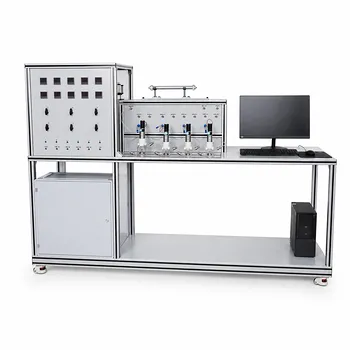
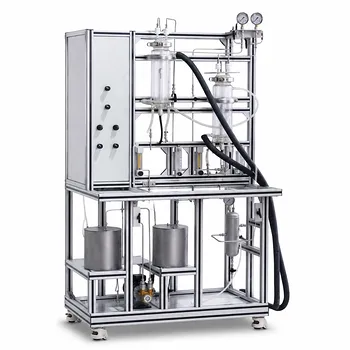
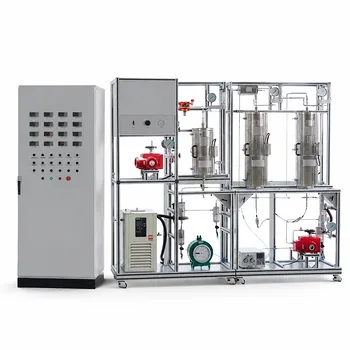
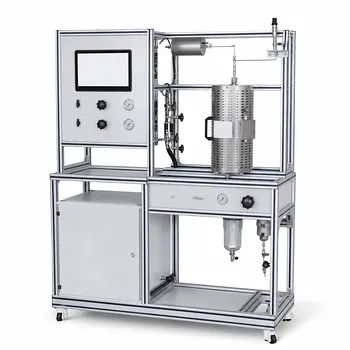
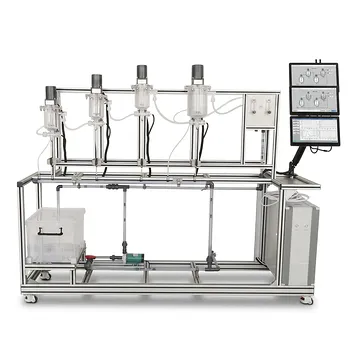
Microchannel reactors radically shrink the hazard zone, making the chemical engineering lab a safer, smarter place to learn. They achieve this by limiting the volume of dangerous chemicals present at any moment, dissipating heat so rapidly that explosive runaways become nearly impossible, and even quenching gas-phase explosions before they can propagate. Compared to a traditional batch reactor where a whole flask of reactive mixture can run away, these continuous-flow devices let students safely experiment with reactions that would otherwise be off-limits, while simultaneously slashing the time required to gather kinetic data.
The true power of the microchannel is not just its size, but how that size rewrites the risk equation. By shrinking the reaction space to the width of a credit card groove, you extinguish the threat of bulk runaway and unlock study conditions that mimic true kinetic limits—turning a training tool into a window on industrial process intensification.
The Safety Transformation: From Batch Risk to Inherently Safer Design
The jump from a glass round-bottom flask to a microchannel is a move from controlling a hazard to removing it. This is safety by design, not just by procedure.
Minimized Hazard Inventory: Less is Literally Safer
In a conventional batch reactor, the entire reaction mixture—solvent, reactants, catalyst—resides in one vessel. If a reaction misbehaves, that whole inventory can release energy, toxic gas, or ignite.
A microchannel, with its narrow channels and thin walls, holds only microliters of active reaction volume at any instant. This tiny reactant inventory means students and researchers can study inherently hazardous chemistries like nitrations or azidations with a fraction of the risk. The hazard is present only in the channel for a few seconds, then quenched downstream.
Rapid Heat Dissipation: Stopping Thermal Runaway Before It Starts
Highly exothermic reactions in a batch vessel can generate heat faster than it can be removed, leading to a dangerous positive feedback loop—thermal runaway. Microchannels short-circuit this.
Their extremely high surface-to-volume ratios (often 10,000–50,000 m²/m³) act like an integrated heat exchanger. Heat is transferred to the channel walls over distances of just micrometers, essentially eliminating hot spots. This lets students run strongly exothermic reactions, like the water-gas shift or partial oxidation, isothermally and safely in a benchtop training unit.
Quenching Free-Radical Reactions: An Extra Layer of Defense
Gas-phase free-radical chain reactions, the engine behind many industrial explosions, are physically inhibited inside microchannels. The wall distance is so small that intermediate radicals collide with the surface and are quenched before the chain can branch.
This radical-quenching effect creates a unique intrinsic safety net. For example, mixtures of hydrogen and oxygen that would detonate in a pipe can be processed safely in a microchannel, allowing students to study dangerously flammable regimes without the danger.
Efficiency Redefined: Kinetic Speed and Process Intensification
Safety gains are matched by leaps in experimental productivity. The same physical features that tame hazards also erase the transport bottlenecks that slow conventional batch workflows.
Accelerating Kinetic Studies with Superior Transport
In educational lab training, time is precious. Microchannel reactors slash the time to gather kinetic data because they eliminate the heat and mass transfer limitations that obscure true reaction rates in batch vessels.
The minimal diffusion distances mean that reactant molecules encounter the catalyst or each other almost instantaneously. Coupled with precise thermal control, this lets students measure intrinsic kinetics—not the slower, transport-disguised rates—directly. What used to take a full semester’s worth of batch runs can be screened in a single lab session, accelerating chemical and biochemical kinetic investigations tenfold.
Teaching Process Intensification Hands-On
Modern chemical engineering demands a mindset of doing more with less: higher throughput, smaller footprint, lower capital cost. Microreactors are the textbook example, and pilot-plant training units make this philosophy tangible.
Students observe volume reductions of 10 to 1000 times compared to stirred tanks. They run steam methane reforming at contact times under 10 milliseconds and Fischer-Tropsch synthesis at high CO conversion (>69%) with minimal methane selectivity. By correlating these performance metrics directly to channel geometry, they internalize the core principles of process intensification.
From Batch to Continuous: A Paradigm Shift in Experimentation
The move from batch to continuous flow is not just a hardware swap; it reframes how students think about reaction engineering. A batch run yields one data point per operation. A continuous microreactor yields stable-state data points as fast as analytical samples can be drawn.
Furthermore, scaling up is taught through “numbering up” —multiplying identical channels in parallel—rather than geometric redesign. This avoids the fluid dynamic and thermal pitfalls of scaling a batch vessel, and imparts a modular, production-oriented engineering mindset early in training.
Understanding the Trade-offs in Educational Settings
No technology is perfect, and for a lab instructor, understanding the boundaries is as critical as showcasing the benefits. Transparent discussion of limitations builds true competence.
The Achilles' Heel: Sensitivity to Solids and Blockages
Microchannels, typically 10 to 1000 µm wide, can be easily blocked by solids. Slurry catalysts, precipitating products, or any undissolved particle can cause catastrophic channel plugging. This makes chemistries that generate solids—like many pharmaceutical Grignard or crystallization-in-reactor processes—a poor fit.
Students must learn that pre-reaction filtration, homogeneous catalysis, or immobilized catalyst coatings are essential workarounds, not optional extras.
Corrosion and Material Compatibility Concerns
The high surface-to-volume ratio that provides excellent heat transfer also exposes a vast wall area to the reaction mixture. Corrosive media like strong acids or halogens, manageable in a thick glass vessel, can rapidly degrade the thin metal layers of a microreactor. Material selection (e.g., Hastelloy, glass, silicon, PTFE) becomes a critical design variable, teaching students to balance thermal performance against chemical durability.
The “Numbering Up” Complexity vs. Batch Versatility
While numbering up is elegant in theory, achieving uniform flow distribution across thousands of parallel channels is a significant engineering challenge. In a teaching lab, a single-channel microreactor works beautifully, but the industrial scale-up story is more nuanced. Reconciling the simplicity of “just add more channels” with the complexity of manifold design gives students a realistic, balanced perspective on process development.
Making Microreactors a Cornerstone of Your Training Program
Integrate these devices not as novelties, but as teaching platforms for the safety and efficiency principles that define modern industry. Tailor the focus to your specific learning objectives.
A step-wise approach works best:
- If your primary focus is hazard education and safety culture: Use microreactors to demonstrate inherently safer design. Let students compare the reactive inventory and thermal profile of a batch run with the same chemistry in a microchannel. The data will speak louder than any lecture.
- If your primary focus is accelerating kinetic experimentation and data quality: Shift your physical chemistry and reaction engineering labs to continuous flow. Students will generate cleaner, intrinsic kinetic constants in one tenth of the time, gaining a practical feel for transport-free kinetics.
- If your primary focus is teaching process intensification and sustainable engineering: Build a pilot-plant experiment around a classic intensified reaction, like FT synthesis or steam reforming. Have students measure the productivity per cubic meter and the thermal efficiency, then challenge them to design a scaled-up microreactor train using the numbering-up concept.
- If your primary focus is preparing students for modern industrial reality: Combine flow chemistry with automated data acquisition and in-line analytics. The microreactor becomes a node in a small, automated plant, teaching the continuous manufacturing paradigm that pharmaceuticals and fine chemicals are rapidly adopting.
Bring the microchannel out of the research paper and onto the lab bench, and you transform a classic curriculum into a real-world apprenticeship in safer, faster, smarter chemical engineering.
Summary Table:
| Feature | Traditional Batch Reactors | Microchannel Reactors |
|---|---|---|
| Reactant Inventory | Large volume (high hazard risk) | Microliters (inherently safer) |
| Heat Dissipation | Slow (prone to thermal runaway) | Rapid (high surface-to-volume ratio) |
| Kinetic Study Speed | Slow (transport-limited) | Fast (measures intrinsic kinetics) |
| Scale-Up Method | Geometric redesign | Parallel numbering-up |
| Solids Handling | Good versatility for slurries | High sensitivity to clogging |
Upgrade Your Chemical Engineering Lab with LABPARK
Ready to transition from traditional batch risks to modern, inherently safer continuous flow systems? LABPARK provides state-of-the-art Educational and Vocational Unit Operations Pilot Plants in chemical engineering, bioprocess & biotech, and environmental & water treatment.
We help universities, research institutes, and enterprises bridge the gap between classroom theory and modern industrial practice with safe, efficient, and reliable training equipment.
Contact LABPARK Today to customize your laboratory pilot plants!
Related Products
- Micro-Scale Gas-Solid Catalytic Reaction Educational Pilot Plant
- Multi Functional Catalytic Reaction and Reactor Evaluation Educational Unit Operations Pilot Plant
- Educational Unit Operations Pilot Plant for Intraparticle Diffusion Effective Factor Measurement
- Tubular Reactor Flow Characteristics Determination Educational Unit Operations Pilot Plant
- Gas Phase Mixing and Residence Time Distribution Determination Educational Unit Operations Pilot Plant
People Also Ask
- Fluidized vs. Fixed Bed Reactors: Comparing Heat & Complexity in Pilot Plants
- Why is a multibed configuration necessary for exothermic reactions? Optimize your pilot plant trajectory.
- Why is thermal management a major challenge in methane oxidative coupling? Reactor Solutions for Pilot Plants
- How does the Mears criterion evaluate transport resistance? Key Guide to Intrinsic Kinetics
- How do reactor pilot plants safely study gas-solid reactions? Master kinetics with thermal & flow control.