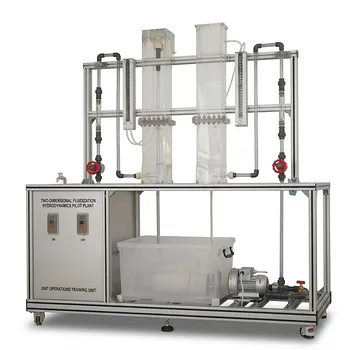
The interaction between gas velocity and column diameter acts as a control switch for flow regimes. In a bubble column pilot plant, increasing the superficial gas velocity pushes the system out of a calm, uniform state. The column diameter then decides the character of the new regime: narrow columns force the flow into slug flow, while wider columns allow a transition into churn-turbulent (heterogeneous) flow. These two parameters together define the hydrodynamic map that governs mass transfer, scale-up reliability, and safe operating limits.
The superficial gas velocity triggers the regime change. The column diameter determines whether that change leads to slugging or churn-turbulent behavior. Mastering this interplay is essential for extracting scalable data from a pilot plant—because the wrong diameter can produce flow patterns that never appear in industrial reactors.
The Driving Force: Superficial Gas Velocity
The Calm Before the Transition
At low superficial gas velocities—typically below 0.05 m/s—the column operates in the homogeneous (bubbly) regime. Here, small, evenly sized bubbles rise uniformly with minimal interaction. This regime is orderly and predictable, making it ideal for studying fundamental mass transfer without the complications of chaotic mixing.
Crossing the Velocity Threshold
As the gas velocity increases, bubble population rises and coalescence begins. The once-uniform bubble swarm becomes unstable. The system loses its homogeneous character and transitions into a different flow structure. The exact velocity at which this happens can shift slightly depending on liquid properties and sparger design, but the 0.05 m/s mark remains a practical boundary for pilot-scale work.
The Fork in the Road: Column Diameter
Narrow Columns Trap the Flow in a Slugging Pattern
In columns with a small diameter—typically less than 0.15 m (and especially below 0.1 m)—the rising gas phase cannot spread laterally. Bubbles merge into large plugs that span the entire cross-section. This creates slug flow: a repeating cycle of liquid slugs and bullet-shaped gas bubbles. The flow becomes unsteady, produces significant pressure fluctuations, and rarely represents industrial operation. For a pilot plant, such a pattern is usually a warning sign that the column is too narrow for the chosen gas rate.
Wide Columns Unlock Churn-Turbulent Flow
With a larger column diameter—generally above 0.15 m—the disrupted bubble swarm evolves into heterogeneous (churn-turbulent) flow. Here, a central core of fast-rising large bubbles coexists with a recirculating liquid stream carrying smaller bubbles. This regime is chaotic but delivers intense mixing and high gas holdup. It is the dominant flow pattern in full-scale industrial bubble columns. Achieving this pattern in a pilot plant is crucial for scale-up credibility.
Why This Interplay Matters in a Unit Operations Pilot Plant
The Direct Link to Mass Transfer and Gas Holdup
Flow regime determines bubble size distribution, interfacial area, and residence time—all of which drive volumetric mass transfer coefficients (kLa) and gas holdup. Narrow columns operating in slug flow often yield very different holdup values than wide columns in churn-turbulent flow at the same superficial velocity. Pilot plant data must be collected in a regime that matches the intended industrial design; otherwise, mass transfer predictions fail.
Navigating Scale-Up Traps
One critical finding from hydrodynamic correlations is that column diameter effects on holdup and kLa fade once the diameter exceeds roughly 0.60 m. However, most pilot plants have diameters well below this threshold. When columns are very narrow (<0.15 m), slug flow can dominate in a way that is completely absent in industrial vessels. Researchers using small-diameter rigs must account for this geometric sensitivity or risk building a distorted scale-up model. In practice, choosing a pilot column diameter above 0.15 m helps holdup data become more representative, while still being small enough for a lab footprint.
Understanding the Trade-offs and Hidden Variables
The Cost of Narrow Diameters
- Slug flow can cause violent pressure cycling and vibration, potentially damaging instrumentation or internals.
- Data from slugging columns rarely translate linearly to industrial churn-turbulent reactors, leading to wasted pilot-plant efforts.
The Reality Check of Wide Columns
- To reach a churn-turbulent state, a larger column demands higher volumetric gas flow rates, which may strain lab supply systems.
- When ceiling height is constrained, a wider column with low gas velocity can still produce practical dispersion heights. For example, in slurry systems, a low gas velocity of 0.5 cm/s can work with a wide column to keep the expanded bed manageable, while doubling the velocity would require halving the diameter and quadrupling the dispersion height.
Other Knobs That Shift the Boundaries
While gas velocity and diameter are primary, they are not the only controls. The transition map can shift noticeably with:
- Gas sparger design (pore size, distribution pattern)
- Liquid velocity and direction (co-current or batch)
- Physicochemical properties (viscosity, surface tension)
- Solid loading in slurry systems
A robust pilot-plant study must therefore document these variables when reporting regime boundaries.
Making the Right Choice for Your Pilot Plant Goal
Your primary objective determines how you balance gas velocity and column diameter.
- If your primary focus is studying homogeneous bubble dynamics: Keep the superficial gas velocity below 0.05 m/s and use a column diameter that avoids wall-induced coalescence—generally above 0.1 m but well below industrial scale.
- If your primary focus is mimicking industrial churn-turbulent reactors: Use a column diameter greater than 0.15 m and a gas velocity high enough to push past the transition, ensuring your pilot data reflect the mixing and mass transfer intensity of a real process.
- If your primary focus is training or educational demonstration of flow regimes: Employ a transparent column with a diameter near 0.1–0.15 m and gradually increase gas velocity; students can directly observe the shift from bubbly to slug or churn-turbulent flow, making abstract hydraulics tangible.
- If your primary focus is mass transfer scale-up with limited headroom: Choose a lower gas velocity (0.5–1.0 cm/s) and a wider column to keep dispersion height under control while still gathering representative holdup data.
In a pilot plant, the column is not just a vessel—it is a hydrodynamic decision. Aligning gas velocity and diameter with your regime target ensures you don't just run an experiment, but you run the right experiment.
Summary Table:
| Flow Regime | Superficial Gas Velocity | Column Diameter | Key Characteristics & Scale-Up Impact |
|---|---|---|---|
| Homogeneous (Bubbly) | Low (< 0.05 m/s) | Typically > 0.1 m | Small, uniform bubbles with minimal interaction; ideal for basic mass transfer studies. |
| Slug Flow | High (> 0.05 m/s) | Narrow (< 0.15 m) | Large gas plugs, high pressure fluctuations; rarely represents industrial-scale reactors. |
| Heterogeneous (Churn-Turbulent) | High (> 0.05 m/s) | Wide (> 0.15 m) | Chaotic mixing, fast-rising large bubbles; critical for representing industrial scale-up. |
Optimize Your Hydrodynamic Research with LABPARK
Achieving accurate, scalable data requires a pilot plant designed with the right geometric and operational boundaries. LABPARK offers advanced Educational and Vocational Unit Operations Pilot Plants in chemical engineering, bioprocess & biotech, and environmental & water treatment.
Specially built for universities, research institutes, and enterprises, our pilot systems help you master flow regime transitions and obtain reliable scale-up data.
Contact LABPARK today to discuss your laboratory configuration needs!
Related Products
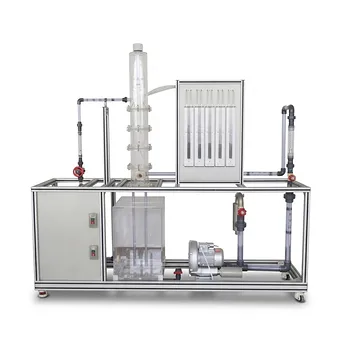
- Plate Column Hydrodynamics Tray Demonstration Educational Pilot Plant
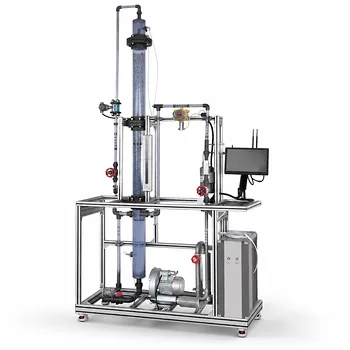
- Multimodal Absorption and Desorption Pilot Plant for Unit Operations Training
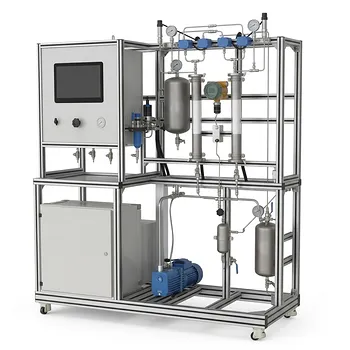
- Dual-Mode Rectification Pilot Plant for Practical Training Unit Operations
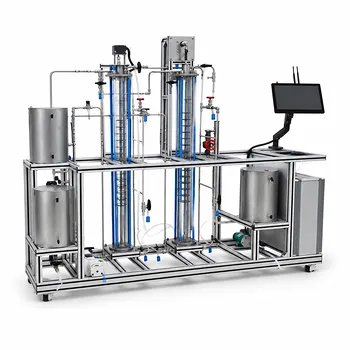
- Multi-Modal Distillation Unit Operations Training Pilot Plant
- Packed Bed Absorption Educational Unit Operations Pilot Plant
People Also Ask
- How to update chemometric calibration models in pilot plants? Best practices for process engineers.
- How does nuclear yield inefficiency translate to chemical engineering education? Optimize kinetics with pilot plants.
- How can educational pilot plants be used to teach process safety and risk assessment in chemical engineering curricula?
- Why Correct Sig Figs & Rounding Matter in Educational Pilot Plants: Ensure Data Accuracy
- Why Calculate Sieve Tray Pressure Drop? Optimize Distillation Pilot Plant Performance