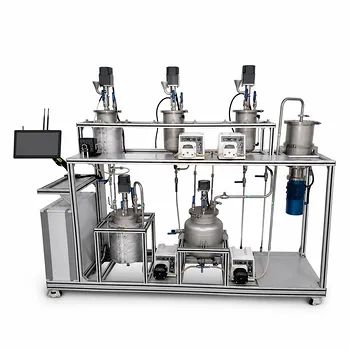
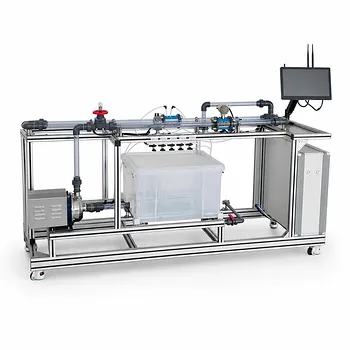
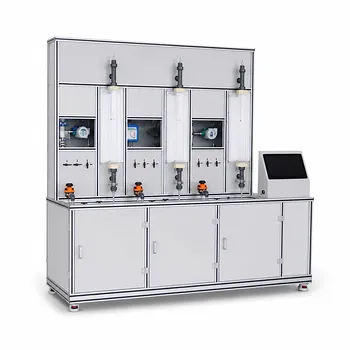
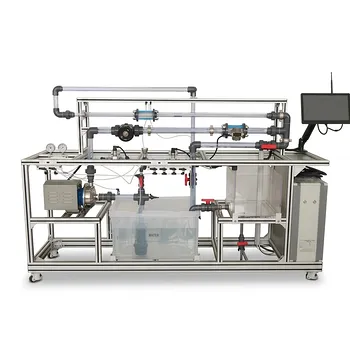
The non-negotiable starting point for any educational pilot plant handling strong oxidizers or mineral acids is a material integrity and pressure management strategy designed for worst-case scenarios.
The wetted components of reactors, piping, and feed vessels must be constructed from materials like borosilicate glass, PTFE (Teflon), or high-grade stainless steel to resist corrosion and prevent catastrophic failure. Beyond simple material selection, the system must include engineered safety controls—such as pressure relief systems, spill containment, and gas monitoring—to protect students from the unique hazards of runaway decomposition, corrosive leaks, and toxic vapor generation.
The core challenge is managing two simultaneous risks: the chemical attack on system materials and the physical danger of overpressure from uncontrolled reactions. A safe pilot plant is not just a collection of resistant parts but a complete system designed to contain energy, neutralize spills, and provide students with safe visual access to the kinetic phenomena.
Decoding the Chemical Threat: Material Science Essentials
Your material choices directly determine whether a leaking flange becomes a maintenance nuisance or a life-threatening classroom emergency. The primary reference identifies borosilicate glass, PTFE, and high-grade stainless steel as foundational materials, but each serves a distinct role based on the specific threat.
The Case for Borosilicate Glass and PTFE
These materials are your first line of defense against aggressive chemical attack. Borosilicate glass offers near-universal resistance to mineral acids like hydrochloric acid, a key reactant in sucrose hydrolysis experiments.
It provides a critical educational advantage. Its transparency allows for direct visual observation of color changes, phase behavior, or mixing dynamics. However, this visual access must be balanced against its brittle nature and lower pressure tolerance.
PTFE is the inert workhorse for sealing and lining. It resists attack from virtually all chemicals involved in these experiments, including strong oxidizers, and can handle higher temperatures. It is the ideal material for gaskets, valve seats, and flexible connectors where glass is impractical.
The Role and Limits of High-Grade Stainless Steel
"High-grade" in this context points specifically to austenitic grades like 316 stainless steel, which contains molybdenum for enhanced pitting resistance against chlorides from hydrochloric acid.
Standard 304 stainless steel or carbon steel is strictly off-limits. These materials can suffer rapid, aggressive corrosion when exposed to mineral acids or high-concentration oxidizers, leading to structural weakness and dangerous leaks. The supplementary references confirm that material selection must align with the specific fluid to prevent system degradation over time.
The thermodynamic properties of the steel matter. Beyond simple corrosion, you must ensure the metal can withstand the exothermic temperatures of the target reaction without losing mechanical strength, a consideration that often makes 316 SS the most economical viable option for metal-bodied reactors in these scenarios.
Engineering the Safety Envelope: Controlling Decomposition and Overpressure
The kinetic experiments described, such as hydrogen peroxide decomposition, introduce kinetic hazards that material compatibility alone cannot solve. The primary reference explicitly warns of the violent decomposition of high-concentration hydrogen peroxide, which generates oxygen gas and can cause rapid overpressure.
The Critical Role of Pressure Relief Systems
Pressure relief valves and burst discs are mandatory. If a catalyst is inadvertently added too quickly or a cooling system fails, the exothermic reaction rate escalates, and gas generation can spike almost instantaneously.
These relief devices represent a weak point by design. They must be sized to handle the maximum credible gas generation rate. The supplementary reference on hydrogenation reinforces that these systems must vent safely, often into a containment or scrubbing network, and are a non-negotiable requirement for pressurized training systems.
Without them, a sealed borosilicate glass reactor becomes a fragmentation hazard, and even a stainless steel vessel can fail catastrophically at its seals or gaskets if pressure exceeds its rating.
Secondary Containment and Spill Mitigation
A pressure relief event or a leaking pump seal can release corrosive liquids like hydrochloric acid onto the bench. The primary reference’s call for spill containment is a fundamental safety layer.
This means installing reactors and storage vessels within chemical-resistant secondary trays or bunds. This passive system design prevents a chemical spill from damaging other equipment, creating toxic fumes from uncontrolled mixing, or harming a student operator.
The supplementary references extend this logic, emphasizing the need for emergency facilities like eyewash stations and emergency showers within seconds' reach. Spill containment buys you time, while immediate access to decontamination saves sight and skin.
The Total Safety System: Beyond Wetted Parts
Your deep need is to create a productive and inherently safe learning environment. This requires integrating administrative controls and PPE with your engineered material choices, a principle underscored across all supplementary references.
Fume Hood Integration and Hazardous Vapors
Acid-catalyzed reactions often involve volatile or irritating vapors, even if the main reactants aren't the primary vapor concern. The supplementary lab safety guidelines issue a clear directive: any operation generating toxic or irritating gases must occur inside a functioning fume hood.
The pilot plant design must accommodate this. The reactor should be sized and configured so that all ports, sampling points, and relief device vents are fully contained within the hood's working space. This integration ensures that a minor vapor release doesn't expose the entire laboratory.
For oxidative experiments generating a visible oxygen off-gas stream, the hood provides a reliable exhaust path, eliminating the risk of building an oxygen-enriched atmosphere that drastically increases the flammability risk of nearby materials.
PPE and Pre-Operational Protocols
Materials like borosilicate glass and PTFE resist permeation, but students are not chemical-resistant. The final defensive layer is rigorous safety training and proper PPE, as explicitly required by the lab establishment guidelines.
For these specific experiments, chemical-resistant gloves (e.g., butyl or neoprene, checked for compatibility with HCl and H2O2) and full-face protection against splash are non-negotiable. A standard lab coat must be complemented by a chemical-resistant apron if a large-volume spill is possible.
Pre-operational safety checks, as highlighted in the general lab guidelines, must verify that master shut-off valves are accessible, fire extinguishers are in place, and the gas purge system functions correctly before any chemical is charged. In an educational setting, a student’s signed safety commitment is as critical as the reactor’s pressure relief valve.
Understanding the Trade-offs: Balancing Safety, Cost, and Function
Objective analysis demands acknowledging that no single material is perfect. An educational pilot plant is a designed compromise between ideal material properties, practical constraints, and pedagogical goals.
The Hardness vs. Brittleness Paradox
A stainless steel reactor offers superior mechanical toughness. It can withstand accidental impacts from tools or student mishandling that would shatter a glass vessel, providing a massive safety advantage in a busy teaching lab.
However, even high-grade stainless steel has limited chemical resistance. It can be attacked by concentrated hydrochloric acid, especially at elevated temperatures. For an oxidative system like hot peroxide, a stainless outer wall might resist the pressure, but its inner surface can catalyze decomposition in a way that inert glass or PTFE will not.
Borosilicate glass provides perfect inertness and vital transparency. The trade-off is its fragility and its strict limit on positive pressure differentials. Using it requires pairing it with more robust piping and relief systems, and teaches students the discipline of handling fragile, high-value scientific assets.
Operational Cost and Longevity
PTFE is costly and can "cold flow" under mechanical load, requiring frequent re-tightening of fittings. This introduces a maintenance variable that must be managed to prevent leaks. The supplementary references on pilot plant design note that balancing such performance requirements with maintenance and fabrication costs is a central engineering challenge.
A system built entirely of heavy-walled borosilicate glass and PTFE lines is chemically supreme but physically delicate and expensive. A hybrid system—using a glass reactor body with a stainless steel jacket for temperature control, PTFE internals, and a stainless framework for structural support—often represents the safest, most instructive, and most durable engineering compromise.
How to Design or Select a Safe Educational Pilot Plant
Your goal is to build a learning platform where students can safely witness kinetic principles in action. The specific choices you make should flow from your primary educational and operational priorities.
After a brief introductory sentence, use a bulleted list to provide specific recommendations based on different user goals.
- If your primary focus is demonstrating the core chemistry without risk of corrosion failure: Specify all wetted parts to be borosilicate glass and PTFE. Use only a trace-metal-grade stainless steel jacket for heat transfer, and mandate a pressure relief valve with a set pressure below the glass vessel's rating.
- If your primary focus is demonstrating a high-pressure oxidative kinetic process: You must step beyond glass to an autoclave-style reactor. The material specification becomes critical: insist on 316 stainless steel with a complete internal PTFE liner to prevent metal-catalyzed decomposition and resist acid attack.
- If your primary focus is building a comprehensive student safety culture: Build your operating procedure around the principle of secondary containment. Combine the chemically compatible materials with a mandatory fume hood placement, a pre-experiment gas-leak and relief-path verification checklist, and a "no exceptions" personal protective equipment policy for all observers.
The safest educational pilot plant is the one designed not just for the experiment you planned, but for the one that might happen when a student makes a predictable mistake.
Summary Table:
| Material / System | Key Properties | Ideal Application |
|---|---|---|
| Borosilicate Glass | Transparent, highly acid-resistant, fragile | Visual kinetic observations, low-pressure runs |
| PTFE (Teflon) | Chemically inert, handles high temperatures | Gaskets, seals, reactor liners |
| 316 Stainless Steel | Structural strength, high-pressure tolerance | Autoclave reactors, outer structural jackets |
| Pressure Relief Systems | Active/passive venting (valves, rupture discs) | Prevention of runaway reaction overpressure |
Build a Safe and Robust Learning Environment with LABPARK
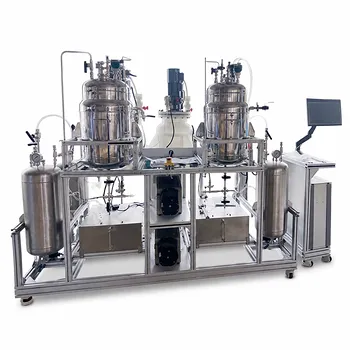
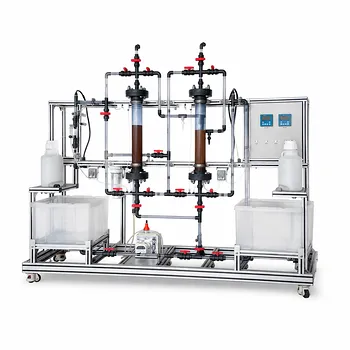
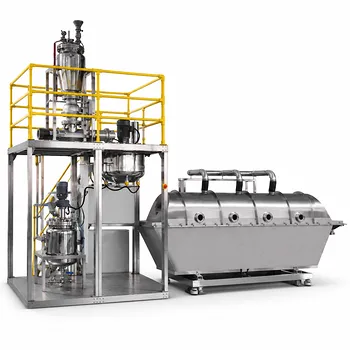
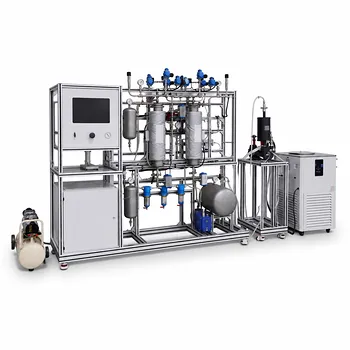
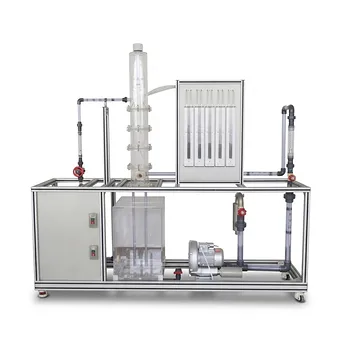
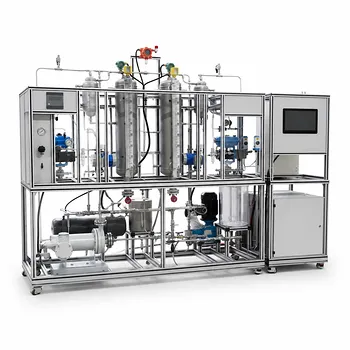
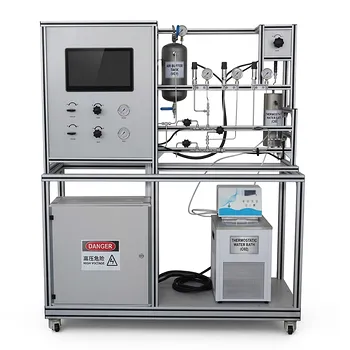
Ensure the highest safety standards in your chemical engineering curriculum. LABPARK provides premium Educational and Vocational Unit Operations Pilot Plants in chemical engineering, bioprocess & biotech, and environmental & water treatment. Designed specifically for universities, research institutes, and enterprises, our systems feature robust material integrity and advanced safety controls to protect students during complex kinetic experiments.
Ready to upgrade your laboratory with safe, compliant, and durable pilot plants? Contact LABPARK today to request a customized quote!
Related Products
- Multi-Functional Special Distillation Educational Pilot Plant
- Multi-Reactor Educational Pilot Plant for Reaction Engineering Unit Operations
- Multi-Functional Membrane Separation Educational Pilot Plant for Unit Operations Lab
- Micro-Scale Gas-Solid Catalytic Reaction Educational Pilot Plant
- High-Gravity Emulsification and Mass Transfer Educational Pilot Plant
People Also Ask
- Why does simple distillation yield higher efficiency than flash distillation? Key thermodynamic differences.
- How to Verify Distillation Boundary Lines & Composition Regions with Pilot Plants
- How to Estimate Distillation Pilot Plant Tray Efficiency? O'Connell's Correlation Guide
- Why is the acentric factor important in pilot plants? Fluid property prediction.
- How to Integrate Spectroscopy in Distillation Pilot Plants for Advanced Process Control