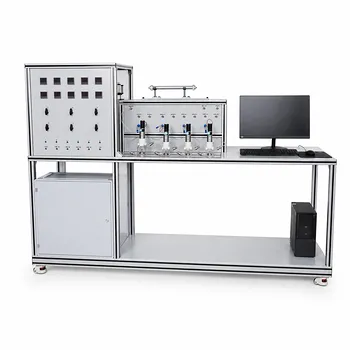
Microchannel reactor performance is not just about chemistry—it’s a mechanical and materials engineering challenge. The fabrication technique, material choice, and channel aspect ratio directly dictate how well the reactor transfers heat and mass, handles pressure, and scales to meaningful throughput. A high aspect ratio (channel depth to width) maximizes surface area and thermal duty, but it pushes the limits of machining accuracy. The material you select determines not only machinability but also the long-term seal integrity under high temperature. Scaling up from a single channel to a pilot‑scale device hinges on diffusion bonding and intelligent stacking architectures. Together, these elements define whether a microchannel reactor becomes a reliable, versatile tool for process engineering research or a leak‑prone, hard‑to‑control curiosity.
The performance and scalability of microchannel reactors is governed by an interdependent triangle: aspect‑ratio geometry, material properties, and fabrication method. Mastering this interplay is essential to achieving high throughput, wide turn‑down ratios, and robust thermal management in a laboratory setting.
How Aspect Ratio Shapes Reactor Performance
The Link Between Geometry and Heat Transfer
In microchannels, the dominant transport mode shifts from turbulent mixing to diffusion‑dominated mass transfer and conduction‑dominated heat transfer. A high aspect ratio—deep, narrow channels—multiplies the wall surface area in contact with the fluid, dramatically improving heat duty and reaction throughput. This is the fundamental driver behind process intensification: collapsing the characteristic length scale to boost efficiency.
Why Throughput Demands Higher Aspect Ratios
When you need to process more fluid without sacrificing conversion, you can’t just widen channels; that would ruin micromixing. The solution is to go deeper while keeping the width in the micro‑range. This high height‑to‑width ratio maintains the advantages of micro‑scale transport while increasing the total cross‑sectional area for flow, directly raising throughput.
The Fabrication Limits of Conventional Machining
Using a slitting saw or standard milling on stainless steel, the achievable aspect ratio is typically capped at 4:1. Tool deflection, chip evacuation, and work hardening of the metal impose a practical ceiling. Beyond this, the channel walls lose parallelism and the floor becomes uneven, undermining flow uniformity and heat transfer performance.
Pushing Boundaries with Advanced Fabrication
To break through the 4:1 barrier, two routes emerge. The first is to switch to easier‑to‑machine aluminum, which allows deeper, cleaner cuts and higher aspect ratios. The second, for micron‑scale precision, is high‑resolution Inductively Coupled Plasma (ICP) dry etching on silicon substrates. ICP etching delivers near‑vertical sidewalls and aspect ratios well above 10:1 in channels ranging from 5 µm to 500 µm, ideal when absolute geometric fidelity and surface smoothness are critical.
Material Selection: The Foundation of Reliability
Stainless Steel: The Pilot‑Plant Workhorse
In pilot‑scale process engineering labs, stainless steel remains the preferred material. It supports reliable, leak‑tight diffusion bonding and welding of thin shim plates, ensuring hermetic seals even at high temperatures and pressures. Its mechanical strength prevents distortion during the lamination process, a key quality‑control requirement when stacking dozens of patterned layers.
Aluminum: A Lightweight Temptation with Hidden Flaws
Aluminum promises deeper microchannels and a higher aspect ratio with less tool wear. However, its poor weldability introduces a severe drawback: micro‑leaks are common in welded joints, making the sealed device unsuitable for high‑temperature gas operations. For liquid‑phase reactions at modest conditions, aluminum can be an affordable prototyping choice, but for hot, pressurized gas streams, the risk of seal failure erases its machining advantage.
Silicon and Glass for Microscale Research
At the few‑hundred‑micron scale, silicon‑on‑glass or all‑silicon reactors offer chemical inertness, extreme dimensional accuracy, and compatibility with optical diagnostics. Their brittle nature, however, makes them unsuitable for large‑scale stacking without compression fixtures. They are the go‑to for fundamental reaction studies, mixing characterization, and catalyst screening where visual access and resolution trump ruggedness.
Sealing and Stacking: The Art of Scale‑Up
From Gaskets to Diffusion Bonding
Early microreactor attempts relied on bolted‑together, gasketed plates. These inevitably leak under thermal cycling or high‑pressure gradients. Modern pilot‑scale devices overcome this by diffusion bonding: pressing and heating a stack of thin, patterned metal shims until atomic diffusion fuses them into a single, monolithic block with no interlayer. The result is a hermetically sealed, multi‑layer array that can withstand the mechanical and thermal stresses of process‑like conditions.
Multi‑Cell Architecture for Process Flexibility
Scaling up does not mean simply making one channel larger. Instead, many identical, parallel microchannels are arranged into individual “cells,” each with its own inlet and outlet header. These cells can then be stacked and operated independently. For a teaching or research laboratory, this modularity delivers a wide turn‑down ratio—such as 8:1—allowing the same hardware to explore both idling and full‑power operating modes without losing thermal uniformity.
Interleaved Heat Exchange for Intensification
To maintain thermal control at scale, a second set of channels can be interleaved right next to the process channels. For example, air‑cooled fins or webs cut into alternating layers provide intimate thermal contact, enabling partial condensation integrated with phase separation. This kind of multi‑fluid architecture turns the reactor into a complete unit operation, cutting equipment volume by factors from 10 to 1,000 compared to conventional shell‑and‑tube setups.
Understanding the Trade‑offs
Pressure Drop vs. Mixing Enhancement
Wave‑line, zigzag, and sine‑wave channel geometries significantly boost mass transfer by disrupting boundary layers and inducing secondary flows. But they come at a cost: a steep rise in pressure drop. For gas‑phase reactions, this extra pumping work can impact overall energy efficiency, making straight channels with higher flow rates a more practical choice in some cases. The geometry must match the reaction’s mixing sensitivity.
Fabrication Complexity vs. Reproducibility
Photochemical etching and laser cutting produce intricate channel patterns with excellent repeatability, but they are limited in maximum depth per shim. Machining can cut deeper but lacks the fine‑feature fidelity. Every extra fabrication step—alignment, stacking, bonding—introduces potential for misalignment that can cause flow maldistribution. Simpler designs often win when reliability across dozens of stacked layers is non‑negotiable.
Material Cost, Corrosion, and Thermal Limits
Stainless steel offers ruggedness but adds weight and cost. Aluminum avoids some welding issues at a lower price, yet its corrosion resistance in acidic process streams can be inadequate. Silicon reactors excel in analytical environments but shatter under thermal shock or uneven clamping. The material must be chosen not just for its fabrication convenience but for the full chemical and thermal environment of the intended operating campaign.
Making the Right Choice for Your Laboratory
The optimal microchannel reactor configuration is never universal; it’s a deliberate compromise aimed at your specific research or educational goal.
- If your primary focus is high‑throughput, high‑temperature gas‑phase reactions: Choose diffusion‑bonded stainless steel with a moderate (≤4:1) machined aspect ratio and multi‑cell stacking for turn‑down flexibility. Accept the machining limit to gain absolute seal integrity and process safety.
- If your primary focus is microscale mixing studies or catalyst screening at low throughput: Use silicon ICP‑etched chips with extremely high aspect ratio channels and optional wave‑line geometries. Prioritize visual access and geometric precision over ruggedness.
- If your primary focus is rapid prototyping and liquid‑phase demonstrations: Consider well‑clamped, gasketed aluminum reactors with deep‑machined channels. Be prepared to restrict operation to low temperature and pressure to avoid leaks.
- If your primary focus is integrated process intensification with heat management: Select a stacked, diffusion‑bonded architecture with interleaved heat‑exchange channels. Invest in precise shim alignment and quality‑control steps to ensure uniform flow distribution across all layers.
Ultimately, the right combination of material, aspect ratio, and fabrication method transforms a microchannel reactor from a fragile lab curiosity into a versatile, scalable platform that faithfully demonstrates the principles of process intensification.
Summary Table:
| Material | Key Advantage | Limitations | Best Application |
|---|---|---|---|
| Stainless Steel | Reliable diffusion bonding, high temp/pressure | Harder to machine, caps aspect ratio (~4:1) | Pilot-scale gas-phase reactions |
| Aluminum | Easy to machine, higher aspect ratios | Poor weldability, prone to micro-leaks | Low temp/pressure liquid reactions |
| Silicon & Glass | High precision, optical access, chemical inertness | Brittle, unsuitable for large-scale stacking | Fundamental microscale research |
Scale Up Your Process Engineering Labs with LABPARK
Are you looking to optimize your chemical engineering, bioprocess, or environmental research? LABPARK provides state-of-the-art Educational and Vocational Unit Operations Pilot Plants tailored for universities, research institutes, and enterprises.
Whether you are analyzing microchannel reactor scale-up or setting up complete process engineering labs, our high-quality pilot plants ensure reliable, hands-on learning and precise research outcomes.
Contact LABPARK today to discuss your laboratory equipment needs and get a custom solution!
Related Products
- Micro-Scale Gas-Solid Catalytic Reaction Educational Pilot Plant
- Multi-Stage Stirred Tanks in Series Residence Time Distribution and Mixing Performance Determination Educational Pilot Plant
- Photocatalytic Membrane Separation and Degradation Unit Operations Pilot Plant
- Methane Cracking Educational Unit Operations Pilot Plant
- Internal Circulation Gradient Free Catalytic Reaction Educational Pilot Plant
People Also Ask
- Fluidized vs. Fixed Bed Reactors: Comparing Heat & Complexity in Pilot Plants
- Why is a multibed configuration necessary for exothermic reactions? Optimize your pilot plant trajectory.
- Why is thermal management a major challenge in methane oxidative coupling? Reactor Solutions for Pilot Plants
- How does the Mears criterion evaluate transport resistance? Key Guide to Intrinsic Kinetics
- How do reactor pilot plants safely study gas-solid reactions? Master kinetics with thermal & flow control.