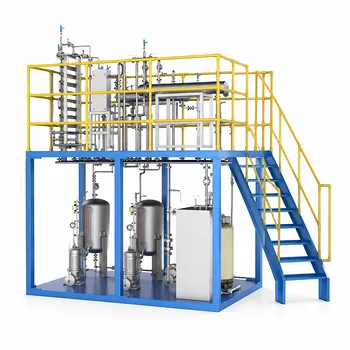
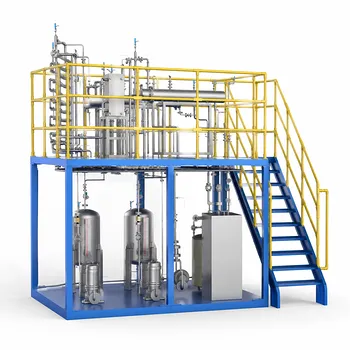
Scaling up a pharmaceutical process is not just a bigger flask. A chemical reaction that works flawlessly with a few grams in the lab can fail catastrophically when moved to commercial production—not because the chemistry changed, but because the physics did. Unit operations pilot plants assist by providing an intermediate-scale testbed where these physical dynamics can be observed, measured, and controlled. They allow scientists and engineers to study transport phenomena, optimize critical process parameters, and validate predictive models, ultimately slashing the risks and costs of bringing a new drug to market.
The core challenge of pharmaceutical scale-up is the non-linear behavior of mass, heat, and momentum transfer as you move from bench to reactor. Pilot plants address this by serving as a physical truth-teller: a dedicated system to generate multivariate data, expose hidden failure modes, and teach engineers to design processes that are inherently scalable, not just chemically elegant.
Why Laboratory Success Doesn’t Guarantee Commercial Success
The gap between a chemist’s round-bottom flask and a 10,000-liter manufacturing vessel is far wider than it appears. Understanding this gap is the deep need behind every scale-up question.
The Physics Problem Lurking Behind Every Reaction
In the lab, heat and mass transfer are almost instantaneous. The small volume means temperature is uniform, mixing is effortless, and by-products dilute instantly.
At scale, these assumptions break. Mixing becomes slower, temperature gradients appear, and local concentrations can drift far from the intended stoichiometry. A reaction that gave 95% yield on the bench might generate hazardous hot spots, runaway reactions, or frustratingly low purity in a pilot reactor.
Impurities You Never See at Small Scale
Lab experiments typically use pure starting materials and run for short durations with no recycle loops. This masks two critical threats: accumulation of trace impurities in continuous recycle streams and long-term catalyst deactivation.
A pilot plant running continuous closed-loop operations for days or weeks exposes both. It reveals whether a seemingly clean distillation will deposit polymers over time, or whether that highly selective catalyst loses 50% of its activity after 72 hours due to coking.
The Silent Complexity of Unit Operation Sequencing
Drug synthesis isn’t just a single reaction—it’s a train of unit operations: reaction, extraction, crystallization, filtration, drying. At scale, each step interacts with the next. A minor yield drop in filtration can overload the dryer, shifting the cycle time and creating a bottleneck that never appeared in the lab.
Pilot plants allow you to run the entire train, not just isolated steps, capturing these emergent behaviors before millions of dollars are invested in fixed equipment.
How Unit Operations Pilot Plants Bridge the Scale-Up Gap
A pilot plant isn’t a miniature factory. It’s a strategic research tool that de-risks the leap from molecule to medicine by generating the right data at the right scale.
Studying Transport Phenomena at a Decisive Scale
In chemical engineering, “transport phenomena” refers to the movement of mass, energy, and momentum. Their relative importance shifts dramatically with scale.
A pilot plant (or “semiworks”) with precise sensors reveals exactly how heat transfer coefficients drop in a larger crystallizer, or how mass transfer limitations starve a gas-liquid reaction of the desired oxygen profile. This data is impossible to collect from a bench-scale beaker, yet essential for designing commercial equipment.
Optimizing Critical Process Parameters Under Realistic Constraints
The pilot plant is a safe sandbox for the uncomfortable questions. You can intentionally introduce process upsets—a sudden drop in cooling capacity, a feed impurity spike—and observe the cascade of effects.
This allows you to identify critical process parameters (CPPs) that genuinely control quality, separate them from the noise, and define robust operating ranges. The result is not just a recipe, but a knowledge space where the process will reliably deliver, even on a bad day.
Validating Multivariate Models Instead of Guessing
Modern scale-up relies on mathematical models to predict behavior and minimize expensive trial-and-error. But models need validation.
A pilot plant provides the empirical multivariate data to confirm that your computational fluid dynamics (CFD) simulation of a stirred tank actually matches reality. By mapping product quality in a multivariate space—tracking size, mass, and energy balances—you move from one-dimensional endpoint tests to a process signature that transfers reliably to any scale.
Detecting Hidden Failure Modes Before They Stop Production
Some failures only emerge under continuous operation. A pilot plant running for weeks exposes:
- Sieving or agglomeration tendencies in a continuous crystallizer.
- Fouling tendencies in a wiped-film evaporator.
- Solvent degradation products that build up and crash out after multiple recycles.
These discoveries are priceless when compared to discovering them during an expensive commercial validation batch.
Building the Engineering Intuition for “Right-First-Time” Scale-Up
The pharmaceutical industry faces relentless pressure to deliver safe, economic processes on compressed timelines. There is no room for the old “scale-up by trial” approach.
Educational and vocational unit operations pilot plants train the next generation of engineers to think in scale. They learn to see beyond the chemistry to the fluid dynamics and thermodynamics that dominate large-scale equipment. This hands-on experience with manufacturability creates teams that can anticipate problems, not just react to them.
Understanding the Trade-offs and Pitfalls
Pilot plants are powerful, but they are not a magic wand. Using them effectively requires a clear-eyed view of their limitations and the decisions they force.
The Cost vs. Fidelity Trade-off
A fully instrumented pilot plant is a significant investment. You must balance the richness of data against the financial and time cost of running trials. Often, the goal is not to replicate the entire commercial line, but to model the unit operation with the highest risk—and accept that other steps will be scaled based on simpler correlations.
The Danger of Pilot Plant Blindness
A pilot plant that is too perfect can be deceiving. If it uses unrealistic feedstock purity or fails to mimic the thermal lag of a massive vessel, the data may give a false sense of security. Validating the model means ensuring the pilot plant actually reflects the mixing and heat transfer ratios (the dimensionless numbers) of the commercial design.
Process Train Trade-offs: Yield vs. Purity vs. Time
As you simulate the sequence of operations, you’ll face classic pharmaceutical trade-offs. For example, tightening the specification on a distillation cut may increase purity but sacrifice yield, potentially requiring a second pass. Alternatively, you might discover that accepting a lower yield in crystallization eliminates the need for an expensive chromatography step downstream. The pilot plant reveals these connections, allowing you to optimize the holistic process mass intensity and cycle time, not just each step in isolation.
Don’t Forget the Human Factor
A pilot plant only gives good answers if the right questions are asked. Teams without statistical design of experiments (DoE) training may run serial, one-factor-at-a-time trials that miss complex interactions. The value of the pilot plant is proportional to the multivariate skill of the engineers operating it.
How to Apply This to Your Scale-Up Program
The role of a pilot plant is not one-size-fits-all. Your specific approach should align with the primary risk driver in your development lifecycle.
- If your primary focus is risk reduction for a high-value API: Invest in a pilot plant that can run continuous, closed-loop campaigns to expose catalyst deactivation and impurity accumulation before you lock in commercial equipment design.
- If your primary focus is speed to clinic: Use the pilot plant to validate the scale-up model for your most hazardous or thermally sensitive step, generating GMP material fast while the rest of the process is scaled using conservative overdesign.
- If your primary focus is process understanding and regulatory filing quality: Design multivariate experiments in the pilot plant to define a proven acceptable range and establish the process signature, creating the data package that regulators expect for a robust control strategy.
- If your primary focus is technology transfer to a CMO: Use a standardized unit ops pilot plant to train the receiving team, demonstrate the process’s sensitivity to mixing and temperature, and hand over not just a recipe but a mechanistic understanding of scale-dependent behavior.
A pilot plant transforms scale-up from a leap of faith into a managed, evidence-based engineering exercise. The data you gather there is not an expense—it is the cheapest insurance you will ever buy against a $10 million commercial batch failure.
Summary Table:
| Scale-Up Challenge | Commercial Impact | Pilot Plant Solution |
|---|---|---|
| Transport Phenomena | Poor mixing, hot spots, & low purity | Optimizes heat/mass transfer & defines CPPs |
| Impurity Accumulation | Catalyst deactivation & product degradation | Exposes continuous closed-loop cycle behavior |
| Unit Sequencing | Bottlenecks & yield loss between steps | Validates the entire integrated process train |
| Model Discrepancies | Scale-up failure due to inaccurate CFD | Provides empirical multivariate data for validation |
Scale Up with Confidence—Partner with LABPARK
Transitioning from lab scale to commercial manufacturing requires reliable process data and hands-on training. LABPARK provides premium Educational and Vocational Unit Operations Pilot Plants in chemical engineering, bioprocess & biotech, and environmental & water treatment.
We empower universities, research institutes, and enterprises to mitigate scale-up risks, optimize critical process parameters, and train future-ready engineers.
Ready to elevate your research and training capabilities? Contact us today to explore our pilot plant solutions!
Related Products
- Carbon Dioxide Hydrogen Methanol Synthesis Educational Unit Operations Pilot Plant
- Multi Pump Fluid Transport Process Piping Unit Operations Training Pilot Plant
- Natural Product Extraction Unit Operations Training Pilot Plant
- Multi-Modal Distillation Unit Operations Training Pilot Plant
- Multi-Reactor Educational Pilot Plant for Reaction Engineering Unit Operations
People Also Ask
- How do temp & pressure affect methanol synthesis pilot plants? Optimize equilibrium and catalyst performance.
- Why is a purge system necessary when operating a gas recirculation loop in a methanol synthesis pilot plant? (Guide)
- Why do modern methanol pilot plants operate at lower pressures? Catalyst & Feed Requirements Explained
- What are the operational requirements for catalyst activation? Safe Methanol Pilot Plant Operation
- Why is the chemical plant startup schedule crucial? De-risk scale-up with pilot plants.