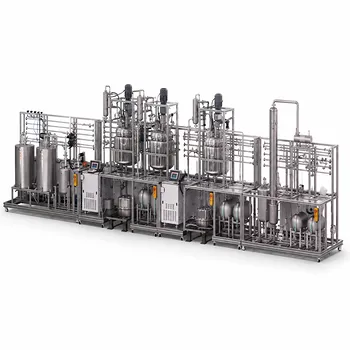
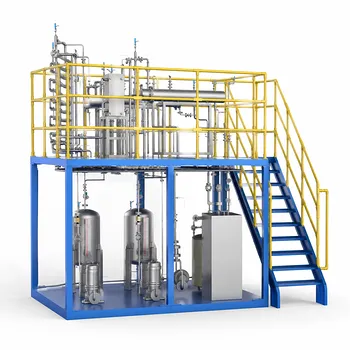
Integrating temperature-programmed desorption and reduction into chemical engineering pilot plants is not simply about adding sensors—it’s about turning a reactor into a dynamic laboratory for surface chemistry. At the hardware level, you incorporate a furnace capable of highly linear temperature ramps, a thermocouple directly in the catalyst bed, and a detection system (TCD or mass spectrometer) positioned immediately downstream. When combined with carefully chosen probe gases and adsorption protocols, the pilot plant can generate desorption spectra or hydrogen consumption curves that reveal the activation energy of desorption, the number and strength of active sites, and how preparation steps like calcination control metal-support interactions.
The core educational power of integrating TPD/TPR lies in bridging molecular surface science and industrial reactor engineering. Students move beyond theoretical models: they perform in‑situ catalyst activation, quantify reducibility and site heterogeneity, and directly connect those surface properties to macroscopic reaction performance, all within a single, safe platform.
The Essential Hardware for TPD/TPR Integration
Carrier Gas Purification and Flow Control
Every TPD/TPR experiment begins with a clean carrier gas stream—typically argon, helium, or a hydrogen/argon mixture for reduction. A purification train removes oxygen and moisture that would otherwise react with the catalyst or distort the thermal conductivity signal. Precision mass flow controllers then maintain a stable baseline, which is critical for detecting the small concentration changes that signal a desorption or reduction event.
A spike of impurity in the carrier gas creates a false TCD peak or interferes with mass spectrometer fragmentation patterns. Students learn that signal quality is only as good as the baseline, reinforcing the importance of gas handling at pilot scale.
Linear Temperature Programming and Bed Thermocouples
A furnace with PID-controlled linear ramping is non‑negotiable. The ramp rate (often 5–20 K min⁻¹) directly influences peak resolution: too fast and peaks merge, too slow and the experiment becomes impractical for a lab session. The thermocouple must be placed inside the catalyst bed—not just in the furnace—to capture the true temperature experienced by the solid, because heat transfer lags can shift the apparent desorption temperature and mislead kinetic analysis.
This arrangement teaches the fundamental lesson that the catalyst bed temperature, not the furnace setpoint, drives the chemistry. Students see how a temperature gradient across the bed can artificially broaden peaks, linking heat transfer principles to analytical data quality.
Detector Selection: From TCD to Quadrupole Mass Spectrometry
A thermal conductivity detector (TCD) is the workhorse for simple TPR or TPD of a single probe gas. Mounted immediately after the reactor outlet to minimize dead volume, it compares the thermal conductivity of the effluent to that of the reference carrier gas. When hydrogen is consumed during reduction, the effluent becomes leaner in the high‑conductivity component, producing a negative peak; desorbed ammonia or CO creates a positive peak. This simplicity makes TCD highly educational.
For mixtures or unknown desorption products, a quadrupole mass spectrometer adds species‑level identification. It requires a heated, deactivated capillary inlet to bridge the pressure gap from atmospheric reactor effluent to the high‑vacuum ion source. Students learn the importance of minimizing cold spots that would condense higher‑boiling desorbates, and of correcting for fragmentation patterns when multiple species overlap.
Reactor Design and Inlet System Considerations
The reactor itself can be a simple quartz or stainless steel U‑tube placed inside the furnace. Because TPD/TPR is inherently transient, the volume between the catalyst bed and the detector must be minimized. Any dead volume causes peak smearing and delayed response, which can be incorrectly attributed to slow kinetics.
The gas delivery system should allow swift switching between adsorption mixtures and inert carrier gas. A four‑way valve located as close as possible to the reactor inlet is a practical solution, enabling students to initiate the temperature ramp immediately after adsorption saturation without interrupting flow.
Demonstrating Fundamental Catalyst Concepts
Measuring Reducibility: Seeing Metal‑Support Interactions
TPR is perfectly suited to show how catalyst preparation changes reducibility. For example, a supported copper‑nickel catalyst that is directly reduced often shows a single merged peak, indicating intimate metal‑metal contact and alloy formation. When the same precursor is first calcined, students record two distinct reduction peaks—one for each metal oxide—demonstrating how calcination locks metals into separate phases and alters the final catalyst structure.
These experiments make tangible concepts like metal‑support interaction and phase separation. Students can then correlate the reduction profile with catalyst activity in a subsequent reaction run, closing the loop between synthesis, characterization, and performance.
Probing Surface Sites with Desorption Kinetics
In TPD, students adsorb a probe gas (e.g., CO, NH₃, or H₂) at low temperature, then purge the system before initiating the temperature ramp. As the bed heats, molecules desorb from sites of increasing binding strength. The resulting spectrum—a series of peaks at different temperatures—maps the distribution of active site energies. The area under each peak quantifies the number of sites, while the peak temperature, analyzed via methods like the Redhead equation, yields the activation energy of desorption.
In a pilot plant, students can vary the adsorption temperature or the ramp rate and observe how the peak temperatures shift. This directly illustrates the kinetic nature of desorption and the assumptions behind simple peak‑temperature analysis, reinforcing the difference between apparent and intrinsic activation energies.
Calculating Active Surface Areas and Metal Dispersion
Using a well‑calibrated TCD or mass spectrometer, the total hydrogen consumed during TPR can be converted to moles of reducible metal. Coupled with the known catalyst loading, students calculate the degree of reduction and the active metal surface area. When a chemisorption step follows, TPD of the adsorbed species gives the dispersion—the fraction of metal atoms exposed at the surface. These numbers are then used to compute turnover frequencies from steady‑state reaction data, linking characterization directly to catalytic performance.
Linking Characterization to Real‑World Operation
Bridging Molecular Surface Science and Macro‑Scale Chemical Engineering
The unit operations pilot plant already provides flow, pressure, and temperature control at an industrial scale. By embedding TPD/TPR protocols, it becomes a unique platform where students witness how molecular events—a hydroxyl group reducing, a CO molecule desorbing—translate into a macroscopic signal that can be measured, modelled, and used to predict reactor behavior.
This integration directly addresses the common curriculum gap between surface science courses (where techniques are demonstrated on ultra‑high‑vacuum equipment with single crystals) and reaction engineering courses (where plug‑flow reactor equations treat kinetics as a black box). A TPD/TPR‑capable pilot plant puts the surface into the reactor.
Teaching Catalyst Activation and Industrial Start‑up Procedures
Industrially, many catalysts must be activated in‑situ by a controlled reduction before they become active. In the pilot plant, students program the same heating profile and reducing gas composition that an operator would use—say, a slow ramp to 200 °C in 5% H₂/Ar to avoid sintering. They can monitor the hydrogen uptake in real time, verifying when reduction is complete, and immediately switch to a reaction feed. This teaches safe, reproducible start‑up protocols and the risks of exothermic runaway if the ramp is too aggressive.
Monitoring Hot Spots and Catalyst Aging
Multi‑point temperature sensors placed axially and radially in the bed reveal how hot spots develop during exothermic reactions. By linking these temperature profiles to TPR‑derived reducibility, students see that poorly reduced or unevenly loaded regions can locally overheat, leading to sintering and permanent activity loss.
Furthermore, TPD/TPR can be used to diagnose deactivation itself. A catalyst that has been on stream for many hours can be cooled and subjected to a TPD of carbon monoxide; the reduction in CO sorption compared to a fresh sample quantifies loss of active metal area, while a high‑temperature TPD peak might indicate formation of carbon deposits that block sites.
Understanding the Trade‑offs and Pitfalls
Pitfalls to Avoid in Educational TPD/TPR Experiments
- Ignoring bed temperature measurement: Relying on furnace temperature alone is the most common error. The lag can be tens of degrees at typical ramp rates, leading to misleading activation energies. Always place a thermocouple in the bed.
- Using an excessively fast ramp: Students often want quick results. A ramp above 20 K min⁻¹ broadens peaks and merges closely spaced features, destroying the very information the experiment seeks. Set a standard ramp of 5–10 K min⁻¹ for educational clarity.
- Neglecting the adsorption step: Incomplete saturation or a poorly controlled adsorption temperature leads to irreproducible peak areas. Teach a strict protocol: cool under probe gas, wait for equilibrium, then purge with inert gas before starting the ramp.
- TCD polarity confusion: Reduction and desorption can give opposite peak directions depending on the thermal conductivity of the species. A calibration injection of the probe gas at the start of every experiment eliminates ambiguity.
Balancing Analytical Rigor with Throughput
A full TPD/TPR run—adsorption, purge, ramp, and cool‑down—can take one to several hours. In a teaching lab, this may limit the number of catalysts that can be studied. A wise compromise is to design focused studies where students compare two catalyst preparations (e.g., calcined vs. unealcined) or two probe gases, rather than a broad survey. Alternatively, use the TPD/TPR capability as a demonstration for the whole class while having teams run complementary steady‑state reactor experiments in parallel.
Making the Right Choice for Your Educational Goal
Integrate TPD/TPR not by adding every possible feature, but by matching the analytical depth to the learning objective.
- If your primary focus is hands‑on kinetics training: Equip the pilot plant with a TCD and a robust, slow‑ramp furnace. Design short, reproducible CO TPD experiments where students apply the Redhead equation and immediately see the effect of varying the ramp rate.
- If your primary focus is demonstrating industrial catalyst activation: Prioritize a safe hydrogen blending system and multi‑point bed thermocouples. Let students perform a TPR activation, then immediately conduct a steady‑state reaction, comparing conversion before and after the controlled reduction.
- If your primary focus is linking surface science to reactor performance: Add a quadrupole mass spectrometer and teach students to deconvolve overlapping desorption peaks. Have them calculate active site densities from TPD, then input those numbers into a reactor model to predict conversion—and test the prediction with the same catalyst.
- If your primary focus is studying catalyst deactivation: Use the constant‑conversion variable‑temperature mode. Have students monitor how the required inlet temperature rises as the catalyst ages, then perform a comparative TPD of the fresh and spent catalyst to identify the deactivation mechanism (sintering, coking, poisoning).
By embedding these capabilities into the heart of a unit operations pilot plant, you give engineering students the ability to observe, measure, and manipulate catalytic surfaces—not as an abstract concept, but as a controllable variable that directly governs reactor performance and product quality.
Summary Table:
| Integration Component | Hardware Requirement | Educational/Practical Value |
|---|---|---|
| Gas Flow Control | High-precision MFCs & purification train | Teaches baseline stability & importance of clean carrier gases |
| Temperature Control | Linear PID furnace & in-bed thermocouple | Demonstrates true catalyst bed dynamics & heat transfer lags |
| Detection System | TCD or Quadrupole Mass Spectrometer | Explains species identification, peak resolution, & calibration |
| Reactor Design | Low dead-volume quartz/metal U-tube | Minimizes peak smearing to ensure accurate transient kinetics |
Elevate Your Chemical Engineering Curriculum with LABPARK
At LABPARK, we design and manufacture high-quality Educational and Vocational Unit Operations Pilot Plants tailored for chemical engineering, bioprocess & biotech, and environmental & water treatment applications. We help universities, research institutes, and enterprises integrate advanced capabilities like TPD/TPR, bridging the gap between molecular surface science and macro-scale reactor operations.
Ready to enhance your lab's hands-on teaching and research capabilities? Contact LABPARK today to customize your pilot plant solutions!
Related Products
- Carbon Dioxide Hydrogen Methanol Synthesis Educational Unit Operations Pilot Plant
- Multi Pump Fluid Transport Process Piping Unit Operations Training Pilot Plant
- Natural Product Extraction Unit Operations Training Pilot Plant
- Multi-Modal Distillation Unit Operations Training Pilot Plant
- Multi-Reactor Educational Pilot Plant for Reaction Engineering Unit Operations
People Also Ask
- How do temp & pressure affect methanol synthesis pilot plants? Optimize equilibrium and catalyst performance.
- Why is a purge system necessary when operating a gas recirculation loop in a methanol synthesis pilot plant? (Guide)
- Why do modern methanol pilot plants operate at lower pressures? Catalyst & Feed Requirements Explained
- What are the operational requirements for catalyst activation? Safe Methanol Pilot Plant Operation
- Why is the chemical plant startup schedule crucial? De-risk scale-up with pilot plants.