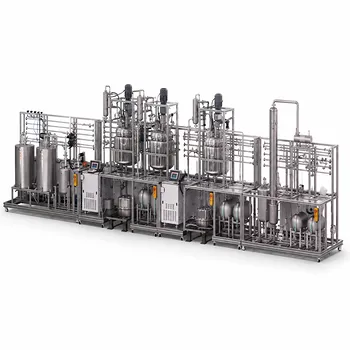
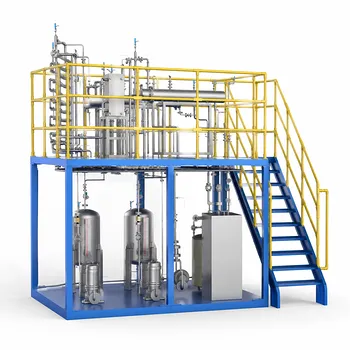
Designing safety into a university pilot plant starts long before any chemical is loaded—it begins with a calculated hazard index like the Fire and Explosion Index (F&EI). You apply the F&EI during the early design or equipment selection phase, once you have a preliminary Piping and Instrumentation Diagram (P&ID) and equipment layout, to quantify the inherent fire and explosion risk of each unit. This number doesn’t just label a hazard; it actively guides you toward selecting inherently safer configurations and dictates exactly which compensation measures (like ventilation, relief systems, or containment) are needed to create an acceptable risk profile for a student-filled lab.
Before signing a purchase order for a distillation column or reactor, use the F&EI to move from a vague sense of “hazardous” to a specific, defensible risk level. That number becomes your objective benchmark for evaluating equipment alternatives, prioritizing budget for safety systems, and setting the foundation for all subsequent safety protocols in the educational environment.
What is the Fire & Explosion Index and Why It Matters for Your Lab
The F&EI is a numerical value that quantifies the loss potential from a fire or explosion within a specific process unit. For a university lab, where inexperienced operators are part of the learning process, this isn’t just an industrial formality—it’s a critical tool that bridges the gap between theoretical safety and hands-on protection.
The Anatomy of the Index
The F&EI starts with a Material Factor (MF), a measure of how energetically a substance can burn or explode. That MF is then multiplied by a series of General Process Hazard Factors (F1) and Special Process Hazard Factors (F2) – things like operating pressure, toxicity, or temperature extremes. The product gives you a single number that slots the unit into a risk category, from “light” to “extreme.”
Why a University Lab is a Unique Application
An industrial plant might tolerate a “severe” index with heavy engineering controls. In a university setting, you’re balancing research objectives with the safety of students who are still building operational intuition. The F&EI helps you decide if that high-risk unit’s educational value justifies the additional safety layers—or if a less hazardous but pedagogically similar alternative would be the smarter choice.
Timing is Everything: When to Apply the F&EI in Your Project
You don’t calculate the index after the plant is built. The optimal window is during the early design or procurement phase, right after you’ve finalized a preliminary P&ID and general equipment layout. This timing transforms the F&EI from a forensic score into a proactive decision-making tool.
Using P&IDs to Partition and Prioritize
At this stage, you can break the pilot plant down into discrete processing units—the reactor, the distillation column, the solvent storage tank. For each, you identify the chemical inventory and operating conditions. The unit with the highest calculated index tells you exactly where to focus your safety engineering effort and budget first.
Driving the “Inherently Safer” Choice
If the F&EI for a proposed benzene-based extraction unit comes back as “severe,” you haven’t just learned about a hazard—you’ve gained the objective evidence to ask: “Can we achieve the same learning outcomes with a toluene-based system?” The index makes it possible to compare completely different process routes on a single, structured scale before procurement locks you into a design.
From Calculation to Design Decision: How the Index Drives Safety Choices
Once the risk level is known, the F&EI framework directly determines the Safety Compensation Factors you must introduce. For an educational lab, these factors become your non-negotiable design requirements.
Selecting Materials and Pressure Ratings with Purpose
If your index reveals a high hazard due to corrosive substances or elevated pressures, the choice of construction materials becomes a safety-critical decision. You move from “stainless steel is nice to have” to “304 or 316 stainless steel is required to prevent a catastrophic failure from corrosion in that humid lab environment.” Similarly, a pressure-driven hazard index mandates certified relief valves, burst discs, and pressure transmitters with alarms—not just as add-ons, but as integral pieces of the educational tool.
Engineering Ventilation, Containment, and Inerting
The F&EI output tells you how aggressively you need to prevent flammable vapor accumulation. For a moderate-risk unit, a good laboratory exhaust hood might suffice. For a higher-risk pilot plant using acetone or ethanol, the index compels you to design an open-frame structure for dilution ventilation, specify welded joints over flanges to minimize leaks, and integrate a nitrogen blanketing system on feed and product tanks. Fixed gas detectors with alarm functions become the standard for catching any breach before concentrations approach the lower flammability limit.
Designing for Visibility Without Sacrificing Safety
Educational pilot plants need transparent sections—glass columns in distillation or absorption units—so students can observe hydrodynamic phenomena. The F&EI helps you decide where glass is safe and where a metal body with sight glasses might be required. A low index for an atmospheric water-distillation column? Full glass might be fine. A high index for a pressurized solvent stripper? Only robust, properly shielded sight ports.
Understanding the Trade-offs and Common Pitfalls
Objectively, applying the F&EI isn’t a silver bullet, and misusing it can create new problems for a university. Acknowledging the limitations is essential for smart implementation.
The Simulation Fidelity vs. Safety Paradox
An inherently safer fluid—perhaps a water-based simulant instead of a real hydrocarbon stream—lowers the index dramatically. The trade-off? Students lose the real-world handling experience, and the process’s thermodynamic behavior may not fully match an industrial system. You must decide if the safety gain is worth the educational compromise on a unit-by-unit basis.
The “Paperwork vs. Practice” Trap
A beautifully calculated F&EI is worthless if the safety systems it prescribes are bypassed for convenience. University labs, often run by rotating groups of researchers, are especially prone to this. The index must be documented alongside operational checklists and startup/shutdown procedures that are enforced, not just filed. Failing to pair the index with a living safety management system creates a dangerous illusion of control.
Cost Escalation and Infrastructure Strain
The index might mandate a fume hood upgrade, a new nitrogen supply line, or a reinforced drainage system for spill containment. These aren’t small additions—they can double the installation cost and require civil works. Early F&EI application helps avoid the shock of retrofitting these into a completed lab, but it also means having the institutional courage to say “not with our current infrastructure” if the numbers are untenable.
Making the Right Choice for Your University Lab
The F&EI isn’t just for compliance; it’s a lens for decision-making. To apply it effectively, tailor your approach to your primary objective.
- If your primary focus is maximizing student safety for a teaching-only lab: Use the F&EI to set a hard risk ceiling. Avoid any unit that crosses into the “severe” range unless its educational value is irreplaceable, and then mandate every compensation factor from inerting to automated shutdowns as a funded, non-negotiable part of the package.
- If your primary focus is supporting advanced research with novel chemicals: Apply the index as an iterative tool during experimental design. Before ordering a custom reactor, run the F&EI for the worst-case credible mixture, and let the result dictate the mechanical design pressure, emergency relief sizing, and containment strategy from day one.
- If your primary focus is building a multi-purpose plant with the widest possible curriculum: Calculate the F&EI not just for your planned chemistry, but for the most hazardous combination of allowed substances. Base your master safety systems—ventilation, gas detection, material of construction—on that worst credible scenario, so the plant’s design is always conservative regardless of future scheduling changes.
The Fire and Explosion Index transforms a university pilot plant from a source of anxiety into a structured learning platform, where risk is quantified and safely enclosed, letting you focus entirely on the science.
Summary Table:
| F&EI Application Stage | Key Action & Considerations | Safety & Design Outcomes |
|---|---|---|
| Early Design | Partition unit operations & calculate Material Factors (MF) | Guides budget allocation and inherently safer chemical alternatives. |
| Equipment Selection | Evaluate pressure, temperature, and material compatibility | Dictates the use of 304/316 stainless steel and certified relief valves. |
| Lab Infrastructure | Determine containment, ventilation, and inerting needs | Mandates nitrogen blanketing, gas detectors, and open-frame ventilation. |
| Operational Setup | Translate index findings into checklists and procedures | Prevents bypassing safety controls and ensures long-term lab compliance. |
Build a Safer, High-Performance Educational Lab with LABPARK
Designing a university pilot plant requires balancing educational value with uncompromising safety. LABPARK provides state-of-the-art Educational and Vocational Unit Operations Pilot Plants in chemical engineering, bioprocess & biotech, and environmental & water treatment. Our systems are engineered for universities, research institutes, and enterprises, incorporating advanced safety compensation measures right from the design phase.
Ready to equip your lab with inherently safe, compliant, and robust pilot plants? Contact LABPARK today to discuss your project requirements with our engineering experts!
Related Products
- Carbon Dioxide Hydrogen Methanol Synthesis Educational Unit Operations Pilot Plant
- Multi Pump Fluid Transport Process Piping Unit Operations Training Pilot Plant
- Natural Product Extraction Unit Operations Training Pilot Plant
- Multi-Modal Distillation Unit Operations Training Pilot Plant
- Multi-Reactor Educational Pilot Plant for Reaction Engineering Unit Operations
People Also Ask
- How do temp & pressure affect methanol synthesis pilot plants? Optimize equilibrium and catalyst performance.
- Why is a purge system necessary when operating a gas recirculation loop in a methanol synthesis pilot plant? (Guide)
- Why do modern methanol pilot plants operate at lower pressures? Catalyst & Feed Requirements Explained
- What are the operational requirements for catalyst activation? Safe Methanol Pilot Plant Operation
- Why is the chemical plant startup schedule crucial? De-risk scale-up with pilot plants.